Somewhere around the seventh month, many women tell me the same thing in slightly different words: “I was fine until now, and suddenly everything is uncomfortable.” The bump is heavier, the stairs feel longer, sleep comes in pieces, and every new twinge raises the question of whether it is normal.
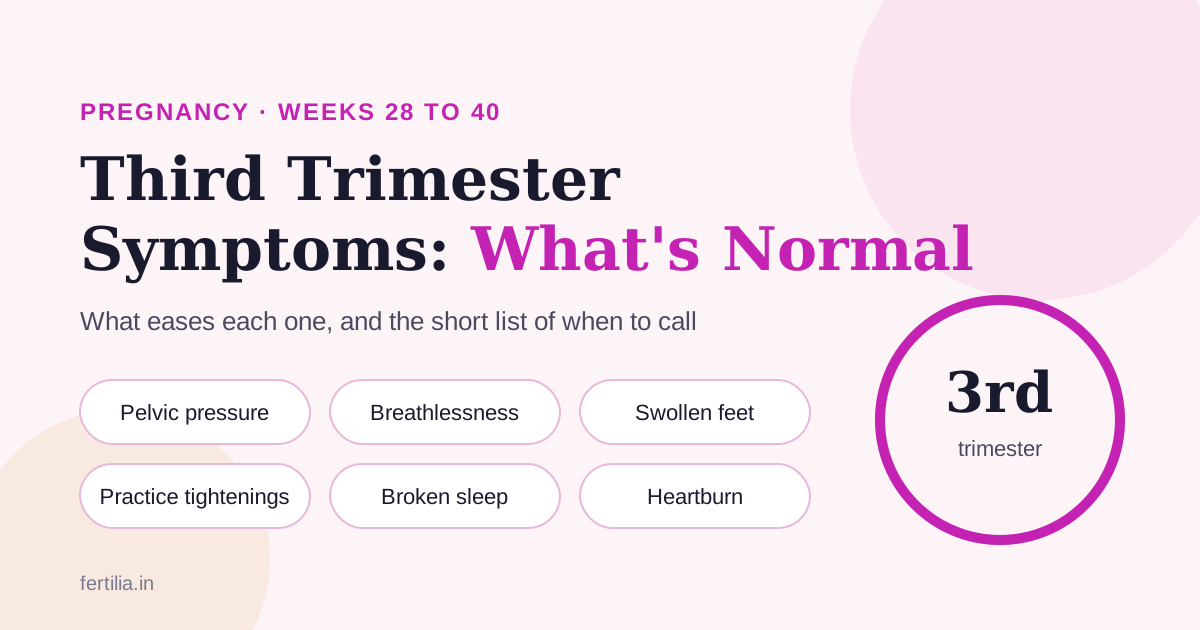
Most of the time, it is. The third trimester runs from week 28 until birth, usually somewhere between weeks 37 and 41, and it is the stretch where the baby gains most of its weight. Your body carries that extra load with your heart, lungs, joints, bladder and stomach all making room. The symptoms that come with this are real, they can be tiring, and the large majority of them are signs of a pregnancy doing exactly what it should.
I’m Dr. Suganya Venkat, an OB-GYN with more than fifteen years of practice, and the third trimester is where I spend a good part of every video consultation simply sorting “this is your body making room” from “this one needs a check straight away.” This post is that sorting, written down.
What this post covers:
- What changes in your body between weeks 28 and 40
- The common third-trimester symptoms, one by one, with links to the detailed guides
- Simple things that make these weeks easier
- A short, clear list of when to call your doctor
- The routine checks to expect in these final weeks
If you want the full nine-month picture, our pregnancy week-by-week guide covers all three trimesters. This post stays with the last one.
What Is Changing in Your Body From Week 28
Three things drive most of what you feel in these weeks.
The uterus is now large. By the third trimester it reaches up under your ribs. It presses on your stomach, your diaphragm, your bladder and the large veins in your pelvis. Many of the symptoms below come straight from this crowding.
Your blood volume and heart output are higher. Your body has been increasing the amount of blood it circulates since early pregnancy, so your heart works harder at rest. A slightly faster pulse and feeling warm are common.
Hormones are loosening your joints. The ligaments around your pelvis relax so that it can widen a little for birth. That same loosening is behind much of the back and pelvic discomfort of late pregnancy.
Then, in the last few weeks, the baby usually settles lower into the pelvis. Breathing often gets easier at that point, and pressure low down often gets heavier.
The Common Third-Trimester Symptoms
Each of these has a detailed guide on Fertilia. Here you will find the short version: what it is, why it happens, and the one thing to watch for.
Pelvic pressure and heaviness
A heavy, pushing-down feeling low in the pelvis, worse at the end of the day or after standing, is one of the most common complaints of the third trimester. It comes from the weight of the baby and the loosened pelvic joints, and it often increases once the baby drops. Lying on your side, resting with your hips slightly raised, and a support belt can all help. Our guide to pelvic pressure in pregnancy explains the pattern, and what to watch for if it comes with tightening or fluid before 37 weeks.
Breathlessness
Feeling short of breath while climbing stairs or even while talking is very common now, because the uterus pushes up against the diaphragm and pregnancy hormones make you breathe more deeply. It usually eases when the baby drops. Sitting upright, slowing down, and propping yourself on pillows at night help. Breathlessness that comes on suddenly, is present at rest, or comes with chest pain, a racing heart or coughing up blood is different. It is an emergency, so go to the nearest emergency department immediately. The full picture is in our guide to shortness of breath in pregnancy.
Swollen feet and ankles
Mild swelling of the feet and ankles, worse in the evening and in hot weather, is expected in late pregnancy. Pregnancy holds extra fluid, and the uterus slows the return of blood from the legs. Putting your feet up, avoiding long periods of standing, walking a little through the day and sleeping on your side help it settle overnight.
What matters is the type of swelling. Swelling that appears suddenly in the face, around the eyes or in the hands, especially with a headache that does not go away, blurred vision or pain under the ribs, needs urgent assessment, so contact your maternity unit straight away rather than waiting for a routine blood pressure check. These can be signs of preeclampsia. One leg that is swollen, red and painful while the other is not also needs urgent review, so contact your hospital straight away.
Practice contractions (Braxton Hicks)
Your bump may go hard and tight for a minute and then relax. These practice contractions are usually irregular, often painless or mildly uncomfortable, and tend to settle when you change position, drink water or rest. Our guide on Braxton Hicks contractions shows how to tell them apart from real labour. Before 37 weeks, tightenings that become regular, stronger, or come with lower back ache, pressure or fluid loss should be checked straight away, and our guide to preterm labour signs lists exactly what to look for.
Broken sleep
Sleep gets harder in the last trimester for many reasons at once: the bump, trips to the toilet, heartburn, leg cramps and a busy mind. Sleeping on your side, with a pillow between your knees and one under the bump, helps most women. Going to sleep on your side rather than flat on your back is the position advised from 28 weeks, and our post on sleeping position in pregnancy explains why and how to set up your pillows. For the wider sleep picture, see our guide to insomnia in pregnancy.
Heartburn and acidity
The uterus pushes up on the stomach, and pregnancy hormones relax the valve at its top, so acid rises more easily. Smaller, more frequent meals, an early dinner, and staying upright for a while after eating help. Spicy or oily evening meals often make it worse. Our pregnancy heartburn guide covers safe relief and which antacids are usually fine to take.
Back pain
As the bump grows, your posture shifts and the loosened pelvic joints carry more strain. Lower back pain, pain at the back of the pelvis and pain running down a leg are all common. Gentle movement, warmth and good support while sitting help. Our guide to back pain in pregnancy explains the types and the signs that need attention, including back pain that comes and goes in a rhythm, which can be contractions.
Leg cramps
Sudden, painful calf cramps at night are common in late pregnancy. Flexing your foot up towards you and gently stretching the calf usually stops one. Our guide to leg cramps in pregnancy covers what helps and how a cramp differs from a clot.
Passing urine more often, and small leaks
With the baby’s head pressing on the bladder, especially after it drops, you may need the toilet often, including at night. A small leak with a cough or sneeze is also common. Keep drinking enough water. Burning while passing urine, fever or pain in your side is not part of this pattern and needs a urine test.
Itching
Stretching skin over the bump often itches, and a moisturiser helps. Itching that is intense, particularly on the palms and soles and worse at night, without a rash, is worth a blood test to check for a liver condition of pregnancy. Our guide on itching in pregnancy explains the difference.
Baby’s movements
By the third trimester, your baby has a pattern of movement that you will get to know. Movements change in feel as space gets tighter, more rolls and pushes than sharp kicks, but they should not slow down or stop. Our fetal movement guide explains how to get to know your baby’s pattern. If movements are reduced or different from usual, call your hospital’s maternity unit straight away, at any time of day or night. Do not wait to see if they pick up later.
Other common changes
Many women also notice more vaginal discharge, constipation or haemorrhoids, numb or tingling hands, a stuffy nose, bleeding gums, and new stretch marks. Clumsiness and tiredness are also normal as your centre of gravity shifts and your body carries more weight. None of these needs to be endured silently. Mention them at your next antenatal visit.
💬 Not sure whether something you are feeling is normal at this stage? You can talk it through with Dr. Suganya Venkat over a ₹399 online video consultation, from anywhere in India. Message Fertilia on WhatsApp and tell us your week and what you are noticing. For anything urgent from the list below, go to your hospital directly.
What Makes These Weeks Easier
A handful of habits help with several symptoms at once:
- Sleep on your side, with pillows between your knees and under the bump.
- Eat smaller meals more often, and keep dinner light and early. Curd rice, idli, dal and soft rotis are easier on the stomach in the evening than a heavy, spicy meal.
- Drink water through the day, more in hot weather. Tender coconut water and buttermilk count too.
- Keep moving gently. A daily walk and simple stretches help with swelling, cramps, constipation and sleep, if your doctor has not advised rest. Our guide to pregnancy exercises by trimester has safe options.
- Put your feet up for a while each afternoon and evening.
- Ask for help. Late pregnancy is not the time to carry heavy loads or keep the same pace as before.
These weeks are also a good time to plan practical things: pack your hospital bag, talk to your hospital about pain relief options in labour, and learn the early signs that labour is starting. Emotions can run high too, and our post on emotional changes in pregnancy is a good companion read.
When to Call Your Doctor
This list is short on purpose. Knowing exactly what needs a call lets you relax about everything else. Contact your hospital’s maternity unit straight away, day or night, or go in directly, if you have:
- Fewer movements, or a change in your baby’s usual pattern.
- Bleeding from the vagina.
- A gush or steady trickle of fluid, which can mean your waters have broken.
- Regular tightenings or period-like pain before 37 weeks.
- A headache that does not go away, blurred vision or flashing lights, pain under the right ribs, or sudden swelling of the face or hands.
- Sudden breathlessness, breathlessness at rest, chest pain, a racing heart or coughing up blood. These are an emergency, so go to the nearest emergency department immediately.
- One swollen, painful, red leg.
- Fever, burning when passing urine, or pain in your side.
- Intense itching of the palms and soles.
- Severe or constant abdominal pain that does not ease with rest.
When in doubt, call. Hospitals would much rather see you and send you home reassured than have you wait at home with a worry.
The Checks to Expect in the Final Weeks
Antenatal visits become more frequent in the third trimester, often every two weeks from around 28 weeks and weekly from 36 weeks, though your hospital’s schedule may differ. At these visits your doctor will usually check your blood pressure and urine, measure the growth of your bump, listen to the baby’s heartbeat and check the baby’s position as you get closer to term.
Depending on your history, you may also have a repeat blood count to look for anaemia (our guide to haemoglobin in pregnancy explains the numbers), a growth scan, or closer monitoring if you have diabetes, high blood pressure or a twin pregnancy. Your obstetrician and hospital lead this care. At Fertilia, our role is to support you between those visits: answering questions, helping you understand reports, and helping you prepare for the birth and the weeks after. If you would like structured support through these months, our pregnancy program works alongside your obstetrician’s care.
Practical Takeaways
- Most third-trimester symptoms come from the size of the uterus, higher blood volume and loosened joints. They are tiring, and they are usually normal.
- Side-sleeping, smaller meals, gentle movement, water and rest ease several symptoms at once.
- Know the short list of signs that need your maternity unit straight away: reduced movements, bleeding, leaking fluid, early regular contractions, signs of high blood pressure, and breathlessness at rest.
- Keep your antenatal visits, and bring your list of questions.
- Use the detailed guides linked above for any one symptom that is bothering you.
Frequently Asked Questions
What are the most common symptoms in the third trimester?
The most common are pelvic pressure, breathlessness on exertion, swollen feet and ankles, practice contractions, back pain, heartburn, leg cramps, passing urine often and broken sleep. Most come from the growing uterus pressing on nearby organs and from your joints loosening ahead of birth.
What symptoms are normal at 28 weeks pregnant?
At 28 weeks it is common to notice more tiredness returning, some breathlessness, heartburn, back ache, mild swelling by evening and occasional painless tightenings of the bump. You should also feel a regular pattern of movements. Fewer movements, bleeding, leaking fluid, or regular painful tightenings at this stage should be checked straight away, so contact your maternity unit, day or night.
Is it normal to feel more tired in the third trimester?
Yes. Many women feel their energy return in the second trimester and then dip again in the third, because of the extra weight, broken sleep and the work of carrying the baby. Rest when you can and keep your iron levels checked. Extreme tiredness with breathlessness or a racing heart should be discussed with your doctor, since anaemia is common in Indian women.
How do I know if swelling in pregnancy is serious?
Gradual swelling of the feet and ankles that is worse in the evening and better by morning is usually normal. Sudden swelling of the face, around the eyes or in the hands, especially with a headache, blurred vision or pain under the ribs, needs urgent assessment, so contact your maternity unit straight away. One painful, swollen leg also needs urgent review, so contact your hospital straight away.
When do third-trimester symptoms get easier?
Breathlessness and heartburn often ease once the baby drops lower into the pelvis in the last few weeks. In exchange, pelvic pressure and passing urine often increase. Most third-trimester symptoms settle within days to weeks after the birth.
Should I sleep on my left side in the third trimester?
From 28 weeks, the advice is to go to sleep on your side rather than on your back. Either side is fine for most women. If you wake up on your back, simply turn onto your side. A pillow behind your back can help you stay there.
When should I go to the hospital in the third trimester?
Contact your maternity unit straight away, day or night, if your baby’s movements reduce or change, or if you have bleeding, leaking fluid, regular contractions before 37 weeks, a severe headache with vision changes, or one swollen painful leg. Sudden breathlessness, breathlessness at rest or chest pain is an emergency, so go to the nearest emergency department immediately. After 37 weeks, follow your hospital’s advice on when to come in once labour starts.
A Last Word
The last trimester asks a lot of your body, and it is fair to find it hard. Most of what you are feeling is your body making room for your baby, and there is usually something simple that makes each symptom easier. Know the short list of signs that need a call, and let the rest be what it is: the final stretch.
If you would like a doctor to go through your symptoms with you, message Fertilia on WhatsApp to book a ₹399 online video consultation with Dr. Suganya Venkat. You can also download our free pregnancy guide for a calm, practical companion to these weeks.