Your report says Hb 10.2 g/dL, there is a small “L” printed beside it, and the range column next to it says 12.0 to 15.0. Most women stop there and assume something has gone wrong. In my video consultations, this is one of the most common reasons a pregnant woman sends me a photo of her blood report, often late at night.
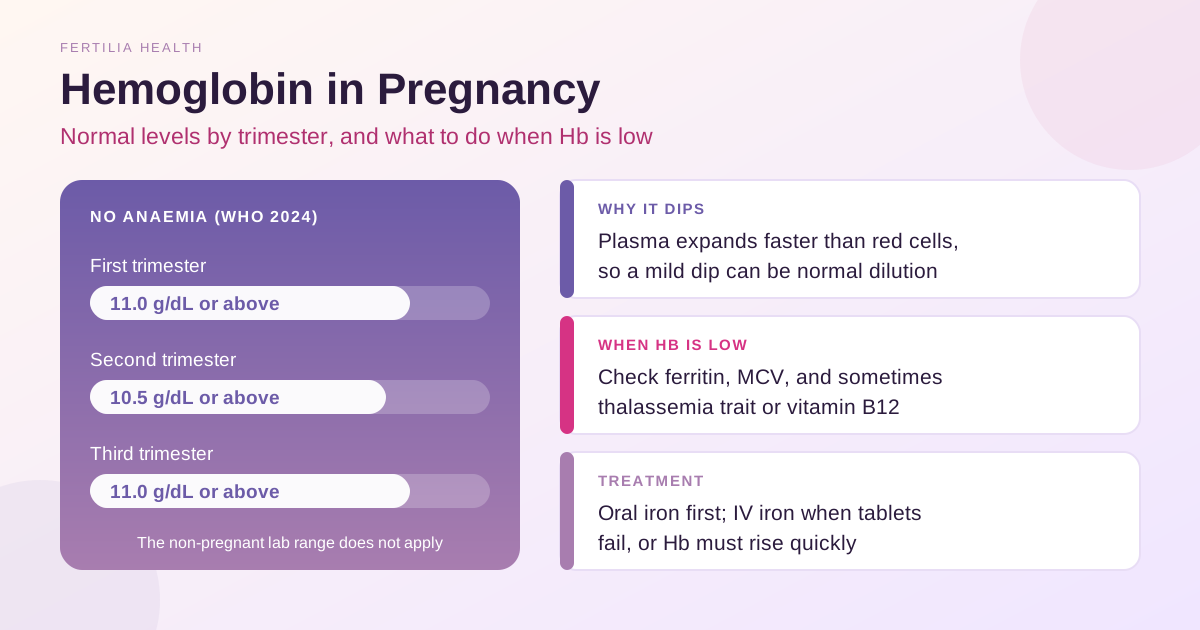
Here is the short answer first. In pregnancy, a hemoglobin of 11.0 g/dL or above in the first and third trimesters, and 10.5 g/dL or above in the second trimester, is not anaemia. These are the cut-offs in the World Health Organization’s 2024 Guideline on haemoglobin cutoffs to define anaemia in individuals and populations (who.int, ISBN 978-92-4-008854-2). The “12.0 to 15.0” printed on many lab reports is the range for women who are not pregnant, so a pregnant woman’s value can sit below it and still be normal for her stage.
If your value is below these cut-offs, that is common, it is usually caused by low iron, and it is very treatable. This post explains:
- The normal hemoglobin range for each trimester, and how mild, moderate and severe anaemia are defined
- Why hemoglobin naturally falls in pregnancy
- What else to check when Hb is low (ferritin, and sometimes thalassemia or B12)
- When oral iron tablets are enough, and when IV iron makes sense
- Simple steps that help your levels recover
Normal Hemoglobin Levels in Pregnancy, Trimester by Trimester
Lab reports in India usually give hemoglobin in g/dL. The WHO guideline uses g/L, which is the same number multiplied by ten (110 g/L is 11.0 g/dL). The table below converts the WHO 2024 trimester cut-offs (Table 3 of the guideline) into g/dL so you can compare them directly with your report.
| Trimester | No anaemia | Mild anaemia | Moderate anaemia | Severe anaemia |
|---|---|---|---|---|
| First (up to 13 weeks) | 11.0 g/dL or above | 10.0 to 10.9 | 7.0 to 9.9 | Below 7.0 |
| Second (14 to 27 weeks) | 10.5 g/dL or above | 9.5 to 10.4 | 7.0 to 9.4 | Below 7.0 |
| Third (28 weeks onward) | 11.0 g/dL or above | 10.0 to 10.9 | 7.0 to 9.9 | Below 7.0 |
Source: WHO, Guideline on haemoglobin cutoffs to define anaemia in individuals and populations, 2024, Table 3.
Two things are worth knowing about this table.
The second-trimester cut-off is lower on purpose. The older WHO definition, summarised in its 2011 document, used one number, 11.0 g/dL, for the whole of pregnancy. The 2024 update was informed by a pooled analysis of healthy reference populations, which found that the lowest normal value (the 5th centile) was about 11.0 g/dL in the first trimester and about 10.6 g/dL in the second (Braat S et al., Lancet Haematol, 2024, PMID 38432242). That study did not have enough third-trimester data to set a separate value, so the WHO kept 11.0 g/dL for the third trimester. Many antenatal cards and lab reports in India still print the single 11.0 figure, which is why a second-trimester value of 10.6 may be flagged on one report and called normal on another.
How the blood is drawn matters. The same WHO guideline recommends venous blood (a sample from the vein in your arm) read on an automated analyser. Finger-prick readings can vary from venous ones, and the guideline notes that there is no reliable correction factor between the two. If a finger-prick test at a camp or clinic shows a low number, a venous CBC is the better way to confirm it.
Why Hemoglobin Falls in Pregnancy
During pregnancy, your blood volume expands so that it can supply the placenta and prepare for the blood lost at delivery. The liquid part of the blood (plasma) increases more than the number of red cells does. The red cells are therefore diluted, and the hemoglobin concentration in each millilitre of blood falls. Doctors call this physiological anaemia or haemodilution (Costantine MM, Front Pharmacol, 2014, PMID 24772083; Horowitz KM et al., Clin Lab Med, 2013, PMID 23702118).
This dilution is expected and is the reason the pregnancy cut-offs are lower than the non-pregnant ones. A mild dip in the second trimester, in a woman who feels well and has good iron stores, is often this effect alone.
What dilution does not explain is a value that keeps falling below the trimester cut-off, or one that is low from the very first visit. That usually points to a true shortage of the raw materials for making red cells, and iron is by far the most common one. Iron deficiency accounts for about three-quarters of anaemia in pregnancy (Horowitz KM et al., Clin Lab Med, 2013, PMID 23702118). Your baby and placenta draw on your iron throughout pregnancy, and many Indian women start pregnancy with low stores after years of heavy periods, closely spaced pregnancies or a largely vegetarian diet.
The scale of this in India is large. In an analysis of NFHS-5 data on 27,317 currently pregnant women, 52.2% had anaemia (Kuppusamy P et al., Curr Med Res Opin, 2024, PMID 37888841). If your Hb is low, you are in very common company, and the fix is well understood.
Why Your Doctor Keeps Checking It
Hemoglobin is one of the first blood tests at your booking visit, as covered in our first trimester tests guide, and it is usually repeated later in pregnancy, often around the same visit as the glucose test at 24 to 28 weeks. A 2017 expert review on iron deficiency in pregnancy recommends a hemoglobin check at least once in each trimester, along with a ferritin test in the first trimester (Breymann C et al., Arch Gynecol Obstet, 2017, PMID 28940095).
The reason for this attention is that hemoglobin is one of the easiest things in pregnancy to measure and correct early. A large review of 148 studies found that low maternal hemoglobin was associated with higher odds of preterm birth, low birthweight and postpartum bleeding, and that lower values carried stronger associations. The same review found that unusually high hemoglobin (13.0 g/dL or above) was also linked to some complications, including gestational diabetes and pre-eclampsia (Young MF et al., BMC Pregnancy Childbirth, 2023, PMID 37076797). These are patterns seen across large groups of women. They are not a prediction for any single pregnancy, and they are the reason a low result is treated promptly rather than watched.
A high value, especially later in pregnancy, can sometimes mean the normal blood-volume expansion has been smaller than expected. If your Hb is on the high side, your doctor will look at it alongside your blood pressure and growth scans, and our guide to pre-eclampsia signs and hospital care explains what that monitoring involves.
Symptoms of Low Hemoglobin in Pregnancy
Mild anaemia often causes no symptoms at all, and the blood test is how it is found. As Hb falls further, women may notice:
- Tiredness that feels heavier than the usual pregnancy tiredness
- Breathlessness on climbing stairs or walking a short distance
- A fast or pounding heartbeat
- Dizziness or light-headedness, especially on standing up
- Pale skin, pale inner eyelids or pale nails
- Cravings for ice, raw rice, mud or chalk (called pica)
- Headaches, hair fall or poor concentration
Many of these overlap with normal pregnancy, which is why a number on a report is more useful than guessing from symptoms. If you are breathless at rest, have chest pain, feel faint, or your heart races without a clear reason, do not wait: go to your nearest maternity unit or emergency department straight away. These symptoms can have causes other than anaemia and need urgent assessment.
💜 Have a low Hb on your antenatal report and not sure what it means for your stage of pregnancy? Message Dr. Suganya on WhatsApp to book a ₹399 video consultation. Send a photo of your CBC and we will go through it together.
When Hb Is Low: The Tests That Find the Cause
A low hemoglobin tells you that there are fewer red cells than expected. It does not tell you why. Before treatment is fine-tuned, a few more values help.
Serum ferritin. This measures your stored iron. A ferritin below 30 micrograms per litre indicates iron deficiency in pregnancy (Breymann C et al., Arch Gynecol Obstet, 2017, PMID 28940095). Ferritin can drop before hemoglobin does, so a woman with a normal Hb and a low ferritin is already running short and benefits from treatment. Our guide to iron deficiency anaemia signs and tests explains ferritin in more detail.
The red cell indices on your CBC. MCV tells you the size of your red cells. Small, pale cells point to iron deficiency or thalassemia trait. Large cells point towards vitamin B12 or folate deficiency.
Thalassemia trait. This is common in India and also causes small red cells, so it can look like iron deficiency on a CBC. If your MCV is low and your ferritin is normal, or the Hb does not rise with iron, an HPLC test is the next step. Our guide to thalassemia screening in pregnancy explains why your husband’s test matters too.
Vitamin B12 and folate. Vegetarian diets, long-term metformin use and stomach problems can lower B12. Our vitamin B12 deficiency guide covers the signs and tests.
Treatment: Oral Iron First, IV Iron When It Fits Better
Oral iron tablets are the first-line treatment for iron deficiency, with or without anaemia, in pregnancy (Breymann C et al., Arch Gynecol Obstet, 2017, PMID 28940095). They are inexpensive, widely available and effective for most women when taken regularly. The dose, the form and how long to continue are decided by your doctor based on your Hb, your ferritin and how far along you are, so please do not adjust it on your own.
The most common reason oral iron fails is that it is difficult to keep taking: constipation, nausea and stomach upset are real. There are practical ways around each of these, and our guide to managing iron tablet side effects in pregnancy walks through them, including what to avoid taking at the same time.
Your doctor will usually recheck your Hb a few weeks after starting treatment to confirm it is rising. If it is, you continue. If it is not, the next step is to look at whether the tablets are being absorbed and tolerated, or whether a cause other than iron is involved.
IV iron is the usual next option for iron-deficiency anaemia when it is severe, when oral iron cannot be tolerated or is not working, or when there is a need to correct iron quickly, for example later in pregnancy when delivery is approaching (Breymann C et al., Arch Gynecol Obstet, 2017, PMID 28940095). It is generally reserved for the second and third trimesters and is usually avoided in the first trimester, because safety information for that early stage is limited. It is given as an infusion into a vein over a short session, under observation.
What does the evidence show? A 2024 Cochrane review of 13 randomised trials with 3,939 pregnant women, most of them conducted in India and Africa, found that IV iron likely raises hemoglobin slightly more than oral iron three to six weeks after starting, and likely reduces the number of women who are still anaemic at that point and around birth. It found that IV iron may result in little to no difference in postpartum bleeding and likely results in little to no difference in the need for blood transfusion. IV iron likely did not increase adverse events, although the authors noted that individual side effects were reported inconsistently across trials and that the confidence intervals still included potential harm (Nicholson L et al., Cochrane Database Syst Rev, 2024, PMID 39651609).
Context matters, too. In a trial of 862 anaemic women in their second trimester in Malawi, a single dose of IV ferric carboxymaltose was safe but did not reduce anaemia at 36 weeks compared with oral iron in that malaria-endemic setting (Pasricha SR et al., Lancet, 2023, PMID 37088092). So IV iron is a useful tool for the right woman at the right time, and oral iron remains a sound starting point for most.
For severe anaemia, especially close to delivery, care is planned with your obstetric team, and in some cases hospital treatment is needed. The aim is always the same: to reach labour with enough hemoglobin in reserve, because every delivery involves some blood loss. Our guide to postpartum haemorrhage care and prevention explains how delivery teams prepare for this.
Food Helps, Alongside the Tablets
Iron-rich food supports your recovery and helps maintain your levels once they are corrected, but in pregnancy it rarely raises a low Hb on its own. Food and tablets work best together.
Simple habits that help:
- Include an iron source at most meals: ragi, rajma, kala chana, masoor dal, green leafy vegetables like murungai keerai (drumstick leaves) and palak, and eggs or meat if you eat them
- Pair it with vitamin C at the same meal: a squeeze of lemon, amla, guava or tomato
- Keep tea and coffee away from iron-rich meals and from your iron tablet, since they reduce iron absorption
- Take calcium tablets and iron tablets at different times of day
For a full day’s plan with portions, see our guide to iron-rich Indian foods for pregnancy.
What Anaemia Is Called at Home
Many women search for this in their own language, and it helps to know the everyday terms when talking to family about why the tablets matter.
| Language | Everyday term for anaemia | Common phrasing |
|---|---|---|
| Tamil | ratha sogai (ரத்த சோகை) | “Hemoglobin kammiya irukku” (Hb is low) |
| Hindi | khoon ki kami (खून की कमी) | “Pregnancy me hemoglobin kitna hona chahiye?” |
| Telugu | raktaheenata | “Hb takkuvaga undi” (Hb is low) |
After Delivery
Hemoglobin does not reset on the day your baby is born. Pregnancy uses up iron stores, delivery adds blood loss, and anaemia often continues or appears in the weeks afterwards. If you were anaemic in pregnancy, ask for your Hb to be checked again after delivery. Our guide to postpartum anaemia explains why it is easily missed and how it is treated while breastfeeding.
Practical Takeaways
- Compare your Hb with the pregnancy cut-off for your trimester, not the non-pregnant range printed on the report: 11.0 g/dL in the first and third trimesters, 10.5 g/dL in the second.
- A mild dip in the second trimester is often normal dilution. A value below the cut-off, or one that keeps falling, needs attention.
- Ask for a ferritin test if your Hb is low or borderline. Low ferritin can be treated before Hb drops.
- If the red cells are small and ferritin is normal, ask about thalassemia screening.
- Take your iron as prescribed, and talk to your doctor about side effects instead of quietly stopping.
- Ask about IV iron if tablets are not tolerated, Hb is not rising, or you are late in pregnancy with low values.
- Recheck after delivery if you were anaemic in pregnancy.
Frequently Asked Questions
What is the normal hemoglobin level in pregnancy?
According to the WHO’s 2024 guideline on hemoglobin cut-offs, a hemoglobin of 11.0 g/dL or above in the first and third trimesters, and 10.5 g/dL or above in the second trimester, means no anaemia. Values below these are classed as mild, moderate or severe anaemia depending on how low they are. The non-pregnant range printed on many lab reports (often 12.0 to 15.0 g/dL) does not apply in pregnancy.
Is Hb 10 normal in pregnancy?
An Hb of 10.0 g/dL counts as mild anaemia in every trimester under the WHO 2024 cut-offs (below 11.0 g/dL in the first and third trimesters, below 10.5 g/dL in the second). It is common and treatable. Your doctor will usually check ferritin to confirm iron deficiency and start or adjust iron treatment, then recheck after a few weeks.
Is Hb 9 dangerous in pregnancy?
An Hb of 9.0 g/dL is moderate anaemia in any trimester under the WHO 2024 definitions. It is not an emergency on its own if you feel well, but it does need active treatment, a ferritin test and a planned recheck. If you are late in pregnancy, have trouble with tablets, or the value is not improving, your doctor may suggest IV iron. If you are breathless at rest, have chest pain or feel faint, go to your nearest maternity unit or emergency department straight away.
Why does hemoglobin decrease in pregnancy?
Your blood volume rises in pregnancy, and the plasma (liquid) part increases more than the red cells do. This dilutes the red cells, so hemoglobin per unit of blood falls, especially in the second trimester. On top of this, your baby and placenta use your iron, so women who start pregnancy with low iron stores often develop true iron deficiency anaemia.
When is IV iron given in pregnancy?
IV iron is usually considered for iron-deficiency anaemia when it is severe, when oral iron tablets cannot be tolerated or are not raising Hb, or when iron needs to be corrected quickly, such as later in pregnancy with delivery approaching. It is generally given in the second or third trimester and usually avoided in the first. A 2024 Cochrane review found IV iron raises Hb slightly more than tablets over three to six weeks, and it likely does not increase side effects, though reporting in the trials was uneven. It is given as an infusion under observation.
Can food alone increase hemoglobin in pregnancy?
Food supports your iron levels and helps keep them steady, but once Hb has fallen below the pregnancy cut-off, diet alone is rarely enough to correct it in the time available. Iron-rich foods like ragi, rajma, kala chana and green leafy vegetables, eaten with a vitamin C source such as lemon or amla, work best alongside the tablets your doctor prescribes.
Pregnancy me hemoglobin kitna hona chahiye?
Pregnancy me hemoglobin pehli aur teesri timahi (first and third trimester) me 11.0 g/dL ya usse zyada, aur doosri timahi (second trimester) me 10.5 g/dL ya usse zyada hona chahiye. Isse kam ho to use khoon ki kami (anaemia) kehte hain. Iron ki goli, doctor ki salah se, aur iron wala khana, dono saath me madad karte hain.
Talking It Through
Low hemoglobin is one of the most fixable findings in pregnancy, and the earlier it is caught, the easier it is. Dr. Suganya Venkat, an OB-GYN with over 15 years of experience, usually starts with three numbers when a woman shares her antenatal report: the Hb against her trimester’s cut-off, her ferritin, and her MCV. Together, they almost always point to a clear plan. Fertilia’s Pregnancy Care program includes trimester-specific care plans and monthly consultations with her, so questions like this can be followed through to delivery.
💜 Want your Hb and ferritin reviewed, or help deciding between tablets and IV iron? Message Dr. Suganya on WhatsApp to book a ₹399 video consultation, available online across India. You can also download our free pregnancy guide for a trimester-by-trimester view of the tests ahead.