Your blood pressure was normal at every visit. Then, at 30 weeks, it wasn’t. Your doctor mentioned preeclampsia and arranged more tests. By the time you reached the car, you had already opened your phone.
If that happened to you recently, I want to give you something more useful than a search result.
I’m Dr. Suganya Venkat, an OB-GYN with fifteen years of clinical experience, and preeclampsia is the condition I watch for most carefully at every antenatal appointment from 20 weeks onward. Most women who develop it go on to deliver healthy babies. Managing it well depends on catching it early and knowing which symptoms need a same-day call to your doctor rather than watchful waiting at home.
In this post:
- Preeclampsia vs. gestational hypertension: the clinical distinction that matters
- Classic signs and symptoms
- Severe features and the thresholds that change management
- HELLP syndrome: when preeclampsia escalates
- Risk factors relevant to Indian women
- What happens in hospital, step by step
- Low-dose aspirin prevention
- Postpartum preeclampsia (the presentation that often gets missed)
- Answers to the most common questions
Preeclampsia vs. Gestational Hypertension: Why the Distinction Matters
Both conditions involve blood pressure of 140/90 mmHg or higher developing after 20 weeks in a woman who had normal readings before pregnancy. That is where the similarity ends.
Gestational hypertension is high blood pressure without protein in the urine and without any sign of organ involvement. It is monitored closely, managed with medication when needed, and resolves after delivery in most cases.
Preeclampsia is gestational hypertension with one or both of the following added:
- Proteinuria: protein in the urine at 300 mg or more in a 24-hour sample, or a protein-to-creatinine ratio of 0.3 or higher on a spot sample
- Organ damage: abnormalities in kidney function, liver enzymes, platelet count, or neurological signs, even when proteinuria is absent
This is precisely why your doctor tests your urine at every antenatal visit. That small dipstick check is a front-line preeclampsia screen. A negative urine dipstick does not rule out preeclampsia. Your team may need repeat blood-pressure readings, a quantitative urine test, blood tests, and symptom assessment before deciding whether this is gestational hypertension or preeclampsia.
ACOG Practice Bulletin 222 (2020) formalised the point that proteinuria is no longer required for a preeclampsia diagnosis when severe-feature organ damage is present, because some of the most dangerous presentations have no detectable urinary protein at all.
Approximately 15 to 25% of women with gestational hypertension will go on to develop preeclampsia before delivery. This is why monitoring continues closely even when the initial diagnosis is the less serious one.
What Preeclampsia Feels Like: Signs That Need Attention
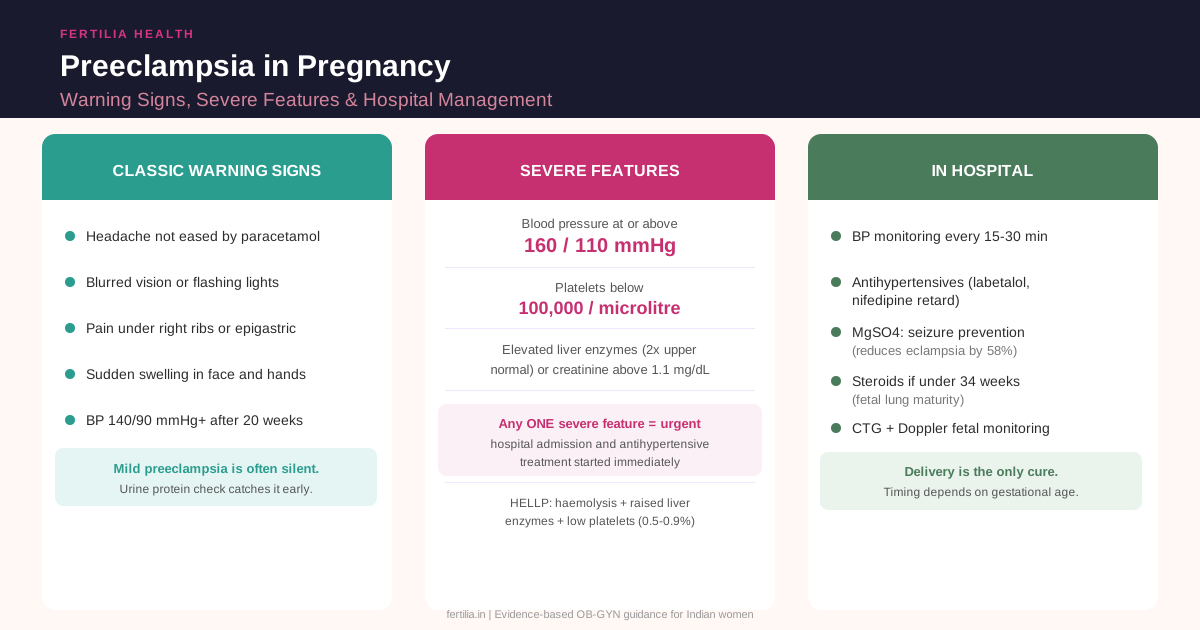
The most disorienting aspect of mild preeclampsia is that it often produces no symptoms at all. High blood pressure is famously silent. You can feel well and still have readings that require urgent management.
That said, certain symptoms call for a same-day contact with your doctor or a visit to the nearest hospital:
New severe or persistent headache. A new severe headache after 20 weeks, or one that persists, needs prompt maternity assessment, especially with visual changes, pain under the right ribs, breathlessness, or a blood-pressure reading of 140/90 mmHg or above. Do not wait to see whether paracetamol relieves it before calling your obstetric team or going to the nearest maternity hospital. Preeclampsia headache is typically frontal or occipital, pulsing, and unrelenting in character. It is qualitatively different from the tension headaches that are common in the first trimester. The pregnancy headache guide describes how to distinguish between the different headache types in detail.
Visual disturbance. Blurred vision, flashing lights, spots, or any partial loss of vision. High blood pressure affects the small vessels supplying the retina, and these symptoms can precede seizures in a small number of cases. Any visual change during pregnancy warrants same-day assessment.
Pain under the right ribs or in the upper abdomen. Discomfort or pressure under the right rib cage, in the right upper abdomen, or just below the breastbone is a warning sign of liver involvement and is one of the early indicators of HELLP syndrome (covered in detail below). Do not attribute this to indigestion or heartburn without having it assessed.
Sudden, significant facial or hand swelling. Some ankle and foot swelling is normal in the third trimester. Sudden, pronounced swelling in the face and hands, particularly first thing in the morning, is different in character and warrants a check.
Reduced fetal movement. Not a direct sign of preeclampsia, but in combination with any of the above, it should prompt immediate assessment rather than a wait-and-see approach.
Severe Features: The Thresholds That Change Management
Preeclampsia is classified as having severe features when any one of the following is present, according to ACOG and ISSHP (International Society for the Study of Hypertension in Pregnancy) guidance (Magee et al., 2014):
- Blood pressure of 160/110 mmHg or higher. Persistent severe hypertension is confirmed over minutes and treated urgently; clinicians do not wait four hours to act.
- Platelet count below 100,000 per microlitre
- Elevated liver enzymes at twice or more the upper limit of normal
- Impaired kidney function: serum creatinine above 1.1 mg/dL or doubling from baseline
- Pulmonary oedema: fluid accumulating in the lungs, causing breathlessness
- New persistent headache unresponsive to paracetamol
- Visual disturbance of any kind
- Severe persistent pain under the right ribs or in the upper abdomen that is not explained by another cause or relieved by treatment
These features determine whether close outpatient monitoring remains appropriate or whether immediate hospital admission is required. At 160/110 mmHg, antihypertensive treatment is started urgently. The risk of haemorrhagic stroke rises significantly at that threshold, and the management strategy changes fundamentally.
HELLP Syndrome: When Preeclampsia Escalates
HELLP stands for Haemolysis (red blood cells breaking down), Elevated Liver enzymes, and Low Platelets. It is a severe variant of preeclampsia that can develop rapidly and is sometimes present without prominent hypertension, which is why it is occasionally missed on initial assessment.
The symptom that most often prompts the diagnosis is pain in the upper right abdomen or epigastric region (the area just below the breastbone). Nausea and vomiting that develops in the late second or third trimester, after a period of feeling well, can also be a presenting feature. If these symptoms appear at any point after 20 weeks, they need same-day evaluation.
HELLP is uncommon but clinically important (Sibai BM, Obstetrics & Gynecology, 2004; PMID 15121574). It can develop rapidly and requires hospital admission. The management includes stabilising maternal blood pressure, correcting any coagulation abnormalities, and planning the timing of delivery.
Risk Factors Relevant to Indian Women
Preeclampsia is more common in India than the global average. Preeclampsia affects pregnancies worldwide and remains an important contributor to maternal complications in India. Estimates vary substantially by population and setting, so an individual woman’s risk factors and antenatal measurements are more useful than one national percentage.
Factors that increase individual risk:
- First pregnancy (primiparity carries the highest baseline risk)
- Prior preeclampsia in a previous pregnancy
- Chronic hypertension diagnosed before pregnancy
- PCOS (PMOS): women with polycystic ovary syndrome, now formally renamed Polyendocrine Metabolic Ovarian Syndrome by international consensus in May 2026, carry elevated risk due to underlying insulin resistance and chronic vascular inflammation
- Obesity (BMI above 30)
- Multiple pregnancy (twins or higher-order multiples)
- Diabetes, whether type 1, type 2, or gestational
- Kidney disease or autoimmune conditions such as lupus or antiphospholipid syndrome
- Maternal age above 35 or below 18
- Family history: a mother or sister who had preeclampsia
If two or more of these factors apply to you, ask your obstetrician explicitly about preeclampsia surveillance and whether aspirin prevention is appropriate at your booking appointment.
What Happens in Hospital When Preeclampsia Is Diagnosed
Hospital admission can feel overwhelming. Here is what the team is doing and why each step matters.
Frequent blood pressure monitoring. During the acute phase, readings are repeated at intervals determined by severity and hospital protocol. The team lowers severe pressure while avoiding an abrupt fall that could compromise placental blood flow. Immediate treatment starts if readings hit the severe-feature threshold of 160/110.
Antihypertensive medication. Hospitals may use labetalol, hydralazine, or nifedipine for acute severe hypertension. The team selects the medicine, route, and ongoing plan according to severity, contraindications, response, and local protocol.
Magnesium sulphate (MgSO4). This is not a blood pressure medication. Magnesium sulphate is given specifically to prevent eclampsia, which is the development of new-onset seizures in preeclampsia. The Magpie Trial (Altman et al., 2002, The Lancet, PMID 12057549), which enrolled over 10,000 women across 33 countries, found that MgSO4 reduced the risk of eclampsia by 58% compared with placebo. It is the cornerstone of preeclampsia management across government and private hospitals in India.
MgSO4 is given as an intravenous loading dose followed by a maintenance infusion, or in some settings as intramuscular injections. You may notice flushing, warmth, and some nausea during the infusion. These are expected effects, not allergic reactions. The nursing team monitors urine output and deep tendon reflexes throughout, as these are the earliest indicators of magnesium accumulation.
Repeat blood tests. A full blood count, liver function tests, kidney markers (creatinine, urea), and a coagulation screen are done on admission and repeated as often as the clinical picture requires. These panels detect HELLP syndrome and track whether organ involvement is worsening or stabilising.
Fetal monitoring. A cardiotocograph (CTG) assesses the fetal heart rate pattern and how the baby is responding to any contractions. An ultrasound may be ordered to check fetal growth, amniotic fluid volume, and umbilical artery Doppler. The Doppler reading reflects placental blood flow directly, because preeclampsia is at its core a placental disease and the fetus can be significantly affected by reduced circulation through a stressed placenta.
Corticosteroids if under 34 weeks. When preeclampsia develops before 34 weeks of gestation, betamethasone or dexamethasone injections are given to the mother to accelerate fetal lung maturity. This is standard care in the event that delivery becomes necessary before the lungs are fully developed. The treating obstetric team decides the steroid timing according to gestational age, the likelihood of preterm delivery, and current protocol.
Delivery timing. Delivery is the only definitive treatment for preeclampsia. The placenta is the source of the condition, and the disease process can persist or worsen after birth, so blood pressure and symptoms still need close postpartum monitoring.
Timing depends on gestational age, severity of preeclampsia, evidence of organ involvement, and how the baby is responding on monitoring. At 37 weeks or beyond with confirmed preeclampsia, delivery is generally recommended without further delay. Between 34 and 37 weeks, the decision is individualised. Below 34 weeks, the team tries to extend the pregnancy under close monitoring while giving steroids, unless the mother or baby shows signs of rapid deterioration.
If your blood pressure is elevated or you have any warning symptom above, contact your own obstetric team or go to the nearest maternity hospital promptly. After urgent assessment, Dr. Suganya Venkat and the Fertilia team can help explain your report and follow-up plan through an online, pan-India video consultation. Start a follow-up conversation on WhatsApp.
Prevention: Low-Dose Aspirin for Higher-Risk Pregnancies
For women identified as higher-risk, low-dose aspirin (75 to 150 mg daily) started between 12 and 16 weeks of pregnancy is now a standard recommendation. This is not aspirin taken for pain. The dose and purpose are entirely different.
The ASPRE trial (Rolnik et al., 2017, The New England Journal of Medicine, PMID 28657417) found that aspirin started before 16 weeks in women identified as high-risk through first-trimester screening reduced preterm preeclampsia (before 37 weeks) by 62%. This trial supports the use of prescribed low-dose aspirin in appropriately screened high-risk pregnancies.
First-trimester combined screening for preeclampsia risk uses blood pressure, uterine artery Doppler, maternal serum markers including PAPP-A, and maternal characteristics together to calculate an individual risk score. This combined approach is available at larger diagnostic centres in India. Not all government hospitals offer it, but it is worth asking about at your booking visit if you have two or more of the risk factors listed above.
If your doctor has mentioned aspirin for preeclampsia prevention, the evidence behind that recommendation is among the strongest in obstetric medicine. Take it exactly as prescribed and ask your obstetrician before starting or stopping it.
Postpartum Preeclampsia: The Presentation That Gets Missed
Preeclampsia can develop for the first time after delivery, most commonly within the first week, but it can occur up to six weeks postpartum. It is more frequently diagnosed late than it should be, partly because women and their families attribute symptoms to normal postpartum exhaustion and recovery.
The warning signs are the same as during pregnancy: new high blood pressure, persistent headache, visual changes, upper abdominal pain, or sudden facial swelling. Any of these symptoms in the six weeks after delivery need blood pressure measurement and a same-day call to your doctor. The postpartum warning signs guide covers this and other presentations that warrant prompt attention.
Frequently Asked Questions
What is the difference between preeclampsia and gestational hypertension? Gestational hypertension is high blood pressure of 140/90 mmHg or above after 20 weeks, with no protein in the urine and no evidence of organ involvement. Preeclampsia is gestational hypertension with the addition of proteinuria or laboratory evidence of kidney, liver, blood, or neurological involvement. Gestational hypertension may remain stable, or it may progress to preeclampsia in 15 to 25% of cases, which is why monitoring continues regardless of the initial label.
Can preeclampsia affect the baby? Yes. Preeclampsia is a placental condition, and a stressed placenta may not deliver oxygen and nutrients efficiently. This can result in restricted fetal growth (the baby measuring small on scans), reduced amniotic fluid, and in severe cases, placental abruption or fetal distress. This is why fetal monitoring with CTG and Doppler ultrasound is part of standard hospital management for any preeclampsia diagnosis.
Is delivery always the treatment? Delivery is the only definitive cure because the placenta is removed along with the baby. The timing, however, is carefully balanced against gestational age and severity. Below 34 weeks, the team generally tries to extend the pregnancy under close monitoring while administering steroids for fetal lung maturity, unless either the mother or baby deteriorates. At or beyond 37 weeks with confirmed preeclampsia, delivery is standard practice.
What is eclampsia? Eclampsia is the occurrence of new-onset seizures in a woman with preeclampsia. It is a medical emergency requiring immediate intervention. Magnesium sulphate is given as a preventive measure specifically to reduce the risk of seizures. Eclampsia can occur before, during, or after delivery, which is why MgSO4 is continued for 24 hours after birth in women with severe preeclampsia.
Will I get preeclampsia again in my next pregnancy? The recurrence risk is elevated compared with the general population. Approximately 15 to 20% of women with prior preeclampsia will develop it again in a subsequent pregnancy. Starting low-dose aspirin early (12 to 16 weeks) in the next pregnancy is standard advice for women with a prior episode. The risk is also higher if the first episode occurred early, before 34 weeks, or was associated with severe features.
What is HELLP syndrome? HELLP stands for Haemolysis, Elevated Liver enzymes, and Low Platelets. It is a severe variant of preeclampsia that can develop rapidly, sometimes without the blood pressure changes being prominent. The most common presenting symptom is pain under the right ribs or in the upper abdomen. Late-onset nausea and vomiting in the third trimester can also signal HELLP. It requires hospital admission, stabilisation, and planning of delivery timing.
Preeclampsia ke lakshan kya hain? (What are the symptoms of preeclampsia in Hindi?) Preeclampsia ke mukhy lakshan hain: sar dard jo paracetamol se theek na ho, aankhon mein dhundla dikhna ya chamak aana, haath aur chehere mein achaanak sujan, pet ke upar daayee taraf dard, aur antenatal jaanch mein high blood pressure. Agar in mein se koi bhi symptom 20 weeks ke baad dikhe, usi din apne doctor se milen.
For a complete guide to antenatal tests, screenings, and what to track across each trimester, the Fertilia Pregnancy Guide covers the full roadmap in one place. The pregnancy week-by-week guide also maps out what monitoring is typically scheduled at each stage.
If you are navigating a high-risk pregnancy or have recently been told your blood pressure is a concern, you are welcome to speak with Dr. Suganya Venkat directly over a video consultation. The consultation is available online across India. Start the conversation here.