By 34 or 35 weeks, most of the women I see in my video consultations have already asked their family WhatsApp group what to pack. The answers, understandably, are all different. One aunt says three sets of clothes are enough. Another insists on packing for a two-week stay. Someone’s cousin swears the hospital gave her nothing, and someone else’s sister says the hospital gave her everything and she barely opened her bag.
The truth sits in between, and it depends on your hospital. What I tell women in my practice is simple: pack for the hospital you are actually delivering in, not for a generic list off the internet. Government and private hospitals in India provide very different things, and packing without knowing that means either an overstuffed bag or a last-minute scramble for someone to bring you a phone charger at 2 a.m.
This is the checklist I actually give patients: what to pack, what to leave out, what your specific hospital is likely to provide, and when to have the bag ready by the door.
When to Pack Your Hospital Bag
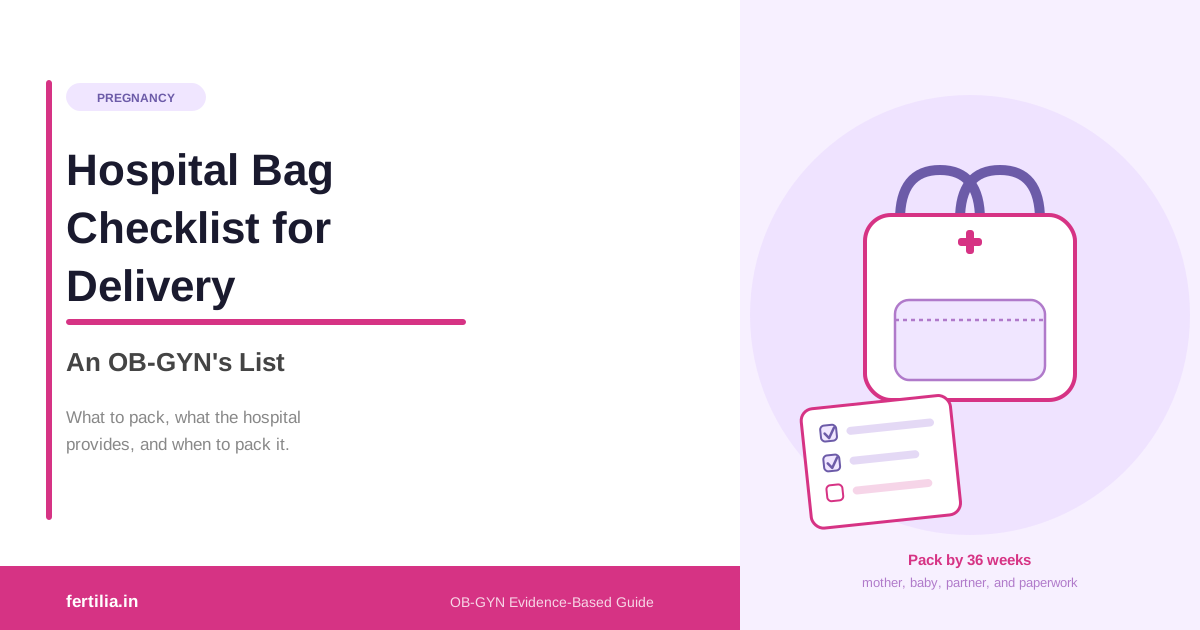
Pack by 36 weeks. A pregnancy is considered full term from 37 weeks, and labour can start any time from then, sometimes without much warning. Having the bag ready before 37 weeks means you are not packing through contractions or asking your partner to guess what you need while you are focused on breathing through labour.
If you have any risk factors for early delivery, such as a history of preterm labour, twins, or a cervix that is already shortening on scan, your doctor may ask you to have the bag ready earlier. Ask at your next appointment whether 36 weeks is still the right target for you.
Keep the bag somewhere obvious, by the front door or in the car, not at the back of a cupboard. In an emergency C-section or a labour that moves fast, nobody wants to be searching for a bag while a taxi waits outside.
What This Post Covers
- What the hospital almost always provides, so you do not duplicate it
- A packing list for the mother, split by before, during, and after delivery
- What your baby needs, and what is safely optional
- A short list for your partner or support person
- India-specific paperwork that avoids delays at admission and discharge
- What to leave at home
Check With Your Hospital First: What Do They Provide?
This is the single step that saves the most overpacking. Before you fill a bag, call your hospital’s maternity ward or check their admission handout, if they gave you one at registration, and ask specifically:
- Do you provide sanitary pads, or should I bring my own?
- Do you provide a hospital gown, or do I wear my own nightwear?
- Do you provide baby items: nappies, wipes, a going-home outfit, a swaddle?
- Is there a fridge or space to store snacks and drinking water?
- Do you provide a phone charging point near the bed?
Government hospitals in India, and many trust or charitable hospitals, typically provide the medical essentials, gauze, pads for the first day, basic baby wraps, but expect you to bring your own toiletries, comfortable clothing, and most personal items. Larger private hospitals often provide more: some include a welcome kit with baby items, a set of hospital gowns, and toiletries as part of the room package. A handful even provide a “going home” outfit for the baby as a courtesy, though you should never assume this without confirming.
This one phone call is what turns a generic internet checklist into a list that is actually right for you.
The Mother’s Bag: What to Pack
Documents (keep this in one folder, at the very top of the bag)
- Your antenatal file with all scan reports, blood test results, and prescriptions
- Aadhaar card and one other photo ID
- Hospital registration or admission card, if issued at your booking visit
- Health insurance card and policy number, if you plan to use cashless admission
- A list of any medications you are currently taking, with dosages
Keep this folder easy to hand over, because the person filling out your admission paperwork is very often your husband or a family member, not you, especially if labour is already underway.
For labour and delivery
- Two or three loose, front-opening nightgowns or kurtas that make breastfeeding and skin-to-skin contact easy afterward
- A robe or shawl for walking the corridors during early labour, many hospitals encourage moving around
- Comfortable, non-slip slippers
- A hair tie or two
- Lip balm, your mouth gets dry during labour, and ice chips are not always freely offered
- A phone charger, ideally one with a long cable, and a portable power bank
- Earphones or a small speaker if music helps you relax, and check with your hospital whether this is allowed in the labour room
- A birth partner’s item if you are using one: a photo, a small object, whatever is meaningful to you
For the hospital stay after delivery
- Comfortable, loose clothing for 2 to 3 days after a vaginal delivery, or a front-opening nightgown or button-down shirt for a longer stay if you are having a C-section, where reaching over your incision is uncomfortable
- Maternity sanitary pads, even if the hospital provides some, having your preferred brand on hand is reassuring
- Nursing bras, at least two, sized for after delivery rather than during pregnancy
- Breast pads if you plan to use them
- Your own toiletries: toothbrush, toothpaste, a mild soap, a comb, a small towel
- A going-home outfit, loose and comfortable, your body will not look or feel like it did before pregnancy, and that is completely normal
- Basic snacks that travel well, dry fruit, biscuits, glucose biscuits, for the hours between hospital meals
Optional, but genuinely useful for many women
- A nursing pillow, if you already have one and find it helpful, though most hospitals can lend one
- A notebook, for writing down feeding times or questions to ask the paediatrician on rounds
- Headphones for your partner, hospital stays involve a lot of waiting
Baby’s Bag: What to Pack
Most hospitals provide the baby’s immediate first-hours needs, a wrap and a cap at minimum. Beyond that:
- Two or three going-home-sized newborn outfits (0 to 3 months, newborn sizes run large on most babies)
- A soft swaddle or wrap blanket
- A cap and mittens, especially if you are delivering in the cooler months
- A few cloth nappies or diapers in newborn size, though most hospitals supply these during the stay
- A car seat, if you are travelling home by private car. This is one item people consistently forget, and it is the one that matters most for the actual journey home. If you are travelling by auto or without a car seat, plan for someone to hold the baby securely and low in the vehicle, and drive slowly.
You do not need a full wardrobe, toys, or a baby bathtub in this bag. Your baby will spend the first days mostly wrapped, fed, and sleeping. Save the rest for home.
Partner or Support Person’s Bag
The person supporting you through labour needs their own small bag, separate from yours, so they are not digging through your things at 3 a.m.:
- A change of clothes, labour and hospital stays can run long
- Snacks and a reusable water bottle
- Phone charger
- Cash in small denominations, for parking, canteen food, or anything the hospital pharmacy needs paid for directly
- Any documents you have asked them to hold onto, in case they are the one at the admission desk while you are being examined
India-Specific Paperwork That Prevents Delays
If you plan to use cashless insurance, most Indian insurers require pre-authorisation documents submitted before or at admission, not after. Confirm with your insurer or TPA what they need at least a week in advance, and keep a printed copy in your document folder, not just a photo on your phone, in case the hospital’s wifi or your signal is unreliable at the desk.
If you are delivering at a government hospital, keep your Janani Suraksha Yojana or state maternity scheme documents, if you are enrolled, along with your Aadhaar and antenatal file. Approval and benefit disbursement for these schemes typically depends on having your registration paperwork complete at admission, not filled in afterward.
Whichever hospital you choose, ask in advance what discharge requires: some hospitals need a birth certificate application started before you leave, and having your and your partner’s ID copies ready at admission avoids a second trip back to the records office in the days after you get home.
What to Leave at Home
- Excess jewellery or valuables, hospital rooms are not designed for safekeeping
- A full wardrobe “just in case,” most stays are 2 to 4 days for a vaginal delivery and slightly longer for a C-section
- Perfume or strongly scented products, some hospitals restrict these near the nursery
- Multiple pairs of shoes, one comfortable pair covers labour, the ward, and the walk to the car
If you are unsure whether something belongs in the bag, ask yourself if you would need it in the first 72 hours. If not, it can wait at home for your partner to bring later.
Packing this bag is one of the more grounding things you can do in the final weeks. It turns an abstract due date into something concrete, a bag by the door that says you are ready. If you notice signs that labour may be starting, our guide on early labour signs at 37+ weeks walks through what to watch for and when to head in.
If you have questions specific to your own pregnancy or hospital plan, message the Fertilia team on WhatsApp. I am Dr. Suganya Venkat, an OB-GYN with over fifteen years of clinical experience, and our team reviews questions like this over video consultation every week, from what to pack to what a smooth admission actually looks like at your hospital.
Frequently Asked Questions
When should I pack my hospital bag? By 36 weeks. Full term begins at 37 weeks, and labour can start without much warning after that. Packing earlier if you have any risk factors for preterm birth is worth discussing with your doctor.
Does the hospital provide sanitary pads and baby diapers? It depends on the hospital. Government and many trust hospitals usually provide the first-day medical essentials but expect you to bring your own toiletries and most personal items. Larger private hospitals often include more in a room package. Always confirm directly with your hospital’s maternity ward before you finish packing.
Do I need to bring a car seat to the hospital? Bring it for the drive home if you are travelling by private car. It is not needed during your hospital stay itself, so it can wait in the car rather than take up space in your hospital bag.
How many clothes should I pack for a C-section versus a vaginal delivery? Pack the same core list for either, but for a C-section, prioritise front-opening nightgowns or button-down shirts, since reaching overhead is uncomfortable after abdominal surgery, and your stay is likely to run a day or two longer. Our C-section guide covers recovery timing in detail.
What documents do I actually need at admission? Your antenatal file, Aadhaar or another photo ID, your hospital registration card if one was issued, and your insurance details if you are using cashless admission. Keep them together in one folder so anyone can hand them over on your behalf.
Should my partner pack a separate bag? Yes. Labour and hospital stays can run long, and your partner having their own change of clothes, snacks, charger, and cash means they are not relying on your bag or leaving you to go find these things themselves.
What should I NOT pack? Leave valuables and excess jewellery at home, do not pack for a longer stay than your delivery type typically requires, and skip strongly scented toiletries, which some hospitals restrict near newborns.
Dr. Suganya Venkat is an OB-GYN with over 15 years of clinical experience. Fertilia’s pregnancy program supports women through every stage of pregnancy with online video consultations, pan-India. For questions about your own delivery plan, reach out on WhatsApp.