It usually happens in the small hours. You stretch in your sleep, your toes point down, and your calf seizes into a hard, painful knot that pulls you wide awake. You sit up holding your leg, someone in the house wakes up wondering what happened, and for a minute or two all you can do is wait for the muscle to let go. The next morning the calf still feels bruised.
If this sounds familiar, you are in large company. In a Norwegian survey of 120 women questioned three days after giving birth, 45% had had leg cramps during pregnancy. For 81% of them the painful cramps came only at night, and in just over half they began after the 25th week (Valbø A et al., Tidsskr Nor Laegeforen, 1999, PMID 10385800). A 2024 study of 205 women in the third trimester in Jordan found a prevalence of 58% (Abandeh A et al., Int J Womens Health, 2024, PMID 39157003).
The reassuring part first. A review of leg cramps and restless legs in pregnancy by Hensley describes leg cramps as “a common yet benign disorder” (Hensley JG, J Midwifery Womens Health, 2009, PMID 19410213). The cramp is in your own muscle and is not known to affect the baby. Its main cost is your sleep, and that is worth fixing.
Here is what this post covers:
- Why pregnancy leg cramps strike at night, and what is thought to cause them
- How to stop a cramp while it is happening, and how to make the next one less likely
- What the trials show on magnesium, calcium and vitamins
- How to tell a cramp from restless legs, sciatica or a clot
- When to mention it to your doctor, and when to get checked the same day
What a Pregnancy Leg Cramp Feels Like
A leg cramp is a sudden, involuntary tightening of a muscle, most often the calf, sometimes the sole of the foot or the thigh. The muscle goes rock hard, you can often feel the knot under your hand, and the pain is sharp enough to wake you from deep sleep. Most cramps ease within a few minutes, although a sore, bruised feeling can stay in the muscle for the rest of the night or into the next day.
Why at night? A review of sleep-related leg cramps notes that plantar flexion of the feet, meaning toes pointed downward, may set off most of them (Brown TM, Sleep Med Clin, 2015, PMID 26329449). When you lie in bed, your feet tend to drop into that position on their own, and a blanket tucked tightly at the foot of the bed pushes them further. That is why several of the prevention steps below are about keeping your feet relaxed rather than pointed.
When do they start? Cramps are mostly a problem of the later months. In the Norwegian survey, just over half of the women who had cramps said they began after the 25th week, which also means plenty of women get them earlier. Early cramps are not a cause for worry in themselves.
What Causes Leg Cramps in Pregnancy?
Nobody knows the exact cause. A review of night-time leg cramps in adults generally (not only in pregnancy) concluded that the exact mechanism is unknown, and that the cramps are probably caused by muscle fatigue and nerve dysfunction rather than by electrolyte or other abnormalities (Allen RE et al., Am Fam Physician, 2012, PMID 22963024).
In pregnancy, a few things are thought to add up, though none has been proven to be the cause:
- Tired calf muscles. Your calves carry more weight through every step of the day, and muscles that are worked hard tend to cramp more.
- Changes in leg circulation. The growing uterus presses on the large veins in the pelvis, which slows the return of blood from the legs. It is the same reason ankles swell by evening.
- Long stretches of standing or sitting. Hours at the kitchen counter, at a desk, or on a long journey leave the calf muscles either overloaded or still for too long.
In the Jordanian study, cramps were more likely with each additional week of pregnancy, with each previous pregnancy a woman had had, and in women whose legs were swollen (Abandeh A et al., Int J Womens Health, 2024, PMID 39157003). So it is common for cramps to build through the final months, and to be more of a nuisance in a second or third pregnancy than in the first.
“Calcium kam hai.” Many women in India are told that night cramps mean calcium deficiency. The supplement trials below do not support that explanation for most women, though blood tests can be useful when cramps come with the other symptoms listed later in this post.
How to Stop a Cramp While It Is Happening
When a cramp grips, the aim is to gently stretch the tight muscle back out.
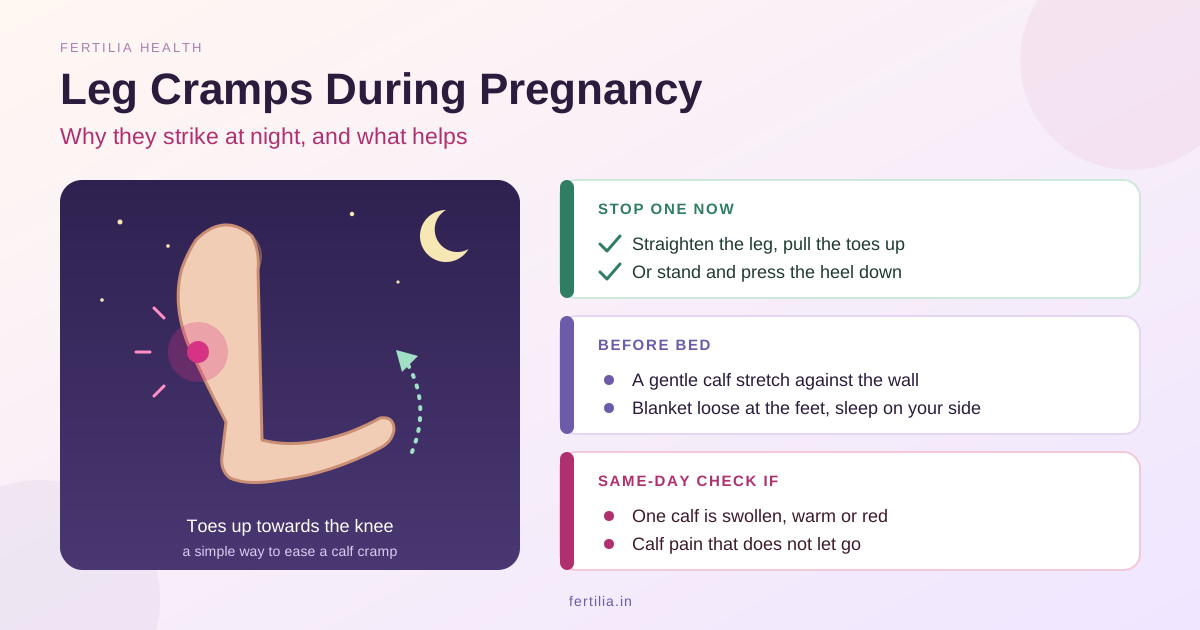
- Straighten the leg and pull your toes up towards your knee. Hold it until the knot releases. If your bump makes it hard to reach your toes, loop a dupatta or towel around the ball of your foot and pull gently, or ask your husband or a family member to push the front of your foot up towards you.
- Or stand and press your heel down. If you can get up safely, stand with the cramping leg slightly behind you, heel flat on the floor, and lean forward gently with your hands on a wall or the bed. Sit on the edge of the bed for a moment first. Getting up quickly while half-asleep can leave you dizzy or unsteady, and a fall is a bigger worry than the cramp.
- Massage the calf with firm, slow strokes once the worst has passed.
- Use warmth for the leftover soreness. A warm (not hot) towel, or a hot water bottle wrapped in a cloth, on the calf for 10 to 15 minutes eases the bruised feeling for many women.
- Walk a few steps around the room before lying down again.
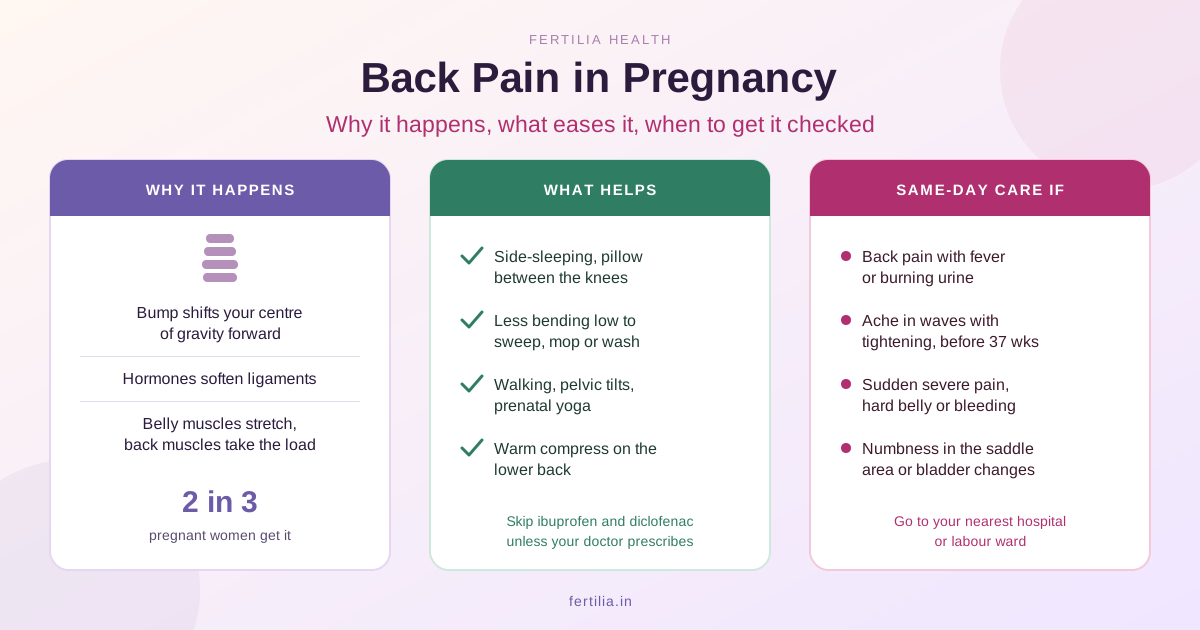
A cramp is usually over long before any tablet could start working, so painkillers are rarely needed. If your calf is still sore the next day, warmth and gentle massage are the first things to try. If you do need a painkiller, paracetamol is the usual choice in pregnancy, with your doctor’s advice on the dose. Many muscle-pain gels and sprays sold in India contain diclofenac, an anti-inflammatory painkiller (NSAID). NSAIDs are not recommended in the third trimester because of known effects on the baby (Dathe K et al., Eur J Clin Pharmacol, 2019, PMID 31273431). From about 20 weeks of pregnancy they can also affect the baby’s kidneys and lower the amount of amniotic fluid, so from then on use one only if your doctor has specifically advised it. Check the label and ask your doctor before using any of these products. Our guide to back pain in pregnancy explains which painkillers and gels to avoid and why.
Making Night Cramps Less Likely
None of these steps has been tested in a large trial of pregnant women, so think of them as sensible, low-risk habits rather than guaranteed fixes. Try a few together for a week or two.
Stretch your calves before bed
- Wall calf stretch. Stand facing a wall with your hands on it. Step one foot back, keep that knee straight and the heel on the floor, and lean forward until you feel a stretch in the calf. Hold for 20 to 30 seconds. Repeat three times on each side.
- Bent-knee calf stretch. Same position, but bend the back knee slightly while keeping the heel down. This stretches the lower part of the calf.
- Seated hamstring stretch. Sit on the edge of a chair with one leg straight out, heel on the floor, and lean forward gently from the hips until you feel a stretch behind the thigh.
What does the evidence say? Stretching for cramps has not been studied in pregnant women. A Cochrane review of non-drug treatments for leg cramps deliberately excluded pregnancy; in the three trials it did include, all in people aged 50 and older, daily calf and hamstring stretching for six weeks may have reduced how severe night cramps were, the effect on how often they happened was uncertain, and calf stretching alone for 12 weeks may have made little or no difference to frequency. No participant in those trials reported side effects (Hawke F et al., Cochrane Database Syst Rev, 2021, PMID 33998664). So the evidence is thin. I still suggest stretching first, because it costs nothing, it is gentle, and you can stop if it does not suit you.
Keep your feet relaxed in bed
- Untuck the sheet or blanket at the foot of the bed so it does not press your toes down.
- Sleep on your side with a pillow between your knees. Our guide to sleeping positions in pregnancy explains how to set up the pillows in the later months.
- When you stretch on waking, pull your toes up towards you instead of pointing them. The big full-body stretch with pointed toes is a classic cramp trigger.
Keep the calves moving during the day
- If your doctor has cleared you for exercise, aim for a 20 to 30 minute walk on most days. Our guide to safe pregnancy exercises by trimester covers what suits each stage.
- When you sit for long, at work or on a journey, do ankle circles and calf pumps (point and flex the feet alternately) for a minute or two every half hour, and get up to walk when you can.
- If you stand for long periods to cook, shift your weight, rest one foot on a low stool, and take short breaks to sit.
- Wear comfortable, supportive footwear with a low heel.
Food and fluids
Drink water steadily through the day, more in hot weather. Eat a varied diet with dal, ragi, green leafy vegetables (keerai, palak), curd, nuts and seeds, which together provide magnesium, calcium and potassium. This is good pregnancy eating anyway; just do not expect one food or drink to switch off cramps. Our guide to calcium in pregnancy lists Indian calcium sources and how to take a prescribed supplement.
💜 Night cramps breaking your sleep? Message Dr. Suganya on WhatsApp to book a ₹399 video consultation. Tell us how many weeks pregnant you are, how often the cramps come, and which supplements you already take, and we will work out a plan that fits your pregnancy.
Magnesium, Calcium and Vitamins: What the Trials Show
This is where most of the advice online overpromises, so it helps to look at the studies directly.
The most complete summary is the Cochrane review by Luo and colleagues, which included eight small trials covering 576 pregnant women (Luo L et al., Cochrane Database Syst Rev, 2020, PMID 33275278). The trials measured cramps in different ways, so their results could not be pooled, and the certainty of the evidence was low or very low throughout. The authors concluded that it is unclear whether any of the treatments they reviewed is effective for leg cramps in pregnancy.
Magnesium. The results were inconsistent. In one trial, more women taking magnesium reported having no cramps at all after treatment, and in another more women reported their cramps halving. Other findings suggested magnesium may make little or no difference to how often cramps happened. Side effects such as nausea and diarrhoea were not clearly more common than with placebo, although the review notes that the trials did not report adverse outcomes for mother and baby, so safety could not be properly assessed (Luo L et al., Cochrane Database Syst Rev, 2020, PMID 33275278). A separate meta-analysis of four randomised trials with 332 pregnant women found that magnesium did not reduce how often cramps occurred, and concluded that oral magnesium is not effective for treating leg cramps in pregnancy (Liu J et al., Taiwan J Obstet Gynecol, 2021, PMID 34247796).
Calcium. The evidence is very uncertain. One small trial of 60 women found slightly fewer cramps with calcium. Another trial of 84 women found that calcium combined with vitamin D may make little or no difference compared with placebo (Luo L et al., Cochrane Database Syst Rev, 2020, PMID 33275278).
Vitamins. One small trial of 42 women suggested vitamin B supplements may reduce the combined frequency and intensity of cramps. Vitamin D alone may make little or no difference (Luo L et al., Cochrane Database Syst Rev, 2020, PMID 33275278).
Quinine. Quinine tablets were once given for night cramps. A review of night leg cramps notes that quinine is no longer recommended for them (Allen RE et al., Am Fam Physician, 2012, PMID 22963024), and the Cochrane pregnancy review left quinine out altogether because of its known adverse effects (Luo L et al., Cochrane Database Syst Rev, 2020, PMID 33275278). Do not take it for cramps in pregnancy.
What this means for you
- Keep taking what your doctor has already prescribed for the pregnancy, such as calcium, iron and folic acid. They are prescribed for reasons that have nothing to do with cramps.
- Do not add extra calcium or a magnesium supplement on your own to treat cramps. Doubling up on calcium is unlikely to help, and every extra tablet is one more to time around your iron tablet.
- If cramps are frequent and spoiling your sleep despite the steps above, magnesium is a reasonable thing to discuss with your doctor, on the understanding that the benefit is uncertain. The product and the dose should come from your doctor, who knows your other tablets and your health history.
- Be wary of anything sold online as a guaranteed “pregnancy cramp cure”. The trials above are the best evidence there is, and none of them supports a guarantee.
Cramp, Restless Legs, Sciatica or a Clot?
Several different things can make your legs uncomfortable at night in pregnancy. The pattern usually tells them apart.
| Leg cramp | Restless legs | Sciatica-type pain | Possible clot (DVT) | |
|---|---|---|---|---|
| What it feels like | A sudden, hard, painful knot in the calf or foot | A crawling, tingling or “can’t keep still” feeling, with an urge to move | Shooting pain from the buttock down the back of one leg, sometimes with tingling | An ache or tenderness in the calf that does not go away, often with swelling |
| How long it lasts | Seconds to minutes, then soreness | As long as you stay still | Comes and goes with position | Hours to days, and may get worse |
| What eases it | Stretching the muscle, toes pulled up | Moving or walking, but it returns at rest | Changing position | Nothing at home; needs a check |
| Which leg | Either | Usually both | Usually one | Usually one |
Restless legs
Restless legs syndrome is common in pregnancy. A meta-analysis of 27 studies covering 51,717 pregnant women found a pooled prevalence of 21%, rising from 8% in the first trimester to 22% in the third, and dropping to 4% after delivery (Chen SJ et al., Sleep Med Rev, 2018, PMID 29169861). A 2026 review of restless legs in pregnancy by Jung names iron deficiency as a consistent risk factor, notes that the condition typically resolves after delivery, and puts iron repletion near the top of management (Jung KY, Sleep Med Clin, 2026, PMID 42161455).
If what you have sounds more like restless legs than a cramp, ask your doctor to check your haemoglobin and ferritin. Our post on insomnia in pregnancy has a section on restless legs and the iron connection, and our guide to iron tablets in pregnancy covers how to take them with fewer side effects.
Sciatica-type pain
Pain that shoots from the lower back or buttock down the back of the leg is a nerve pain, not a muscle cramp. Our guide to back pain in pregnancy explains how it differs from ordinary backache and which signs need a prompt check.
One Swollen, Painful Calf: Get It Checked the Same Day
This is the one situation where calf pain in pregnancy should not wait for your next visit. It is uncommon, and it is very treatable when it is found early.
Pregnancy makes blood clot more easily, which protects you from heavy bleeding at birth but also raises the chance of a clot in a deep leg vein (deep vein thrombosis, DVT). In a 30-year population study, the risk of a vein clot in pregnant or postpartum women was about four times that of women who were not pregnant, and the yearly rate in the three months after birth was five times higher than during pregnancy (Heit JA et al., Ann Intern Med, 2005, PMID 16287790). Almost all the women in that study were white Americans, so the exact figures may differ for Indian women. The pattern is still worth knowing: the weeks after delivery carry the highest risk, so calf pain after birth deserves the same attention as calf pain during pregnancy.
The main difference is time: a cramp releases within minutes, while pain from a clot persists. Go to your hospital the same day if you notice:
- Pain or tenderness in one calf that does not release like a cramp, lasts for hours, or gets worse when you walk or stand
- One calf or leg that looks or feels more swollen than the other
- Warmth, redness or a change in colour over the calf
When doctors assess a possible clot in pregnancy, two of the things they look at are whether the symptoms are in the left leg and whether one calf measures 2 cm or more larger than the other. Both are part of a scoring rule developed for pregnant women. The researchers who tested it say it should not be used on its own to exclude a clot, and suggest it might instead form part of a diagnostic approach that also includes a D-dimer blood test and a compression ultrasound scan of the leg veins (Righini M et al., Haematologica, 2013, PMID 23065510). Please do not try to rule a clot out yourself at home with a tape measure. The scan is quick and painless.
Go to the emergency department straight away, or call an ambulance, if you have sudden breathlessness, chest pain (especially when breathing in), coughing up blood, or fainting, whether or not you have any calf pain or swelling. A clot in the lungs can happen without any leg symptoms. Do not wait for a WhatsApp reply or your next appointment.
If you have had a clot before, have a family history of clots, or are on bed rest, after a caesarean or after long travel, your doctor may already have discussed this with you. Our guides to blood thinners in pregnancy and swollen feet in pregnancy cover who needs preventive treatment and how ordinary swelling differs from one-sided swelling.
When to Mention Cramps at Your Next Visit
Most cramps need nothing more than the steps above. Bring them up at your next antenatal appointment, or book a consultation, if:
- You are getting cramps on most nights despite stretching and the other changes
- Cramps happen during the day as well, or in other muscles such as the hands or thighs
- You notice muscle weakness, numbness or tingling that stays
- The cramps started after a lot of vomiting or diarrhoea
- They began after you started a new medicine. A review of night cramps in adults lists intravenous iron sucrose among the medicines strongly associated with leg cramps (Allen RE et al., Am Fam Physician, 2012, PMID 22963024). If you have had an iron infusion, mention it, and do not stop any prescribed treatment on your own.
Your doctor may examine your legs and, depending on what they find, check your blood count, ferritin and other blood levels.
Practical Takeaways
- Night leg cramps are very common in pregnancy, especially in the third trimester, and they are not known to harm the baby.
- To stop one: straighten the leg and pull the toes up, or stand and press the heel down. Use warmth and massage for the soreness afterwards.
- To prevent them: stretch your calves before bed, keep the blanket from pushing your toes down, sleep on your side, and keep your calves moving during the day.
- The trials on magnesium are mixed and low in certainty, and calcium and vitamin D trials show little clear benefit. Keep taking what your doctor prescribed, but do not add supplements on your own for cramps.
- Restless legs feel different, with an urge to move that walking relieves. Ask for an iron check.
- Pain, swelling, warmth or redness in one calf that does not let go needs a same-day check, in pregnancy and in the weeks after birth.
What It Is Called in Tamil, Hindi and Telugu
Many women search for this in their own language. The terms below describe the same night-time calf cramp.
| Language | Term | Notes |
|---|---|---|
| Hindi | pair ki nas chadhna (पैर की नस चढ़ना), pindli mein ainthan (पिंडली में ऐंठन) | Often searched as “pregnancy me pair ki nas chadhna” |
| Tamil | kaal thasai pidippu (கால் தசைப் பிடிப்பு) | Thasai pidippu is a muscle cramp; the calf is the kendaikkaal (கெண்டைக்கால்) |
| Telugu | pikkalu pattadam | Calf muscles seizing up |
Whichever word you use, the advice in this post is the same.
Frequently Asked Questions
Why do I get leg cramps at night during pregnancy?
Nobody knows the exact cause, but tired calf muscles carrying extra weight, slower blood return from the legs, and long periods of standing or sitting are all thought to play a part. At night your feet tend to point downward in bed, and that position may set off most sleep-related cramps. Stretching your calves before bed and keeping the blanket off your toes help many women.
Pregnancy me pair ki nas kyon chadhti hai? (Why do my leg muscles cramp in pregnancy?)
The “nas chadhna” feeling is a muscle cramp, usually in the calf. It becomes more common as pregnancy advances, and it is not usually a sign of a serious problem. Pull your toes up towards your knee or stand and press your heel down to release it, and stretch your calves every night before sleeping.
Should I take magnesium for leg cramps in pregnancy?
The evidence is mixed. A Cochrane review found inconsistent results from small trials, and a later meta-analysis of four trials concluded that oral magnesium was not effective for pregnancy leg cramps. Do not start it on your own. If cramps are frequent despite stretching, discuss it with your doctor, who can decide whether it is worth trying and which product and dose suit you.
Are leg cramps in pregnancy a sign of calcium deficiency?
Usually not. Night cramps are thought to come mainly from muscle fatigue and nerve activity rather than low minerals, and the trials of calcium supplements for pregnancy cramps are small and very uncertain. Keep taking any calcium your doctor prescribed for the pregnancy, but do not add more just for cramps.
Can leg cramps harm my baby?
Leg cramps themselves are not known to harm the baby. A cramp is a tightening of your own leg muscle, and its main effect is on your sleep. The leg symptom that needs prompt attention is pain, swelling, warmth or redness in one calf that does not let go, because that can be a sign of a clot.
How do I tell a cramp from a blood clot in my leg?
A cramp comes on suddenly, the muscle goes hard, and it releases within minutes when you stretch it, even if the calf stays sore for a while. A clot usually causes an ache or tenderness in one calf that lasts for hours or gets worse, often with swelling, warmth or redness, and it does not ease with stretching. If you are unsure, go to your hospital the same day for a leg ultrasound.
Will leg cramps go away after delivery?
For most women, pregnancy leg cramps ease in the weeks after the baby is born. Restless legs also usually settle after delivery. If cramps continue for weeks after birth, mention them at your postnatal check, and treat any new one-sided calf pain after delivery as a reason for a same-day check.
Better Nights Are Possible
I’m Dr. Suganya Venkat, an OB-GYN with more than 15 years of practice, and when a pregnant woman tells me about night cramps on a video consultation, I ask three things: which leg, how long the pain lasts, and whether the calf looks any different afterwards. Those answers usually separate a simple cramp from something that needs a scan, and for most women the answer is reassuring. In Fertilia’s Pregnancy Care program, sleep and leg comfort are looked at alongside the rest of your antenatal care, and Dr. Maitri Daga, our women’s health physiotherapist, works with women over video call on trimester-appropriate movement.
💜 Want help with cramps, sleep or anything else in your pregnancy? Message Dr. Suganya on WhatsApp to book a ₹399 video consultation, available online across India. You can also download our free pregnancy guide for trimester-by-trimester support.