You are supposed to be resting. Everyone keeps telling you to rest. And yet at 2 AM you are lying wide awake, getting up for the third time to use the bathroom, trying to find one position where your hips do not ache, and wondering whether this is just how the next few months will go.
For many women, it is. Sleep disruption is one of the most consistent complaints across all three trimesters of pregnancy, and it rarely gets the attention it deserves in antenatal care appointments. The practical guidance women receive is usually “sleep on your left side” and very little else.
I am Dr. Suganya Venkat, an OB-GYN with fifteen years of clinical practice. Sleep questions come up in almost every second antenatal consultation I have. In this post, I want to give you a clear explanation of why pregnancy disrupts sleep and walk you through the strategies that are genuinely safe to try.
Why Pregnancy Disrupts Sleep
Sleep in pregnancy is affected by a combination of physical, hormonal, and emotional changes. Different causes tend to dominate at different stages: the first trimester often brings exhaustion paired with difficulty staying asleep, the second trimester can offer a brief reprieve, and the third trimester is where most women report the most significant disruption.
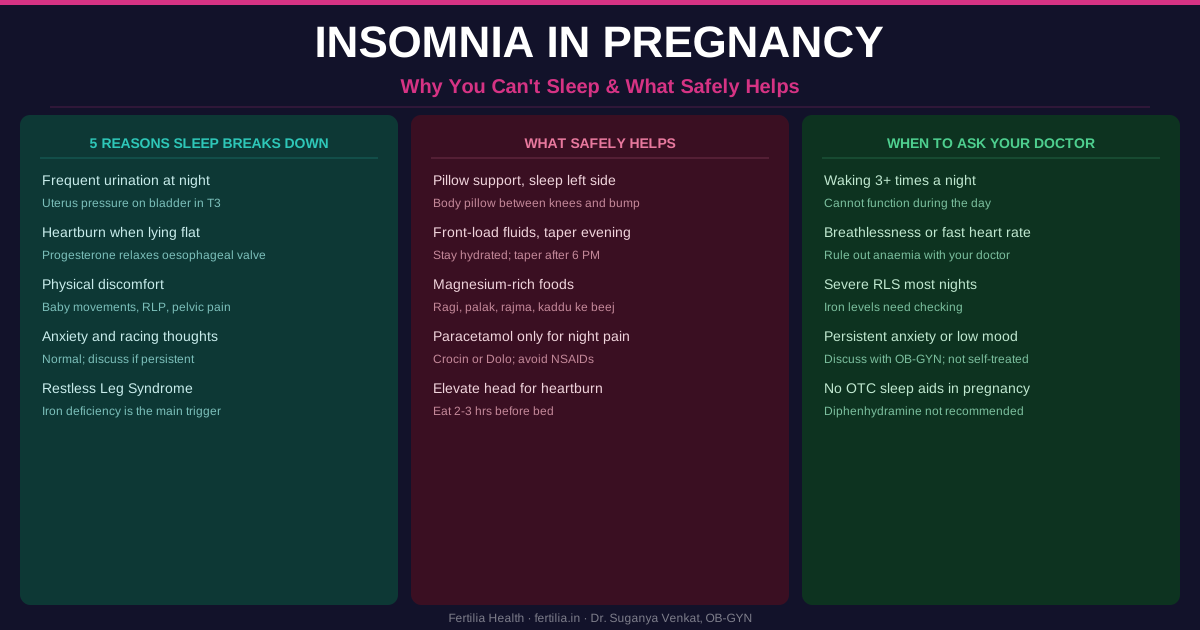
Understanding what is causing your specific sleep difficulty matters, because what helps with frequent urination will not help restless legs, and what helps with heartburn is different again. The five causes below cover the most common ones.
Cause 1: Frequent Urination at Night
Your kidneys work harder in pregnancy. Blood volume increases by 40 to 50 percent over the course of pregnancy, your kidneys filter significantly more fluid, and urine production rises from early in the first trimester. By the third trimester, the growing uterus presses directly on the bladder, reducing the volume it can hold before signalling the need to empty.
The result is that many pregnant women wake two, three, or four times a night to use the bathroom.
What helps: Drink most of your fluids during the morning and early afternoon. Taper off fluid intake from about two hours before bed. This does not mean dehydrating yourself, which is harmful in pregnancy. It means front-loading your hydration during waking hours rather than drinking a large glass of water at 9 PM. Avoid all caffeinated drinks (chai, coffee, cola) from mid-afternoon onward, as caffeine is both a diuretic and a stimulant.
Cause 2: Heartburn and Acid Reflux
Progesterone, which rises throughout pregnancy, relaxes smooth muscle throughout the body. That includes the lower oesophageal sphincter, the valve that normally keeps stomach acid from rising into the oesophagus. In later pregnancy, the growing baby pushes upward on the stomach, compressing it from below.
The result is acid reflux that is often worst when lying flat. Many women find that the moment they lie down to sleep, the burning starts.
What helps: Eat your last proper meal at least two to three hours before lying down. A small snack close to bed, if needed, works better when it is light and non-fatty: a small bowl of dahi, a handful of roasted chana, or a roti with a thin layer of ghee. Avoid the large, heavy meal late at night.
Sleep with your head and upper back elevated, using a wedge pillow or two stacked pillows. Elevating just the neck is not enough; the angle needs to begin at the shoulders.
Your doctor may recommend a safe antacid if lifestyle measures are not enough. Do not self-prescribe any medication in pregnancy.
For a complete guide on managing acidity safely: heartburn and acid reflux in pregnancy.
Cause 3: Physical Discomfort
By the second and third trimesters, physical comfort in bed becomes genuinely challenging. Three specific culprits come up most often in clinic.
Baby movements at night. Babies often become more active when the mother is at rest, because the rhythmic movement of walking and daily activity tends to soothe fetal movement. In stillness at night, every roll, kick, and stretch is noticeable. This is a feature of a healthy, active pregnancy rather than a sleep disorder.
Round ligament pain. As the uterus grows, the round ligaments stretch. Many women experience sharp, brief twinges in the lower abdomen when they roll over in bed or change position quickly. This is not dangerous, but it is startling and uncomfortable at 3 AM. Our post on round ligament pain in pregnancy explains what it is and what eases it.
Pelvic girdle pain. Hip pain, pelvis aching, or lower back pain when lying on one side or rolling over is a classic feature of pelvic girdle pain (also called symphysis pubis dysfunction or sacroiliac joint pain). Sleeping with a pillow between the knees and using a support belt during the day significantly reduces this. See our dedicated guide: pelvic girdle pain in pregnancy.
General positioning: Sleeping on your left side is well-supported for blood flow to the placenta. A full-length body pillow between your knees and under your bump is one of the most consistently useful tools for physical comfort in the third trimester. Our post on sleeping position in pregnancy covers the evidence behind this recommendation.
Cause 4: Anxiety and Racing Thoughts
Pregnancy carries a significant mental load: thinking through the birth plan, preparing for the newborn, managing work, navigating relationships, worrying about scan results still to come. For many women, lying down at night is the first time in the day when the noise of activity stops, and that is exactly when the thoughts start.
A degree of pregnancy-related worry is completely normal. It does not indicate an anxiety disorder, and it does not mean something is wrong with the pregnancy. If anxiety becomes disproportionate, intrusive, or is accompanied by physical symptoms like a racing heart, persistent tearfulness, or difficulty eating, that is worth discussing with your OB-GYN. Speaking with a mental health professional as part of your antenatal care is also an option.
What helps at a mild level: A short body scan before bed (starting at the feet and moving upward, noticing each part without judgement), keeping a notepad beside the bed to write down tomorrow’s tasks so your mind can release them, and avoiding screens for 30 minutes before sleep.
For more on recognising when anxiety becomes more than everyday worry, see our guide on anxiety in women.
Cause 5: Restless Leg Syndrome and the Iron Connection
Restless Leg Syndrome (RLS) is a condition where an uncomfortable crawling, tingling, or irresistible urge-to-move sensation builds up in the legs when at rest and is partially relieved by movement. It is significantly more common in pregnancy than at other times, affecting an estimated 15 to 25 percent of pregnant women at some point, most often in the second and third trimesters.
The link to iron deficiency is well established. Iron plays a role in dopamine synthesis, and dopamine is central to the pathway that underlies RLS. In pregnancy, iron requirements increase substantially compared to pre-pregnancy levels. Many women become iron-depleted during pregnancy even without meeting the criteria for clinical anaemia, and when iron stores fall, RLS symptoms often worsen.
The first step when RLS develops in pregnancy is to have your iron levels and ferritin checked. If you are iron-depleted, supplementation prescribed by your OB-GYN often improves symptoms significantly over a few weeks.
For context on iron deficiency, anaemia, and the tests involved: iron deficiency anaemia in women.
Struggling with sleep, fatigue, or physical discomfort in pregnancy?
In a video consultation with Dr. Suganya Venkat, we can go through what is specifically driving your sleep disruption and what is safe to try given your stage of pregnancy. Consultations run online, pan-India. WhatsApp Dr. Suganya to book a consultation.
Safe Sleep Strategies in Pregnancy
Once you know the main cause of your sleep disruption, the strategy becomes more targeted. Here is what is safe and evidence-informed at each stage.
Adjust When You Drink Fluids
Front-load your fluid intake. Aim to drink most of your water before 6 PM. A small glass of water with dinner is fine. A large glass at 10 PM is not. Avoid caffeinated drinks, including chai, from mid-afternoon onward.
You still need to stay well hydrated throughout pregnancy. This is about timing, not restriction.
Use Pillow Support
A full-length body pillow is one of the most practical tools for pregnancy sleep. Place it between your knees and under your bump when sleeping on your side. If you do not have one, arrange two or three regular pillows in the same way. When rolling over in bed, move slowly and deliberately to avoid triggering round ligament twinges.
Eat Magnesium-Rich Foods
Magnesium supports muscle relaxation and plays a role in the nervous-system pathways that regulate sleep quality. It is also involved in the dopamine pathways relevant to RLS. Indian foods rich in magnesium that are appropriate throughout pregnancy include:
- Ragi (finger millet): ragi kanji in the evening, ragi roti, or a small ragi ladoo as a bedtime snack
- Palak (spinach): dal palak, palak paneer, or steamed palak with a drizzle of ghee
- Rajma (kidney beans): rajma curry as part of a balanced dinner
- Kaddu ke beej (pumpkin seeds): a small handful as an evening dry snack
- Kala chana (black chickpeas): sprouts or a simple kala chana sabzi
Keep your evening meal moderate in size and finish it at least two hours before you plan to sleep.
If you are thinking about magnesium supplementation specifically, discuss it with your OB-GYN first. The appropriate form and dose matter, and it can interact with certain other minerals and medications.
For more on foods that support iron levels in pregnancy (also relevant to RLS): iron-rich foods during pregnancy.
Safe Pain Relief for Night Discomfort
If physical discomfort is keeping you awake, paracetamol (Crocin or Dolo) is the only over-the-counter pain reliever considered safe in pregnancy. Use the standard adult dose of 500 mg to 1,000 mg, not exceeding 4 g in 24 hours.
Do not take NSAIDs such as ibuprofen (Brufen, Combiflam), naproxen (Naprosyn), or diclofenac (Voveran gel or oral) in pregnancy, particularly in the third trimester. These carry established risks to the fetal cardiovascular system. This applies to topical gels as well, unless specifically prescribed by your OB-GYN.
A Note on Cetirizine and Drowsiness
Cetirizine (Alerid, Zyrtec) is an antihistamine commonly prescribed in pregnancy for allergies and skin conditions like PUPPS rash. It has a well-established safety record in pregnancy. One of its side effects is mild drowsiness.
Some women who are already prescribed cetirizine for another reason notice that taking their dose at night, rather than during the day, makes sleep a little easier as a secondary effect. That is reasonable if your OB-GYN has already prescribed it for a specific indication. Cetirizine is not a sleep aid, however, and you should not start taking it specifically for insomnia without your doctor’s guidance.
Over-the-counter sleep tablets that contain diphenhydramine (Nytol, Benadryl Sleep) are not recommended in pregnancy. They cross the placenta and their safety for fetal development has not been established.
When to Talk to Your Doctor
Bring sleep disruption up at your next antenatal appointment when:
- You are waking more than three times a night and finding it difficult to function during the day
- Anxiety, persistent low mood, or intrusive thoughts are not easing with the self-care steps above
- You are experiencing breathlessness with minimal activity, a rapid resting heart rate, or extreme fatigue (these can indicate anaemia and need investigation)
- Restless leg symptoms are severe enough to prevent you from falling asleep most nights
- You are wondering whether a prescription medication would help
If anxiety or depression is significantly affecting your sleep, please raise it with your OB-GYN. SSRIs and SNRIs, which some women are prescribed for anxiety or depression in pregnancy, require careful medical supervision and are never for self-prescription.
Sleep in Pregnancy: What It Is Called in Hindi
Many women search for help using Hindi terms. If you are looking for guidance on pregnancy mein neend nahi aana (sleep not coming in pregnancy) or garbhavastha mein neend ki samasya (sleep problems in pregnancy), everything in this post applies directly.
A quick reference for common Hindi search terms:
| What you are feeling | Hindi search term | What it might be |
|---|---|---|
| Waking repeatedly to urinate | Baar baar peshab ke liye uthna | Nocturia, normal in pregnancy |
| Burning in chest when lying down | Seene mein jalan | Heartburn, progesterone-related |
| Crawling or tingling in legs at rest | Tangon mein kheench ya jhunjhunahat | Restless Leg Syndrome, check iron |
| Racing thoughts and worry at night | Raat ko chinta aur racing thoughts | Pregnancy anxiety, discuss if severe |
What to Expect Across the Three Trimesters
The pattern of sleep disruption shifts across pregnancy. For a full trimester-by-trimester overview of what to expect, see our pregnancy week-by-week guide.
First trimester: Sleep disruption is usually driven by nausea (which can be worse when lying flat in some women), frequent urination, and the paradox of profound daytime exhaustion paired with fragmented night sleep. Some women sleep far more than usual in the first trimester; others find their sleep is broken from early on.
Second trimester: Many women find this the most manageable trimester for sleep. The worst of the nausea has usually eased, the bump is not yet large enough to make positioning very uncomfortable, and energy levels often return. This is a good window to establish sleep habits (fluid timing, earlier meals, screen-off routines) that will carry you through the third trimester.
Third trimester: Physical discomfort peaks. Fetal movements are more pronounced and often most active at night. The bladder is compressed. Heartburn is often at its worst. Anxiety about labour and the approaching birth can intensify. Most women find the third trimester the hardest for sleep, and this is where the strategies in this post matter most.
Frequently Asked Questions
Is it normal to not sleep well in pregnancy?
Yes. Sleep disruption is one of the most consistently reported symptoms of pregnancy, and it is not a sign that something is wrong. The causes are well understood: hormonal changes affecting the bladder and oesophageal valve, physical discomfort as the uterus grows, fetal movement at night, and the emotional load of preparing for a new baby. Most sleep disruption in pregnancy does not require medication and improves significantly after delivery.
Which trimester is insomnia worst?
The third trimester is typically the most difficult. Physical discomfort is greatest, fetal movements are most noticeable, nocturia is most frequent, and heartburn is often at its peak. Some women also experience more anxiety as the birth approaches. The first trimester can also bring significant sleep disruption from nausea and hormonal changes, particularly in the early weeks.
Can I take sleeping tablets in pregnancy?
No over-the-counter sleeping tablet is recommended in pregnancy. Paracetamol is safe for pain-related sleep disruption at night. Cetirizine, if already prescribed by your OB-GYN for another reason, may have a mild drowsiness benefit as a secondary effect. For sleep disruption that is severe enough to need treatment, speak to your OB-GYN about what is appropriate for your situation and stage of pregnancy.
What foods help with sleep in pregnancy?
Focus on magnesium-rich Indian foods in the evening: ragi (kanji or roti), palak (sabzi or dal palak), rajma, kala chana, and kaddu ke beej. Foods containing tryptophan, such as dahi and paneer, may also support better sleep quality. Keep your evening meal moderate in size and finish it at least two hours before you plan to sleep.
Why are my legs restless and uncomfortable when I try to sleep?
This is a classic description of Restless Leg Syndrome (RLS), which is much more common in pregnancy than at other times. The main pregnancy-specific driver is iron deficiency. Ask your OB-GYN to check your ferritin and serum iron levels. If iron is low, supplementation often improves RLS significantly over a few weeks. Staying well hydrated, stretching your calves before bed, and a short walk in the evening can also help in the interim.
How can I sleep more comfortably in the third trimester?
Sleep on your left side with a body pillow between your knees and under your bump. Use an extra pillow or wedge under your head and upper back if heartburn is a problem. Taper fluid intake from early evening. Eat your last meal at least two hours before lying down. A warm (not hot) shower before bed can help with muscle relaxation. Avoid screens for 30 minutes before you plan to sleep.
Pregnancy mein neend nahi aane par kya karna chahiye?
Pehle yeh samjhna zaroori hai ki neend kyun nahi aa rahi: baar baar peshab ke liye uthna, seene mein jalan, pair mein takleef, ya raat ko chinta. Har ek ka alag solution hota hai. Jo cheezein aam taur par kaam aati hain: pani zyaadatar din mein piyein, shaam ke baad taperein; magnesium-rich khana lein (ragi, palak, rajma); body pillow use karein; sone se 2-3 ghante pehle khana kha lein. Agar pair mein restlessness ki samasya hai, to ferritin aur serum iron test karwayein apne doctor se. Agar neend itni disturb ho rahi hai ki din mein kaam nahi ho pa raha, to apne OB-GYN se zaroor batayein.
Sleep in pregnancy is genuinely difficult, and it matters for your own health and energy. At Fertilia, Dr. Suganya Venkat works with pregnant women across India over video consultation to address exactly these day-to-day challenges: what is safe, what is evidence-based, and what is specific to where you are in your pregnancy.
If you are struggling with sleep disruption and want to talk through what might be driving it, WhatsApp Dr. Suganya Venkat to book a video consultation.
You can also download our free Pregnancy Guide for a complete overview of what to expect trimester by trimester.