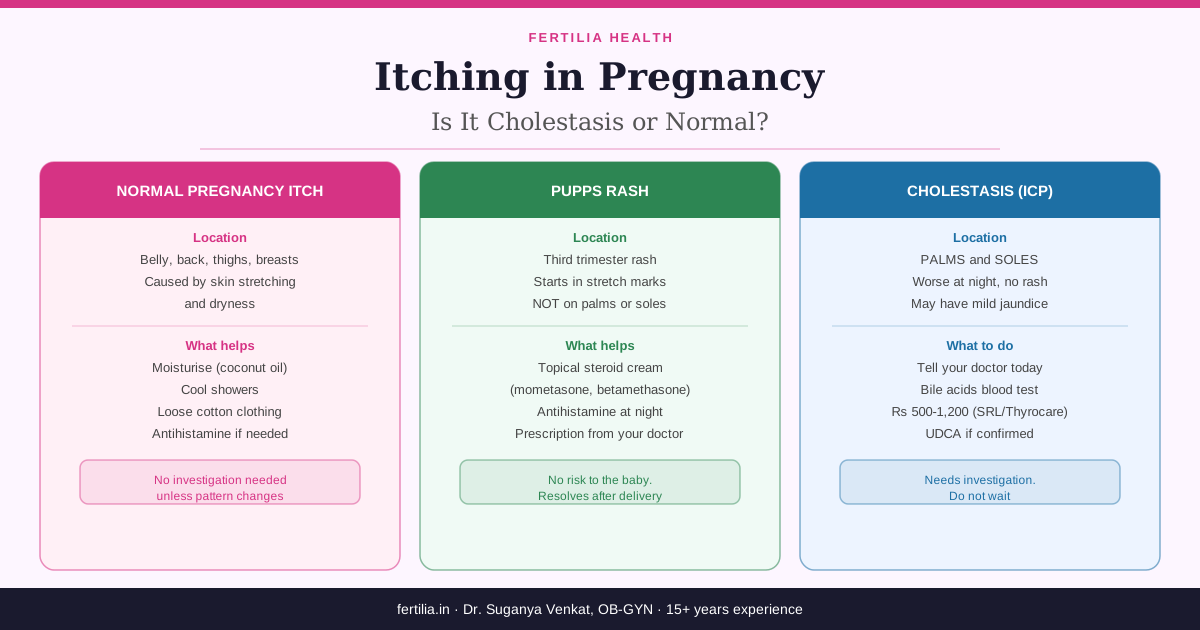
Most pregnancy itching is entirely normal. Your skin is stretching, your blood volume has increased by nearly 50 per cent, your hormones are doing things they have never done before: all of this shows up as itch. An itchy belly, itchy thighs, the kind of nighttime scratching that wakes you up once or twice and then fades: all ordinary.
But one pattern of itching in pregnancy is different, and it is worth knowing before it arrives. Intense itching on the palms of your hands and the soles of your feet, worse at night, without any rash at the site: that combination needs a blood test and a call to your doctor.
I’m Dr. Suganya Venkat, an OB-GYN with more than fifteen years of practice, and in online consultations at Fertilia I hear this question in almost every third trimester: is this itching something I should be worried about? This guide gives you a clear way to answer that yourself, and tells you what to do either way.
Why Your Skin Itches During Normal Pregnancy
Normal pregnancy itching comes from several overlapping causes, and understanding them makes it easier to recognise when something does not fit the usual pattern.
Skin stretching. As the uterus grows, the skin over the abdomen, lower back, thighs, and breasts stretches faster than it would at any other point in life. That mechanical stretch activates nerve fibres in the skin and produces itch. It does not mean the skin is unhealthy. It means it is doing its job.
Dry skin. Increased blood volume and fluid redistribution change how the surface layers of skin retain moisture. Many women notice dryness from the second trimester onwards, particularly on the belly and lower back. Dry skin itches. This gets worse in air-conditioned rooms, in winter, and in dry climates.
Hormonal skin sensitivity. Rising oestrogen and progesterone levels change how reactive the skin is to heat, sweat, and friction. Women who never had sensitive skin before sometimes find that pregnancy makes it temporarily reactive.
Stretch marks forming. When striae gravidarum develop, there is low-grade inflammation in the dermis beneath the skin surface. That inflammation produces itch directly at the site of the mark, usually the abdomen, hips, and the upper thighs.
None of this signals anything wrong. It is common, expected, and manageable. There are practical measures further down this guide that genuinely help.
PUPPP (PUPPS): The Rash That Looks Alarming but Is Safe
Some women in their third trimester develop a condition called PUPPP (pruritic urticarial papules and plaques of pregnancy, often written PUPPS). It is the most common inflammatory skin condition of pregnancy, and it is harmless to the baby.
PUPPP appears as small raised itchy bumps or hive-like patches, usually starting within existing stretch marks on the abdomen. It spreads to the thighs, buttocks, and upper arms in more severe cases. The itch is often significant, sometimes severe enough to disrupt sleep for several nights.
The reassuring facts:
- PUPPP causes no harm to the baby
- It does not affect labour, delivery, or pregnancy outcome
- It resolves fully within one to two weeks after delivery
- A topical steroid cream (mometasone, betamethasone), prescribed by your doctor, brings meaningful relief
The feature that separates PUPPP from the more serious condition below is location. PUPPP does not involve the palms of the hands or the soles of the feet. If the itching is primarily on your palms and soles, especially at night, that is not PUPPP. That is the pattern that needs investigation.
For more on this, read our guide on PUPPS Rash in Pregnancy.
What Is Intrahepatic Cholestasis of Pregnancy (ICP)?
Intrahepatic cholestasis of pregnancy, sometimes called obstetric cholestasis, is a liver condition that affects roughly 0.7 per cent of pregnancies and is more common in women of South Asian origin (RCOG Green-top Guideline 43, 2022). It typically appears in the second or third trimester.
Under normal conditions, the liver produces bile that flows through bile ducts into the small intestine. During pregnancy, rising oestrogen levels slow this flow. In most women the slowing is minor and causes no symptoms. In women with ICP, the slowdown is more significant: bile acids back up in the liver, enter the bloodstream, and deposit in the skin. Those bile acids in skin tissue cause the itch.
ICP is not caused by diet, lifestyle choices, or anything you have done. It runs in families, is more common among women of South Asian origin, and commonly recurs in later pregnancies, though reported recurrence rates vary widely between studies and the exact figure is uncertain (RCOG Green-top Guideline 43, 2022).
The Pattern That Sets ICP Apart
The hallmark symptom of ICP is itching with a specific character:
- Located primarily on the palms of the hands and the soles of the feet (though it can spread across the whole body as bile acid levels rise)
- Significantly worse at night, often intensifying from around midnight onward
- Without a rash or visible skin change at the site of the itch (the skin looks normal; the itch comes from inside)
- Persistent and worsening over days rather than fluctuating
Some women also develop mild yellowing of the whites of the eyes or mildly pale stools. These are signs that bile flow is more significantly impaired, and they need prompt review.
Many women with ICP describe the nighttime itch as unbearable: they scratch until the skin breaks, cannot sleep, feel a crawling sensation in the skin of the hands and feet. If this is your experience, you do not have to endure it while waiting to see if it passes. The test is straightforward and the condition is very manageable once it is found.
In Hindi, the common search for this symptom is “pregnancy mein haath aur pair mein khujli” (khujli meaning itch, haath meaning hands, pair meaning feet). In Tamil, “kai kaal arippu” describes palm-and-sole itching. If these are the searches that brought you here, you are in the right place.
How ICP Is Diagnosed
The test for ICP is a blood test measuring serum bile acids. You do not need to fast for it: the current diagnostic thresholds are based on a random (non-fasting) sample.
Bile acid levels and what they mean, per the RCOG Green-top Guideline 43 (2022). These are peak (highest recorded) values from a non-fasting sample:
| Peak bile acids (micromol/L) | Classification |
|---|---|
| Below 19 | Normal (or gestational pruritus, not ICP) |
| 19 to 39 | Mild ICP |
| 40 to 99 | Moderate ICP |
| 100 and above | Severe ICP (highest risk to the baby) |
Your doctor will also check liver function tests (LFTs), specifically ALT and AST, which are elevated in most cases of ICP. They may also test for other causes of raised liver enzymes, including hepatitis B and C, and check for gallstones.
What to say to your doctor: tell them the itch is on your palms and soles, that it is worse at night, and that there is no rash at the site. Ask for serum bile acids and LFTs. You do not need a specialist referral to get these tests.
In India, serum bile acids testing is available at all major reference laboratories: SRL Diagnostics, Thyrocare, and Metropolis. The cost runs approximately Rs 500 to 1,200 depending on the lab and city. Results typically come back within 24 to 48 hours.
Why ICP Needs Careful Monitoring
ICP is primarily a fetal risk condition, not a maternal one. Women with ICP do not typically develop liver failure or long-term liver damage. But unmonitored ICP at elevated bile acid levels can affect the baby.
A landmark 2019 meta-analysis in The Lancet, by Ovadia and colleagues, pooled data from more than 5,000 women and established that the risk of stillbirth rises above the background rate only once maternal peak bile acids reach 100 micromol/L or above. Below that threshold, the absolute risk is lower, but monitoring is still warranted to track whether levels are rising.
The specific risks at elevated levels include sudden fetal heart rate changes, passage of meconium before delivery, and preterm birth.
Reading that stillbirth is in this list is frightening. ICP is identifiable with a blood test, and its outcomes with careful monitoring and well-timed delivery are well understood. The women I see at Fertilia who are diagnosed early and monitored closely, with the birth timed to their bile acid level, do well. The danger in ICP is in not knowing it is there, not in having it.
Monitoring your baby’s movements closely and staying in contact with your obstetric team is part of ICP management. A high-risk pregnancy label does not mean a bad outcome; it means care is calibrated to what you actually need.
Experiencing palm and sole itching in pregnancy, or have a confirmed ICP diagnosis and want to understand what it means for your care? Dr. Suganya Venkat is available for online consultations across India.
Reach Dr. Suganya Venkat on WhatsApp
How ICP Is Managed
The core of ICP care is not a tablet. It is regular monitoring of your bile acid levels and timing the birth to your level of risk. That is what protects the baby.
Ursodeoxycholic acid (UDCA) has historically been the most commonly prescribed medication for ICP, and in India it is sold as Ursocol (Abbott) and Udihep, among others. Its actual effect, though, is modest. The largest randomised trial, PITCHES (Chappell and colleagues, The Lancet, 2019), found that UDCA did not meaningfully reduce itching, did not lower bile acid levels, and did not improve outcomes for the baby. On the strength of that evidence, RCOG advises that UDCA should not be offered routinely to improve the pregnancy outcome (RCOG Green-top Guideline 43, 2022). Some women do choose to try it for itch relief, and it appears safe in pregnancy, but it is not the part of ICP care that keeps the baby safe.
What monitoring looks like during ICP:
- Repeat serum bile acids and LFTs every one to two weeks
- Fetal heart rate monitoring (CTG) as directed by your obstetric team
- Growth scans at appropriate intervals
- Kick counts at home: your doctor will advise you on what to watch for
No scan or CTG can reliably predict an ICP-related stillbirth in advance, which is why your bile acid level and the timing of birth carry the weight in ICP care.
When birth is planned (RCOG Green-top Guideline 43, 2022):
| Peak bile acid level | Planned birth timing |
|---|---|
| 19 to 39 micromol/L (mild) | By 40 weeks, or continue with monitoring if no other risk factors |
| 40 to 99 micromol/L (moderate) | Around 38 to 39 weeks |
| 100 micromol/L and above (severe) | Around 35 to 36 weeks |
ICP alone does not determine the mode of delivery. Many women with ICP deliver vaginally. Whether you have an induction, a planned caesarean, or a spontaneous onset depends on your cervical state, fetal position, and your obstetric team’s assessment, not on the ICP diagnosis itself. Discuss your preferences clearly with your obstetrician.
The healthy pregnancy guide covers trimester-by-trimester monitoring in more detail for women who want a broader reference alongside their ICP management.
Safe Relief for Normal Pregnancy Itching
If your bile acids test is normal and the itching is general, the goal is comfort. These measures genuinely help:
Moisturise frequently. Coconut oil applied morning and after bathing keeps the skin supple and reduces the dryness-driven itch. Cocoa butter and fragrance-free moisturising creams work well too. Apply while the skin is still slightly damp.
Wear loose, breathable clothing. Cotton is preferable to synthetic fabrics. This matters most in Indian summers and in humid climates. Tight waistbands and synthetic leggings make belly and thigh itch significantly worse.
Bathe in cool or lukewarm water. Very hot water can feel like relief in the moment because the heat briefly overrides the itch signal, but it strips moisture from the skin and the itch returns worse within the hour. Cool or lukewarm water is better for itch in the medium term.
Antihistamines when needed. Chlorpheniramine (sold in India as Piriton or CPM) is among the best-studied antihistamines in pregnancy and is generally considered safe across all trimesters at appropriate doses. Cetirizine (Alerid, Zyrtec) is also widely used from the second trimester onwards. Take these at the dose your doctor recommends. A single dose before bed helps many women sleep through the night.
Avoid perfumed soaps and detergents. Fragrance is a common skin irritant, and pregnancy skin is often more reactive than usual. Fragrance-free soap and washing powder reduces baseline skin sensitivity.
When to Contact Your Doctor Promptly
Beyond the palm-and-sole ICP pattern, a few other symptoms during pregnancy need prompt review rather than a scheduled appointment. Contact your doctor the same day if you develop:
- Severe pain in the upper abdomen, particularly under the right rib cage
- Yellowing of the eyes or skin alongside the itch
- Nausea and vomiting that starts in the second or third trimester after being absent
- Swelling of the face or hands alongside headache or visual disturbance (this pattern points toward pre-eclampsia rather than a liver condition, but both need prompt attention)
The guide to high-risk pregnancy covers the full spectrum of conditions that need extra monitoring, and how care is structured around each.
FAQ: Itching in Pregnancy
Q: Is itching during pregnancy always normal?
Most pregnancy itching is entirely normal. It comes from skin stretching, dryness, and hormonal skin sensitivity. The pattern that is not normal, and needs a blood test, is itching primarily on the palms of the hands and soles of the feet, severe enough to disturb sleep, without any rash at the site.
Q: My hands and feet itch at night in pregnancy. What could this mean? (pregnancy mein haath paon mein khujli kyun hoti hai)
Palm and sole itching that is worse at night, without a rash, is the hallmark symptom of intrahepatic cholestasis of pregnancy (ICP). Ask your doctor for a serum bile acids test and liver function tests. The test is available at all reference labs in India (SRL, Thyrocare, Metropolis) for approximately Rs 500 to 1,200. This pattern makes ICP likely enough that it must be ruled out with a blood test, even though most pregnancy itching turns out to be something else. When ICP is found, it is very manageable once identified.
Q: What is the bile acids test and how much does it cost in India?
Serum bile acids is a blood test measuring the concentration of bile acids in your blood; you do not need to fast for it. A peak result of 19 micromol/L or above, combined with the typical symptoms, supports a diagnosis of ICP. In India it is available at SRL Diagnostics, Thyrocare, Metropolis, and most major path labs. The cost is approximately Rs 500 to 1,200 depending on the lab and city. No specialist referral is required to order it.
Q: Can intrahepatic cholestasis harm my baby?
ICP at high bile acid levels (100 micromol/L and above) is associated with an increased risk of stillbirth and fetal distress, based on a large 2019 meta-analysis in The Lancet. Below this threshold, the absolute risk is lower but monitoring is still important. The good news is that ICP is identifiable and manageable: close monitoring of bile acid levels and a planned birth at the right week reduce the risk of the most serious outcomes. The key is not waiting to see if the itch resolves on its own.
Q: Does ursodeoxycholic acid (UDCA) work for obstetric cholestasis?
Not as well as was once believed. UDCA (Ursocol, Udihep) was the standard medication for years, but the largest randomised trial (PITCHES, The Lancet, 2019) found it did not meaningfully reduce itching, did not lower bile acid levels, and did not improve outcomes for the baby. RCOG no longer recommends it routinely for that purpose (Green-top Guideline 43, 2022). It appears safe, and some women still try it for itch relief, but the parts of ICP care that actually protect the baby are monitoring bile acids and timing the birth.
Q: At what week should I deliver if I have cholestasis of pregnancy?
This depends on your bile acid level and your overall clinical picture. RCOG Green-top Guideline 43 (2022) advises considering planned birth at 38 to 39 weeks for moderate ICP (peak bile acids 40 to 99 micromol/L) and at 35 to 36 weeks for severe ICP (100 micromol/L and above). For mild ICP (19 to 39 micromol/L) with no other risk factors, birth by 40 weeks or continued monitoring is reasonable. Your obstetric team will make the specific decision based on your test results and your individual situation.
Q: Will ICP come back in a future pregnancy?
ICP commonly recurs in later pregnancies. Reported recurrence rates vary widely between studies, so no single figure is reliable, but the chance is high enough that if you have had ICP, your obstetric team will typically begin monitoring bile acids from early in a future pregnancy rather than waiting for symptoms. A recurrence does not necessarily mean a more severe course; many women have milder ICP the second time. Informing your obstetrician of your history at your first antenatal appointment is the most important step.
For more on pregnancy monitoring and what to expect at each stage, read the complete pregnancy guide and the overview of newborn jaundice, which is sometimes connected to elevated bile acids during delivery.
If you have a confirmed ICP diagnosis, the Pregnancy Care program offers structured monitoring and support alongside your obstetric team, online and pan-India.
You are also welcome to speak with Dr. Suganya Venkat directly over a video consultation if you have questions about itching, cholestasis, or any aspect of your pregnancy care. Consultations are available online, pan-India, at Rs 399.