“Doctor, I had some thick discharge last night and my back has been aching since morning. Am I in labour?”
I receive a version of this message, often at two in the morning, several times a week from women in the last weeks of pregnancy. At 38 or 39 weeks, every new sensation feels significant. The question behind the message is rarely “am I in labour?” in the strict sense. It is usually “how do I know which signs are urgent and which can wait until I speak to someone in the morning?”
This post answers that question. It walks through the early pre-labour signs that appear days to weeks before labour begins, distinguishes them from the signs that mean you are already in active labour, and gives you a clear triage guide for when to call your doctor and when to leave for hospital right away.
Why 37 Weeks Is the Threshold
A pregnancy is considered full term from 37 weeks onwards. At this point, the baby’s lungs, liver, and brain are mature enough for life outside the womb. Before 37 weeks, any contractions or signs of labour need urgent assessment as possible preterm labour. Our post on preterm labour signs and what to do covers that in detail.
This post is for women who have crossed the 37-week mark and are watching for the changes that signal the body is preparing for delivery.
Two to Four Weeks Before: What Changes First
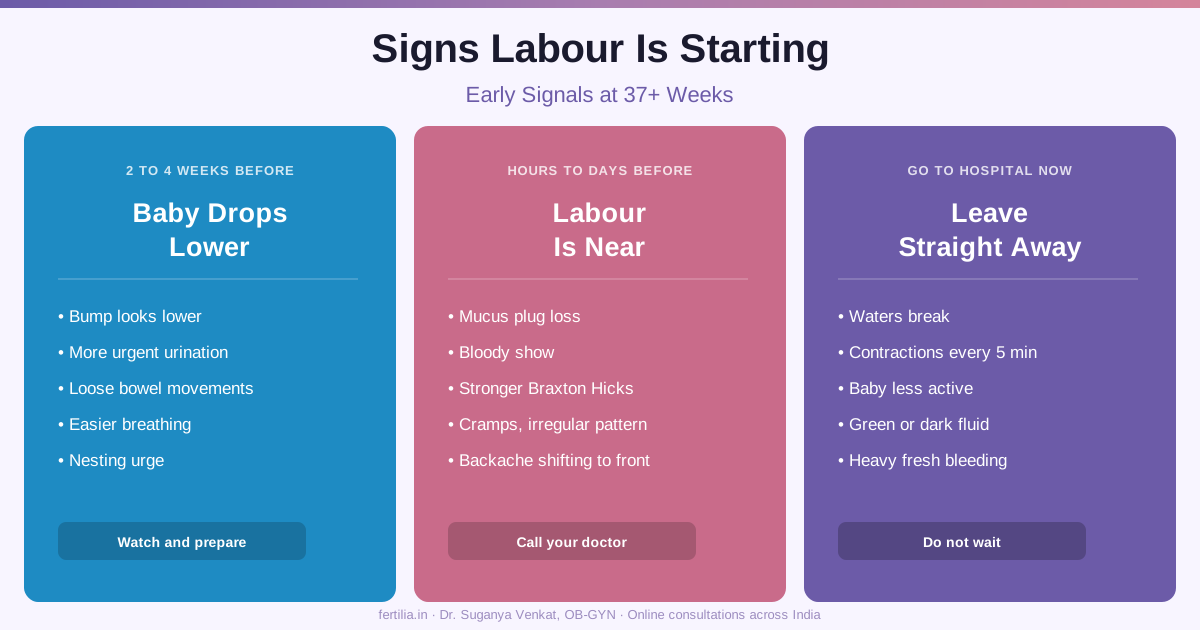
For women expecting their first baby, the baby’s head usually settles lower into the pelvis several weeks before labour begins. You may notice:
- Your bump looks lower than before
- There is more pressure in your lower pelvis and on your bladder, so you need to urinate more frequently
- Breathing becomes slightly easier because the baby is no longer pressing against your diaphragm
This is called lightening, or the baby dropping. It is one of the earliest signs that the body is preparing for delivery.
One important note: for women who have had babies before, the baby’s head often does not engage until labour itself begins. The absence of lightening in a second or third pregnancy means very little and should not cause concern.
Loose stools and digestive changes are also common a day or two before labour begins. Prostaglandins, the same hormones that help soften the cervix, act on the bowel and can cause loose motions, nausea, or a general unsettled stomach. Many women mistake this for a stomach bug. It is a normal part of the body’s preparation and does not need treatment.
One to Two Weeks Before: The Cervix Is Changing
Regardless of what you feel on the surface, the cervix is busy changing in the final weeks of pregnancy. It softens (ripens), thins (effaces), and begins to open (dilates) in preparation for delivery. These changes are internal; most women cannot feel them directly. They are assessed during an internal examination.
During an examination at this stage, your doctor may mention five things:
- Effacement: how much the cervix has thinned, usually expressed as a percentage
- Dilation: how far the cervix has opened, measured in centimetres
- Station: how far the baby’s head has descended into the pelvis, measured on a scale from minus 3 to plus 3
- Consistency: whether the cervix feels soft or firm
- Position: whether the cervix is tilting backward (posterior) or forward (anterior)
Together, these factors make up what obstetricians call the Bishop score, a clinical tool used to assess how ready the cervix is for labour. A higher score generally means the cervix is more favourable, and is the same assessment used when planning an induction of labour. Our post on induction of labour: methods, reasons, and what to expect explains this in more detail.
One thing I want to be clear about: cervical changes alone do not predict when labour will start. A woman can be two or three centimetres dilated for ten days without going into labour. The examination gives a direction, not a date.
Increased vaginal discharge is also common at this stage. As the cervix softens and begins to change, you may notice more white or clear discharge than earlier in pregnancy. This is normal. Discharge that is heavy, watery, foul-smelling, or accompanied by itching or burning is different and should be mentioned to your doctor.
The nesting urge tends to peak in the final week or two before delivery. A sudden desire to organise the house, wash baby clothes for the third time, or stock up on supplies is experienced by many women and is thought to reflect the same hormonal shifts that prepare the body for labour. It is not a clinical sign of imminent delivery, but it is very commonly reported in the days before labour begins.
Days to Hours Before: The Signs to Watch For
These are the signs most associated in people’s minds with labour approaching. They are more reliable than the earlier changes, though they still do not mean labour is starting this hour.
Mucus Plug Loss
The cervix is sealed during pregnancy by a thick plug of mucus that acts as a barrier against infection. As the cervix softens and begins to open, this plug comes away. You might notice it as a single jelly-like piece, or you might pass it gradually over a few days.
The mucus plug is typically clear, whitish, or pale yellow, with a thick, stringy texture. Losing it tells you the cervix is changing, but labour can follow hours later or it can be several days away. Do not rush to hospital on the basis of mucus plug loss alone unless you have other signs alongside it.
Bloody Show
Closely related to mucus plug loss is the bloody show: a small amount of pink or blood-streaked mucus. This happens because the tiny blood vessels in the cervix rupture slightly as it begins to dilate. A small amount of pink or brownish mucus-blood mixture is expected and normal.
What is different, and needs prompt assessment, is fresh red bleeding without mucus, or bleeding in an amount greater than a tablespoon. If you see that, call your doctor straight away or go to hospital.
Stronger, More Regular Braxton Hicks
From the middle of pregnancy onwards, the uterus practises with Braxton Hicks contractions: irregular tightenings that do not progressively intensify or come closer together. In the days before true labour, these often become stronger, more frequent, and more uncomfortable.
The way to tell them from true labour contractions is the pattern. Braxton Hicks do not get progressively longer, stronger, or closer together over time. True labour contractions do. They also do not ease off when you change position, rest, or drink water, whereas Braxton Hicks usually do. Our post on Braxton Hicks contractions and how to tell them from real labour walks through this distinction in detail.
If you are in the final weeks of pregnancy and unsure whether what you are noticing warrants a call to hospital, I am Dr. Suganya Venkat, an OB-GYN with over fifteen years of clinical experience, and the Fertilia team offers video consultations across India. Many women find a quick call clarifies everything before they make the trip to hospital. Reach us on WhatsApp to set up a consultation or ask a question.
For a comprehensive guide to what to expect across your pregnancy week by week, including how the third trimester typically unfolds, our free Pregnancy Guide is available to download.
Leave for Hospital Now: These Are Not Early Signs
The following are not pre-labour signs to observe from home. If any of these happen, head to hospital.
Your Waters Break
When the amniotic sac ruptures, fluid gushes out or leaks continuously. This is called spontaneous rupture of membranes. About one in ten women at term will have their waters break before contractions begin. In most cases, contractions start within 12 to 24 hours.
Amniotic fluid is usually clear or very faintly yellow, with a slight sweet smell. It continues to flow out with gravity, unlike urine. You may feel a gush and then a steady trickle, or just a sustained trickle without an obvious gush.
Note the time and the colour of the fluid. Clear fluid is normal and expected. Green or dark-coloured fluid suggests the baby has passed meconium (the first stool) inside the womb and needs to be assessed urgently, as this can be a sign of fetal distress. Most hospitals advise arriving within one to two hours of the waters breaking, even without contractions.
Contractions Every 5 Minutes for an Hour
If you have contractions that:
- Come every 5 minutes (measured from the start of one to the start of the next)
- Last roughly 45 to 60 seconds each
- Are strong enough that you cannot talk comfortably through them
- Have held this pattern for one hour
then you are in established labour and should leave for hospital. Once you arrive, your doctor will assess how far along in labour you are and guide the next steps. Our post on the stages of labour and what happens in each phase explains what to expect after you get there, and our guide to labour pain management options covers what pain relief is available.
Reduced or Absent Fetal Movement
A significant reduction in the baby’s movements is not a sign of labour beginning. It is a sign that the baby’s wellbeing needs to be checked immediately. Do not wait and watch. Go to hospital and ask for a CTG (cardiotocograph), which monitors the baby’s heart rate. Our post on fetal movement, when to feel kicks, and what is normal explains what counts as reduced movement and how to track it.
Sudden Severe Headache or Vision Changes
A sudden or severe headache, especially with blurring of vision, swelling of the face, or very high blood pressure, may indicate preeclampsia. This is an emergency regardless of gestational age. Go to hospital immediately.
Vaginal Bleeding Without Mucus
Fresh red bleeding without mucus, or bleeding in a quantity that soaks more than a pad, needs urgent assessment. This is different from the small bloody show described above.
Signs of Labour in Hindi and Tamil
Women searching for this information in Hindi often use terms such as prasav ke lakshan (प्रसव के लक्षण) or prasav shuru hone ke lakshan, meaning the signs that labour is starting. Others search for delivery ka samay kab hoga, asking when their delivery time will come.
| Sign | Hindi (Roman) | Hindi script |
|---|---|---|
| Baby dropping (lightening) | Bachcha neeche aana | बच्चा नीचे आना |
| Mucus plug loss | Mucus plug nikalna | म्यूकस प्लग निकलना |
| Bloody show | Khoon ke saath discharge | खून के साथ डिस्चार्ज |
| Waters breaking | Paani tutna | पानी टूटना |
| Labour contractions | Prasav dard | प्रसव दर्द |
In Tamil, labour signs are sometimes described as prasava nerathil enna aagu (what happens near delivery time). The clinical signs themselves are the same across all languages and regions.
Quick Triage Guide: Call vs. Go Now
| What you are experiencing | What to do |
|---|---|
| Mucus plug loss, no contractions | Note it; mention at next appointment or call for advice |
| Small bloody show, no contractions | Call your doctor; follow their guidance |
| Loose stools and mild backache | Rest, stay hydrated; monitor for contractions |
| Contractions, irregular, easing with rest | Time them; call if they become regular |
| Contractions every 5 min for 1 hour | Leave for hospital |
| Waters break | Leave for hospital within 1-2 hours |
| Green or dark fluid after waters break | Leave for hospital immediately |
| Significant reduction in baby’s movements | Leave for hospital immediately |
| Heavy fresh bleeding without mucus | Leave for hospital immediately |
| Sudden severe headache with vision changes | Leave for hospital immediately |
Frequently Asked Questions
Q: What are the first signs that labour is starting at 37 or 38 weeks?
The earliest changes include the baby dropping lower into the pelvis, more frequent urination, an increase in vaginal discharge, and loose bowel movements. Braxton Hicks contractions may become more intense and frequent. These changes happen over days to weeks rather than hours. The signs that are closer in time to labour starting are mucus plug loss, bloody show, and contractions that come at regular, shortening intervals.
Q: How long after losing the mucus plug does labour start?
There is no fixed answer. Labour can follow within hours of passing the mucus plug, or it can be a week or more away. The mucus plug tells you the cervix is changing, but it does not tell you how quickly things will progress. Continue monitoring for contractions and other signs, and follow your doctor’s guidance on when to come in.
Q: Prasav ke lakshan kya hote hain?
Prasav ke pahle ke lakshan mein shaamil hain: pet ka neeche dikhna (baby dropping), zyada baarbar peshab aana, vaginal discharge mein bardhawa, loose motions, aur Braxton Hicks ka teez hona. Jab contractions har 5 minute mein aane lagte hain, lagbhag 1 minute tak rehte hain, aur 1 ghante tak yahi pattern rahe, tab hospital ke liye nikal jaana chahiye. Agar paani toot jaaye (pani tutna), toh bina intezaar kiye hospital jayen.
Q: Can I be dilated 2 or 3 cm for weeks without going into labour?
Yes, this is entirely normal. Cervical dilation in the final weeks before labour is common and does not tell you when labour will begin. Many women are 1 to 3 cm dilated for a week or two before active labour starts. Your doctor considers the full picture, including effacement, station, consistency, and cervical position, and even with that information the timing remains unpredictable.
Q: My waters have broken but I have no contractions. What should I do?
Go to hospital within one to two hours even without contractions. Once the amniotic sac ruptures, there is a risk of infection if labour does not begin within 24 hours. Your hospital will either wait for contractions to start on their own or begin an induction within that window. Do not wait at home for contractions after your waters break.
Q: How is the baby dropping different from just the bump looking lower?
When the baby drops (lightening), you will notice several changes at once: the bump looks lower, pelvic pressure increases, you need to urinate more often, and breathing may feel slightly easier. In first pregnancies, this typically happens two to four weeks before delivery. In second or later pregnancies, it often does not happen until labour begins, so the absence of this sign in a subsequent pregnancy is not something to worry about.
Q: How do real labour contractions differ from Braxton Hicks in the last weeks?
Real labour contractions follow a progressive pattern: they get longer, stronger, and come closer together over time. They do not ease off when you change position, drink water, or rest. Braxton Hicks contractions are irregular, do not intensify progressively, and often ease with position change or rest. If you are unsure, time your contractions for an hour. A pattern of every five minutes, lasting about a minute, held for one hour is the standard signal to head to hospital.
The final weeks of pregnancy are a time when it is completely reasonable to ask questions, call your doctor, and seek reassurance. Dr. Suganya Venkat and the Fertilia team consult across India over video call and are happy to help you work through what you are experiencing so you can make the right decision about when to head to hospital. Send a WhatsApp message to start a conversation.