Many women mention it quietly, almost at the end of an appointment, as if asking about it has already taken up too much of the consultation time. Haemorrhoids during pregnancy are that kind of complaint: very common, genuinely uncomfortable, and somehow always the last thing to come up.
There is no reason for it to be last. Piles in pregnancy are caused directly by the normal hormonal and physical changes of pregnancy, they are not a sign that anything has gone wrong, and there is a clear, practical set of steps that help.
I am Dr. Suganya Venkat, an OB-GYN with fifteen years of clinical experience, and in online consultations at Fertilia I cover haemorrhoids with almost every woman in her third trimester. This guide explains why they develop, what is safe to do about them, and when to involve your doctor.
What Are Haemorrhoids?
Haemorrhoids are swollen, distended veins in the lower rectum or around the opening of the anus. The vascular cushions that line the anal canal exist in every person: they assist with stool control and are a normal part of the body’s anatomy. The problem begins when the veins in these cushions become engorged and inflamed.
Internal haemorrhoids sit inside the rectum and are usually painless unless they prolapse (descend through the anal opening). The most common symptom is bright red blood on toilet paper or in the toilet bowl after passing stool, without pain.
External haemorrhoids form under the skin around the anus and are more likely to cause discomfort, itching, and the sensation of a lump or swelling that is sensitive to touch.
Many women have both at the same time during pregnancy. Both respond to the same basic management approach.
Why Pregnancy Causes Haemorrhoids: Three Reasons
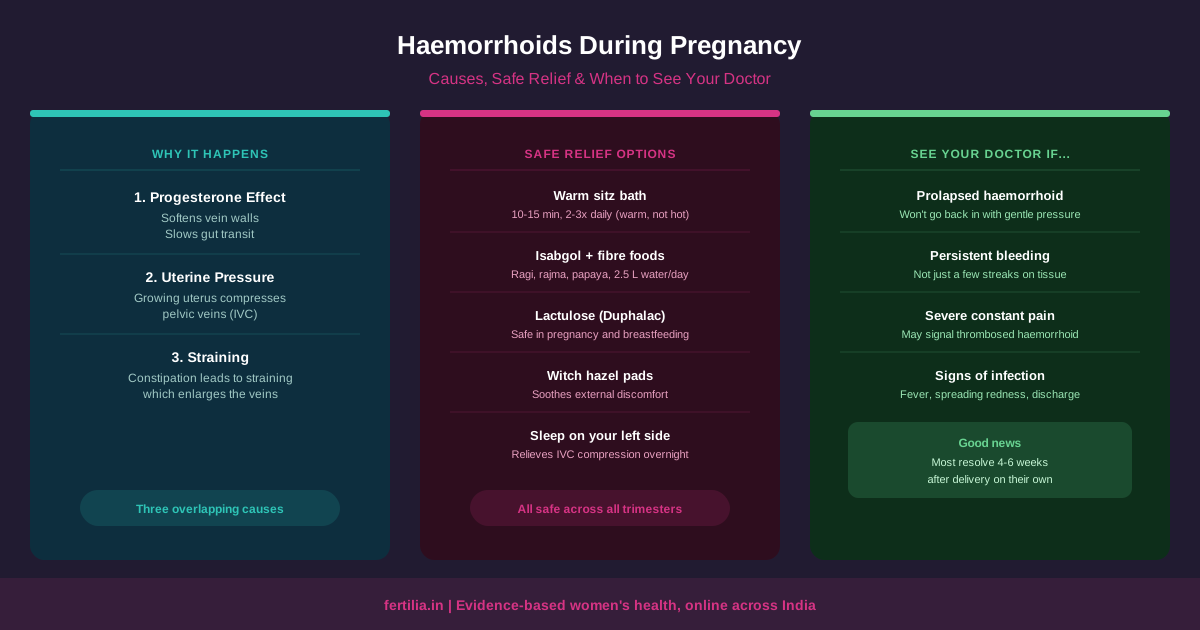
Pregnancy does not simply increase the risk of haemorrhoids by chance. There are three specific, overlapping mechanisms at work, and understanding them makes the management steps much easier to follow.
Reason 1: Progesterone Softens Vein Walls and Slows the Bowel
Progesterone is essential for maintaining a healthy pregnancy. It relaxes smooth muscle throughout the body, which is what allows the uterus to expand without contracting prematurely. But the same effect acts on blood vessel walls and on the gut.
Vein walls that are less firm hold more blood before they drain. This is venous stasis, and it makes the veins in the pelvis and the anal canal particularly prone to engorgement. Rising progesterone also slows the speed at which food moves through the bowel (gut transit time increases significantly during pregnancy), which is the direct cause of the constipation that most pregnant women experience from the first trimester onwards.
Reason 2: The Growing Uterus Presses on Pelvic Veins
As pregnancy advances, the uterus exerts increasing pressure on the inferior vena cava, the large vein that returns blood from the lower half of the body to the heart. This pressure is greatest when lying flat on your back, and increases through the second and third trimesters as the uterus grows. It slows venous return from the lower body, blood pools in the pelvic region for longer, and the haemorrhoidal veins, which drain into the same system, become progressively distended.
This is the same mechanism behind varicose veins in the legs during pregnancy. It is also why sleeping on your left side (rather than flat on your back) helps: it shifts the uterus away from the vena cava and improves circulation through the lower body overnight.
Reason 3: Constipation Leads to Straining
When progesterone slows the gut, stool becomes drier and harder to pass. Straining at the toilet is the mechanical trigger that pushes the vascular cushions downward and enlarges the haemorrhoidal veins. The more straining, the more the veins enlarge. A single episode of severe straining can worsen haemorrhoids significantly, which is why managing constipation proactively is the single most important step in the whole approach.
Iron supplements, which most pregnant women in India are prescribed to manage anaemia, add to this picture. They are necessary and should not be stopped without advice, but oral iron slows bowel function further in many women. Managing that side effect reduces how much straining is needed. See Iron Tablets in Pregnancy: Side Effects and How to Manage Them for the full approach.
Safe Relief Options During Pregnancy
The approach has two layers: reduce the inflammation and discomfort that is already present, and address the underlying constipation so it does not worsen.
Warm Sitz Baths: The Most Reliable First Step
A sitz bath means soaking the anal and perineal area in a few centimetres of warm water. You can use a wide basin or a sitz bath tray that sits over the toilet seat (available at medical equipment shops and online for around Rs 300 to 500). The regular bathtub works too.
Use warm water, not hot. Hot water increases blood flow to the already-engorged area and can worsen swelling. The water should feel comfortably warm, nothing that makes you hesitate before lowering yourself in.
Soak for 10 to 15 minutes, two to three times a day, especially after a bowel movement. Pat the area gently dry afterward: friction from rubbing adds to irritation.
This is consistently the most reliably helpful first step, and it is safe across all three trimesters and during breastfeeding.
Cold Compress for Immediate Swelling
If you have significant swelling or acute pain, a cold compress brings rapid, temporary relief. Wrap a few ice cubes in a clean cloth and hold it to the area for a few minutes. Do not place ice directly against the skin. Cold reduces swelling and numbs the area for a short period. Alternating a cold compress followed by a warm sitz bath works better than either alone for some women.
Witch Hazel Pads
Witch hazel is a plant-based astringent that reduces inflammation and soothes irritated skin. Use an alcohol-free distilled witch hazel, or ready-made witch hazel pads (available at pharmacies and online in India), applied to the external area: tincture forms are alcohol-based and can sting already inflamed skin, so avoid those. It does not cure haemorrhoids but relieves the itching and burning that often come alongside them.
Witch hazel should not be used inside the rectum.
Topical Lignocaine Gel
Lignocaine gel (such as Xylocaine gel 2%) is a local anaesthetic that provides temporary pain relief when applied externally to the anal area. It is particularly useful before a bowel movement to reduce the discomfort of passing stool. Discuss with your doctor before using it regularly during pregnancy: the guidance on dose and frequency depends on your trimester and overall picture.
Food and Fibre: The Most Sustainable Change
No topical treatment will give sustained relief if the underlying constipation continues. Adjusting what you eat and drink addresses the root cause directly.
Isabgol (psyllium husk): One heaped teaspoon stirred into a full glass of water, once or twice a day. It adds bulk and retains water in the stool, producing a softer result that requires much less effort to pass. It is safe throughout pregnancy and postpartum. Drink it with plenty of water: isabgol taken without enough fluid can have the opposite effect.
For a broader guide to managing pregnancy constipation with Indian foods, see Pregnancy Constipation: Is Isabgol Safe? Indian Diet Remedies.
High-fibre Indian foods: Ragi, rajma, masur dal, dalia, lauki, tinda, papaya, and guava all increase fibre intake in ways that integrate naturally into a regular Indian diet. Aim for fibre to come largely from food sources rather than supplements, as it is better tolerated and gentler on the gut.
Fluids: At minimum 2 to 2.5 litres a day. Water, coconut water, nimbu pani, chaas (buttermilk), light rasam, and clear dal soups all count. Dehydration is one of the most direct causes of hard, difficult-to-pass stool, and it is easy to let fluid intake slip during a busy or uncomfortable day.
Avoid prolonged time sitting on the toilet. Many people use their phone or read while on the toilet, often for far longer than the bowel movement itself takes. Prolonged sitting increases downward pressure on the haemorrhoidal veins. Go when you feel the urge, and get up when you are done.
Lactulose: The Safest Laxative Option in Pregnancy
Lactulose (sold as Duphalac syrup) is an osmotic laxative: it draws water into the bowel, softening stool without stimulating the bowel wall. It is not absorbed into the bloodstream and is generally considered acceptable in pregnancy and while breastfeeding.
Because any medicine in pregnancy is best started with your doctor’s or pharmacist’s input, ask them for the right dose and how long to use it for your stage of pregnancy rather than starting a fixed amount on your own. Lactulose typically takes 24 to 48 hours to take effect, so give it time before expecting a change. The goal is one comfortable, soft bowel movement a day: not loose stools, just soft enough to pass without straining.
One brand note worth making: Duphalac is lactulose, but the similarly stocked Cremaffin Plus is not. Cremaffin Plus combines liquid paraffin and milk of magnesia with sodium picosulfate, a stimulant laxative, so it is a different medicine and should not be used as though it were lactulose.
Stimulant laxatives, which include bisacodyl (Dulcolax) and senna (Senokot), work by prompting the bowel wall to contract. They are not recommended for routine or prolonged use during pregnancy. Short-term use under medical advice is sometimes considered, but for softening hard stool an osmotic option like lactulose, alongside isabgol and enough fluid, is the better first choice: it achieves the softening goal without the stimulation.
Sleep on Your Left Side
Sleeping on your left side in the second and third trimesters is advised for several reasons, reducing haemorrhoidal pressure being one of them. This position shifts the uterus off the inferior vena cava, improving venous return from the lower body and reducing pelvic congestion overnight. Many women find that haemorrhoids feel less prominent in the mornings after a night on the left side compared to nights spent semi-reclined or on the back.
Speak to Dr. Suganya Venkat at Fertilia
If the discomfort is affecting your sleep or daily routine, or if you are not sure which of the options above is right for your situation, a video consultation with Dr. Suganya Venkat at Fertilia gives you a personalised plan based on your trimester, your symptoms, and any other medications you are on.
Chat with us on WhatsApp to book a Rs 399 online consultation.
When to See Your Doctor
Most pregnancy haemorrhoids respond well to the steps above. These are the situations where a clinical assessment is the right next step.
A prolapsed haemorrhoid that will not reduce. An internal haemorrhoid can descend through the anal opening during a bowel movement. Haemorrhoids are graded by how far they prolapse: a grade 2 haemorrhoid comes down on straining but slips back on its own, a grade 3 one has to be pushed back in by hand, and a grade 4 one stays out and cannot be reduced at all. A haemorrhoid that has to be manually pushed back, that stays prolapsed during ordinary activity, or that will not go back in at all needs medical review and may need a specific treatment.
Persistent or significant bleeding. A small amount of bright red blood on toilet paper after passing stool is the typical pattern of internal haemorrhoids. Bleeding that appears in the toilet bowl rather than just on the paper, bleeding that does not settle over a few days, or any rectal bleeding accompanied by pain or a change in bowel pattern should be assessed by your doctor or midwife.
Severe or constant pain. Haemorrhoids cause discomfort during and briefly after a bowel movement. Constant, severe pain, particularly a throbbing or intense ache, suggests a thrombosed haemorrhoid (a blood clot that has formed in the vein) or another cause that needs examination.
Signs of infection. Fever, significant spreading redness, pus or unusual discharge, or swelling that is clearly increasing beyond what you would expect from haemorrhoids alone all warrant a call to your care team.
If your doctor has described your pregnancy as high-risk, our high-risk pregnancy guide explains the reasons for that label and how care is organised.
After Delivery: Will They Go Away?
For most women, yes.
The combination of reduced pelvic pressure after delivery, the return of progesterone to pre-pregnancy levels, and the resolution of pregnancy-related constipation means that haemorrhoids that developed during pregnancy typically improve substantially in the first two to four weeks postpartum and resolve fully within four to six weeks for most women.
The warm sitz bath and soft-stool approach continues to be helpful in the postnatal period. The postpartum period does bring its own set of factors that slow the bowel (iron supplements, reduced mobility, perineal discomfort), and addressing those directly helps haemorrhoids clear faster. See Constipation After Delivery: Causes and Safe Relief for the postpartum-specific guidance.
If haemorrhoids are still causing significant symptoms beyond six to eight weeks after delivery, a review by your doctor is worth arranging. In the non-pregnant setting, treatment options include rubber band ligation, sclerotherapy, and surgical haemorrhoidectomy for grade 3 to 4 haemorrhoids. These are not commonly needed, but they are available if conservative management has not been enough.
Pregnancy mein Bawaseer: What the Terms Mean
| Language | Term | Notes |
|---|---|---|
| Hindi | Bawaseer (बवासीर) | Interchangeable with piles |
| Tamil | Moolam / mula noi | Roman transliteration |
| Common Indian term | Piles | Used interchangeably with haemorrhoids |
If you are searching for “pregnancy mein bawaseer ka ilaj” or “bawaseer ke liye kya karna chahiye pregnancy mein”, the steps in this guide are exactly what applies. Warm sitz baths, isabgol with plenty of water, lactulose if needed, and avoiding prolonged toilet sitting form the core approach.
Frequently Asked Questions
Are haemorrhoids during pregnancy dangerous for the baby?
No. Haemorrhoids affect the veins in the mother’s anal canal and have no impact on the baby, the placenta, or the pregnancy itself. They cause discomfort for the mother but pose no risk to the fetus.
When do pregnancy haemorrhoids go away?
For most women, haemorrhoids that develop during pregnancy improve in the first two to four weeks after delivery and resolve fully within four to six weeks. The sitz bath and soft-stool routine helps the process along. If they are still significant after six to eight weeks postpartum, see your doctor for a review.
Is isabgol (psyllium husk) safe for piles during pregnancy?
Yes. Isabgol is a bulk-forming fibre supplement that softens stool and reduces the need to strain. It is safe throughout pregnancy and postpartum, as long as you drink enough water alongside it. One teaspoon in a full glass of water, once or twice a day, is a reasonable starting amount.
Can I use Xylocaine (lignocaine) gel for piles during pregnancy?
Lignocaine gel applied externally to the anal area provides temporary relief from pain and is generally considered acceptable during pregnancy. Discuss with your doctor before using it regularly, as the guidance on frequency and amount varies depending on how far along you are and your overall clinical picture.
What is bawaseer and is it the same as piles?
Yes. Bawaseer (बवासीर) is the Hindi word for haemorrhoids, which are also commonly called piles. All three words refer to the same condition: swollen, distended veins in the lower rectum or around the anus.
Can pushing during labour make haemorrhoids worse?
The pushing phase of vaginal delivery can temporarily worsen haemorrhoids or cause new ones to develop. This is very common immediately after delivery. The same warm sitz bath and soft-stool approach resolves most of these within a few weeks. Let your midwife or obstetric team know if you have significant haemorrhoids before delivery so they can advise on positioning and pushing technique.
Is lactulose (Duphalac) safe during pregnancy?
Yes. Lactulose is an osmotic laxative that works by drawing water into the bowel. It is not absorbed into your bloodstream and is generally considered acceptable in pregnancy and during breastfeeding. Ask your doctor or pharmacist for the right dose for your stage of pregnancy rather than starting a fixed amount yourself. It takes 24 to 48 hours to produce an effect, so give it time before expecting a change. One caution: Duphalac is lactulose, but Cremaffin Plus is a different, stimulant-containing product and is not interchangeable with it.
Haemorrhoids during pregnancy are caused by the same hormones and physical changes that support the pregnancy. That does not make them any less uncomfortable, but it does give them a clear trajectory: they improve as the body returns to its pre-pregnancy state, and there are practical, safe steps that help in the meantime.
If you would prefer to discuss your specific situation with an OB-GYN, Fertilia offers online consultations at Rs 399 across India, available from wherever you are.
Message us on WhatsApp to get started.
For more on staying comfortable through pregnancy, see the Fertilia Pregnancy Guide.