By the sixth or seventh month, many women tell me the same thing in almost the same words: “My back aches by evening, I can’t find a comfortable way to lie down, and I didn’t want to bother you with it.” That last part is the one I want to change.
Back pain in pregnancy is common enough that it gets brushed aside, by families, by women themselves, and sometimes by busy antenatal clinics. A large survey of 950 pregnant women in Connecticut found that 68.5% had low back pain in their current pregnancy, 58% said it disturbed their sleep, and yet only 32% had mentioned it to their prenatal care provider (Wang SM et al., Obstet Gynecol, 2004, PMID 15229002). Closer to home, a Delhi study of 200 pregnant women found a point prevalence of 80% (Saxena AK et al., Anesth Essays Res, 2019, PMID 31198266). The authors note that pregnancy back pain usually begins between the 20th and 28th weeks.
You do not have to grit your teeth through it, though. Most pregnancy back pain is mechanical, which means it responds to mechanical fixes: how you move, how you sleep, how you lift, and the right kind of exercise. A small number of back pains are something else entirely, and those are worth knowing by sight.
Here is what this post covers:
- Why your lower back takes the strain in pregnancy
- How to tell lumbar back pain apart from pelvic girdle pain and sciatica
- Daily-life changes that ease the load, with Indian homes in mind
- What the exercise evidence shows
- Which painkillers, gels and balms are safe, and which to avoid
- The red flags that mean back pain needs same-day care
- Frequently asked questions
Why Your Lower Back Takes the Strain
Several changes stack up at once, and they all land on the same few vertebrae.
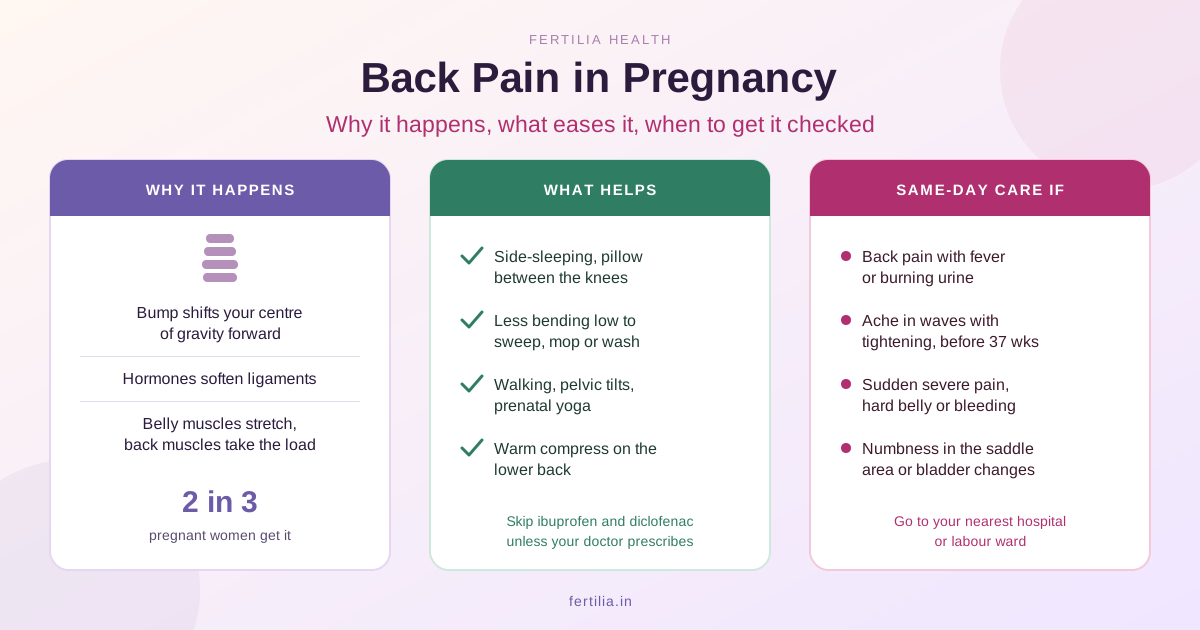
Your centre of gravity moves forward. As the uterus grows, its weight sits in front of your spine. To stay upright, most women lean back slightly without noticing, which deepens the inward curve of the lower back. The small joints and muscles there spend the whole day holding a position they were not built to hold for hours.
Your ligaments soften. Pregnancy hormones loosen ligaments throughout the body so that the pelvis can widen for birth. Looser ligaments mean the muscles around the spine and pelvis have to work harder to keep things stable, and tired muscles ache.
Your abdominal muscles stretch. The long muscles at the front of the belly normally act like a corset for the spine. As they stretch and sometimes separate down the middle to make room for the baby, that support weakens and the back muscles take up the slack.
You are carrying more weight. Healthy weight gain in pregnancy is necessary, but every extra kilogram passes through the lower spine every time you stand, bend or climb stairs.
Sleep gets harder. Pain disturbs sleep, and poor sleep lowers your tolerance for pain the next day. It becomes a loop, which is why sleep features in the relief section below.
The Connecticut survey also found that some women are more likely to get back pain in pregnancy than others: younger women, and women who already had back pain before pregnancy, back pain with their periods, or back pain in a previous pregnancy (Wang SM et al., Obstet Gynecol, 2004, PMID 15229002). If that describes you, it helps to start the habits below early, before the pain sets in, rather than waiting for it.
Lumbar Pain, Pelvic Girdle Pain or Sciatica: Which One Is Yours?
“Back pain” covers a few different patterns, and they respond to slightly different things. Knowing which one you have makes the advice that follows more useful.
| Pattern | Where you feel it | What tends to set it off |
|---|---|---|
| Lumbar (lower back) pain | Above the waistline, on either side of the spine, sometimes spreading across the lower back | Standing or sitting for long periods, bending forward, the end of a long day |
| Pelvic girdle pain | Lower down, over the dimples at the back of the pelvis, in the buttocks, or at the front over the pubic bone | Turning over in bed, climbing stairs, standing on one leg to wear a saree or salwar, getting in and out of a car or auto |
| Sciatica-type pain | Shooting pain down the back of one leg, sometimes past the knee, with tingling or numbness | Can follow either of the above; often worse when sitting |
This post focuses on the first pattern, the lumbar ache. If your pain sits low over the pelvis or at the pubic bone, our guide on pelvic girdle pain in pregnancy explains the specific activity changes that help with that. And if what you feel is a sharp, brief pull low in the belly or groin when you move suddenly, that is more likely round ligament pain, which is a different thing again.
Pain that shoots below the knee with numbness or tingling in the foot is worth mentioning to your doctor at your next visit, so it can be examined. Leg weakness, or numbness around the private area, is a different matter and is covered in the red flags section.
Daily-Life Changes That Ease the Load
Most of the relief for pregnancy back pain comes from small changes repeated many times a day. None of these needs equipment.
Sitting
- Sit with your back supported and your hips slightly higher than or level with your knees. A small rolled towel or cushion in the curve of your lower back helps.
- If you work at a desk, get up and walk for a few minutes every 30 to 45 minutes. A long stretch of sitting is often worse than the work itself.
- Sitting cross-legged on the floor for long meals or pujas is fine for some women and hard for others later in pregnancy. A low stool or a chair with a cushion is a reasonable swap.
Standing and household work
- If you stand to cook, rest one foot on a low stool or a step and switch feet now and then. It takes some of the arch out of your lower back.
- Bending low for long periods is what most often triggers pain in Indian homes: sweeping with a short broom, mopping on the floor, washing vessels or clothes while squatting. A long-handled broom and mop, or sitting on a low stool to wash, makes a real difference. Better still, this is a good time to hand some of these jobs to others in the family.
- Wear flat or low-heeled, supportive footwear. Very high heels and completely flat, thin rubber slippers both put more load on the back.
Lifting
- Bend at the knees, not the waist, and keep whatever you lift close to your body.
- If you have a toddler at home, try not to carry them on one hip for long. Sit down and let them climb onto your lap instead, and get help with lifting them in and out of the bath or bed.
- Avoid twisting while carrying something. Turn with your feet.
Sleeping and getting out of bed
- Sleep on your side with your knees bent and a pillow between your knees and ankles. A second pillow under the bump, and one behind your back, stops you rolling forward or back. Our guide to sleeping positions in pregnancy explains why side-sleeping is advised in the later months and how to set up the pillows.
- To get out of bed, roll onto your side first, then push yourself up with your arms as you swing your legs down together. This takes the twist out of the movement.
- If back pain is part of why you are not sleeping, our post on insomnia in pregnancy has further strategies.
Travel
- Two-wheeler pillion rides over uneven roads jolt the spine. Where you can, choose a car or auto, and sit fully back in the seat.
- On longer journeys, stop or stand up every hour if possible.
Warmth, Massage and Support Belts
Warmth. A warm (not hot) compress or a hot water bottle wrapped in a towel on the lower back for 15 to 20 minutes eases muscle spasm for many women. Keep heat off the belly, and avoid long, very hot baths.
Massage. A gentle back massage with oil from your husband or a family member, while you lie on your side, is safe and often comforting. Ask them to avoid deep, forceful pressure.
Maternity support belts. Some women who stand for many hours find a support belt makes the end of the day easier. There is limited trial evidence that belts treat back pain, so think of one as a comfort aid rather than a treatment, and do not wear it so tight that it digs in or restricts breathing.
💜 Back pain getting in the way of your sleep or work? Message Dr. Suganya on WhatsApp to book a ₹399 video consultation. Tell us how many weeks pregnant you are, where the pain sits, and what makes it worse, and we will work out a plan that fits your day.
What the Exercise Evidence Shows
Exercise is the one treatment for pregnancy back pain with a reasonable body of trial evidence behind it, though the evidence is not as strong as we would like.
The most complete summary is the Cochrane review by Liddle and Pennick, which included 34 randomised trials covering 5,121 pregnant women (Liddle SD et al., Cochrane Database Syst Rev, 2015, PMID 26422811). Its findings, in plain terms:
- There is low-quality evidence that exercise, on land or in water, may reduce pregnancy-related low back pain.
- There is moderate-quality evidence that an exercise programme of eight to 12 weeks reduced the number of women reporting low back and pelvic pain.
- There is moderate-quality evidence that land-based exercise, in a variety of formats, reduced sick leave due to back and pelvic pain.
- When side effects were reported, they were minor and did not last.
“Low quality” here means the trials were small or varied a lot in design, so the size of the benefit is uncertain. It does not mean exercise was shown not to work. In practice, regular movement is low-risk and helps with many other things in pregnancy, so it is the first thing I suggest.
Water-based exercise has been studied directly. In a trial of 390 healthy pregnant women at three antenatal care centres, weekly water aerobics reduced pregnancy-related low back pain and back-pain sick leave more than a land-based exercise programme (Granath AB et al., J Obstet Gynecol Neonatal Nurs, 2006, PMID 16881990). A larger trial of 516 healthy pregnant women found that unsupervised water exercise twice a week lowered back pain intensity slightly, but the authors judged the difference most likely too small to matter clinically, and it did not change sick leave (Backhausen MG et al., PLoS One, 2017, PMID 28877165). Taken together: if you have access to a pool and enjoy it, water exercise is a good option, and the trial of supervised classes showed a clearer benefit than the trial of exercising on your own. If you do not have a pool nearby, walking and the movements below are a sound alternative.
Movements that are usually comfortable for the lower back
These suit most women with an uncomplicated pregnancy. Stop any movement that increases your pain.
- Pelvic tilts on hands and knees. On all fours, gently tuck your tailbone under so your lower back rounds slightly, hold for a breath, then return to a flat back. Ten slow repetitions.
- Cat-cow. The same starting position, alternating a gentle round of the whole spine with a gentle dip, moving with your breath.
- Standing wall tilts. Stand with your back against a wall, knees soft, and press the small of your back gently towards the wall, then release.
- Walking. 20 to 30 minutes on most days, at a pace where you can still talk.
- Prenatal yoga taught by someone trained in pregnancy.
From the second trimester onward, avoid exercises done lying flat on your back for long periods. Our guides to safe pregnancy exercises for each trimester and pregnancy yoga poses by trimester cover what to include and what to leave out at each stage, and when exercise is not advised at all.
When to see a physiotherapist
If the pain limits your walking, wakes you at night, or has not improved after two or three weeks of the changes above, a physiotherapist experienced in pregnancy can assess which muscles and joints are involved and give you a specific programme. In Fertilia’s Pregnancy Care program, Dr. Suganya Venkat plans the medical side of care while Dr. Maitri Daga, our women’s health and pelvic floor physiotherapist, works with women over video call on trimester-appropriate movement, so back pain is handled alongside everything else in the pregnancy rather than as a separate problem.
Painkillers, Gels and Balms: What Is Safe
This is the part where well-meaning advice most often goes wrong, so it is worth slowing down.
Paracetamol (sold as Crocin, Dolo, Calpol and others) is the painkiller generally used in pregnancy when pain relief is needed. Use it when you need it rather than every day “just in case”, at the lowest dose that works and for the shortest time, and check the dose with your doctor. If you find you need it most days, that is a reason to talk to your doctor about the pain itself.
Anti-inflammatory painkillers (NSAIDs), such as ibuprofen, diclofenac, aceclofenac and naproxen, are a different story. They are not recommended in the third trimester because of known effects on the baby, and longer use later in the second trimester also needs medical monitoring (Dathe K et al., Eur J Clin Pharmacol, 2019, PMID 31273431). Use from around 20 weeks onward has also been linked to rare but serious kidney problems in the baby, which can lower the amniotic fluid, so the concern is not limited to the last three months. The practical advice is simple: do not take them in pregnancy unless your own doctor has prescribed them for a specific reason.
Two places where NSAIDs hide:
- Combination tablets. Many common pain tablets in India combine paracetamol with aceclofenac or another NSAID in one strip. Read the composition on the back of the strip, not just the brand name.
- Pain relief gels and sprays. Many popular back-pain gels contain diclofenac. Check the label before using one, and ask your doctor or pharmacist first, especially in the third trimester.
Calcium. Many women are told their back pain is “calcium deficiency”. Pregnancy back pain is mostly mechanical, so extra calcium on its own is unlikely to fix it. Do keep taking the calcium and vitamin D your doctor has prescribed for the pregnancy, but do not add more on top just for back pain.
If you are already following a treatment from another doctor, physiotherapist or Ayurveda practitioner, tell your obstetrician what you are using, including any oils or balms, so your care fits together.
Red Flags: When Back Pain Needs Same-Day Care
Most pregnancy back pain builds slowly, changes with position and eases with rest. The pains below behave differently. They are uncommon, and each one has an effective response when it is caught early, so it is worth knowing them.
Back or side pain with fever. Pain under the ribs at the back, on one or both sides, together with fever, chills, nausea or burning when you pass urine, can mean a kidney infection (pyelonephritis). In one hospital study of pregnant women, it affected 1.4% of pregnancies, most often in the second trimester (Hill JB et al., Obstet Gynecol, 2005, PMID 15625136). It needs same-day assessment and is usually treated in hospital. Our guide on UTI in pregnancy explains the warning signs and safe antibiotics.
Backache that comes in waves, before 37 weeks. A dull, period-like ache low in the back that comes and goes in a rhythm, or does not ease with rest, together with tightening of the belly, pelvic pressure, or a change in discharge, can be a sign of early labour. Our guide to preterm labour signs lists what to watch for, and our post on Braxton Hicks contractions explains how practice tightenings differ.
Sudden, severe, constant pain with a hard belly or bleeding. Pain that comes on suddenly and does not let up, with a belly that feels firm or tender, any vaginal bleeding, or reduced movements of the baby, needs to be seen in hospital straight away. This pattern can occur with placental abruption.
Numbness around the private area, or new trouble passing urine or stool. Numbness in the saddle area (the inner thighs, buttocks and around the vagina), new difficulty controlling or passing urine or stool, or weakness in one or both legs, together with back pain, can mean pressure on the nerves at the base of the spine. This is rare and needs emergency assessment the same day.
Back pain after a fall or a blow to the belly, even if you feel fine afterwards. You and the baby should be checked.
Pain that is severe, constant, and not affected by position or rest, or that wakes you every night, should be examined, even without any of the signs above.
If any of these apply to you right now, go to your nearest hospital or labour ward. Do not wait for a WhatsApp reply or your next scheduled visit.
After the Baby Arrives
For most women, lumbar back pain eases after delivery. In a cohort followed from early pregnancy, 72% of women with lumbar pain (21 of 29) had recovered by three months after birth, while women who had both back and pelvic pain together recovered less often, 33% (Gutke A et al., Spine, 2008, PMID 18496334). The numbers in that study were small, but the pattern is reassuring for most women.
Feeding, lifting and carrying a newborn bring their own strains, though. If the ache continues or returns after birth, our guide to back pain after delivery covers the postnatal causes and what helps.
Practical Takeaways
- Back pain affects most pregnant women, but you do not need to put up with it silently. Mention it at your antenatal visit.
- Start with how you sit, stand, lift and sleep. Side-sleeping with a pillow between the knees, and less bending low to the floor, help many women within days.
- Regular movement helps: walking, pelvic tilts, prenatal yoga, and water exercise if you have access to it.
- Use warmth, gentle massage and, if it suits you, a support belt for comfort.
- Paracetamol, when needed and at the right dose, is the usual choice. Avoid ibuprofen, diclofenac and other NSAIDs, including combination tablets and many pain gels, unless your doctor prescribes them.
- Fever with back pain, rhythmic backache before 37 weeks, sudden severe pain with a hard belly or bleeding, and saddle numbness or bladder changes all need same-day care.
What It Is Called in Tamil, Hindi and Telugu
Many women search for this in their own language. The terms below all describe the same lower back ache.
| Language | Term | Notes |
|---|---|---|
| Tamil | iduppu vali (இடுப்பு வலி), muthugu vali (முதுகு வலி) | Iduppu is the waist and lower back; muthugu is the back in general |
| Hindi | kamar dard (कमर दर्द) | Often searched as “pregnancy mein kamar dard” |
| Telugu | nadumu noppi | Lower back and waist pain |
Whichever word you use, the advice in this post is the same.
Frequently Asked Questions
Is back pain normal in early pregnancy?
Some women do feel back pain in the first trimester. For many it builds as the bump grows, and Indian data put the usual start between 20 and 28 weeks. Early back pain is usually the same mechanical ache. Back pain with bleeding, one-sided severe pain, or fever in early pregnancy should be checked by your doctor the same day.
Pregnancy mein kamar dard kyon hota hai? (Why does back pain happen in pregnancy?)
It happens because the growing bump moves your centre of gravity forward, pregnancy hormones soften the ligaments that stabilise the spine and pelvis, the abdominal muscles stretch, and the extra weight all passes through the lower back. Most of this pain responds to changes in posture, sleep position, lifting and regular gentle exercise.
Which painkiller is safe for back pain in pregnancy?
Paracetamol is the painkiller generally used in pregnancy, at the lowest dose that works and for the shortest time, with your doctor’s advice on the dose. Avoid ibuprofen, diclofenac, aceclofenac and naproxen unless your own doctor has prescribed them, because NSAIDs are not recommended in the third trimester and use from around 20 weeks has been linked to rare kidney problems in the baby. Check combination tablets and pain gels for these ingredients too.
Can I use a pain relief gel or spray in pregnancy?
Many back-pain gels and sprays sold in India contain diclofenac, which is an NSAID. Check the label, and ask your doctor or pharmacist before using one, especially in the third trimester. A warm compress and gentle massage are safe alternatives.
Is back pain a sign of labour?
It can be. A dull ache low in the back that comes in waves or does not ease with rest, along with tightening of the belly, pelvic pressure, or a watery or blood-tinged discharge, can be a sign of labour. Before 37 weeks this needs prompt assessment at your hospital. After 37 weeks, follow the plan your hospital has given you for when to come in.
Does a pregnancy belt help back pain?
Some women find that a maternity support belt makes long hours of standing more comfortable. The trial evidence that belts treat back pain is limited, so use one as a comfort aid alongside posture changes and exercise, and make sure it does not dig in or feel tight.
Will my back pain go away after delivery?
For most women, lumbar back pain eases in the months after birth. In one study, 72% of women with lumbar pain had recovered by three months after delivery. Women who had both back and pelvic pain together tended to take longer, and lifting and feeding a newborn can bring new strain, so it is worth getting help if it persists.
A Sore Back Is Worth Mentioning
I’m Dr. Suganya Venkat, and in fifteen years as an OB-GYN I have seen how much a nagging back ache takes out of the last months of pregnancy: the sleep, the patience, the energy for everything else. It is one of the most fixable discomforts of pregnancy once someone looks at how you move through your day.
💜 Want a plan for your back that fits your pregnancy? Message Dr. Suganya on WhatsApp to book a ₹399 video consultation, available online across India. You can also download our free pregnancy guide for trimester-by-trimester support.