Around the fourth month, many women message me with a question that sounds almost guilty: “I suddenly feel fine. Is that normal?” After weeks of nausea and exhaustion, the energy comes back, food tastes good again, and for a few days it can feel as if the pregnancy has gone quiet.
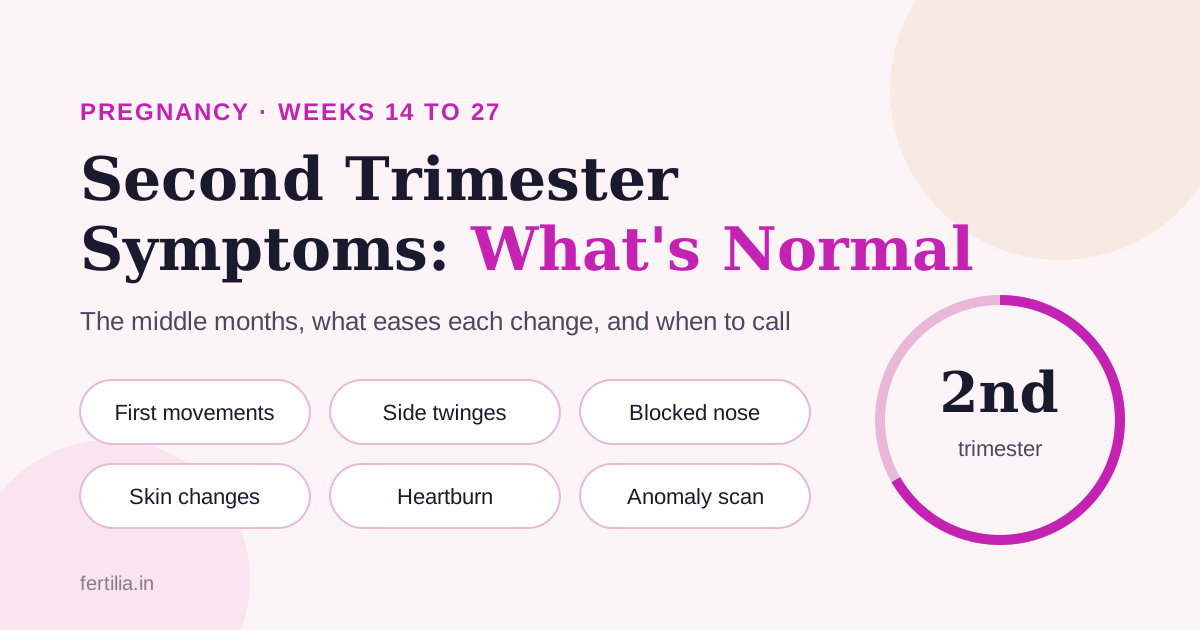
That is normal. The second trimester, from week 14 to the end of week 27, is usually the most comfortable stretch of pregnancy. The baby grows quickly, the bump starts to show, and somewhere in these weeks you feel the first movements. Your body is making room, and that brings its own set of new sensations: twinges at the sides of the bump, a blocked nose, bleeding gums, a darker line down the belly.
I’m Dr. Suganya Venkat, an OB-GYN with more than fifteen years of practice, and in my video consultations the second trimester is where most questions are about small, unfamiliar changes rather than big problems. This post sorts the common ones for you, so that you know what is expected and which few signs need a call.
What this post covers:
- What changes in your body between weeks 14 and 27
- The common second-trimester symptoms, one by one, with links to the detailed guides
- Simple habits that make these weeks easier
- A short, clear list of when to call your doctor
- The routine scans and tests usually done in these weeks
What Is Changing in Your Body From Week 14
A few changes explain most of what you feel in the middle months.
Nausea usually eases. The pregnancy hormone hCG, which is linked to nausea, peaks in the first trimester and then levels off. For many women this is when nausea and the heavy early tiredness ease off, although some women carry nausea longer.
The uterus rises out of the pelvis. Around this time it grows up into the abdomen, which is why the bump starts to show and why the ligaments that hold the uterus get stretched. It also takes some pressure off the bladder for a while.
Blood volume keeps rising. Your body circulates much more blood in pregnancy than before it. That extra flow is behind several mid-pregnancy symptoms: a stuffy nose, nosebleeds, bleeding gums, feeling warm, and sometimes feeling dizzy when you stand up quickly.
Alongside these, pregnancy hormones change your skin and slow your gut, and your joints start to loosen in preparation for birth.
The Common Second-Trimester Symptoms
Each of these has a detailed guide on Fertilia. Here you will find the short version of each, with the sign to watch for.
More energy, and a bigger appetite
For many women this is the first good news of pregnancy. Energy improves, sleep gets easier, and hunger returns. This is a good time to settle into regular meals and a daily walk. You do not need to “eat for two”; weight gain in pregnancy is gradual, and our guide to pregnancy weight gain shows the usual ranges.
First movements (quickening)
Most women first feel the baby move between 16 and 24 weeks. In a first pregnancy you might not feel it until after 20 weeks, and women who have been pregnant before often notice it earlier (NHS). At first it feels like fluttering, bubbles or a gentle tap, and it is easy to miss. Over the following weeks it becomes clearer and more regular. Our fetal movement guide explains when to expect it and how the pattern develops. If movements you have been feeling clearly slow down, stop or change, or you are worried about them, call your obstetrician or the labour ward of the hospital where you are booked straight away. Do not wait until the next day.
Sharp twinges at the sides of the bump
A sudden, sharp pain low on one or both sides of the bump, often when you stand up, turn in bed, cough or sneeze, is very common from around the fourth month. It is usually round ligament pain: the ligaments that support the uterus are stretching as it grows. It lasts seconds, and moving slowly, bending towards the side of the pain and resting help. Our guide to round ligament pain explains the pattern. Pain that is constant, severe, comes in waves, or comes with bleeding or fever is not round ligament pain and needs to be checked.
Blocked nose and nosebleeds
A stuffy nose that has nothing to do with a cold is common in mid-pregnancy, because the lining of the nose swells with the extra blood flow. Small nosebleeds happen for the same reason. Saline drops, a warm shower and a humid room help. Avoid leaning over a bowl of hot water, which can scald. A nosebleed that does not stop after 10 to 15 minutes of firmly pinching the soft part of your nose needs urgent attention (NHS). Our guide to nosebleeds in pregnancy covers how to stop one.
Bleeding gums
Gums often become puffy and bleed when you brush. A soft brush, gentle flossing and a dental check-up help, and routine dental care is safe and worth doing in the second trimester. Gums that are swollen and painful, or a tooth that feels loose, are worth a dentist visit soon. Our guide to bleeding gums in pregnancy has more.
Skin changes
A dark line down the middle of the belly, darker nipples, and patches of darker skin on the face are all common and usually fade in the months after birth. Our guide to the dark belly line (linea nigra) explains what helps. Sunscreen and a moisturiser are the simple basics. Intense itching, especially of the palms and soles and worse at night, is different: tell your obstetrician promptly so you can have a blood test for bile acids and liver function, which our guide on itching in pregnancy explains.
Heartburn and constipation
Pregnancy hormones relax the muscles of the gut, so food moves more slowly and acid rises more easily. Smaller meals, an early dinner, and staying upright after eating help with heartburn; our pregnancy heartburn guide covers safe relief. For constipation, water, fibre from vegetables, fruit, whole grains and dal, and a daily walk are the first steps. Iron tablets can add to it, and our guide to iron tablet side effects shows how to manage that.
Dizziness
Feeling light-headed when you stand up quickly, or in a hot, crowded place, is common now. Blood pressure is naturally a little lower in mid-pregnancy. Stand up slowly, drink enough water, eat regularly, and lie on your side if you feel faint. Our guide to dizziness in pregnancy covers this in detail. Fainting, or dizziness with a racing heart or breathlessness, needs a prompt check with your doctor, and sudden breathlessness or chest pain is an emergency (see the list below). Dizziness with marked tiredness can point to anaemia, which a blood count shows.
Back ache and leg cramps
As the bump grows and your posture shifts, a mild lower back ache often starts in the second trimester. Calf cramps at night can begin now too. A back ache that comes and goes in a rhythm or feels like period pain, or back pain with fever or burning urine, is different: see the list of signs below. Our guide to back pain in pregnancy explains what helps.
More vaginal discharge
A thin, milky white, mild-smelling discharge increases through pregnancy and is normal. Itching, a strong smell, a change in colour, or watery fluid that keeps coming is not, and should be checked. Our guide to white discharge in pregnancy shows the difference.
Other common changes
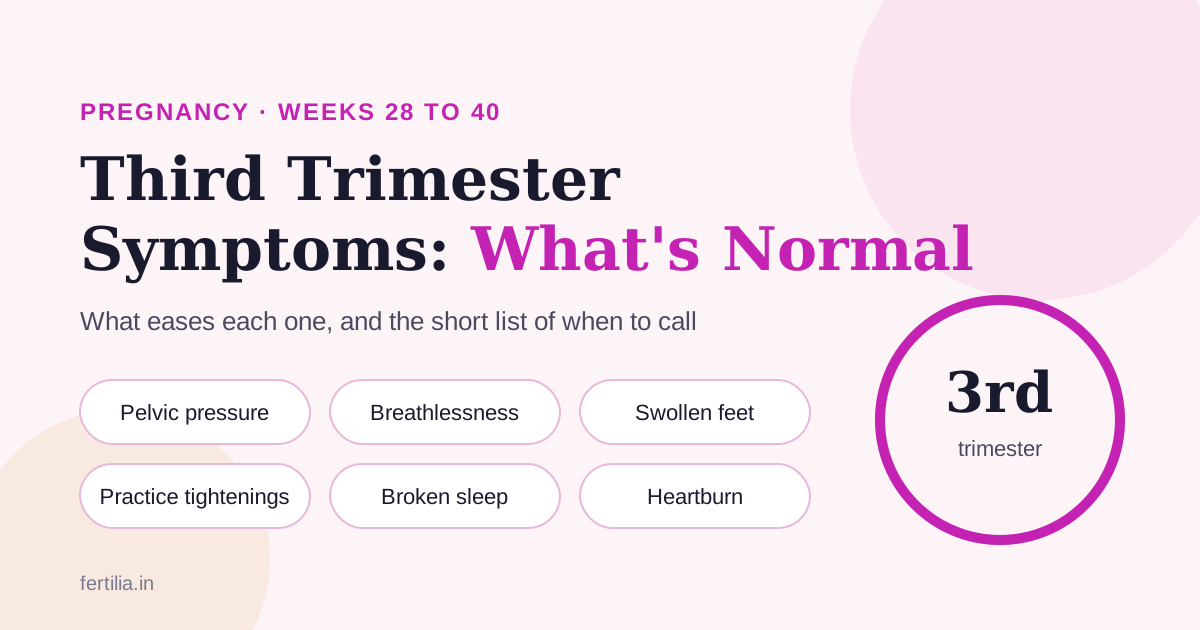
Mild swelling of the feet by evening, varicose veins, occasional headaches, and painless tightening of the bump towards the end of this trimester (practice contractions) are also common. Mention any of them at your next antenatal visit.
💬 Not sure whether something you are feeling is normal at this stage? You can talk it through with Dr. Suganya Venkat over a ₹399 online video consultation, from anywhere in India. Message Fertilia on WhatsApp and tell us your week and what you are noticing. For anything urgent from the list below, go to the labour ward of your hospital directly.
What Makes These Weeks Easier
The second trimester is a good time to build habits that carry you through the rest of pregnancy:
- Keep moving. A daily walk and gentle exercise help with energy, sleep, constipation and back ache, if your doctor has not advised rest. Our guide to pregnancy exercises by trimester has safe options.
- Eat regular, simple meals. Dal, curd, ragi, eggs if you eat them, green leafy vegetables, fruit and whole grains cover most needs. Our guide to iron-rich Indian foods in pregnancy is a useful companion.
- Take your supplements as prescribed. Folic acid, which you have usually been taking since before or early in pregnancy, is typically combined with iron as IFA tablets from the second trimester, and calcium is added around the same time. Our guide to calcium in pregnancy explains timing.
- Drink water through the day. Tender coconut water and buttermilk count too.
- Start sleeping on your side as the bump grows, so it is a habit by the third trimester. Our post on sleeping position in pregnancy explains how to set up your pillows.
- Plan travel for now if you need to travel. Many women find mid-pregnancy the easiest time for a journey. Check with your doctor before you book.
When to Call Your Doctor
This list is short on purpose. Knowing exactly what needs a call lets you relax about everything else. Call your obstetrician or go to the labour ward of the hospital where you are booked straight away, day or night, if you have:
- Bleeding from the vagina.
- A gush or steady trickle of watery fluid.
- Regular tightenings, period-like cramps, or a low, rhythmic back ache. Our guide to preterm labour signs lists exactly what to look for.
- Fewer movements, or a change in your baby’s movements, or any worry about them.
- Severe or constant abdominal pain that does not ease with rest.
- A headache that does not go away, blurred vision, pain under the right ribs, or sudden swelling of the face or hands, especially from 20 weeks. These can be signs of preeclampsia.
- Fever, burning when passing urine, or pain in your side.
- One swollen, painful, red leg.
- Sudden breathlessness, breathlessness at rest, or chest pain. This is an emergency, so go to the nearest emergency department immediately.
- Vomiting so much that you cannot keep fluids down.
When in doubt, call. Your obstetrician would much rather see you and send you home reassured than have you wait at home with a worry.
The Scans and Tests Usually Done in These Weeks
The second trimester holds some of the most important routine checks of pregnancy. Your hospital’s schedule may differ, but most women in India can expect:
- The anomaly scan, usually between 18 and 22 weeks, which looks at the baby’s anatomy, growth and the position of the placenta. Our guide to the anomaly scan (TIFFA / Level 2) explains what it checks.
- A glucose test for gestational diabetes. In India, the national guideline is to test at your first antenatal visit and, if that result is normal, again between 24 and 28 weeks (MoHFW guideline on gestational diabetes). Our guide to the glucose tolerance test explains how to prepare and read the result.
- A blood count to check your haemoglobin; our guide to haemoglobin in pregnancy explains the numbers.
- Vaccines advised in pregnancy; our guide to pregnancy vaccines covers which ones and when.
- Regular visits with blood pressure, urine and bump measurement at each one.
Your obstetrician and hospital lead this care. At Fertilia, our role is to support you between visits: answering questions, helping you understand scan and lab reports, and helping you plan for the months ahead. If you would like structured support through pregnancy, our pregnancy program works alongside your obstetrician’s care.
Practical Takeaways
- The second trimester (weeks 14 to 27) is usually the most comfortable stretch of pregnancy, and feeling better is normal.
- Most new symptoms come from the growing uterus, extra blood volume, and hormones that relax the gut and change the skin.
- First movements arrive in this window; if they slow down, stop or change, call straight away.
- Use these weeks to build habits: walking, regular meals, water, supplements and side-sleeping.
- Keep your anomaly scan and glucose test appointments, and know the short list of signs that need your obstetrician straight away.
Frequently Asked Questions
What are the most common symptoms in the second trimester?
The most common are more energy and a bigger appetite, the first baby movements, sharp twinges at the sides of the bump, a blocked nose, bleeding gums, skin darkening, heartburn, constipation, mild back ache and more vaginal discharge. Most come from the growing uterus, the higher blood volume and pregnancy hormones.
What symptoms are normal at 20 weeks pregnant?
At 20 weeks it is common to feel clearer movements, notice a visible bump, have occasional round ligament twinges, a stuffy nose, heartburn and some back ache. This is also around the time of the anomaly scan. Bleeding, leaking fluid, regular cramps, or a severe headache with vision changes at this stage should be checked straight away.
Is it normal to have no symptoms in the second trimester?
Yes. Many women feel very well in the middle months, once nausea and early tiredness settle. Feeling fine is not a sign that something is wrong. Your antenatal checks and scans are how the baby’s growth is followed, not the number of symptoms you have.
When will I feel my baby move?
Most women first feel movements between 16 and 24 weeks. In a first pregnancy it may be after 20 weeks, and in later pregnancies it is often earlier. Early movements feel like fluttering or bubbles. If you have not felt any movement by around 24 weeks, mention it to your doctor so it can be checked.
Is it normal to have pain on the sides of my bump?
Brief, sharp pain on one or both sides, triggered by standing up, turning or coughing, is usually round ligament pain and is common in the second trimester. Pain that is constant, severe, rhythmic, or comes with bleeding, fever or burning while passing urine needs to be checked.
Is it normal to feel dizzy in the second trimester?
Mild light-headedness when you stand up quickly is common, because blood pressure is naturally a little lower in mid-pregnancy. Stand up slowly, drink water and eat regularly. Fainting, or dizziness with a racing heart or breathlessness, should be discussed with your doctor.
Which tests are done in the second trimester?
Most women have an anomaly scan between 18 and 22 weeks, a glucose test for gestational diabetes (repeated at 24 to 28 weeks if the first-visit test was normal), a blood count, advised vaccines, and blood pressure and urine checks at each visit. Your hospital may add others depending on your history.
If you are earlier on, our guide to first-trimester symptoms and tests covers weeks 1 to 13, and our guide to third-trimester symptoms picks up from week 28. For the full nine months in one place, see our pregnancy week-by-week guide.
A Last Word
The middle months are often the time women start to enjoy being pregnant and have the energy to plan. Most of the new sensations are signs of a body making room. Know the short list of signs that need a call, keep your scan and test dates, and let the rest settle.
If you would like a doctor to go through your symptoms or reports with you, message Fertilia on WhatsApp to book a ₹399 online video consultation with Dr. Suganya Venkat. You can also download our free pregnancy guide for a calm, practical companion to these months.