“Doctor, I started the iron tablets you prescribed, but the constipation is so bad I stopped taking them. Is that okay?”
I hear some version of this in almost every antenatal consultation. The iron prescription is written, the tablets are bought, and within a week the woman is quietly stopping them because the side effects feel worse than what the tablets are supposed to help. She does not tell anyone because she worries about being judged for not following instructions.
The iron tablets are not optional in pregnancy. But the side effects are real, and there are practical ways to work through them. This post explains what is happening in your body, why each symptom occurs, and what you can do, with your doctor’s input, to make the tablets tolerable.
Why Iron Matters So Much in Pregnancy
Pregnancy roughly doubles the body’s iron requirement. The growing baby draws iron from the mother’s stores for its own blood production and to build iron reserves it will use in the first six months after birth. The placenta has priority over the mother’s body, which means a pregnant woman can become iron-deficient even when her baby appears to be growing normally.
The Government of India’s National Iron Plus Initiative recommends 100 mg of elemental iron (combined with 0.5 mg folic acid) daily through pregnancy, and most obstetricians begin this from the first trimester or as soon as anaemia is detected. Women with iron deficiency anaemia at booking may need higher doses.
If you are wondering whether your iron levels need attention in the first place, our guide to iron deficiency anaemia: signs, tests and what to do explains how to read your haemoglobin and ferritin results and what the numbers mean.
Stopping the tablets because of side effects leaves iron deficiency unaddressed. The goal of this post is to give you enough information to manage the side effects rather than stop treatment.
The Most Common Side Effects and Why They Happen
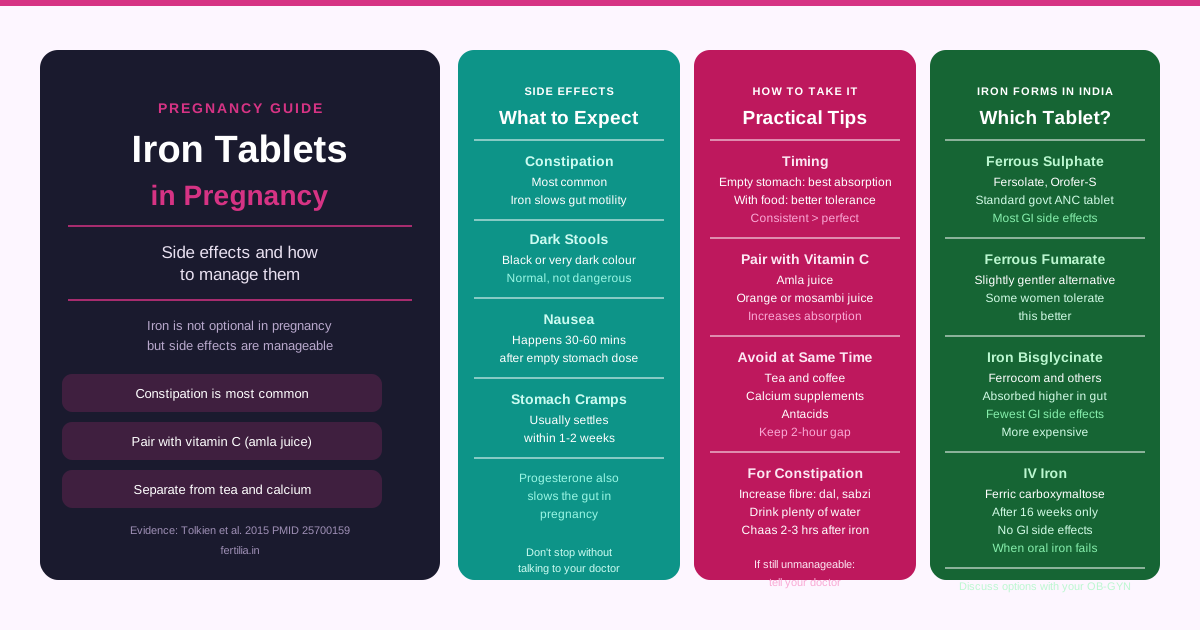
Constipation
This is the side effect women report most often, and the one most likely to cause them to stop taking iron supplements. A 2015 systematic review and meta-analysis published in PLOS ONE (Tolkien et al., PMID 25700159) confirmed that ferrous sulphate supplementation causes significantly more gastrointestinal side effects than a placebo, with constipation being the leading complaint.
Why does it happen? Iron is absorbed in the small intestine, and unabsorbed iron passes into the large intestine. Here it can alter the gut’s bacterial environment and slow gut motility. The result is stools that move more slowly and become harder.
Pregnancy already slows the gut. Progesterone, the hormone that keeps the uterus relaxed during pregnancy, has the same relaxing effect on the muscles of the digestive tract. Add iron to a system that is already sluggish, and constipation is predictable rather than coincidental.
Dark or Black Stools
This frightens many women. When you see a very dark or almost black stool after starting iron tablets, it almost always means the iron is doing what it is supposed to do. Unabsorbed iron reacts with hydrogen sulphide in the gut and forms iron sulphide, which is black. This is harmless and expected.
The exception: if you notice very dark, sticky, tar-like stools with an unusual smell, and you feel unwell, that could indicate bleeding in the gut rather than iron excretion. Tell your doctor if the stool description worries you.
Nausea and Stomach Upset
Iron on an empty stomach is more efficiently absorbed, but it is also harder on the stomach lining. Many women feel a wave of nausea 30 to 60 minutes after taking their tablet on an empty stomach. This is a direct local effect of the iron on the gastric mucosa.
Stomach Cramps
Similar in mechanism to nausea, stomach cramps tend to occur when iron causes irritation further along the digestive tract. They usually settle within the first two weeks as the gut adjusts, though some women continue to find certain formulations uncomfortable throughout pregnancy.
Types of Iron Tablets Available in India
Not all iron supplements cause the same degree of side effects. The formulation matters.
Ferrous sulphate (brands: Fersolate, Orofer-S, Ferro-XT and others) is the most commonly prescribed form in India and in government antenatal kits. It is inexpensive and effective at raising haemoglobin. It is also the form most associated with constipation and nausea in the evidence base. The high dose in standard Indian IFA tablets (100 mg elemental iron) means more iron reaches the colon unabsorbed.
Ferrous fumarate is another ferrous (iron 2+) salt, sometimes prescribed as a slightly gentler alternative. The difference in GI side effects compared to ferrous sulphate is small, but some women do better on it.
Iron bisglycinate (brands: Ferrocom and others) is a chelated form where iron is bound to the amino acid glycine. It is absorbed earlier in the small intestine, which means less iron reaches the colon and causes fewer GI side effects. A number of comparative studies have shown lower rates of constipation with bisglycinate compared to ferrous salts. It is more expensive, and it is not part of the government’s standard ANC kit, but it is available in India and may be worth discussing with your obstetrician if ferrous sulphate is genuinely unmanageable.
Ferric carboxymaltose injection (brand: Injectafer) is an intravenous iron formulation used when oral iron fails, when the deficiency is severe, or when the pregnancy is advanced and oral iron cannot raise haemoglobin quickly enough. IV iron carries none of the GI side effects because it bypasses the gut entirely. It is given as a hospital or clinic procedure after 16 weeks of pregnancy. It is not a first-line treatment, but it is a real option for women who cannot tolerate oral iron.
How to Take Iron to Make It More Tolerable
These adjustments can make a significant difference. Try them before deciding that iron tablets do not agree with you.
Take it with food if the stomach cannot tolerate empty-stomach dosing
The pharmacology textbook says iron is best absorbed on an empty stomach, and that is correct. But a tablet you tolerate and take consistently beats a tablet you take perfectly once and then abandon. If nausea is the problem, take the tablet with a small, light meal. Absorption drops by around 40% with food, but you are still taking in far more iron than you would by stopping the tablet. Tell your obstetrician so she can monitor your haemoglobin and ferritin and adjust the plan if needed.
Pair it with vitamin C
Vitamin C converts iron from its less-absorbable ferric form to the more-absorbable ferrous form, and it keeps iron in solution in the intestine so more of it is taken up before it reaches the colon. Taking your iron tablet with a glass of amla juice, a glass of fresh orange or mosambi juice, or a tomato-based meal meaningfully increases how much iron you absorb. More iron absorbed in the upper gut means less iron reaching the lower gut, which means less constipation.
A small glass of amla juice (about 100 ml) provides around 300–600 mg of vitamin C, which is well above the amount needed to enhance iron absorption.
Avoid these at the same time as your iron tablet
- Tea and coffee: The tannins in chai and filter coffee bind to iron in the gut and can reduce absorption by 50 to 80%. Keep at least a two-hour gap between your iron tablet and your next cup of tea or coffee.
- Calcium supplements or dairy: Calcium competes directly with iron for absorption through the same intestinal transporter. If you are taking a calcium supplement for your pregnancy, separate it from your iron tablet by at least two hours. Dahi, milk, and paneer at the same meal as your iron tablet have the same effect, though the impact is smaller with whole foods than with high-dose supplements. For more on calcium requirements during pregnancy, see our guide to calcium in pregnancy: when to start and how much per trimester.
- Antacids: If you are taking antacids for heartburn (a common pregnancy symptom), avoid taking them at the same time as your iron. Antacids raise the pH of the stomach, which reduces iron absorption. Take them at separate times of day.
Increase dietary fibre and fluid intake
If constipation is the main issue, increasing dietary fibre and fluids is the most direct dietary approach. Dal, whole grains, sabzi, and fruits all add fibre. Plenty of water throughout the day keeps stools from hardening. Buttermilk (chaas) is a useful addition: it keeps the gut moving without interfering with iron absorption the way regular milk can, and it is easy on a pregnant stomach. You can take chaas two to three hours after your iron tablet.
Ask about switching to a different formulation
If you have tried all the above and the GI side effects are still making daily tablets impossible, talk to your obstetrician about switching. An iron bisglycinate supplement, a lower elemental-iron dose taken twice daily instead of once, or IV iron after 16 weeks are all medically reasonable options. Your doctor needs to know what is happening. Quietly stopping is not.
If iron side effects are making your pregnancy harder to manage, or if you are not sure whether your iron levels are where they need to be, you can talk it through with Dr. Suganya Venkat over a video consultation. She works with pregnant women across India online, and pregnancy supplement management is something she reviews in every antenatal case.
Book a video consultation on WhatsApp
What About Iron-Rich Foods Alongside Tablets?
Iron-rich foods are worth eating throughout pregnancy, but they cannot replace supplemental iron when your haemoglobin is low. The iron in plant foods (non-haem iron) is absorbed at around 2 to 10%, compared to 15 to 35% for haem iron from meat. Even with optimal food choices, food alone cannot deliver 100 mg of elemental iron reliably every day.
Think of food as working alongside the tablet, not instead of it. Pairing iron-rich foods with vitamin C sources at the same meal is one of the most effective everyday habits: rajma with tomato gravy, palak with lemon squeeze, chana with raw onion. For a practical breakdown of iron-rich foods for pregnancy and portions, see our guide to iron-rich Indian foods for pregnancy.
What Pregnancy Constipation in General Looks Like
Iron-related constipation in pregnancy sits on top of constipation that is already common in pregnancy for other reasons. Progesterone slows the gut, the uterus presses on the intestines as it grows, and less physical activity in later pregnancy slows things further. If the iron is making this much worse, a practical management plan matters.
In most cases, constipation resolves after delivery, but the postpartum period brings its own constipation challenges for different reasons. If you want to understand what is happening after delivery, our guide to constipation after delivery: causes and safe relief covers the postpartum context separately.
pregnancy mein iron ki goli ke side effects: kya jaanna zaroori hai
Iron tablets se pregnancy mein sabse zyada jo problem hoti hai wo constipation hai. Kyunki iron colone mein pahunchke gut ki movements ko slow kar deta hai. Ye dawaai band karna sahi nahi hai. Sabse pehle apni dawaai khane ke saath lena shuru karein, amla juice ke saath lein, aur chai-coffee se do ghante door rakhein. Agar phir bhi side effects theek na hon, apni doctor se iron bisglycinate ya injection ke baare mein baat karein.
Frequently Asked Questions
Can I stop taking iron tablets if they are causing constipation?
No, not without talking to your obstetrician first. Constipation from iron tablets is common and manageable in most cases. Stopping the tablets leaves your anaemia unaddressed, which carries its own risks in pregnancy including fatigue, breathlessness, and an increased need for blood transfusion at delivery. Try the management strategies in this post first, and if they are not working, tell your doctor so she can adjust the formulation or dose rather than stopping treatment altogether.
Why are my stools black after starting iron tablets?
Black or very dark stools are a normal and expected consequence of iron supplementation. Unabsorbed iron reacts with compounds in the gut to form iron sulphide, which colours the stool. It is not a sign that anything is wrong. If you are genuinely worried, or if the stool looks tar-like and you feel unwell, mention it at your next antenatal visit.
When is the best time to take iron tablets in pregnancy?
On an empty stomach in the morning is the recommendation for maximum absorption, but only if you can tolerate it. If nausea or cramps make this impossible, taking the tablet with a light meal is better than not taking it at all. The most important thing is that you take it consistently. Pairing it with a vitamin C source (amla juice, orange juice, lemon water) at the same time improves absorption regardless of whether you take it with or without food.
Can I take my calcium supplement at the same time as my iron?
No. Calcium competes with iron for absorption, and taking them together significantly reduces how much iron you absorb. Separate your calcium and iron tablets by at least two hours. Many women take iron in the morning and calcium in the evening, or vice versa.
What is the difference between ferrous sulphate and iron bisglycinate?
Ferrous sulphate is the standard form of iron prescribed in India. It is effective and inexpensive but causes more GI side effects because a higher proportion of the dose reaches the colon unabsorbed. Iron bisglycinate is a chelated form absorbed earlier in the gut, leaving less iron to irritate the colon. It causes fewer side effects but is more expensive and is not available in government ANC kits. It is worth discussing with your obstetrician if ferrous sulphate is genuinely not manageable.
When is IV iron used in pregnancy?
Intravenous iron (such as ferric carboxymaltose, brand name Injectafer) is considered when oral iron has failed, when the haemoglobin deficit is too large for oral supplementation to correct in time, or when a woman cannot tolerate any oral iron formulation. It is given after 16 weeks of pregnancy and avoids all GI side effects because it bypasses the gut. Your obstetrician will advise whether this is appropriate for your situation.
How long does it take for iron tablets to raise haemoglobin?
With consistent daily supplementation and without any absorption issue, haemoglobin typically begins to rise within two to four weeks. A meaningful correction (reaching the target for your stage of pregnancy) usually takes six to eight weeks. Ferritin stores take longer, often three to six months after haemoglobin normalises. This is why taking the tablet consistently throughout pregnancy matters, not just until the next blood test shows improvement.
If the side effects from your iron tablets are affecting your daily life during pregnancy, or if you are not sure whether your iron and haemoglobin levels are where they should be, you do not have to figure this out alone.
Talk to Dr. Suganya Venkat about your pregnancy on WhatsApp
Fertilia’s pregnancy support program covers trimester-wise supplement guidance, nutrition, and ongoing monitoring of your blood markers from wherever you are in India, all online.