Somewhere around your fifth or sixth month, the antenatal slip will say “GTT”, “OGTT”, “GCT” or simply “sugar test”. Then the questions start. Do I need to come empty stomach? Can I drink water? How long will I sit there? What if I vomit the drink? And what does the number on the report mean?
This post walks you through the test itself, the way you will live it on the day. It is one of the most routine tests in pregnancy, and once you know what each version involves, it becomes a calm two-hour morning rather than a source of worry.
Here is what this post covers:
- The difference between the GCT, the OGTT and the non-fasting 75 g test used across India
- Whether you need to fast, and what to eat in the days before
- What happens on the day, step by step, and what to bring
- How to read your result, with the cut-offs each test uses
- What happens next if a value comes back high
Three Tests, Three Names: GCT, OGTT and the Indian Single-Step Test
The confusion around this test is mostly about names. Three different procedures are in use, and in everyday speech all of them get called “the glucose test”.
The glucose challenge test (GCT): a screen
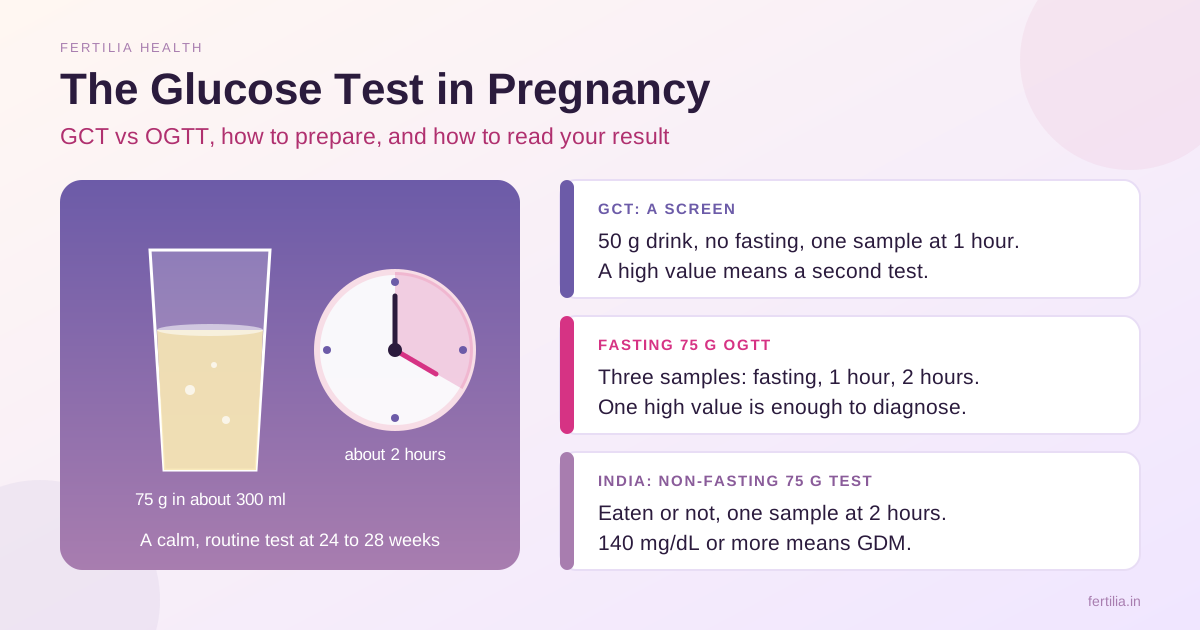
In the two-step approach, you first drink a 50 g glucose drink without needing to fast, and blood is taken one hour later. This is a screening test. A high value does not mean you have gestational diabetes. It only means you go on to a second, longer test with a 100 g glucose drink taken after fasting, which is the one that makes or rules out the diagnosis (Hillier TA et al., N Engl J Med, 2021, PMID 33704936). The American College of Obstetricians and Gynecologists describes this same sequence in its patient guide to routine pregnancy tests: a sugar drink, a blood sample an hour later, and a confirmatory glucose test if the level is high (acog.org, “Routine Tests During Pregnancy”, checked October 2026).
The fasting 75 g OGTT: one visit, three blood samples
In the one-step approach, there is no screen. You come after an overnight fast, give a fasting blood sample, drink 75 g of glucose, and give two more samples at one hour and two hours. These are the criteria set out by the International Association of Diabetes and Pregnancy Study Groups (IADPSG), and the diagnosis is made if any one of the three values reaches its threshold (Metzger BE et al., Diabetes Care, 2010, PMID 20190296). Many private hospitals and laboratories offer this version.
The non-fasting 75 g test: India’s national single-step test
India’s national guideline takes a simpler route. You drink 75 g of glucose dissolved in about 300 ml of water, whether or not you have eaten, and one blood sample is taken two hours later. A value of 140 mg/dL or more is diagnostic of gestational diabetes (Ministry of Health and Family Welfare, Diagnosis & Management of Gestational Diabetes Mellitus: Technical and Operational Guidelines, 2018, nhm.gov.in). This is the test widely known as the DIPSI test, after the Diabetes in Pregnancy Study Group India.
The idea was developed in Chennai. In a study of 800 pregnant women, a 75 g test done irrespective of the timing of the last meal gave a glycaemic profile with no statistically significant difference from the fasting WHO OGTT done 72 hours later, and the authors described it as a patient-friendly approach that causes the least disturbance to a pregnant woman’s routine (Anjalakshi C et al., Acta Diabetol, 2009, PMID 18830559). You do not have to arrange an empty-stomach trip to the lab, which matters a great deal for a woman travelling from a village to a primary health centre.
A quick way to tell which test you are booked for: look at two things on your slip, the grams of glucose (50, 75 or 100) and whether the instructions say “fasting”. That tells you more than the name, because some labs also call the non-fasting 75 g test a “GCT”.
| Test | Glucose drink | Fasting needed? | Blood samples | What it tells you |
|---|---|---|---|---|
| GCT (two-step, first step) | 50 g | No | 1, at 1 hour | Screen only; high means a second test |
| 100 g OGTT (two-step, second step) | 100 g | Yes | Several | Diagnosis |
| Fasting 75 g OGTT (IADPSG) | 75 g | Yes, overnight | 3: fasting, 1 hour, 2 hours | Diagnosis |
| Non-fasting 75 g test (India national / DIPSI) | 75 g | No | 1, at 2 hours | Diagnosis |
Does It Matter Which Test You Get?
This is a fair question, because the tests do not catch the same number of women. The largest head-to-head comparison is a pragmatic trial of 23,792 pregnant women in two US health systems. Gestational diabetes was diagnosed in 16.5% of women assigned to the one-step 75 g test and in 8.5% of those assigned to the two-step approach. Yet the rates of large-for-gestational-age babies (8.9% against 9.2%), high blood pressure or preeclampsia (13.6% against 13.5%) and primary caesarean section (24.0% against 24.6%) were almost the same in both groups (Hillier TA et al., N Engl J Med, 2021, PMID 33704936).
What that means for you: the one-step test labels more women, and experts still debate where the line should sit. It does not mean one test is right and the other is wrong. Each of the approaches above is a recognised, evidence-based way to screen, and the most useful thing you can do is complete whichever test your obstetrician has ordered, at the right time, rather than switching labs looking for a “better” one.
When the Test Is Done
The usual window is 24 to 28 weeks of pregnancy. India’s national guideline goes a step further and recommends testing twice: once at your first antenatal visit, as early as possible, and again at 24 to 28 weeks if the first test was normal, with at least four weeks between the two. The guideline gives the reason plainly: many women develop blood sugar intolerance in the 24 to 28 week window, and only about a third of women with gestational diabetes are picked up in the first trimester (MoHFW GDM guidelines, 2018, nhm.gov.in).
If you are coming for your first antenatal visit after 28 weeks, the same guideline says one test is done at that visit.
Your doctor may also suggest testing earlier if you have PCOS, had gestational diabetes in a previous pregnancy, or have a parent or sibling with type 2 diabetes. Our guide to gestational diabetes symptoms and who should test early goes through those risk factors in detail.
How to Prepare: Fasting, Food and Medicines
If your test is the fasting 75 g OGTT or the 100 g test, you will be asked to fast overnight. Each laboratory gives its own fasting window on the slip, so follow that. Plain water is usually allowed; tea, coffee, milk, juice and biscuits are not. Book the earliest morning slot you can, so the fast does not stretch into late morning.
If your test is the non-fasting 75 g test or the 50 g GCT, you do not need to fast. Have your usual breakfast and go.
In the days before any version, eat as you normally do. It can be tempting to skip rice or sweets for a few days to “pass” the test. Please do not. The test is meant to show how your body handles an ordinary day of eating, and that is the information your doctor needs to look after you and the baby.
Medicines: if you take thyroid tablets, iron, calcium or any other regular medicine, ask your doctor or the lab ahead of time whether to take it before or after the test. If you are already on metformin or insulin, tell your doctor before the test is booked, because the plan may be different for you.
What to bring:
- Your antenatal file or card and the test slip
- A bottle of water (for the fasting test, to drink before and after as the lab allows)
- A light snack, such as a few idlis, a banana or roasted chana, to eat as soon as the last sample is taken
- Something to read, or a family member for company
- Comfortable clothes with sleeves that roll up easily
On the Day: What Happens, Step by Step
- Registration and, for the fasting test, the first blood sample. This is drawn before you drink anything.
- The glucose drink. For India’s non-fasting 75 g test, the glucose is dissolved in about 300 ml of water, and the national guideline asks that it be finished within 5 to 10 minutes. For the fasting OGTT and the GCT, follow the lab’s own instructions on how quickly to finish the drink and when each sample is taken, because the timing is part of the test. It is very sweet. Sipping steadily within the time the lab gives you, rather than gulping, helps many women keep it down.
- The wait. One hour for the GCT, two hours for the 75 g tests. Most labs ask you to stay seated in the waiting area and not eat, drink tea or walk around outside until the last sample is taken, because food and activity can change the reading. Water is usually fine, but ask the lab.
- The blood samples. One for the GCT and the non-fasting 75 g test; three in total for the fasting 75 g OGTT.
- Eat. Have your snack as soon as the last sample is done.
What if I vomit the drink? This is common in women who still have some nausea, and it is nothing you have done wrong. For India’s non-fasting 75 g test, the national guideline is specific: if you vomit within 30 minutes of the glucose drink, the test is repeated on another day; if you vomit after 30 minutes, the test continues as planned (MoHFW GDM guidelines, 2018, nhm.gov.in). For the fasting OGTT, the 100 g test or the GCT, the lab and your doctor will decide whether the test can continue or needs to be rescheduled. Tell the staff either way. If nausea is still a big part of your day, our post on morning sickness and safe remedies has practical tips for the days around the test.
Feeling light-headed or shaky during the wait happens to some women, especially after a long fast. Tell the staff straight away. Sitting quietly with water is usually enough, and the lab will guide you if not.
💜 Your glucose test is coming up and you are not sure which version you have been booked for? Message Dr. Suganya on WhatsApp to book a ₹399 video consultation. Send a photo of your test slip, and we will go through what to expect and how to prepare.
How to Read Your Result
Your report will show one or more glucose values in mg/dL, the unit used in India. Reports from the UK, Australia, Singapore or Canada may use mmol/L instead; the IADPSG thresholds in those units are 5.1, 10.0 and 8.5 (Metzger BE et al., Diabetes Care, 2010, PMID 20190296).
| Test | Normal | Gestational diabetes |
|---|---|---|
| Non-fasting 75 g test, 2-hour value (India national / DIPSI) | Below 140 mg/dL | 140 mg/dL or above |
| Fasting 75 g OGTT (IADPSG), fasting value | Below 92 mg/dL | 92 mg/dL or above |
| Fasting 75 g OGTT (IADPSG), 1-hour value | Below 180 mg/dL | 180 mg/dL or above |
| Fasting 75 g OGTT (IADPSG), 2-hour value | Below 153 mg/dL | 153 mg/dL or above |
Sources: MoHFW GDM guidelines, 2018 (nhm.gov.in); Metzger BE et al., Diabetes Care, 2010, PMID 20190296.
For the fasting 75 g OGTT, one high value is enough. Under the IADPSG criteria, you do not need all three values to be high; any one value at or above its threshold makes the diagnosis (Metzger BE et al., Diabetes Care, 2010, PMID 20190296). Women are often surprised by this, especially when two of the three numbers look perfect.
For the 50 g GCT, a high value is not a diagnosis. It only means you are booked for the longer confirmatory test. The cut-off for a positive screen differs between laboratories and guidelines, so read the reference range printed on your own report rather than comparing it with a friend’s.
A very high fasting value is handled a little differently. If the fasting value is in the diabetes range (126 mg/dL or above under the IADPSG recommendations, Metzger BE et al., Diabetes Care, 2010, PMID 20190296), your doctor may treat this as diabetes that was present before pregnancy and simply not known, rather than gestational diabetes. The care is closer and more structured, and the plan is the same in spirit: steady sugars for the rest of the pregnancy.
A normal result means you continue routine care. If it was your first-visit test, remember the second one at 24 to 28 weeks.
Glucometer readings at a health centre: at primary health centres, India’s national programme allows the test to be read on a plasma-calibrated glucometer so that you get your result the same day (MoHFW GDM guidelines, 2018, nhm.gov.in), and the reading counts as your test result.
If Your Value Comes Back High
A high value is a diagnosis that leads to a plan. For most women it is not an emergency, and the first step is usually food and movement, not medicine. The exception is a very high value, or symptoms such as constant thirst, passing urine very often, blurred vision or feeling unwell. In that case, contact your obstetrician promptly, ideally the same day, because some women need medicine started straight away rather than after a diet trial.
India’s national guideline starts women with gestational diabetes on medical nutrition therapy (a structured diet plan) for two weeks, then checks a two-hour post-meal sugar. If that reading is below 120 mg/dL, you continue with the diet and regular monthly checks. If it is 120 mg/dL or above, metformin or insulin is added (MoHFW GDM guidelines, 2018, nhm.gov.in). Both are well-established treatments in pregnancy, and starting one is a way of keeping your numbers where they need to be, not a sign that you have failed at the diet.
For the meal plan itself, with Indian foods, portion ideas and blood sugar targets, read our full guide to gestational diabetes in India: OGTT cut-offs and diet plan. If gestational diabetes means you have now been told your pregnancy is “high-risk”, our post on what a high-risk pregnancy label means and how care works explains what changes in your follow-up and what stays the same.
In Dr. Suganya Venkat’s video consultations, the first thing she usually does with a new gestational diabetes result is look at which test was done and which value was high, because a single raised fasting value and a single raised two-hour value point to slightly different adjustments in the day’s meals.
The Test After Delivery: Easy to Forget, Worth Doing
Gestational diabetes usually settles after the baby is born. But it does leave a longer-term signal. A meta-analysis of 20 studies covering 675,455 women found that women who had gestational diabetes were about seven times more likely to develop type 2 diabetes later than women whose pregnancy sugars were normal (relative risk 7.43) (Bellamy L et al., Lancet, 2009, PMID 19465232).
That sounds heavy, so here is the useful part: it means a single simple test after delivery can catch any change early, when lifestyle changes make the biggest difference. India’s national guideline recommends a 75 g OGTT at 6 weeks after delivery, with a fasting and a two-hour sample. A two-hour value below 140 mg/dL is normal, 140 to 199 mg/dL is impaired glucose tolerance, and 200 mg/dL or above is diabetes. Your doctor will also read the fasting value, because a raised fasting sugar can point to impaired fasting glucose or diabetes even when the two-hour value is normal. The test counts as normal only when both values are in the normal range. If the test is normal, the guideline advises an annual check (MoHFW GDM guidelines, 2018, nhm.gov.in).
Ask for this test at your six-week postpartum check-up, and put the yearly reminder in your phone.
What It Is Called in Everyday Language
Most women in India never hear the word “OGTT” at home. In Hindi-speaking families it is usually “sugar test” or “pregnancy mein sugar test”, and a high result becomes “pregnancy mein sugar aa gayi”. In Tamil Nadu and across the South, the English “sugar test” is the everyday name too. Whatever the name, the questions are the same: do I fast, how long does it take, and what does the number mean. The sections above answer each one.
Practical Takeaways
- Check two things on your slip: the grams of glucose and whether it says “fasting”. That tells you which test you have.
- Fast overnight only if the slip asks for it. For the non-fasting 75 g test and the 50 g GCT, eat breakfast as usual.
- Eat normally in the days before. Do not cut carbohydrates to “pass”.
- Plan for two hours of sitting quietly, and carry water and a snack for afterwards.
- If you vomit within 30 minutes of the drink, the test is usually repeated on another day.
- For the fasting 75 g OGTT, one value at or above its threshold is enough for a diagnosis.
- A high result leads to a plan, usually starting with diet and movement.
- If you had gestational diabetes, book the 75 g test at 6 weeks after delivery, then check once a year.
Frequently Asked Questions
Is the glucose test in pregnancy done fasting or not?
It depends on the version. The fasting 75 g OGTT (three samples) and the 100 g confirmatory test need an overnight fast. India’s national single-step 75 g test, often called the DIPSI test, is done whether or not you have eaten, and the 50 g glucose challenge test also does not need fasting. Your test slip will say which one you are booked for.
What is the difference between GCT and OGTT in pregnancy?
The GCT (glucose challenge test) is a screening test: you drink 50 g of glucose and blood is taken after one hour. A high result only means you need a longer confirmatory test. The OGTT (oral glucose tolerance test) is the diagnostic test, using 75 g or 100 g of glucose with timed blood samples. In India, the national guideline uses a single non-fasting 75 g test that both screens and diagnoses in one step.
How long does the glucose test take in pregnancy?
Plan for about two hours for the 75 g tests, plus waiting time at the lab. The 50 g GCT takes about one hour. You will be asked to stay seated and not eat until the final sample is taken.
Can I drink water before the OGTT in pregnancy?
Plain water is usually allowed during a fasting test, and many labs encourage it so that the blood draw is easier. Tea, coffee, milk, juice and anything with sugar are not allowed. Because instructions vary slightly between labs, check the slip or ask when you book.
What is the normal value for the 75 g glucose test in pregnancy?
For India’s non-fasting 75 g test, a two-hour value below 140 mg/dL is normal (MoHFW guidelines, 2018). For the fasting 75 g OGTT under IADPSG criteria, normal is below 92 mg/dL fasting, below 180 mg/dL at one hour, and below 153 mg/dL at two hours, and any one value at or above its cut-off is diagnostic.
What happens if I vomit after drinking the glucose?
For India’s non-fasting 75 g test, the national guideline says that if you vomit within 30 minutes of finishing the drink, the test should be repeated on another day, and if you vomit after 30 minutes, the test continues. For the fasting OGTT or the GCT, the lab and your doctor decide whether the test can continue or needs to be rescheduled. Let the staff know either way.
Pregnancy mein sugar test kab hota hai?
The sugar test in pregnancy is usually done between 24 and 28 weeks. India’s national guideline recommends testing at your first antenatal visit as well, and again at 24 to 28 weeks if that first test was normal. Your doctor may test earlier if you have PCOS, a family history of diabetes, or had gestational diabetes before.
Talking It Through Before or After Your Test
If you have just booked the test, or you are holding a report and are not sure what the numbers mean for the rest of your pregnancy, a short conversation usually settles it. I am Dr. Suganya Venkat, an OB-GYN with more than 15 years of experience, and I go through glucose reports with pregnant women across India over video consultations, alongside the care they are already receiving from their own obstetrician.
💜 Want help reading your glucose test result? Message Dr. Suganya on WhatsApp to book a ₹399 video consultation, available online across India. You can also download our free pregnancy guide for trimester-by-trimester support, or read about the 90-day Pregnancy Care program.