You roll over in bed and a sharp, catching pain hits somewhere between your hip and groin. Gone in seconds. Or it strikes when you stand up quickly from a chair, when you sneeze, when you laugh unexpectedly. The sheer suddenness of it is alarming. That kind of sharp is supposed to signal something serious.
In this case, it almost certainly does not.
What you felt is round ligament pain: one of the most common discomforts of the second trimester, and one of the most startling precisely because of how it arrives without warning.
I am Dr. Suganya Venkat, an OB-GYN with over fifteen years of clinical practice. In consultations at Fertilia, I hear about this pain from women in their second trimester almost every week. The first time it happens, women call in worried. By the third episode, they have usually learned the trick that stops it in its tracks. This guide covers everything you need to know.
What Are the Round Ligaments?
Your uterus is not floating freely inside your pelvis. Several ligamentous structures hold it in position, and two of the most important are the round ligaments.
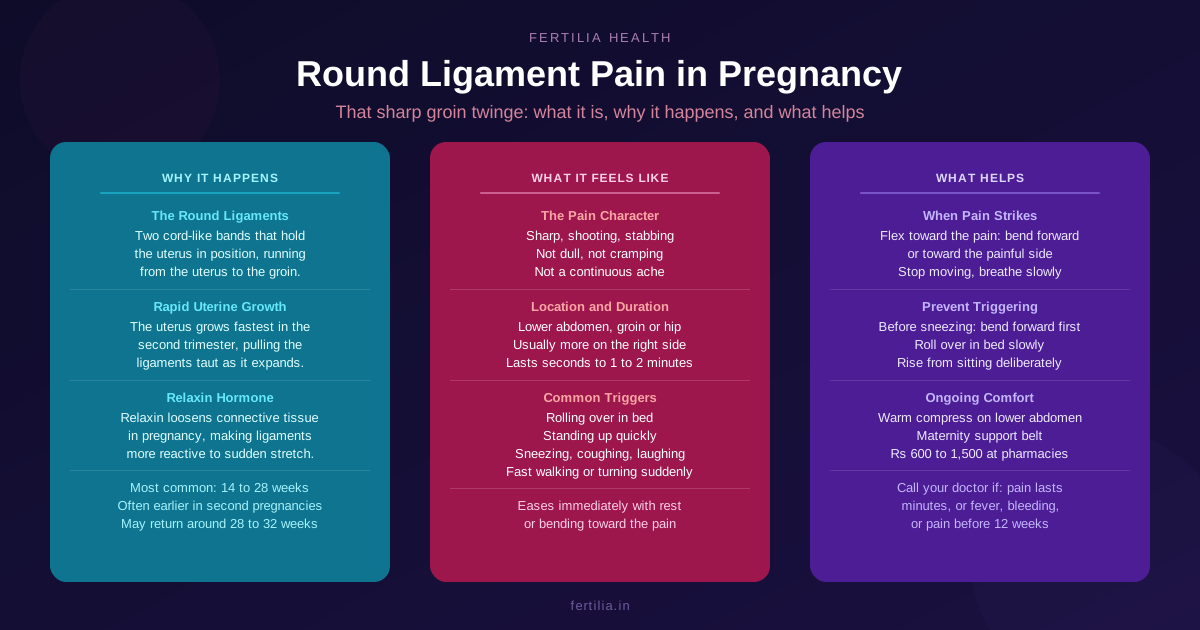
Each round ligament is a thick, cord-like band that runs from the top front of the uterus, passes through the inguinal canal (the channel in your lower abdomen through which nerves and vessels also travel), and attaches in the area of the labia majora. Before pregnancy, each round ligament is roughly 10 to 12 centimetres long. Their job is to keep the uterus from tilting too far backward and to support it as it changes position.
In pregnancy, as the uterus grows and rises out of the pelvis, these ligaments are stretched considerably. The second trimester is when they feel this tension most acutely.
Why Round Ligament Pain Happens in Pregnancy
Two processes combine to produce the pain.
The first is mechanical stretch. From early pregnancy onward, the uterus grows steadily. Through the second trimester it expands from roughly the size of a mango to the size of a papaya. This growth pulls the round ligaments taut. The more rapidly the uterus changes size and position, the more tension they carry.
The second is hormonal. Relaxin is a hormone produced from early pregnancy that loosens connective tissue throughout the body, preparing the pelvis for delivery. The round ligaments are affected. They become more elastic, which sounds beneficial, but it also makes them more reactive: when the ligament is pulled sharply and suddenly, it contracts in a brief spasm. The experience is not unlike a muscle cramp, except it is in a structure most people have never thought about before.
The pain is the ligament’s response to being stretched faster than it was prepared for.
When Round Ligament Pain Is Most Common
The second trimester, from around 14 weeks onward, is when most women first notice it. The uterus is growing at its fastest pace and the ligaments feel the most strain.
Women who have been pregnant before often notice it earlier than first-time mothers. The ligaments have been stretched once already; they are more sensitive in a second or subsequent pregnancy, and the uterus tends to show sooner.
Some women feel it again in the third trimester, particularly between 28 and 32 weeks, as the uterus makes another significant growth push. It tends to ease somewhat in the final weeks, when the baby engages deeper into the pelvis and the rate of uterine expansion slows.
What Round Ligament Pain Feels Like
The character of the pain is fairly consistent, which is one of the ways you can recognise it.
Sharp and shooting, not aching or dull. It arrives intensely and suddenly. Women sometimes describe it as a stabbing or catching sensation. It is not a continuous ache, not a pressure, not the tightening of a Braxton Hicks contraction.
One-sided or both, but often on the right. The uterus naturally tilts slightly to the right during pregnancy, a positioning called dextrorotation. This is the usual explanation offered for why many women feel the pain predominantly on the right side. Both sides can be affected, and some women feel it alternating.
In the lower abdomen, groin, or upper inner thigh. The pain follows the path of the ligament: from the lower front of the uterus down toward the groin. Some women feel it radiate into the inner thigh.
Brief. Most episodes last a few seconds to two minutes. It should ease when you stop moving or change position.
Triggered by movement. Specifically: rolling over in bed, standing up quickly from sitting, sneezing, coughing, laughing, walking at a fast pace, climbing stairs, or turning suddenly. This movement-trigger pattern is the clearest sign that what you are experiencing is round ligament pain rather than something else.
If the pain you are feeling does not match this pattern, particularly if it is constant rather than episodic, or if it is accompanied by other symptoms, it is worth getting it checked.
How to Get Relief When It Strikes
Flex toward the pain. This is the most reliable immediate reliever. Bend forward slightly, or toward the side where the pain is most intense. This reduces the tension on the stretched ligament. If you are lying down, pulling your knees toward your chest does the same. Most women find this eases the spasm within a few seconds.
Stop moving. The ligament reacts to sudden movement. When the pain starts, slow down immediately. A few seconds of stillness usually allows the spasm to settle.
Take a slow, deliberate breath. Shallow breathing keeps the abdominal muscles tense; a slow exhale helps release them.
A warm compress. Once the acute spasm has passed, a warm cloth or a small hot-water bottle wrapped in a towel placed over the lower abdomen can ease the residual discomfort. Do not use a hot pad directly on the skin.
Learn the sneeze trick. If you feel a sneeze or cough coming, bend forward slightly and bring your knees a little closer together before it arrives. This simple adjustment dramatically reduces how often the pain is triggered. Most women who do this regularly find episodes become much less frequent within a week or two.
For staying active comfortably during pregnancy, see our guide on safe pregnancy exercises by trimester.
How to Reduce How Often It Triggers
Move slowly, especially first thing in the morning. Rolling over in bed should be deliberate: knees together, then roll. Getting out of bed: bring both knees toward your chest, swing both feet to the floor together, then push to sitting. Rushing through these transitions is the most common trigger, and slowing them down makes an immediate difference.
Try a maternity support belt. A good-quality prenatal support belt distributes some of the weight of the uterus and reduces the strain on the round ligaments. Look for one with a strap that sits below the bump, cradling the uterus from underneath rather than pressing over it, with adjustable velcro, and buy a size up from your pre-pregnancy waist. Wear it for stretches of activity (standing, walking, long periods on your feet) rather than all day, so your core muscles do not become reliant on it. These are available at most Indian pharmacies and online for around Rs 600 to 1,500. Many women find it reduces the frequency of episodes, especially if they are on their feet for long stretches.
The direct trial evidence here is indirect. A 2013 Cochrane review (Pennick and Liddle, PMID 23904227) reported low-quality evidence that support garments can reduce pain and disability in pregnancy. It studied pelvic girdle and low-back pain, not round ligament pain specifically, but the mechanism is the same, offloading the weight of the uterus, and in practice I find belts help most for the women whose episodes cluster around long periods on their feet.
Avoid prolonged standing in unsupportive footwear. The more load the uterus carries unsupported, the more tension in the ligaments. A short rest with feet up when the episodes are frequent often settles things within a few hours.
Follow your pregnancy week by week to understand how your body is changing at each stage.
If round ligament pain is frequent or getting in the way of daily activity, a quick online consultation with Dr. Suganya Venkat at Fertilia can help you manage the rest of pregnancy more comfortably. WhatsApp to book a video call.
Round Ligament Pain vs Other Pregnancy Pains
Several other pregnancy-related discomforts can feel similar at first glance. Knowing what distinguishes them helps you triage quickly.
Braxton Hicks contractions. Braxton Hicks are a tightening of the whole uterus, felt as a hardening of the entire abdomen. They are not sharp; they are more of a pressure or squeeze. They typically last 30 seconds to a minute. Round ligament pain is localised, shooting, and triggered by movement, not a whole-abdomen tightening. See our complete guide: Braxton Hicks Contractions: Real Labour vs False Alarms.
Pelvic girdle pain (PGP) or symphysis pubis dysfunction. PGP is pain in the joints of the pelvis. It is aching, chronic, and worsened by sustained activity such as walking, climbing stairs, or standing on one leg. It persists and builds over time rather than appearing and resolving within seconds. Round ligament pain is brief and episodic. Both are common in pregnancy but managed differently. For PGP, read: Pelvic Girdle Pain in Pregnancy: Why Your Hips and Pelvis Hurt.
Appendicitis. The appendix also sits in the lower right abdomen, so appendicitis can initially seem like it might be round ligament pain. The difference: appendicitis builds gradually over hours, becomes constant rather than episodic, is usually accompanied by nausea, loss of appetite, and fever, and does not ease with position change. If right-sided pain is building rather than resolving, or if fever is present, seek emergency care.
Pre-term labour contractions. Labour contractions are regular, rhythmic, and tend to intensify rather than ease. They come in a wave-like pattern that repeats. If you have contractions before 37 weeks that are regular (every 5 to 10 minutes or more frequent), call your doctor.
Urinary tract infection (UTI). UTIs are very common in pregnancy and can cause lower abdominal pain. The distinguishing sign is a burning or stinging sensation when you urinate, or needing to go very frequently. If you have lower abdominal pain alongside any urinary symptoms, get a urine test done promptly. UTIs in pregnancy can progress to kidney infections if left untreated.
What Round Ligament Pain Is Called in Hindi and Tamil
Women searching in Indian languages often look for this pain using their own words:
| Language | Common search terms |
|---|---|
| Hindi | Pregnancy mein neeche pet mein sharp dard; garbhashay ke neeche tez dard; round ligament dard pregnancy mein |
| Tamil | Pregnancy la kizh vayiru vali; vayiru pakkam kutthura vali; garbam kizh vayiru kutthal |
| English (search) | Round ligament pain pregnancy; sharp pain in groin pregnancy; lower abdominal pain second trimester |
Note: there is no everyday Tamil term for the round ligament itself, so women usually describe it by location (lower-abdomen or groin pain). In a clinic, the English phrase “round ligament pain” is what is used and widely understood.
When to Call Your Doctor
Round ligament pain is benign and does not harm the baby. But call your doctor or midwife if:
- The pain lasts longer than several minutes and is not easing with rest or position change
- You have a fever alongside the pain
- The pain is accompanied by bleeding or spotting
- You feel light-headed or faint, or have pain at the tip of your shoulder
- You have burning or stinging on urination (possible UTI)
- The pain is constant rather than episodic and shooting
- You are before 12 weeks of pregnancy. Sharp one-sided pain this early needs a scan to rule out an ectopic pregnancy, especially alongside shoulder-tip pain, dizziness, or spotting
- You have pain in the right lower abdomen that is building and not resolving, with nausea or fever (rule out appendicitis)
- You have regular, rhythmic contractions before 37 weeks
If you are ever unsure whether what you are experiencing is round ligament pain or something else, call your doctor and describe the trigger, the duration, the location, and whether it resolves with rest. That information usually clarifies things quickly.
If your doctor has used the term “high-risk pregnancy”, our guide to the high-risk label and care explains the term and how monitoring is organised.
Questions about second-trimester symptoms or pregnancy care? Dr. Suganya Venkat offers online consultations for women across India at Rs 399. WhatsApp to book a video call.
Frequently Asked Questions
What does round ligament pain feel like? Round ligament pain is typically a sharp, shooting, stabbing sensation in the lower abdomen, groin, or upper inner thigh, usually on one side (more often the right). Each episode lasts a few seconds to about two minutes and is triggered by sudden movements: rolling over in bed, standing up quickly, sneezing, coughing, or laughing. It eases almost immediately when you stop moving or bend forward toward the painful side.
When does round ligament pain start in pregnancy? It most commonly begins in the second trimester, around 14 to 16 weeks, as the uterus grows rapidly and places increasing tension on the round ligaments. Women who have been pregnant before sometimes notice it earlier. It may ease and then return briefly around 28 to 32 weeks.
Can round ligament pain harm the baby? No. Round ligament pain is a normal pregnancy discomfort caused by stretching of the ligaments that support the uterus. It does not affect the baby and is not a sign of miscarriage, placental problems, or preterm labour. If the pain is brief, shooting, and triggered by movement, the baby is not in danger.
Pregnancy mein sharp dard: round ligament dard kya hota hai? Round ligament dard pregnancy ka ek common symptom hai, jo aksar doosri trimester mein (14 weeks ke baad) shuru hota hai. Achanak uthne, chhinkne, ya bister par karwat badlne se ek sharp shooting dard hota hai jo pet ke neeche ya groin area mein feel hota hai. Yeh kuch seconds mein kam ho jata hai. Agar dard kaafi der tak rahe, bukhar ho, ya bleeding ho, toh apne doctor se zaroor milein.
Round ligament pain vs pelvic girdle pain: what is the difference? Round ligament pain is sharp, brief, and episodic, triggered by sudden movement and resolving within seconds to two minutes. Pelvic girdle pain (PGP) is a chronic, aching discomfort in the joints of the pelvis, worsened by sustained activity and persisting over time. Both are common in pregnancy but they have different causes and need different management. If your pain is constant and aching rather than sharp and episodic, read our guide on pelvic girdle pain in pregnancy.
Does round ligament pain go away on its own? Yes. Each episode resolves within seconds to a minute or two when you slow down or flex toward the pain. Over the course of the pregnancy, many women find the episodes become less frequent once they learn to move more carefully and use a maternity support belt. Round ligament pain does not continue after delivery.
Can I exercise with round ligament pain? Yes, with modifications. Avoid exercises that involve rapid changes of direction or sudden trunk movements. Swimming, walking at a comfortable pace, and gentle prenatal yoga are usually well-tolerated. A maternity support belt can help during activity. If round ligament pain is interfering with movement, speak to your doctor. Our guide to safe pregnancy exercises by trimester covers what works at each stage.