When you are planning a pregnancy, the checklist is long. Folic acid, thyroid panel, blood group. And somewhere near the end of that list: vaccines.
Most women assume vaccines are for babies. But several specific immunisations either need to happen before you conceive, or are recommended during pregnancy itself, because they build protection in the baby through the placenta before birth.
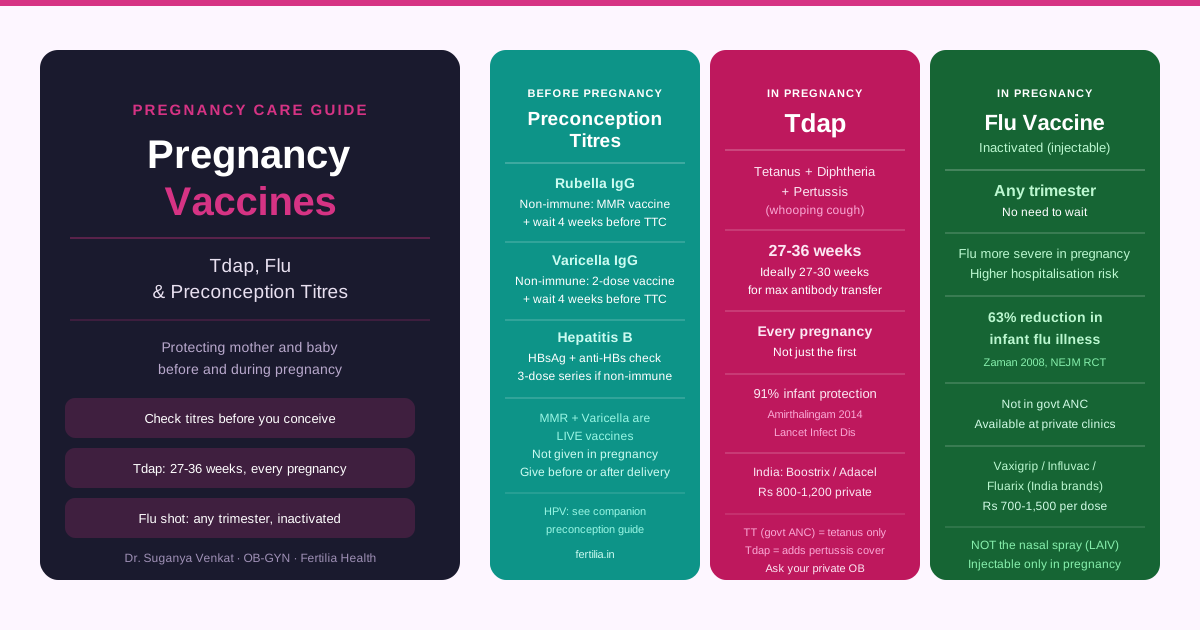
This post covers three areas. First, the blood tests you should run preconception to confirm your immunity to rubella, varicella, and hepatitis B. Second, Tdap, the one vaccine recommended at 27 to 36 weeks in every pregnancy. Third, the flu shot, which can be given in any trimester. It also covers the live vaccines that must wait until after delivery.
The companion post, baby vaccines in India, covers what your baby receives from birth through their second year. This post covers you.
Why Maternal Vaccines Protect Two People at Once
Vaccines given during pregnancy do not just protect the mother. They trigger antibody production that crosses the placenta and enters the baby’s bloodstream before birth. This is called passive immunity, and it is the only protection a newborn has in their first weeks of life.
In India, a baby’s first DTP (Diphtheria, Tetanus, Pertussis) dose is given at six weeks of age. There is a six-week gap between birth and that first dose, during which the baby has no immunity of their own against whooping cough. Maternal vaccination during pregnancy bridges that gap.
The other category of vaccines, covering infections like rubella and varicella, works differently. These need to be assessed and given before pregnancy, because the vaccines used are live vaccines that cannot be given during pregnancy. The goal of preconception testing is to confirm you are already immune, so there is nothing to manage once you conceive.
Preconception: Three Tests to Run Before You Conceive
These are blood tests that check your immunity to specific infections. If you are not immune, vaccines are available preconception. The key point: two of the most important vaccines here use live viruses, which means they must be completed before you become pregnant.
Rubella (German Measles)
Rubella is a mild viral illness in adults. During the first trimester of pregnancy, it is a different matter. Congenital Rubella Syndrome (CRS), resulting from maternal infection in early pregnancy, causes cataracts, deafness, heart defects, and intellectual disability in the baby. In the landmark prospective study of over a thousand confirmed maternal rubella infections, congenital infection occurred in more than 80 percent of pregnancies when rubella struck in the first 12 weeks, and rubella defects occurred in every infant infected before the 11th week (Miller E et al., Lancet, 1982; PMID 6126663).
A rubella IgG test tells you whether you are immune. Most women vaccinated as children are immune, but immunity can wane, and some women were never vaccinated.
If the test shows you are not immune, the MMR vaccine (Measles, Mumps, Rubella) is given preconception. You then wait four weeks before trying to conceive. MMR contains a live attenuated virus and is not given during pregnancy.
If you discover you are not immune after becoming pregnant, your obstetrician will monitor the pregnancy as normal. There is no vaccine option during pregnancy. After delivery, before you leave the hospital, MMR is given. Rubella is far less common in India since the measles-rubella vaccination campaign, but it has not been eliminated and cases still occur, which is exactly why the titre still matters.
Varicella (Chickenpox)
Most adults in India have had chickenpox in childhood and carry lifelong immunity. If you remember having chickenpox, most obstetricians consider that sufficient history. If there is any doubt, a VZV (Varicella-Zoster Virus) IgG test clarifies things.
Varicella during pregnancy carries two distinct risks. Before 20 weeks, infection can cause Congenital Varicella Syndrome in around one to two percent of fetuses: skin scarring, limb defects, and brain damage. If a mother develops chickenpox within five days of delivery, the newborn can develop severe neonatal varicella, which historically carried a 20 to 30 percent fatality rate before antiviral treatment became available. If you are non-immune or unsure of your status and you are exposed to chickenpox or shingles while pregnant, contact your obstetrician the same day. Immunoglobulin works best within 96 hours of exposure and the window closes soon after, so do not wait to see whether a rash appears.
The varicella vaccine is a live vaccine. If you are non-immune, the two-dose course is given preconception, with four to eight weeks between doses and four weeks after the last dose before trying to conceive. It cannot be given during pregnancy. It is safe while breastfeeding after delivery.
Hepatitis B
Two tests cover hepatitis B status: HBsAg (checks whether you are a carrier) and anti-HBs (checks whether you have protective immunity, defined as greater than 10 mIU/mL).
If HBsAg is positive (you are a carrier), your obstetrician manages this separately. In women with high viral loads, antivirals in the third trimester reduce the risk of mother-to-child transmission at birth. The baby receives both hepatitis B immunoglobulin and the first HBV vaccine dose at birth.
If HBsAg is negative and anti-HBs is below 10 mIU/mL (not immune), the hepatitis B vaccine series (three doses at zero, one, and six months) is ideally started before conception. Unlike rubella and varicella vaccines, the HBV vaccine is not a live vaccine, so it can technically be given during pregnancy if needed. But completing the series before conception means you enter pregnancy fully protected.
Tdap: Given at 27 to 36 Weeks, in Every Pregnancy
Tdap stands for Tetanus, Diphtheria, and acellular Pertussis. Pertussis (whooping cough) is why this vaccine matters so much in pregnancy.
Pertussis in young infants is not the same illness adults experience. Before three months of age, babies cannot brace against the coughing episodes the infection causes. The fits can last for minutes, leaving a baby unable to breathe properly or feed. In India, pertussis remains a cause of infant hospitalisation and, in some cases, death in the early months of life, precisely because babies are too young to have received their own DTP series.
When Tdap is given at 27 to 36 weeks, the mother develops antibodies that cross the placenta. The baby is born carrying those anti-pertussis antibodies, which provide protection in the first weeks before their own vaccine begins. A large observational study from England (Amirthalingam G et al., The Lancet, 2014; PMID 25037990) found that maternal Tdap vaccination was associated with 91 percent protection against confirmed pertussis in infants under three months of age.
ACOG recommends Tdap at 27 to 36 weeks, preferably during the earlier part of that window. Giving it earlier in the window allows the maximum time for antibody transfer through the placenta, while still leaving enough time before delivery for the antibodies to reach protective levels in the baby.
Every pregnancy, not just the first. Maternal antibody levels from a prior pregnancy decline within a few years. If you received Tdap in your first pregnancy, you receive it again at 27 to 36 weeks in your next. ACOG’s Committee Opinion No. 718 (2017) recommends Tdap in each pregnancy regardless of prior vaccination, and the WHO’s 2015 position paper on pertussis vaccines likewise backs vaccination in the second or third trimester of pregnancy, preferably at least 15 days before delivery, as the most effective way to protect newborns.
If you are breastfeeding and did not receive Tdap during pregnancy, it can be given immediately after delivery. It is safe while breastfeeding.
The TT versus Tdap Distinction in India
If you attend government antenatal care (ANC), you now receive Td (Tetanus and adult Diphtheria), which replaced the older TT (Tetanus Toxoid) across India’s national programme from 2019. The schedule is one dose as early as possible at your first ANC visit and a second dose four weeks later, or a single booster if you received two Td doses in a pregnancy within the last three years. Td protects against tetanus and diphtheria.
Because Td already covers diphtheria, the one thing it does not include is the pertussis (whooping cough) component, and that is the gap Tdap fills. This is why private obstetricians in India typically recommend Tdap in addition to the Td given in government ANC: it adds the whooping-cough protection that shields a newborn before their own DTP series begins. In practice, the woman I most often reassure is the one who has had her two Td doses at the government centre and been told she is ‘fully covered’, when she still has no pertussis protection to pass on; and the woman who reaches me at 35 weeks worried it is too late, to whom the answer is that any time up to delivery is still worth it. If your government ANC has given you Td, ask your private OB whether and when to add Tdap.
Brands available in India: Boostrix (GSK) and Adacel (Sanofi). Cost at private hospitals: approximately Rs 1,400 to 2,000 per dose (as of 2026).
If you are unsure which vaccines apply to your situation or want to review your preconception immunity tests before trying to conceive, a video consultation can give you a clear, personalised plan. Message Dr. Suganya on WhatsApp to book at a time that suits you.
Flu Vaccine: Any Trimester, Every Season
The flu shot is recommended in every trimester of pregnancy. It is among the most extensively studied vaccines in pregnancy, with a long and consistent safety record across all three trimesters.
Pregnant women are more vulnerable to influenza complications. The 2009 H1N1 pandemic demonstrated this clearly: pregnant women were hospitalised and died from influenza at rates disproportionate to their age group. The immune adaptation of pregnancy, which prevents the mother’s immune system from attacking the fetus, also reduces the ability to fight off respiratory infections like influenza.
The baby is protected too. Maternal flu antibodies cross the placenta and protect the baby for approximately the first six months of life, before the baby can receive their own flu vaccine. A randomised controlled trial in Bangladesh (Zaman K et al., N Engl J Med, 2008; PMID 18799552) found that maternal influenza vaccination reduced laboratory-confirmed flu in infants under six months of age by 63 percent, and respiratory illness with fever by 29 percent.
Only the inactivated, injectable vaccine during pregnancy. The flu vaccine comes in two forms: inactivated (injectable) and live attenuated (nasal spray, called LAIV or FluMist). Only the inactivated injectable form is used in pregnancy. The nasal spray is a live vaccine and is not recommended during pregnancy.
Timing: ideally before flu season begins. In north India, peak season is October to February. In south India, circulation is more year-round with bi-annual peaks. If you are pregnant during flu season, any trimester is the right time.
India context: The flu vaccine is not currently part of the government ANC schedule. It is available at private hospitals and clinics. Brands include Vaxigrip Tetra (Sanofi), Influvac Tetra (Mylan/Abbott), and Fluarix Tetra (GSK). Cost: approximately Rs 1,000 to 2,000 per dose (as of 2026).
Live Vaccines: Hold Until After Delivery
A small category of vaccines uses live attenuated viruses. These are avoided during pregnancy because a live attenuated virus carries a theoretical risk of reaching the fetus, so the precaution is maintained, even though accidental administration of MMR in very early pregnancy (before the pregnancy was known) has not shown a pattern of harm in registry surveillance data.
The vaccines to defer until after delivery:
- MMR (Measles, Mumps, Rubella): given preconception if non-immune, or after delivery if the preconception window was missed
- Varicella: same approach
- MMRV (combined Measles, Mumps, Rubella, Varicella): same
- Yellow fever: generally deferred unless travel to an endemic area with high exposure risk is unavoidable, in which case risk and benefit are weighed case by case with your physician
Both MMR and varicella can be given before you leave the hospital after delivery and are safe while breastfeeding. If you were non-immune preconception and are now postpartum, this is the right window to catch up.
Your Pregnancy Vaccine Timeline at a Glance
Before pregnancy (three or more months before trying to conceive):
- Rubella IgG: if non-immune, get MMR, wait four weeks before trying
- VZV IgG (or confirmed chickenpox history): if non-immune, two-dose varicella vaccine with four to eight weeks between doses, wait four weeks before trying
- HBsAg and anti-HBs: if non-immune, start HBV series (three doses over six months)
- HPV vaccine: if not already completed, see the HPV vaccine before pregnancy timing guide
During pregnancy:
- 27 to 36 weeks (every pregnancy): Tdap
- Any trimester: Inactivated flu vaccine (injectable)
After delivery:
- MMR and varicella if non-immune and missed preconception (safe while breastfeeding, can be given before discharge)
- Continue HBV series if started preconception and not completed
For a full list of what to check before conceiving, including blood tests, supplements, and lifestyle steps, see the preconception checkup resource.
For folic acid timing, the folic acid before pregnancy guide covers when to start and what dose. For what the first trimester expects of you once you conceive, see first trimester symptoms and tests.
Frequently Asked Questions
Is Tdap safe during pregnancy?
Yes. Tdap is an inactivated vaccine, meaning it contains no live components. It has been studied through large national immunisation programmes. A UK observational cohort of 20,074 vaccinated pregnant women found no increased risk of stillbirth or other adverse pregnancy outcomes after pertussis vaccination (Donegan et al., BMJ, 2014, PMID 25015137). ACOG formally recommends Tdap at 27 to 36 weeks in every pregnancy.
Can I get the flu shot in the first trimester?
Yes. The inactivated influenza vaccine is safe in all three trimesters. There is no reason to wait. If flu season coincides with your first trimester, that is when to get it.
What is the difference between TT and Tdap? My government ANC gave me a tetanus injection.
TT (Tetanus Toxoid) protects against tetanus only. Td (Tetanus-Diphtheria) adds diphtheria, and India’s government ANC now uses Td (it replaced TT across the national programme from 2019). Tdap (Tetanus-Diphtheria-acellular Pertussis) adds whooping-cough protection on top. So compared with the Td you receive in government ANC, the one piece missing is pertussis cover, which is what protects a newborn before their own DTP series begins. Ask your private OB whether and when to add Tdap to the Td you have already received.
Do I need Tdap in every pregnancy or just the first?
Every pregnancy. Maternal antibodies from a prior pregnancy decline over the years and will not protect the next baby at a therapeutic level. ACOG’s Committee Opinion No. 718 (2017) recommends Tdap at 27 to 36 weeks in each pregnancy, not as a single lifetime dose, and WHO guidance on pertussis vaccination in pregnancy points the same way.
What if I forgot to check my rubella titre before getting pregnant?
Tell your obstetrician at your first antenatal visit. They will test your rubella IgG. If you are immune, nothing changes. If you are not immune, there is no vaccine option during pregnancy. Your pregnancy will be monitored normally, and you will receive MMR right after delivery before going home. In India, rubella is much less common since the measles-rubella campaign, but it has not been eliminated, so the titre is still worth checking.
Pregnancy mein flu shot safe hai kya? Aur kab lena chahiye? (Is the flu shot safe in pregnancy and when should I get it?)
Haan, bilkul safe hai. Inactivated flu vaccine, yani injection wala, teeno trimester mein liya ja sakta hai. Sirf nasal spray wala flu vaccine pregnancy mein avoid karna chahiye, woh live vaccine hai. Government ANC mein flu ka tika nahi hota. Private hospital ya clinic mein milta hai, approximately Rs 1,000 se Rs 2,000 mein. Best time hai flu season shuru hone se pehle, lekin agar already pregnant hain toh bhi kisi bhi trimester mein le sakte hain.
Are vaccines safe while breastfeeding?
Yes. Tdap, the inactivated flu vaccine, MMR, and varicella are all safe while breastfeeding. If you were non-immune preconception and delivered without receiving MMR or varicella, you can receive them before leaving hospital after delivery. Breastfeeding is not a reason to delay.
For a specific question, such as whether you need both TT and Tdap, which titres to order before your next pregnancy, or what to do about a missed dose in a prior series, a one-to-one video call is the clearest way to work through it.
If you are already pregnant and want your whole antenatal plan handled in one place, our Pregnancy Care program covers vaccines alongside the rest of your trimester-by-trimester care.
Message Dr. Suganya on WhatsApp to book at your convenience.