You have been tracking your cycle for months. The ovulation app keeps predicting a fertile window, the strips sometimes show two lines and sometimes do not, and your periods arrive whenever they please: thirty-five days one month, fifty the next, and once not at all. Somewhere along the way a report or a doctor used the word “anovulation”, and you went home wondering what it means for you.
Anovulation simply means that your ovaries did not release an egg in a cycle. It is one of the most common reasons a pregnancy takes longer than expected, and it is also one of the most workable, because once the reason is found there is usually a clear way to bring ovulation back.
My name is Dr. Suganya Venkat. I have been an OB-GYN for more than fifteen years, and many of the women who come to me at Fertilia over video consultations, worried that something is wrong with their fertility, turn out to have a cycle that is skipping ovulation. This post walks through the same steps I take with them.
Here is what this post covers:
- What anovulation means, and how it differs from the odd skipped cycle
- The signs your body gives when ovulation is not happening
- The tests that confirm it, and the ones that find the reason
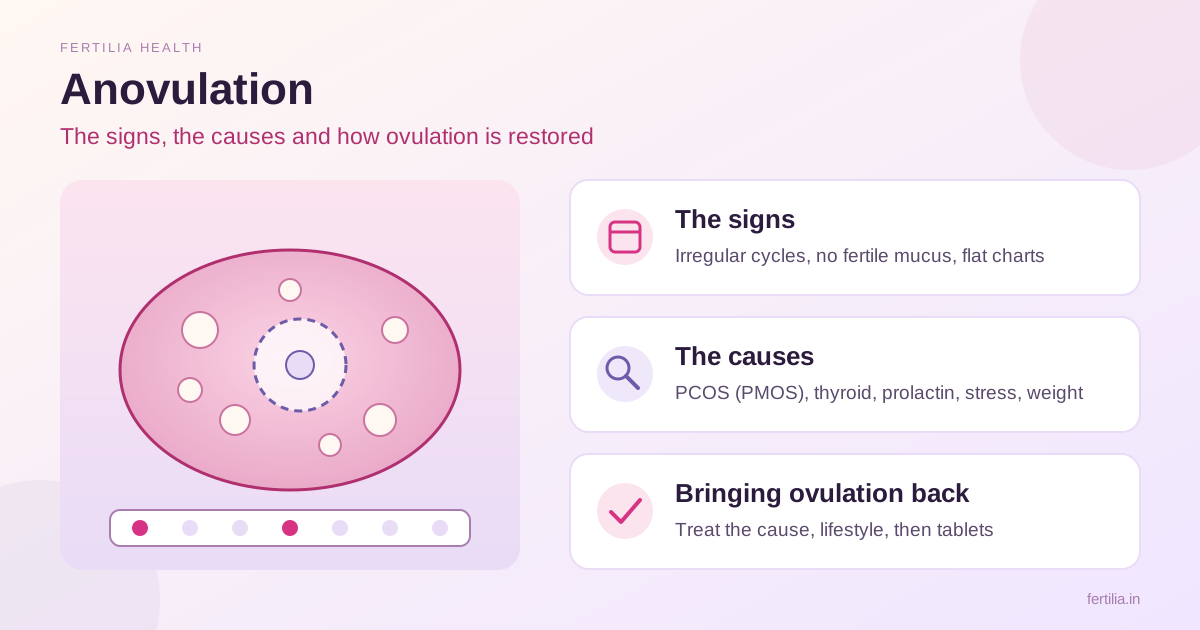
- The main causes, grouped the way doctors think about them
- How ovulation is restored, step by step, from lifestyle to tablets to injections
- Why your cycle matters even if you are not trying to conceive right now
What Anovulation Means
In a typical cycle, a signal from the brain (the hypothalamus and pituitary gland) tells the ovary to grow a follicle. When that follicle matures, it releases an egg. The empty follicle then becomes the corpus luteum, which makes progesterone for the second half of the cycle. If no pregnancy happens, progesterone falls and your period comes about two weeks after ovulation.
In an anovulatory cycle, that chain stops somewhere before the egg is released. No egg means no corpus luteum, very little progesterone, and no predictable period at the end.
It helps to separate two situations:
- An occasional anovulatory cycle. Many women skip ovulation now and then, for example after an illness, a stressful month, travel or a sudden change in weight. One long or odd cycle on its own is not a diagnosis.
- Chronic anovulation. Ovulation is rare or absent month after month. This is what doctors mean when they diagnose anovulation, and it is worth investigating.
The NHS describes ovulation problems as a common cause of infertility in women, noting that some problems stop an egg being released at all, while others prevent release in some cycles but not others (nhs.uk, infertility causes, reviewed August 2023). Both patterns can be found and treated.
Signs You May Not Be Ovulating
Your body gives clues. None of them proves anovulation on its own, but together they point clearly in one direction.
1. Irregular, very infrequent or absent periods. This is the strongest clue. When periods arrive with very different gaps each month, come only a few times a year, or stop, ovulation is often not happening regularly. Our guide to irregular periods and when to look into them covers the broader list of reasons cycles change.
2. No fertile cervical mucus. Around ovulation, rising oestrogen usually produces clear, stretchy discharge that looks like raw egg white. If you never notice that change across a whole cycle, it may mean a follicle is not maturing. Our guide to ovulation symptoms explains what to look for.
3. A flat basal body temperature chart. After ovulation, progesterone raises your resting temperature slightly for the rest of the cycle. A chart that never shows that sustained rise suggests ovulation did not occur, though temperature charts are easy to disturb with poor sleep or illness.
4. Ovulation kits that never turn positive, or turn positive again and again. These strips detect a surge of LH (luteinising hormone). In PCOS, LH can be raised for much of the cycle, so the strip may show positives on several days without ovulation following.
5. Bleeding that does not follow a pattern. You can still bleed without ovulating. Anovulatory bleeding tends to be unpredictable: sometimes light spotting, sometimes a heavier, longer bleed after a long gap.
6. Regular periods, but no pregnancy after trying. Occasionally a woman with fairly regular cycles is still skipping ovulation in some months. This is less common, and it is the reason tests matter more than guesswork.
How Anovulation Is Confirmed
First, a pregnancy test
If a period is late, a urine pregnancy test comes first, every time. It sounds obvious, but it saves a lot of unnecessary worry and testing.
Progesterone, timed to your cycle
The simplest blood test for ovulation is a progesterone level in the second half of the cycle. A good level tells you a corpus luteum formed, which means an egg was released. The NHS notes that the timing of this test is based on how regular your periods are, and that women with irregular periods are offered tests of the hormones that stimulate the ovaries (nhs.uk, infertility diagnosis, reviewed August 2023).
Timing is where most of these tests go wrong. “Day 21” only fits a 28-day cycle. The test should be done about seven days before your next expected period, and in long or irregular cycles it may need repeating. Our guide to Day-21 progesterone explains how to read the result and how to time it in your own cycle.
A follicle-tracking scan
A series of transvaginal ultrasound scans (a follicular study) shows whether a follicle grows, reaches a mature size and then collapses after releasing its egg. It is the most direct way to watch ovulation happen, and it is used routinely once ovulation tablets are started. Our radiologist’s guide to the follicular study and what each scan tracks explains the findings.
The hormone panel that finds the reason
Confirming anovulation is only half the job. The next step is finding out why, because the treatment depends entirely on the cause. Usually this means:
- TSH, to check the thyroid
- Prolactin, ideally a morning sample taken at rest
- FSH, LH and oestradiol, early in a cycle where possible, to see whether the signal from the brain is low, normal or high
- Testosterone and, in some cases, AMH, where PCOS is being considered
- A pelvic ultrasound, to look at the ovaries and the lining of the womb
Our explainer on Day-3 FSH, LH and estradiol walks through what each of those numbers means.
💜 Periods irregular and not sure whether you are ovulating? Message Dr. Suganya on WhatsApp to book a ₹399 video consultation. Share your last few cycle dates and any reports you already have, and we can work out which tests you need and when to do them.
The Main Causes of Anovulation
For about fifty years, doctors grouped ovulation problems using a WHO system. By international consensus, the International Federation of Gynecology and Obstetrics (FIGO) has updated it into four groups, often shortened to HyPO-P: hypothalamic, pituitary, ovarian and PCOS (Balen AH et al., Hum Reprod Update, 2024, PMID 38412452). It is a practical way to think about your own situation, because each group points to a different fix.
Hypothalamic: when the brain turns the signal down
The hypothalamus is sensitive to how much energy and stress your body is carrying. Under-eating, a lot of intense exercise, low body weight or sustained stress can slow the hormone pulses that drive ovulation. The Endocrine Society’s guideline describes functional hypothalamic amenorrhoea as a form of chronic anovulation with no structural cause, often linked with stress, weight loss, excessive exercise or a combination, and diagnosed only after other causes are ruled out (Gordon CM et al., J Clin Endocrinol Metab, 2017, PMID 28368518).
This pattern often looks like PCOS from the outside, because both cause missing periods, yet the hormone picture is quite different. Our post on hypothalamic amenorrhoea and how it differs from PCOS explains how doctors tell them apart.
Two common and expected situations also belong here. Breastfeeding naturally holds ovulation back for a while after delivery, which our guide to the lactational amenorrhoea method explains. And after stopping the contraceptive pill, it can take a few cycles for ovulation to settle; see our post on the first period after stopping the pill.
Pituitary: high prolactin
Prolactin is the milk hormone. When it is raised outside breastfeeding, it suppresses ovulation. Causes include certain medicines (some anti-nausea and psychiatric medicines among them), an underactive thyroid and a small, non-cancerous pituitary growth called a prolactinoma. The Endocrine Society’s guideline on high prolactin sets out how to find the cause, including medicine-related causes, before choosing treatment (Melmed S et al., J Clin Endocrinol Metab, 2011, PMID 21296991). Please do not stop a prescribed medicine on your own; speak to the doctor who prescribed it first.
Our guide to high prolactin in women covers how to get the test right and what the numbers mean.
Ovarian: when the ovaries are running low
In premature ovarian insufficiency (POI), the ovaries stop working regularly before the age of 40. FSH is high rather than low, because the brain is calling loudly for a response the ovaries cannot fully give. This needs a different conversation from the other causes, and our post on premature ovarian insufficiency explains the diagnosis and the fertility options.
In the years leading up to menopause, anovulatory cycles also become more frequent as a natural part of the transition. That is expected, not a disorder.
PCOS (PMOS)
PCOS, now formally renamed PMOS (polyendocrine metabolic ovarian syndrome), is the cause I see most often in women with irregular cycles who are trying to conceive. Here the ovary has plenty of small follicles, but excess androgens and, in many women, insulin resistance stop one of them from maturing and releasing its egg.
PCOS is diagnosed using the Rotterdam criteria, which describe the syndrome as ovarian dysfunction alongside androgen excess and polycystic ovaries on scan, with no single feature enough on its own (Rotterdam ESHRE/ASRM-Sponsored PCOS Consensus Workshop Group, Fertil Steril, 2004, PMID 14711538). The 2023 international PCOS guideline also allows an AMH blood test to be used in adults in place of the ultrasound criterion (Teede HJ et al., Eur J Endocrinol, 2023, PMID 37580861). Our post on why PCOS periods go missing and how to get them back goes deeper into this group.
Thyroid problems
Both an underactive and an overactive thyroid can prevent ovulation, as the NHS notes (nhs.uk, infertility causes, reviewed August 2023). The effect varies from woman to woman. In one study of 171 premenopausal women with an underactive thyroid, about 23% had irregular periods, compared with about 8% of women without thyroid disease (Krassas GE et al., Clin Endocrinol, 1999, PMID 10468932). A simple TSH test is part of every workup for this reason. Our guide to thyroid and fertility explains how thyroid levels are brought into range before conception.
Weight, in either direction
Both very low body weight and excess weight can switch ovulation off. Low weight acts through the hypothalamus, as described above. Excess weight tends to work through insulin and androgens, and it often overlaps with PCOS.
How Ovulation Is Restored
The order matters. Treating the cause comes first, because a tablet that pushes the ovary to ovulate will not fix a thyroid problem, and the wrong treatment can delay the right one.
Step 1: Treat the specific cause
- Thyroid: an underactive thyroid is treated with thyroxine tablets, and cycles often settle once levels are back in range.
- High prolactin: once medicine-related causes are excluded, a dopamine agonist medicine such as cabergoline or bromocriptine is usually used to bring prolactin down, under your doctor’s care.
- Hypothalamic causes: the treatment is closing the energy gap, easing back on intense exercise and addressing stress, usually with help from a dietitian and sometimes a counsellor. The Endocrine Society’s guideline recommends this kind of team approach, with medical, dietary and mental health support (Gordon CM et al., J Clin Endocrinol Metab, 2017, PMID 28368518).
Step 2: Lifestyle change, especially for PCOS and weight
For women with PCOS or excess weight, lifestyle change is a first-line treatment in its own right. In a small Australian study, overweight women who did not ovulate followed a six-month weekly programme of exercise and diet change. They lost an average of 6.3 kg, and 12 of the 13 women resumed ovulation; 11 became pregnant, five of them without further treatment (Clark AM et al., Hum Reprod, 1995, PMID 8567797). It was a small study, so its numbers are not a promise for every woman, and the 2023 international PCOS guideline continues to place healthy lifestyle at the centre of care (Teede HJ et al., Eur J Endocrinol, 2023, PMID 37580861).
In Indian kitchens, that usually looks like steady, regular meals rather than crash diets: millets such as ragi and jowar in place of some of the white rice, a portion of dal, paneer, eggs or sprouts at every meal, and plenty of vegetables in sambar, poriyal and kootu. Add daily walking and some strength work, and sleep that is protected. For the food detail, our insulin resistance and PCOS guide is a good place to start.
For women whose cause is hypothalamic, the direction is the opposite: eating more and exercising less. This is why the cause has to be known before anyone hands you a diet sheet.
Step 3: Ovulation induction tablets
If ovulation has not returned, or if time matters because of age or how long you have been trying, tablets that stimulate ovulation are the next step. The two most used are letrozole and clomiphene.
The largest trial comparing them randomised 750 women with PCOS. Ovulation occurred in 61.7% of treatment cycles with letrozole compared with 48.3% with clomiphene, and cumulative live births were 27.5% compared with 19.1% (Legro RS et al., N Engl J Med, 2014, PMID 25006718). Since then, letrozole has become the usual first choice for PCOS-related anovulation. Our guides to letrozole for PCOS and clomiphene (Siphene) cover dosing, monitoring and side effects.
These tablets work best alongside follicle-tracking scans, so your doctor can see how many follicles are growing, confirm that ovulation happened and time intercourse well.
Step 4: When tablets are not enough
Some women do not respond to tablets at the usual doses. The next options include:
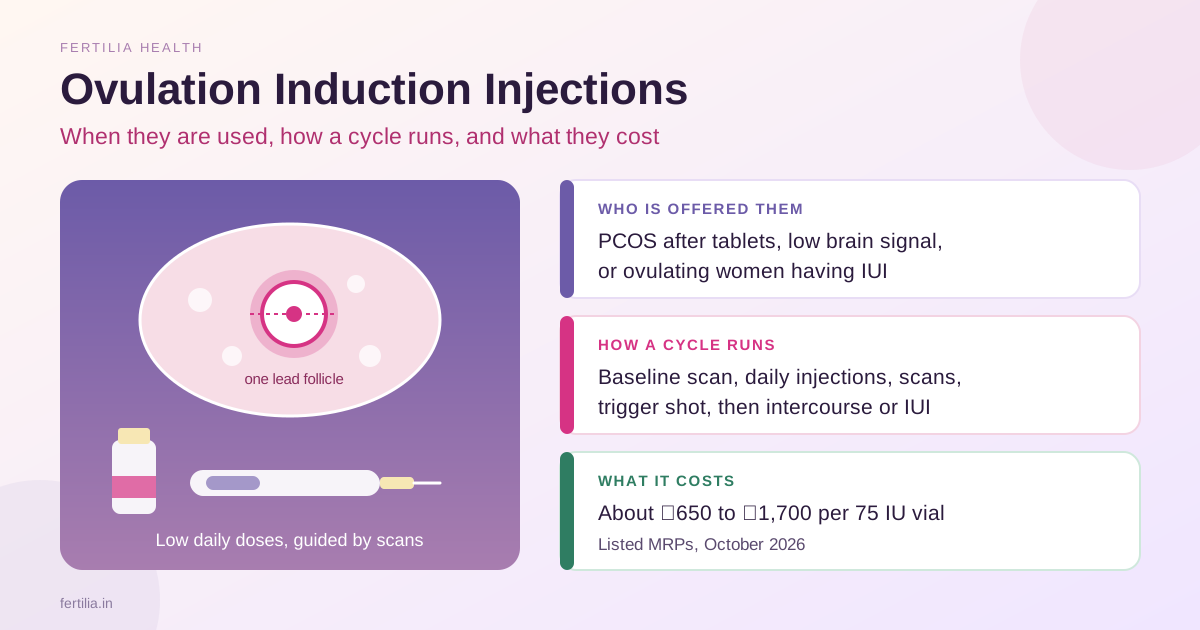
- Gonadotropin injections, which stimulate the ovary directly and need closer scan monitoring, because more than one follicle can grow. Our guide to ovulation induction injections explains how a cycle runs.
- Laparoscopic ovarian drilling, a keyhole procedure sometimes used in PCOS when tablets have not worked.
- IUI or IVF, when other factors are also present or when time is short.
Our post on clomiphene-resistant PCOS walks through how doctors choose between these. Every one of these steps works best when it is coordinated with your gynaecologist or fertility specialist, and at Fertilia we work alongside your existing doctor rather than in place of them.
Why Ovulation Matters Even If You Are Not Trying Now
Regular ovulation is a sign of overall hormonal health, not only fertility.
- The lining of the womb. Ovulation brings progesterone, which balances the effect of oestrogen on the womb lining. When periods are many months apart for a long time, the lining can build up. That is why doctors may suggest a short course of progesterone tablets or the pill to bring on a regular bleed, even when you are not planning a pregnancy. It is a simple, protective step.
- Bone health. In hypothalamic causes, oestrogen stays low, and over a long stretch that can thin the bones. The Endocrine Society’s guideline lists bone loss among the complications of functional hypothalamic amenorrhoea (Gordon CM et al., J Clin Endocrinol Metab, 2017, PMID 28368518), which is a good reason to get missing periods checked rather than waiting.
- Metabolic health. In PCOS, the same insulin resistance that blocks ovulation can affect blood sugar over the years. Working on it now helps both.
What You Can Do This Month
- Write down your period dates for the next three cycles: the first day of each bleed is enough. This is the single most useful thing you can bring to a consultation.
- Take a pregnancy test if a period is more than a week late.
- Time your progesterone test to about seven days before your expected period, not automatically on Day 21.
- List your medicines and supplements, including anything for acidity, nausea or mood, since some can affect prolactin.
- Eat regular meals with protein at each one, and do not cut food drastically if your periods have stopped.
- Protect your sleep and keep moving, with daily walking rather than sudden intense workouts.
- Bring your reports together (TSH, prolactin, hormone panel, scans) so a doctor can read them as one picture.
You can also download our free guide to getting pregnant, which covers cycle tracking and preconception steps.
Frequently Asked Questions
What is an anovulatory cycle?
An anovulatory cycle is a menstrual cycle in which the ovaries do not release an egg. Without ovulation, progesterone stays low and the period that follows is often late, early, very light or heavier than usual. Many women have one now and then; it becomes a concern when it happens month after month.
Can you have periods without ovulating?
Yes. Bleeding can happen without ovulation, but it usually lacks a pattern. It may come after a long gap, last longer, or be light spotting. Regular periods make ovulation likely, though not certain, so a timed progesterone test or a follicle-tracking scan is the way to confirm it.
Can I get pregnant if I have anovulation?
Pregnancy needs ovulation, so the aim is to bring ovulation back. Once the cause is treated, many women start ovulating again, either on their own or with tablets. In the largest trial in PCOS, ovulation occurred in about six of every ten treatment cycles with letrozole (Legro RS et al., N Engl J Med, 2014, PMID 25006718).
Is anovulation the same as PCOS?
No. PCOS is the most familiar cause, but anovulation can also come from the thyroid, high prolactin, low body weight, stress, intense exercise, breastfeeding or the ovaries running low. The treatments differ, which is why the hormone panel matters before treatment begins.
Is anovulation permanent?
For most causes, no. Thyroid and prolactin problems usually respond once levels are treated, hypothalamic causes usually reverse once the trigger is addressed, and ovulation in PCOS often returns with lifestyle change or medication. Premature ovarian insufficiency is the main exception, and it has its own plan.
How long does it take for ovulation to come back?
It depends on the cause. With ovulation tablets, a follicle-tracking scan can show ovulation within the first treatment cycle. After thyroid or prolactin treatment, cycles often settle over a few months. With hypothalamic causes, recovery usually takes months after eating, exercise and stress have been addressed.
Which doctor should I see for anovulation?
A gynaecologist is the right starting point, because she can confirm whether you are ovulating, order the hormone tests and plan treatment. Some causes also involve an endocrinologist (for thyroid or pituitary problems) or a dietitian.
You Do Not Have to Work This Out Alone
Irregular cycles and a word like “anovulation” on a report can leave you feeling stuck, especially when friends seem to conceive without trying. In most women, the reason can be found with a few well-timed tests, and there is a clear path from there. At Fertilia, Dr. Suganya Venkat works through this sequence with women across India over video consultations, alongside the doctors they already see.
💜 Want help working out why you are not ovulating? Message Dr. Suganya on WhatsApp to book a ₹399 video consultation, available online across India. Bring your cycle dates and reports, and leave with a clear plan for your next three months.