The way this diagnosis arrives is brutal in its ordinariness. Periods that once ran like clockwork go missing for a few months. It gets put down to stress, a new job, skipped meals. Then a routine blood test comes back with an FSH in the forties, and the search that follows at midnight returns the word “failure” over and over, until a woman in her early thirties has quietly concluded that her fertility is finished.
It is not finished. It is different, and it needs a real conversation rather than a search-engine verdict. Around 5 to 10 percent of women with POI conceive spontaneously after diagnosis, and there are clear routes for the rest; both are covered below.
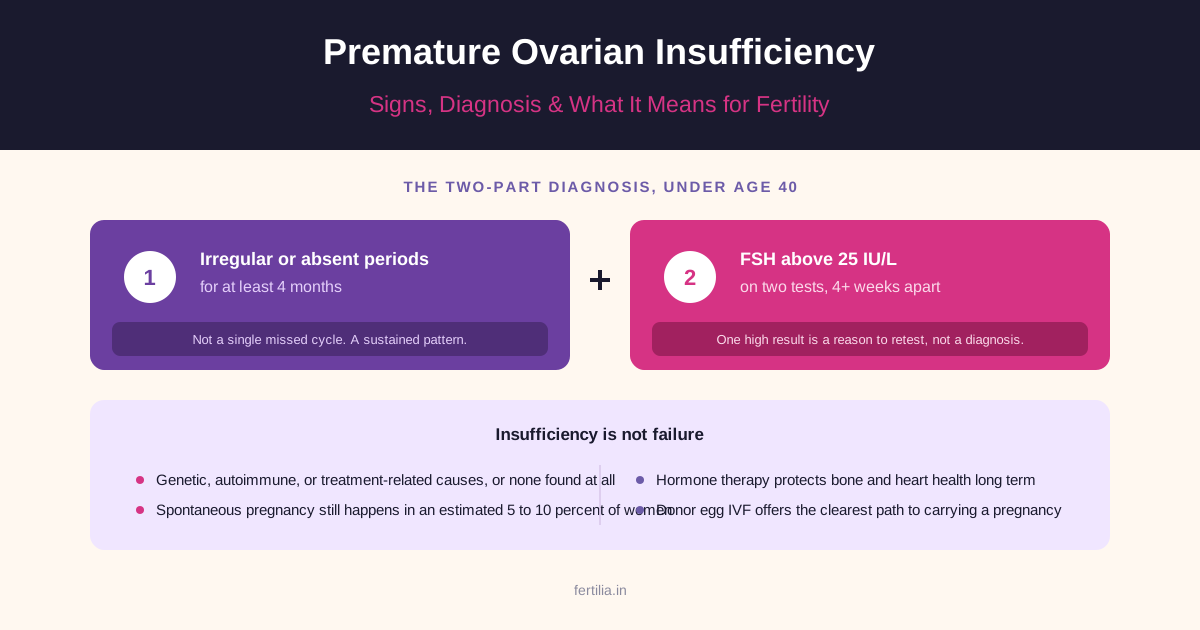
Premature ovarian insufficiency (POI) is the diagnosis when a woman under 40 has irregular or absent periods for at least four months, alongside a blood FSH level above 25 IU/L confirmed on two separate tests, at least four weeks apart (ESHRE Guideline Group on POI, Webber et al., 2016, Human Reproduction, PMID 27008889). It is a distinct clinical picture from ordinary age-related decline in egg count, and it is not automatically the end of the fertility conversation.
This guide covers what POI actually is, how it is diagnosed, what causes it, what it means for your chances of conceiving, and what protects your long-term health regardless of your fertility plans. It is the same information I give women in consultations at Fertilia: specific, and without the doom the search results tend to hand out.
What POI Is, and What It Is Not
POI means the ovaries are running out of functioning follicles, or responding poorly to the signals that would normally trigger them, well before the average age of natural menopause. That average is around 51 in Western populations, but closer to 46 to 47 for Indian women: a meta-analysis of house-to-house survey data across India put it at 46.6 years (Prasad et al., 2021, Diabetes & Metabolic Syndrome, PMID 33524647). The pituitary gland senses this and pushes harder, which is why FSH climbs. Periods become irregular, then stop. Oestrogen, which the ovaries would normally produce each cycle, drops.
It is worth being precise about the name, because the language has changed and the old language did real damage. “Premature ovarian failure” was the term used for decades, and it told women their ovaries had failed, full stop. POI replaced it deliberately, because an insufficient organ can still work intermittently. A small number of women with POI ovulate unpredictably, and some conceive without any treatment at all. Failure suggests zero possibility. Insufficiency describes what actually happens: reduced, unpredictable function, not a hard stop.
What POI is not:
- It is not the same as low AMH with regular ovulatory cycles. A woman can have a low AMH reading and still ovulate every month with no oestrogen deficiency at all. POI specifically requires irregular or absent periods plus elevated FSH, together.
- It differs from ordinary perimenopause in a meaningful way. Perimenopause in your late 40s is expected biology. POI before 40 is not expected, and it carries different long-term health implications that need active management.
- It is not necessarily permanent infertility. More on this below, because it is the part women most need to hear clearly.
The Signs That Bring Women In
The presentation varies, but these are the patterns I see most often in practice:
- Periods becoming irregular, then infrequent, then absent, often over a matter of months rather than years
- Hot flushes and night sweats, sometimes mistaken for stress or thyroid trouble in a woman in her twenties or thirties
- Vaginal dryness and discomfort during sex, from falling oestrogen
- Difficulty conceiving, which is sometimes the first and only sign a woman notices before the period changes become obvious
- Sleep disruption, low mood, or a foggy, flat feeling that many women describe as “not feeling like myself,” which tracks the drop in oestrogen rather than being a separate problem
- Reduced sex drive
None of these symptoms alone means POI. Irregular periods have a long list of ordinary causes, from thyroid changes to PCOS to simple stress, and hot flushes in a 32-year-old are far more often something else entirely. What should prompt a proper workup is the combination: irregular or absent periods for four months or more, in a woman under 40, especially alongside any of the symptoms above. That combination is the trigger for testing, not a reason to assume the worst before the blood work comes back.
How POI Is Diagnosed
The diagnostic bar is specific for a reason: FSH fluctuates cycle to cycle, and a single high reading can reflect a poor-timing blood draw rather than a genuine pattern. The ESHRE guideline requires both of these together, in a woman under 40 (Webber et al., 2016, PMID 27008889):
- Oligomenorrhoea or amenorrhoea (irregular or absent periods) for at least four months
- Serum FSH above 25 IU/L on two separate measurements, taken more than four weeks apart
A single elevated FSH is not a diagnosis. It is a reason to repeat the test a month later, not a reason to panic in the meantime. This is one of the most common things I correct in consultations: a woman comes to me having already decided her fertility is over based on one number from one lab visit.
Alongside the confirmatory FSH, I typically order:
- Oestradiol, which is usually low in POI, consistent with reduced ovarian output
- AMH and antral follicle count (AFC), to get a fuller picture of the remaining follicle pool. Full guide: AMH vs AFC: Which Ovarian Reserve Test and What Each Costs
- Karyotype testing, to check for chromosomal patterns like Turner syndrome mosaicism, particularly relevant in younger women or those with additional physical findings
- FMR1 premutation testing (Fragile X), since a Fragile X premutation is one of the more common identifiable genetic causes of POI and carries implications for family planning beyond fertility alone
- Thyroid function and adrenal antibody testing, because autoimmune conditions cluster together, and undiagnosed thyroid disease or autoimmune adrenal involvement can accompany autoimmune POI
- Pelvic ultrasound, to assess ovarian appearance and rule out other causes of the symptom pattern
This is not a single blood test you get and walk away with an answer. It is a structured workup, the same principle behind the seven-layer fertility assessment I use for any woman with a fertility concern, adapted here to the specific question POI raises.
A practical note on what is actually available in India, because these tests are not equally easy to get. FSH, oestradiol, AMH, thyroid function and pelvic ultrasound are routine: any reasonable local lab or diagnostic centre will do them, and AFC needs only a transvaginal scan. Karyotype and FMR1 premutation testing are different. Both are genetic tests offered by a limited set of labs, usually the larger national chains or a tertiary centre, and in smaller towns they typically mean a referral or a sample sent onward. Cost varies widely by lab and by method, so confirm the current rate and exactly what is being tested before you book rather than assuming the first quote is the market rate. If FMR1 testing is not accessible where you are, it does not stall the rest of your care: the diagnosis rests on the FSH and period pattern, and hormone replacement for bone and cardiovascular protection should not wait on a genetic result. Ask your gynaecologist to refer you to a centre that offers it, and treat it as important for family planning and for your relatives rather than as a gate you must clear before starting treatment.
What Causes It
For most women, no cause is ever found. This is uncomfortable to hear, and I say it plainly anyway, because a woman who is told “idiopathic” deserves to know that idiopathic means genuinely unexplained, not that her doctor missed something. The known causes, where they are identified, generally fall into these groups:
Genetic causes. Turner syndrome (complete or mosaic) affects ovarian development from early in life and is one of the more recognisable genetic causes. The FMR1 premutation, the same gene associated with Fragile X syndrome, is one of the more common identifiable single-gene causes of POI and is specifically why FMR1 testing matters, both for the fertility conversation and because it has implications for future children.
Autoimmune causes. The immune system can target ovarian tissue directly, sometimes alongside autoimmune thyroid disease or, less commonly, autoimmune adrenal insufficiency. This is why thyroid and adrenal antibody testing is part of a proper workup rather than an afterthought.
Iatrogenic causes. Chemotherapy, pelvic radiation, and ovarian surgery (for conditions like severe endometriosis or large ovarian cysts) can all reduce ovarian reserve enough to trigger POI, sometimes immediately, sometimes years later. If you are facing cancer treatment and fertility preservation is on the table, that conversation is worth having with your oncology team before treatment starts, not after.
Idiopathic. No identifiable cause, in the majority of cases where a full workup is done. This is frustrating for both the patient and the clinician, but it is the honest majority finding, and it does not change the management approach.
What POI Means for Your Fertility
This is the part women most want answered, and the part most often answered badly online.
Spontaneous, unassisted pregnancy after a POI diagnosis happens in an estimated 5 to 10 percent of women (Nelson, 2009, New England Journal of Medicine, PMID 19196677). That is a real number, not a rounding error, and it reflects genuine intermittent ovarian activity that persists in some women even after diagnosis. It is also, honestly, a minority outcome, and I am not going to tell you otherwise. What I will tell you is what that 5 to 10 percent actually means in practice: POI is not equivalent to zero ovarian function, and it is not equivalent to certain infertility. Contraception is still a real conversation for women with POI who are not trying to conceive, because unpredictable ovulation is still ovulation.
For women actively trying to conceive after a POI diagnosis, the realistic paths are:
Continued natural attempts, for a defined period, with eyes open. Some clinicians and patients choose to keep trying naturally for a few months while completing other workup and planning, given the possibility of intermittent ovulation. This is a reasonable choice as long as it is an informed one, not a hope built on denial.
Donor egg IVF, which is the path with the highest and most predictable success rates for women with POI who want to carry a pregnancy, because it removes the dependence on the patient’s own remaining egg supply. This is the most realistic route for most women once natural attempts have not worked, and it is worth understanding early rather than as a last resort reached after years of disappointment. Full guide, including the ICMR rules and current India cost breakdown: Donor Egg IVF in India: What to Know, Cost & Success Rates.
Adoption or a child-free path, both of which are legitimate outcomes some women choose, and neither of which is a failure of the process.
I want to be direct about something else here, because it matters clinically and it matters to how a woman feels reading this: once POI is diagnosed, there is typically too little remaining ovarian reserve for egg freezing to be a realistic option, because by definition there is very little functioning follicle supply left to retrieve from. If POI runs in your family (a mother or sister diagnosed early, or a known FMR1 premutation in the family), or if you are facing chemotherapy or ovarian surgery, that is the window for a fertility preservation conversation, before ovarian reserve has already declined, not after.
💜 Been told your FSH is high, or your periods have stopped before 40? Let’s get you a proper workup, not a guess. Message Dr. Suganya’s team on WhatsApp and we will walk through exactly what tests you need and what your results mean.
Why This Is Not Only a Fertility Conversation
POI means years, sometimes decades, of oestrogen deficiency earlier than the body was built for. Oestrogen protects bone density and cardiovascular health, and its early loss has measurable long-term consequences that have nothing to do with whether you want children.
The current evidence-based guideline from ESHRE, ASRM, and partner societies recommends hormone replacement therapy for women with POI, continued until the natural average age of menopause, specifically to protect bone density and cardiovascular health (Panay et al., 2024, Human Reproduction Open, PMID 39660328). Note that the guideline sets that endpoint at the average age of natural menopause without adjusting it for population, so the earlier Indian average is context for the conversation rather than an instruction to stop sooner. Many clinicians continue replacement to around 50 or 51 regardless, and stopping several years early has its own bone and cardiovascular cost. When to stop is an individual decision that belongs to you and your gynaecologist, reviewed periodically. This holds true regardless of your fertility plans. A woman with POI who has completed her family, or who never wanted biological children, still benefits from this hormone replacement for her bone and heart health. Think of it as physiological replacement of hormones the body would ordinarily have for another 10 to 15 years, a different purpose from standard menopausal hormone therapy started at the average age of menopause.
This is exactly the kind of decision to make alongside your gynaecologist. We add the long-term health layer alongside whatever your treating doctor has already started, rather than second-guessing a plan that is already in place. If you have already been started on hormone therapy by another doctor, that is good, evidence-aligned care. If you have not had that conversation yet, it is worth raising directly rather than assuming it is only relevant if you are also trying to conceive.
Alongside HRT, a bone density (DXA) scan at diagnosis is standard, with follow-up scans depending on the initial result. Vitamin D and calcium status matter here too, and deficiency is common: a review of vitamin D status across the Indian subcontinent reported deficiency in 70 to 100 percent of the general population, in both urban and rural settings and across every socioeconomic stratum (Ritu and Gupta, 2014, Nutrients, PMID 24566435). That compounds bone risk in a woman who is also losing the protective effect of oestrogen early. A simple blood test and, where needed, correction is a low-cost, high-value part of managing POI long term.
Living With the Diagnosis
A POI diagnosis in your twenties or thirties is genuinely hard news, and I am not going to pretend a blog post makes that easier. What I can tell you, from years of walking women through this news, is what tends to help:
Get the full workup before drawing conclusions. A single high FSH is not a diagnosis. Karyotype, FMR1, thyroid, and AMH/AFC together give you the actual picture, not a guess based on one number.
Separate the fertility conversation from the health conversation. Both matter, and they call for different plans. Bone and cardiovascular protection through HRT is not optional or fertility-dependent. The fertility path is yours to choose, with full information.
Talk to your gynaecologist about hormone replacement even if you are not trying to conceive. This is the single most under-discussed part of POI care, and it protects you for decades, not months.
If a family member has been diagnosed with POI or carries an FMR1 premutation, mention it early, ideally before you are actively trying to conceive, so fertility preservation is genuinely on the table if you want it.
Give yourself real time to process the diagnosis. Grief around this is normal, whether or not children were part of your plan. It does not mean you are failing to cope; it means the news mattered.
At Fertilia, this is exactly the kind of situation where a full workup and an honest, unhurried conversation change what a diagnosis feels like. Dr. Suganya Venkat has managed POI cases across more than 15 years of practice, and the approach is always the same: confirm the diagnosis properly, treat the whole picture, not only the fertility question, and give women real options rather than a verdict.
Frequently Asked Questions
Can I still get pregnant with premature ovarian insufficiency? Spontaneous pregnancy after a POI diagnosis happens in an estimated 5 to 10 percent of women, reflecting intermittent ovarian activity that persists in some women even after diagnosis (Nelson, 2009, NEJM, PMID 19196677). It is a real possibility, though a minority one. For most women who want to carry a pregnancy after natural attempts have not worked, donor egg IVF offers the highest and most predictable success rates.
What is the difference between POI and menopause? Menopause is diagnosed after 12 consecutive months without a period, typically around age 51 in Western populations and closer to 46 to 47 in Indian women, with essentially no remaining ovarian activity. POI is diagnosed before age 40 and, unlike menopause, can involve intermittent, unpredictable ovarian function, meaning occasional ovulation and periods are still possible. This is why contraception remains a genuine conversation for women with POI who are not trying to conceive.
What is the difference between POI and low AMH? Low AMH with regular ovulatory cycles is a reduced-quantity signal on its own, and many women with low AMH conceive naturally. POI specifically requires irregular or absent periods for four months or more, plus an FSH above 25 IU/L confirmed twice, four weeks apart. A woman can have low AMH without POI. Full breakdown: Low AMH and Pregnancy: Can You Still Conceive Naturally?
Can POI be reversed? No treatment has been reliably shown to restore ovarian function once POI is diagnosed. The follicle pool that remains is what remains. This is not a contradiction of the 5 to 10 percent spontaneous pregnancy figure above: no treatment restores ovarian function, but intermittent, unpredictable ovarian activity does continue in a minority of women on its own, which is why pregnancy remains possible without anything having been reversed. What can be actively managed is everything around it: hormone replacement for bone and cardiovascular protection, and a clear-eyed fertility plan based on your actual options.
Do I need a karyotype and FMR1 test if I have POI? Yes, both are standard parts of a proper POI workup. Karyotype testing checks for chromosomal patterns like Turner syndrome mosaicism. FMR1 premutation testing checks for a Fragile X-related genetic cause, one of the more common identifiable single-gene causes of POI, and the result has implications for future children as well as your own fertility planning.
Is hormone replacement therapy safe for someone my age with POI? For most women with POI and no specific contraindications, HRT is recommended, not just tolerated, precisely because it replaces hormones the body would ordinarily still be producing for another decade or more. Current guidance from ESHRE, ASRM, and partner societies recommends continuing it until the natural average age of menopause to protect bone density and cardiovascular health (Panay et al., 2024, PMID 39660328). This is a conversation to have directly with your gynaecologist, who can review your specific history and any contraindications.
Should I freeze my eggs if POI runs in my family? If you have a first-degree relative diagnosed with POI, or a known FMR1 premutation in your family, that is genuine grounds for an early fertility preservation conversation with your gynaecologist, ideally before any decline in ovarian reserve has already happened. Once POI itself is diagnosed, there is typically too little remaining ovarian reserve for egg freezing to be a realistic option.
If you have irregular periods that have gone on for four months or more and you are under 40, do not wait on a single lab result to draw a conclusion. Fertilia’s fertility program starts with the full workup, not a guess, and Dr. Suganya Venkat’s team will walk you through exactly what your results mean for you specifically.
💜 Ready for a proper workup, whatever your results turn out to mean? Message Dr. Suganya’s team on WhatsApp and we will get you started.