Sometimes it is a single line on a biopsy report: “TB PCR positive.” Sometimes it is a word on an HSG report, such as “beaded tubes,” or a remark after a laparoscopy that the surgeon saw “changes suggestive of tuberculosis.” You came in to find out why pregnancy has not happened, you have no cough and no fever, and now someone is talking about six months of tablets.
I’m Dr. Suganya Venkat. I trained in OB-GYN at GKNM Hospital, Coimbatore, I have more than 15 years of clinical experience, and I also hold an MD in Pathology from CMC Vellore, so the tissue side of this diagnosis is familiar ground for me. Genital tuberculosis is a common cause of infertility in India (Sharma JB et al., Indian J Tuberc, 2020, PMID 33308655), and it is also one of the most confusing diagnoses to be given. Some women are diagnosed on a single test that cannot carry the decision alone. Others have it for years before anyone checks.
This post covers what genital TB is, why it is so often silent, which tests can confirm it and which cannot, the standard treatment, and what the research says about pregnancy afterwards.
What Genital Tuberculosis Is
Genital tuberculosis is TB infection of the reproductive organs. It is caused by the same bacterium as lung TB, Mycobacterium tuberculosis, and it is usually secondary: the infection starts in the lungs or another organ and reaches the pelvis through the bloodstream or lymph, sometimes years earlier. A woman may never have known she had TB anywhere.
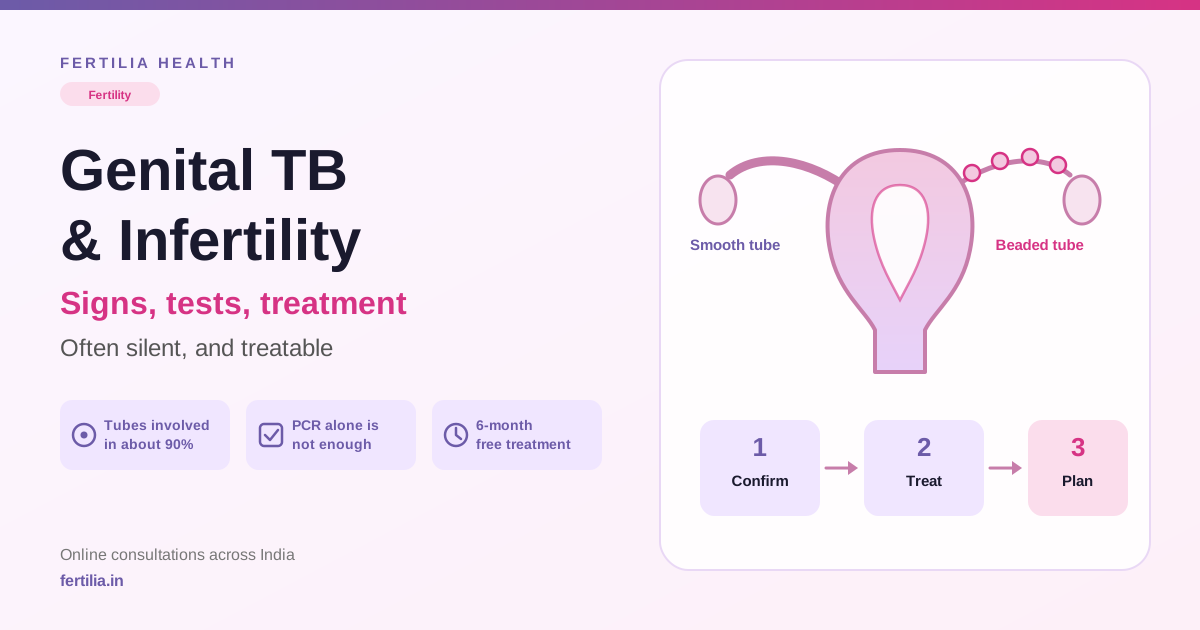
Once it reaches the pelvis, it has a clear pattern. In one review, the fallopian tubes were involved in about 90% of women with genital TB, the endometrium (the lining of the uterus) in about 70%, and the ovaries in about 25% (Sharma JB et al., Indian J Med Res, 2018, PMID 30964083).
That pattern explains how it affects fertility:
- In the tubes, it can cause blockage, scarring, or a fluid-filled tube. Our guide to blocked fallopian tubes explains how tubal damage stops the egg and sperm from meeting.
- In the endometrium, it can thin and scar the lining, and in more advanced cases the walls of the uterus stick together. This is one cause of Asherman’s syndrome, and it is why periods sometimes become very light.
- Around the ovaries and pelvis, it can cause adhesions that bind the organs together.
Why It Is So Often Silent
Most women with genital TB do not feel ill. In a 2026 study from a tertiary centre in North India, the authors described genital TB as underdiagnosed precisely because most women have no symptoms and are only identified during an infertility evaluation (Chawla L et al., Indian J Tuberc, 2026, PMID 41831936).
When there are symptoms, they tend to be mild and easy to put down to something else. In a series of 100 infertile women diagnosed with genital TB, 16% had scanty periods, 7% irregular cycles, 11% painful periods and 11% pelvic pain (Sharma JB et al., Indian J Tuberc, 2023, PMID 36740321).
So the signs worth noticing are often indirect:
- Periods that have become much lighter or shorter over time, with no clear reason. Our post on very light periods covers the other causes.
- Infertility with blocked or damaged tubes, but no history of pelvic infection, surgery or endometriosis.
- A personal history of TB anywhere in the body, or a family member at home who had TB.
- Long-standing pelvic pain or a vaginal discharge that does not settle with routine treatment.
- A thin lining that does not respond to medication, or a cavity that looks scarred on hysteroscopy.
None of these means you have genital TB. They are reasons for your doctor to keep it on the list while working out the cause.
Which Tests Confirm It and Which Do Not
This is where most of the confusion comes from. The bacterium lives in very small numbers in genital tissue, so no single test catches every case, and some tests are positive far more often than the disease is present.
In one study of 167 infertile women with genital TB, all of whom had an endometrial biopsy and a laparoscopy, the bacterium was seen under the microscope or grown in culture in only 2.99% of them. GeneXpert was positive in 18.56% and PCR in 47.90% (Sharma JB et al., Eur J Obstet Gynecol Reprod Biol, 2020, PMID 33256922). The same disease, tested on the same women, gave very different positive rates depending on the test.
| Test | What it looks for | How to read it |
|---|---|---|
| Endometrial biopsy, histopathology | Granulomas (small clusters of immune cells) in the lining | A typical granuloma is strong evidence. A normal result does not rule TB out. |
| AFB smear and TB culture | The bacterium itself | Positive is definite. Positive in only a small fraction of cases. |
| GeneXpert (CBNAAT) | TB DNA, and rifampicin resistance | In the study above: 100% specificity, 35.63% sensitivity. Good for confirming, poor for ruling out. |
| TB PCR on endometrium | TB DNA | Often positive. On its own, it is not considered enough for a diagnosis. |
| Laparoscopy and hysteroscopy | Visible changes in the pelvis and cavity | Can show definite signs (tubercles, caseous nodules, beaded tubes) or probable ones (adhesions). |
| HSG or ultrasound | Shape of the tubes and cavity | Can suggest TB. Cannot confirm it. |
| Mantoux or blood IGRA | Whether the body has met TB | Does not show where the infection is, or whether it is active. |
The PCR question
A positive endometrial TB PCR is one of the most common reasons women in India are started on anti-TB treatment. A review on diagnostic algorithms for genital TB states that a positive PCR alone is not taken for diagnosis because of its high false positivity (Sharma JB et al., Indian J Tuberc, 2020, PMID 33308655). PCR detects fragments of DNA, which can come from contamination or from an old, inactive infection.
Not every specialist reads this the same way. One IVF centre in North India gave 6 months of anti-TB treatment to every woman with a positive PCR and no other sign of disease. Their overall pregnancy rate (59.8%) was similar to that of PCR-negative women (60.9%), and most of their spontaneous pregnancies came within the first year (Jindal UN et al., Hum Reprod, 2012, PMID 22419745). Because there was no comparison group of PCR-positive women who were left untreated, the study cannot tell us whether the treatment made the difference.
What I take from this: a positive PCR is a reason to look further, not a diagnosis by itself. Six months of TB medicines is a real commitment for your liver and your daily life, so ask what else supports the diagnosis before you start.
How the diagnosis is usually put together
Because single tests miss so much, specialists combine the evidence. One widely used approach, called a composite reference standard, counts genital TB as present when there is a positive smear or culture, a granuloma on biopsy, a positive GeneXpert, or definite or probable findings on laparoscopy (Sharma JB et al., Indian J Tuberc, 2023, PMID 36740321).
Looking directly at the pelvis adds a lot. In the 2026 North Indian study, 58 infertile women with no known TB history had hysteroscopy and laparoscopy along with endometrial sampling. Findings suggestive of TB were seen in 19 of them (32.7%), while biopsy histopathology was positive in only 2 and GeneXpert in 1 (Chawla L et al., Indian J Tuberc, 2026, PMID 41831936). This was a small single-centre study, but it shows why your doctor may recommend a diagnostic laparoscopy when the picture is unclear.
If your HSG mentions irregular, beaded or rigid tubes, our walkthrough on how to read your HSG report explains what those terms mean. And if a biopsy has been suggested, the post on endometrial biopsy describes what to expect on the day.
The Mantoux skin test has limited value here. In women of childbearing age it had a sensitivity of 55% and a specificity of 80% for genital TB diagnosed at laparoscopy (Raut VS et al., Int J Gynaecol Obstet, 2001, PMID 11166750). A positive result means you have met TB at some point. It does not tell you that your tubes or uterus are involved.
If you have a report in hand that says PCR positive, granuloma, or beaded tubes, and you are not sure what it means for you, you can send it to me before any treatment decision is made.
The Standard Treatment
Once genital TB is diagnosed, the treatment is the same multi-drug course used for TB elsewhere in the body. For drug-sensitive genital TB under India’s National TB Elimination Programme, that means four medicines (rifampicin, isoniazid, pyrazinamide and ethambutol) daily for 2 months, followed by three (rifampicin, isoniazid and ethambutol) daily for 4 months (Sharma JB et al., J Obstet Gynaecol India, 2021, PMID 34483510). Drug-resistant TB needs different, longer regimens and is managed with a TB specialist.
Six months is enough for most women. A randomised trial in 175 infertile women with genital TB compared 6 and 9 months of treatment. Complete response was 97.7% with 6 months and 95.3% with 9 months, and recurrence and pregnancy rates were similar in both groups (Sharma JB et al., Eur J Obstet Gynecol Reprod Biol, 2016, PMID 27391900). About a third of women in each group had side effects.
A few practical points that make the course easier to get through:
- Treatment is free. The Central TB Division’s site, tbcindia.mohfw.gov.in (checked October 2026), states that TB diagnosis and treatment are free at all government health facilities. The national TB helpline, Nikshay Sampark, is 1800-11-6666.
- Take every dose. Stopping early raises the chance of TB coming back or becoming drug resistant.
- Report liver symptoms promptly. Some of these medicines can affect the liver. Nausea, vomiting, yellow eyes or dark urine are reasons to call your TB doctor the same day, not to wait for the next visit.
- If you conceive during treatment, do not stop the tablets on your own. Tell your TB doctor and your gynaecologist straight away so they can plan the rest of the course together.
Anti-TB treatment kills the infection. It does not undo scarring that has already formed in the tubes or the lining. That is why the next step after treatment depends on how much damage the disease left behind.
Getting Pregnant After Genital TB
The outlook depends mostly on how far the disease had progressed before it was treated.
When the tubes and lining are still healthy, natural conception is a realistic aim. In the 6-versus-9-month trial, about 1 in 5 women conceived during treatment or within a year of finishing it (Sharma JB et al., Eur J Obstet Gynecol Reprod Biol, 2016, PMID 27391900). A 2025 systematic review of 33 studies found that, when HSG or hysterolaparoscopy showed no abnormality, pregnancy rates after spontaneous conception and after IVF were similar (48.4% and 49.2%) (Tjahjadi D et al., Obstet Gynecol Sci, 2025, PMID 39748636).
When the tubes are damaged, IVF bypasses them. The same review found higher pregnancy rates with IVF than with anti-TB treatment alone overall (37.9% vs 23.8%), and concluded that IVF is the better option in more advanced disease. In a study of 155 women with genital TB having IVF or ICSI, women whose TB had affected only the tubes had pregnancy outcomes similar to women with non-TB tubal blockage (Dai W et al., Gynecol Endocrinol, 2020, PMID 31847626). If a tube is swollen with fluid, our post on hydrosalpinx explains why it is often dealt with before an embryo transfer.
When the endometrium was involved, the picture is harder. In the same IVF study, women with endometrial TB had a thinner lining and lower implantation and cumulative pregnancy rates than women in the control group (Dai W et al., Gynecol Endocrinol, 2020, PMID 31847626). Scarring inside the cavity is also common: intrauterine adhesions were found in 29.88% of 348 women with genital TB who had a hysteroscopy (Sharma JB et al., Indian J Tuberc, 2022, PMID 35074151). Mild adhesions can often be treated. For severe scarring that does not respond, a review in this field notes that surrogacy or adoption may be discussed (Sharma JB et al., J Obstet Gynaecol India, 2021, PMID 34483510). That conversation, if it comes, should come only after the lining has been properly assessed and treated.
If IVF is part of your plan, the IVF cost guide lays out what a cycle costs in India and what drives the total.
What It Is Called in Tamil, Hindi and Telugu
TB has a common name in every Indian language, and it helps to recognise it on a referral note or when a relative mentions it.
| Language | Word for TB | Genital TB, as it is usually described |
|---|---|---|
| Tamil | kaasa noi (காச நோய்) | karuppai kaasa noi (TB of the uterus) |
| Hindi | tapedik (तपेदिक), also kshay rog | bachchedani ki TB, or “TB in the tubes” |
| Telugu | kshaya (క్షయ) | usually just “genital TB” |
In practice, most women in Tamil Nadu, Andhra Pradesh, Telangana and across North India hear the English term “genital TB” from their doctor, and that is also what will be written on the report.
Practical Steps if Genital TB Has Been Mentioned
- Ask which test the diagnosis is based on. A granuloma, a positive culture or GeneXpert, or clear laparoscopy findings carry far more weight than a positive PCR alone.
- Ask whether your tubes and lining have been checked. The treatment plan after the anti-TB course depends on them.
- If treatment is advised, complete the full course. Use the government programme if cost is a concern.
- Plan the next step together. Your TB doctor and your gynaecologist should agree on when it is reasonable to try naturally, when to reassess the lining, and when to move to IVF.
- Bring every report to each appointment. HSG images, biopsy reports and laparoscopy notes together tell a much clearer story than any one of them.
If you are still at the stage of finding out why pregnancy has not happened, our post on unexplained infertility covers the tests that usually come next.
At Fertilia, Dr. Suganya Venkat works alongside your TB doctor and fertility specialist rather than replacing them: reviewing the reports, helping you understand which findings matter, and planning the steps around conception once treatment is done.
Frequently Asked Questions
Can genital TB be cured?
Yes. The infection itself responds well to treatment. In a randomised trial, about 95 to 98% of women with genital TB had a complete response to a 6- or 9-month course. What treatment cannot do is reverse scarring that has already formed in the tubes or lining, which is why fertility planning continues after the course ends.
Is genital TB contagious? Does my husband need treatment?
Genital TB usually reaches the pelvis through the bloodstream from an infection elsewhere in the body, not through sex. Your husband does not need TB treatment because you have been diagnosed. If anyone at home has a persistent cough, fever or weight loss, they should be checked for TB in the usual way.
My endometrial TB PCR is positive. Do I definitely have genital TB?
Not necessarily. A positive PCR alone is not considered enough to make the diagnosis because it has a high false-positive rate. Ask your doctor whether a granuloma, a positive GeneXpert or culture, or laparoscopy findings support it before you start a 6-month course.
What are the symptoms of genital TB in women?
Most women have none. When symptoms are present they are usually mild: lighter or irregular periods, painful periods, pelvic pain or a persistent discharge. Infertility is often the first and only sign, which is why the diagnosis is usually made during a fertility workup.
Can I get pregnant after genital TB treatment?
Many women do. If the tubes and lining were not badly damaged, natural conception is possible, and about 1 in 5 women in one trial conceived during treatment or within a year of finishing it. If the tubes are blocked, IVF gives results similar to other causes of tubal blockage. Endometrial damage lowers the chances more, and needs its own assessment.
How long should I wait after anti-TB treatment before trying for a baby or starting IVF?
There is no single number that fits everyone. Your TB doctor and gynaecologist should decide together, based on whether the course is complete, how you tolerated it, and how your tubes and lining look afterwards. In the studies above, some women conceived during the treatment course itself, and many within the year after it.
Can genital TB come back?
It can, though it is uncommon after a full course. In the 6-versus-9-month trial, 6 of 175 women had a recurrence that needed a second course of treatment. Completing every dose is the best protection.
Genital TB is usually found during a fertility workup, in women who had no idea they had it. A firm diagnosis, a complete course of free treatment and a clear look at the tubes and lining afterwards give most women a path forward, whether that path is natural conception or IVF.
If you would like help understanding your reports or planning what comes after treatment, you can speak with Dr. Suganya over a video consultation, wherever you are in India.