Name has been changed to protect patient privacy. Clinical details and images are shared with the patient’s consent.
Not every fertility story begins with fertility.
Some begin with a woman who is simply exhausted. A body that feels heavier than it should. A wound that will not close. Nights of broken sleep. And, sitting quietly underneath all of it, a wish she has not quite said out loud, that one day soon she might carry another baby.
That is where Kalpana was when she first reached out to us.
Where Kalpana Started
When Kalpana joined the program, she was carrying a great deal, physically and emotionally. She weighed 95 kg, and at her height that placed her firmly in a range her doctors were watching. Her recent blood work had flagged two things at once. Her fasting blood sugar had climbed into the diabetic range, at 301 mg/dL, and her cholesterol was borderline. This was not a moment for panic. It was a clear signal that her body needed steady, everyday care, the kind that works quietly alongside the treatment her own doctor was guiding.
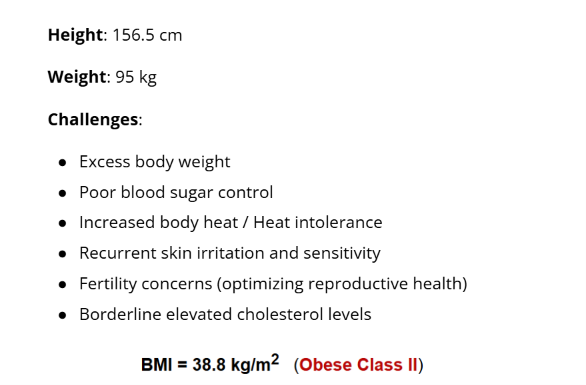
She was already a mother, working from home, and running a full and hectic day. On top of everything else, she had a wound that had not healed for several months. The pain from it kept her from sleeping properly, and the lack of sleep quietly drained her energy, her mood, and her sense of herself. Standing for long stretches or walking comfortably had become hard because of her weight.
And through all of this, she and her husband were hoping to conceive again. Her husband is diabetic, so the two of them were thinking not only about a future pregnancy but about their long-term health together. If you are a mother finding it harder to conceive the second time around, you are not alone, and it has a name. We have written about secondary infertility and trying again after your first child if that is part of your picture too.
Understanding Her Real Day First
During our first consultation, I made a decision that I make with almost every woman who comes to us carrying this much: we did not start with a diet chart.
Instead, we spent the time understanding how Kalpana’s day actually looked. Her work schedule. Her responsibilities as a mother. When she slept, when she woke, when she ate, and where the day kept tripping her up. I am Dr. Suganya Venkat, an OB-GYN, and after years of doing this I have learned that a plan only works if it fits the life it is meant for.
What became clear very quickly was that Kalpana did not need a complicated protocol. She needed something simple and realistic that could survive a busy day at home with a child. So that is what we built.
Small Changes, Done Consistently
The first few weeks were genuinely hard for her. Like so many mothers, she felt there was no time left over for herself after everyone else had been taken care of. We kept gently reminding her of one thing: her health counts too. Slowly, the reminders turned into small, consistent choices.
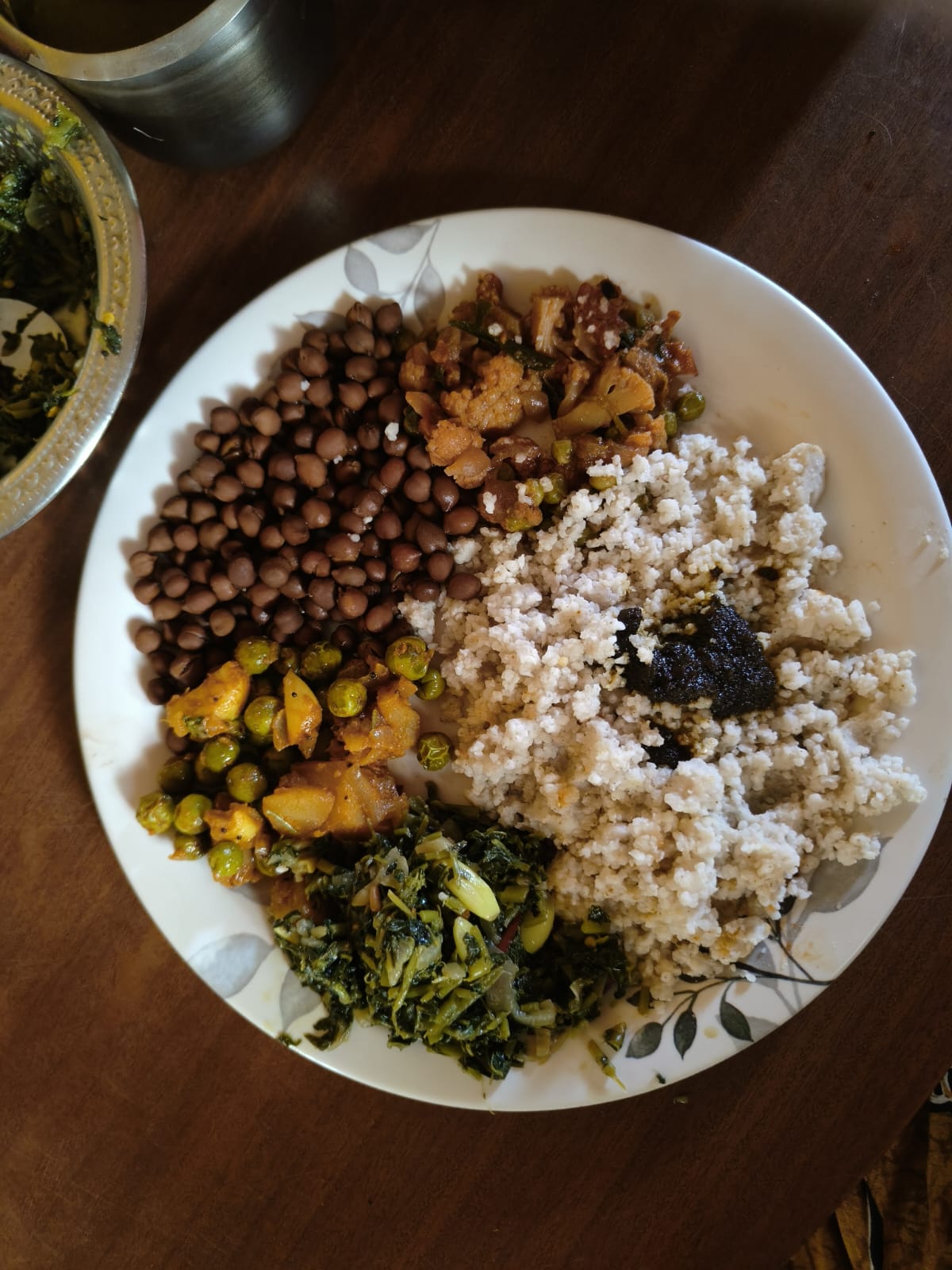
Her nutrition plan was never about eating less. It was about eating in a balanced, structured way, with simple home-cooked plates she could actually manage. Familiar South Indian food, nothing she had to hunt for in a supermarket.
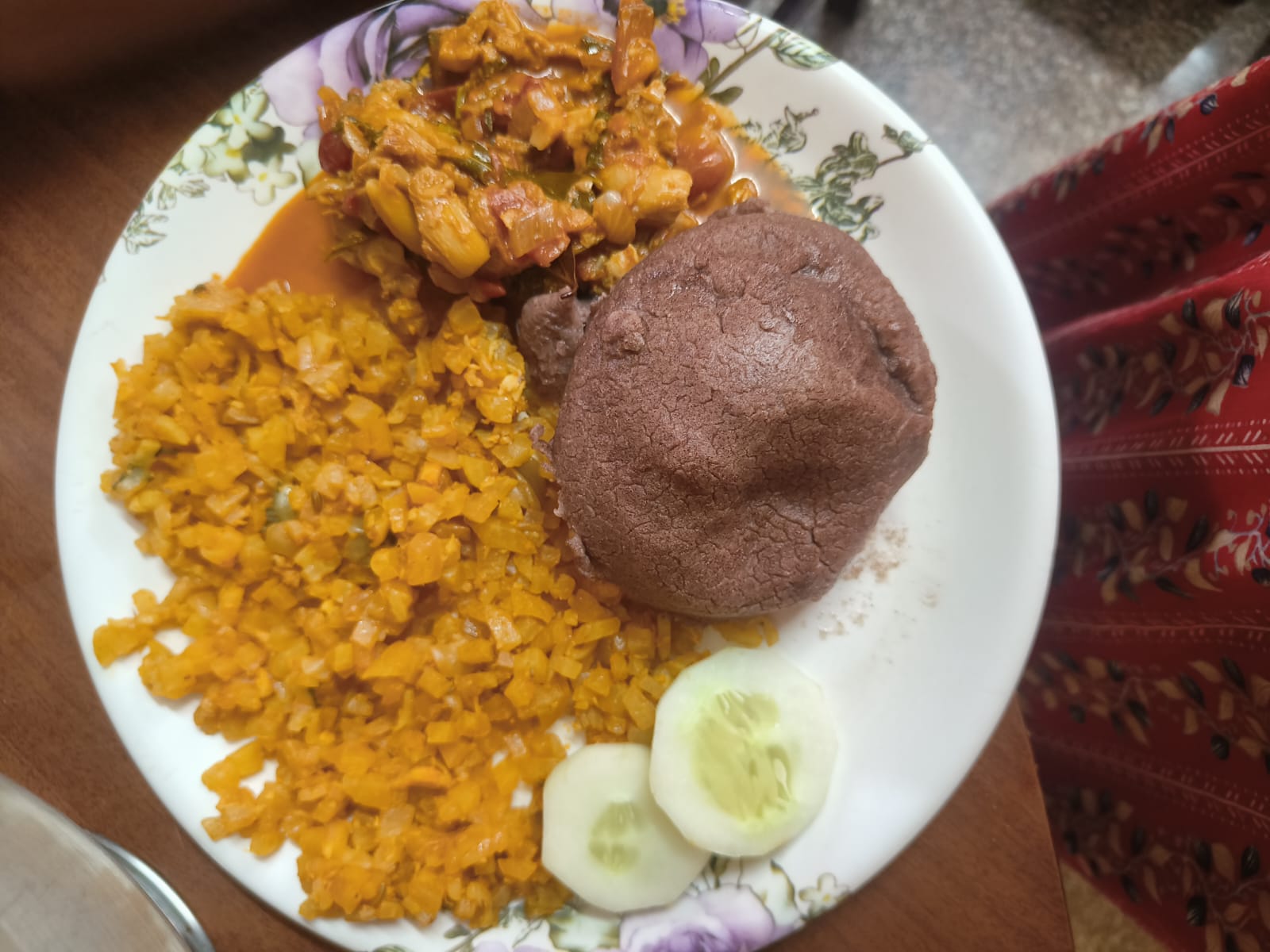
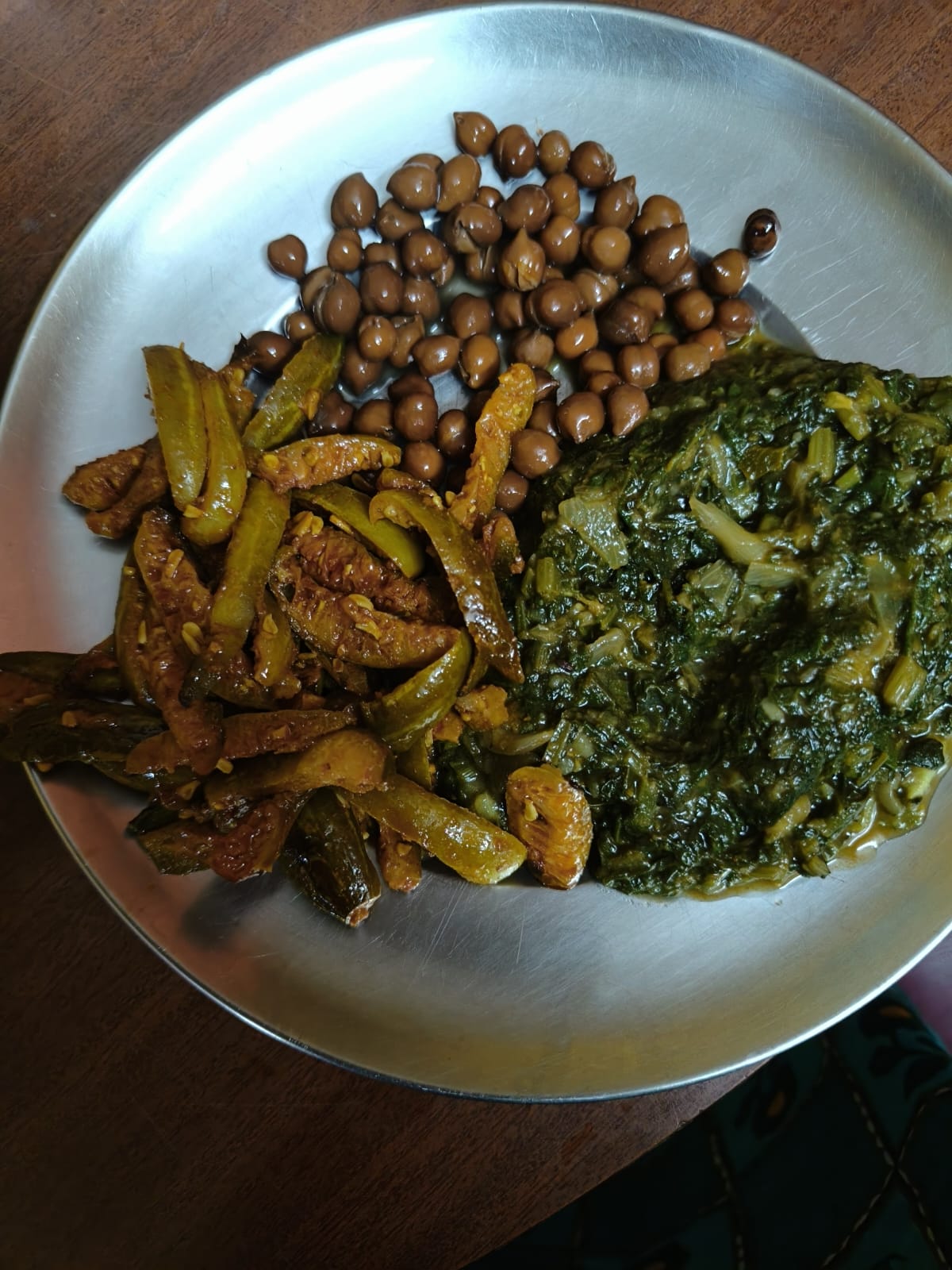
The plates leaned on the things that quietly do a lot of good: whole grains like ragi, protein from eggs and legumes such as chana, plenty of vegetables and greens, and enough on the plate that she never felt starved into it. When you are managing diabetes and weight together, steady, balanced meals do far more than skipping food ever could, and they help keep blood sugar even through the day. (If you want to understand why, our insulin resistance guide explains how balanced eating steadies blood sugar.)
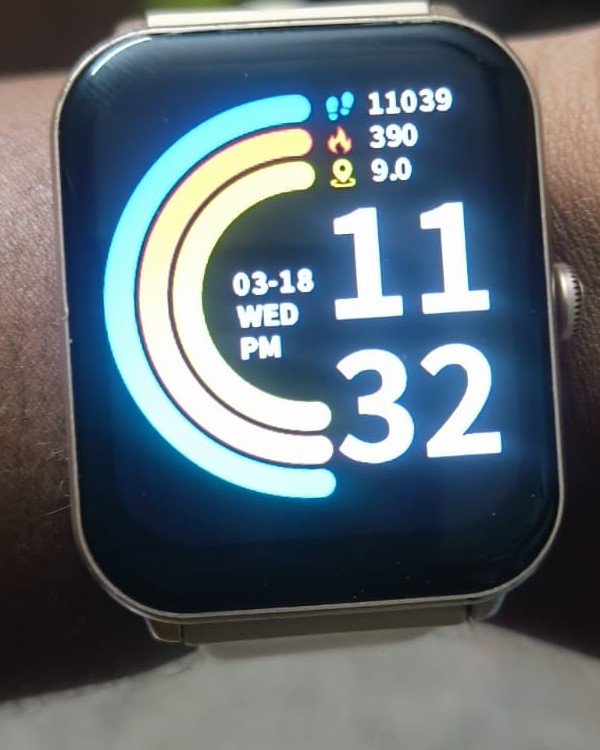
What truly set Kalpana apart, though, was her dedication to movement. She became remarkably regular with her walking, gradually building up to around 12,000 steps a day. She kept her water intake excellent too, drinking 3 to 4 litres daily. These are not dramatic interventions. They are simple, repeatable habits, and in her hands they did a great deal.
If your own health has slipped to the bottom of the list while you look after everyone else, Dr. Suganya can help you rebuild it, one realistic step at a time. Talk to Dr. Suganya on WhatsApp →
The Wound That Finally Healed
Within a few weeks, Kalpana noticed something that moved her deeply. The wound that had refused to heal for months began, at last, to close.
It is easy to underestimate what that meant to her. That wound had been stealing her sleep and her comfort for a long time. As it healed, her sleep improved too. She told us in one of her reviews that she was finally getting good, uninterrupted rest, and that quiet fact gave her a confidence that nothing on a scale could. Her body, she realised, was capable of recovering.
We were not chasing quick numbers with Kalpana. We were helping her build habits she could keep for life. Week by week she grew more active, more consistent, and more sure of herself, and each small milestone carried her to the next.
When Life Took an Unexpected Turn
And then, just as things were finding their rhythm, life interrupted.
Around the second month of the program, Kalpana and her husband were in a serious accident. It shook her, and not only physically. She became anxious, she started overthinking, and for a while she felt emotionally worn out. For nearly a month, the routine she had worked so hard to build was hard to hold on to.
What moved us was that she did not withdraw. She reached out and told us honestly what she was going through. We arranged a dedicated wellness session for her right away, so she had a supportive space to talk through the anxiety and the exhaustion, rather than carrying it alone.
She was worried, understandably, that she had lost a whole month and that all her progress would slip away. So we made a simple decision. We extended her program by an additional month at no extra cost. The point of her journey was never a deadline, and we did not want her to continue from a place of pressure or guilt. She later told us that this was the moment she felt truly cared for, and not treated as just another client. That matters to us more than any single result.
What Changed
By the end of her journey, the numbers had moved, but they were not the real headline.
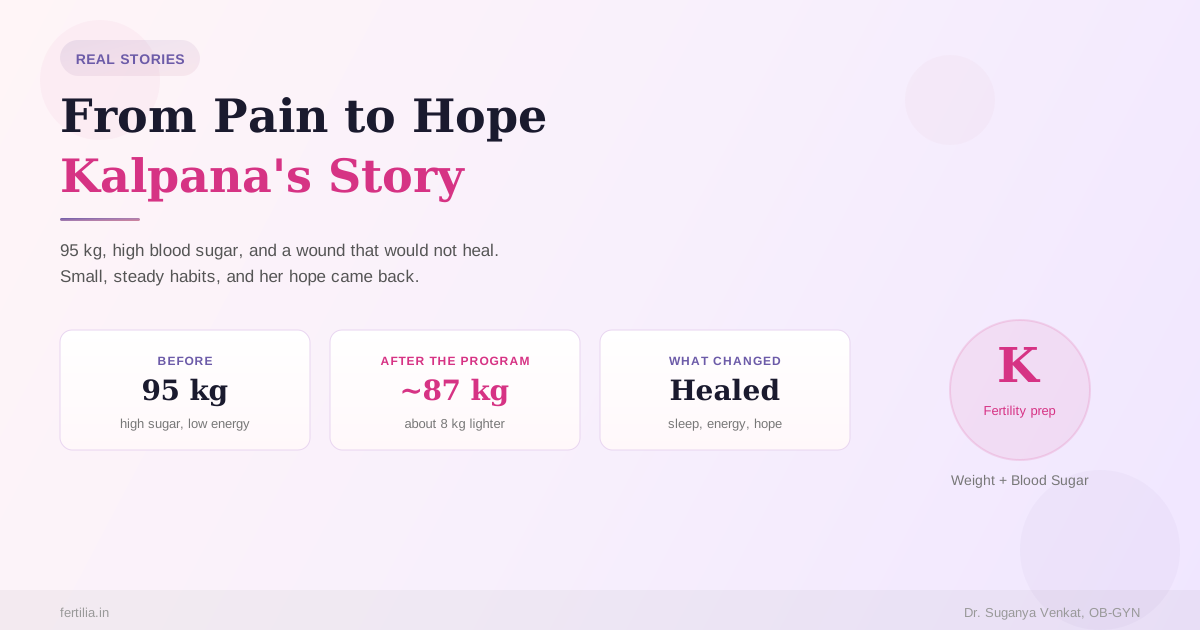
- Steady, sustainable weight loss of around 8 kg, from 95 kg
- A wound that had not healed for months, finally closed
- Deep, uninterrupted sleep, after a long stretch of broken nights
- More energy through the day, and a lighter, more flexible body
- No more knee pain, even climbing stairs, and better digestion
- Her body heat and skin irritation settled, and her hair fall reduced
Her weight coming down was simply the outward sign of something bigger happening underneath: a body finding its balance, a routine that finally worked with her life, and a woman who felt like herself again. If you want to understand why weight loss is never only about the number on the scale, we have written about that here, and about what actually helps with sustainable weight loss.
But the biggest change was the one you cannot measure. Kalpana became hopeful again. She started to believe that her body could be healthy, and that the baby she and her husband were hoping for was genuinely within reach.
In Her Own Words
Near the end, Kalpana left us this message:
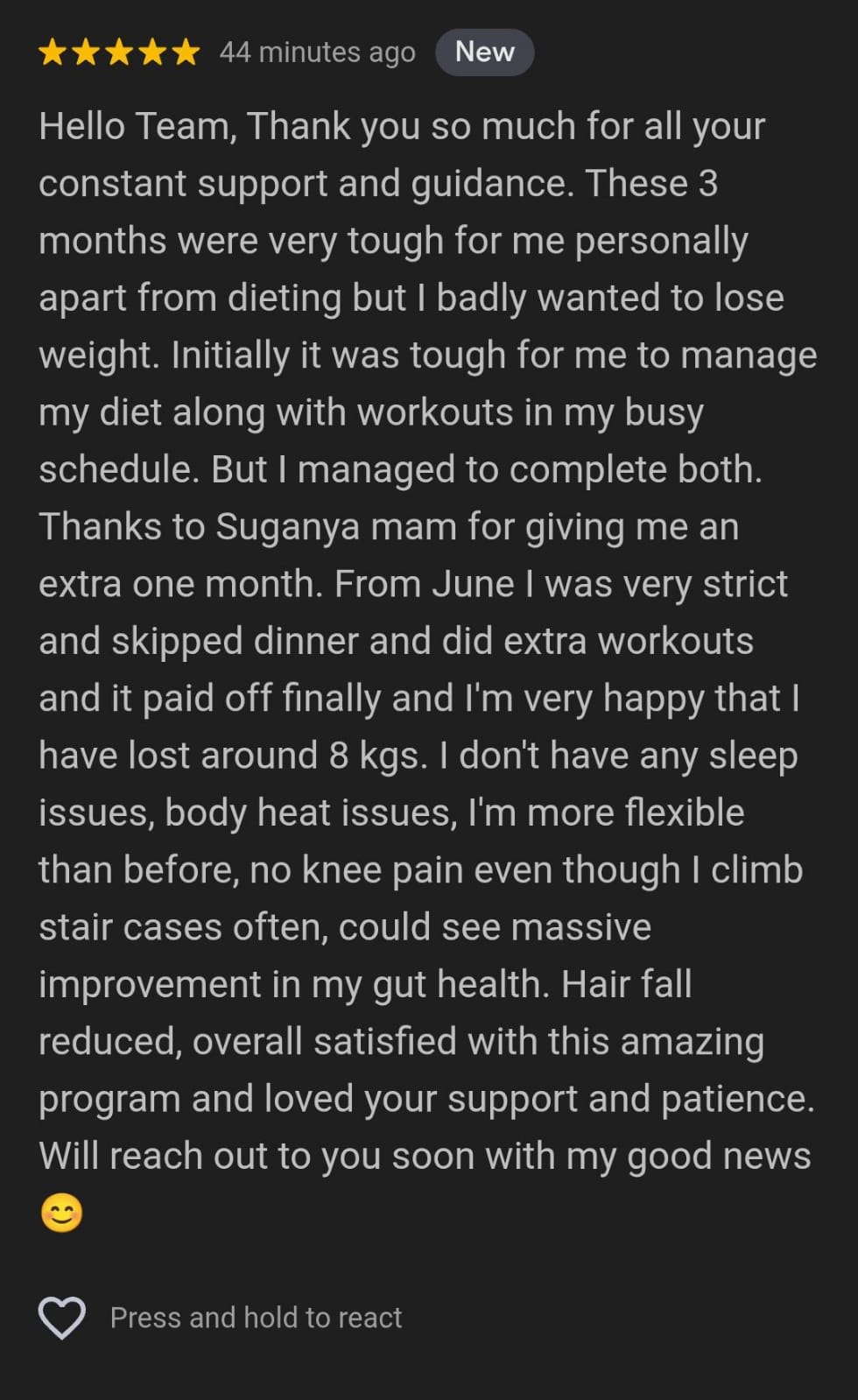
“I’m very happy that I have lost around 8 kgs… loved your support and patience. Will reach out to you soon with my good news.”
In her final month she pushed herself hard, in her own determined way. Throughout the program our guidance to her was always to eat balanced, home-cooked meals rather than skip them, because for a woman managing diabetes, steady, regular meals are what keep blood sugar even and progress safe. What we admired most was not the effort, but the hope in that last line.
Dr. Suganya’s Note
“Kalpana came to us tired, in pain, and quietly worried about whether her body could still do what she hoped it would. We did not rush her. We rebuilt the basics first, her food, her movement, her sleep, and her sense of being cared for. Her wound healed, her sleep returned, and her weight came down steadily, and with all of that her hope came back. When the accident happened, the right thing was simply to give her more time and more support, not less. I am proud of how she kept showing up for herself.” (Kalpana was supported through the program by our nutrition and wellness team.)
Recovery Is Also Preparation
Kalpana’s story is a reminder of something I say often. Fertility is not only about food or weight loss. It is about giving a woman the right support at the right time, physically, emotionally, and mentally, so that she can heal, rebuild her confidence, and move forward with hope.
A body that is rested, better nourished, and metabolically steadier is a far stronger place to begin a pregnancy from than one running on broken sleep and pain. That is true whether the next step is a natural attempt, an IUI, or IVF, and none of the work she has done is ever wasted. Today Kalpana is continuing her healthy lifestyle with much more confidence, looking toward the future with renewed strength.
You can read more journeys like hers on our stories page.
Every woman deserves a plan built for her body and her life, not a generic diet chart. Dr. Suganya and the Fertilia team work with you one-on-one, fully online, wherever you are in India. Start a conversation with Dr. Suganya on WhatsApp →
Frequently Asked Questions
Why focus on weight and diabetes before trying for a baby?
When blood sugar is in the diabetic range and weight is a concern, the body is under extra strain, and that strain can affect both a future pregnancy and long-term health. Bringing weight down gradually, steadying blood sugar with balanced meals alongside the treatment your own doctor advises, and improving sleep all create a stronger foundation to begin from. In Kalpana’s case, rebuilding these basics first was the priority rather than rushing ahead. Our guide on why weight loss is never just about the weight explains this in more detail.
How much weight did Kalpana lose, and how?
She lost around 8 kg from a starting weight of 95 kg, through gradual, sustainable change rather than crash dieting. The plan was built on balanced home-cooked plates with enough protein and vegetables, close to 12,000 steps of walking a day, and 3 to 4 litres of water daily. The aim was habits she could keep for life, not a quick reset.
Can walking alone make that much difference?
More than most people expect. Regular walking, in Kalpana’s case building up to around 12,000 steps a day, improves insulin sensitivity, supports steady weight loss, and lifts mood and sleep, all without any equipment or gym. It is one of the most accessible and underrated tools we have, especially for a busy mother at home.
Does losing weight improve fertility?
For many women carrying excess weight, yes. Excess weight, especially around the abdomen, worsens insulin resistance, which can disturb ovulation and cycle regularity. Even a modest reduction in body weight can meaningfully improve insulin sensitivity and hormonal balance, which is why we so often begin here when a woman is preparing for a future pregnancy.
My partner is diabetic too. Does that affect our chances?
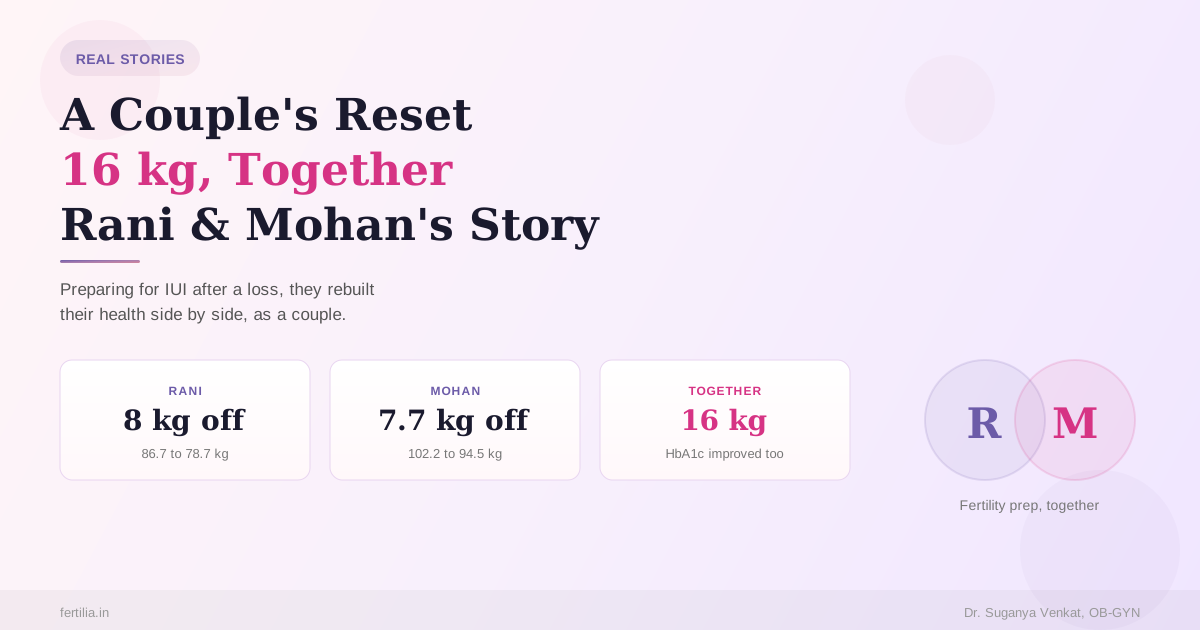
It can play a role, and it is worth both partners looking after their blood sugar and weight together, as Kalpana and her husband did, both of them managing diabetes while she prepared for a future pregnancy. Blood sugar and weight affect fertility on both sides, and small shared habits, better food, more movement, better sleep, help the whole household. Any medical management of diabetes should of course continue with your own doctor, alongside these lifestyle changes.
Do you work with women who have not conceived yet?
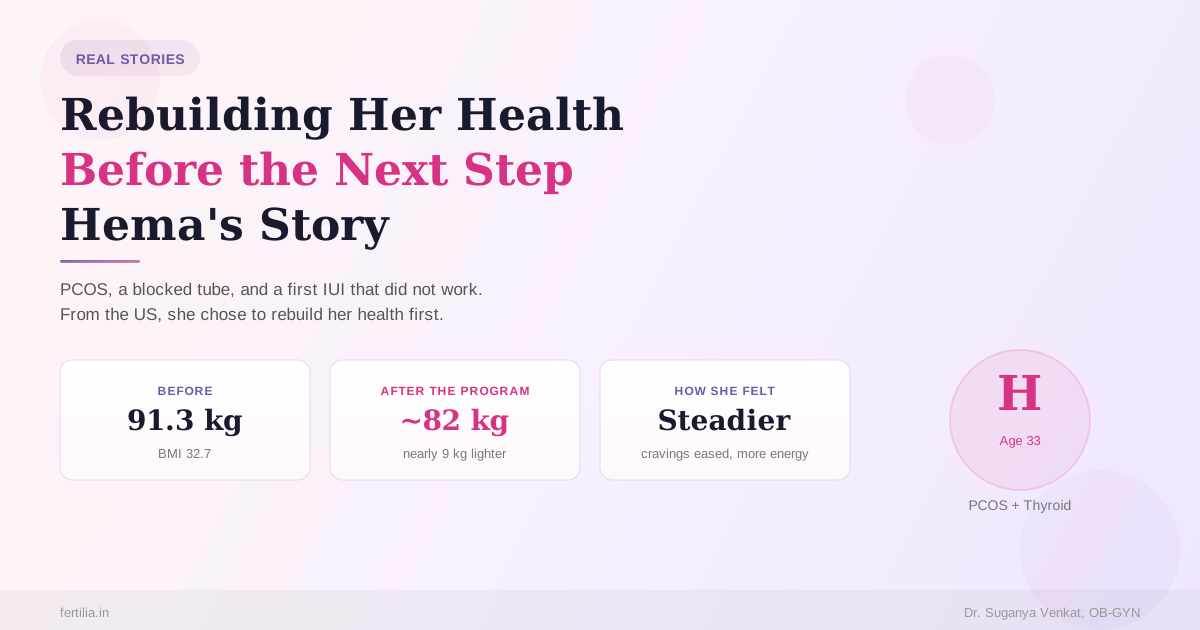
All the time. Many women reach us before, during, or between fertility attempts, and our role is to strengthen the foundation around whatever comes next: nutrition, weight, blood sugar, sleep, and emotional wellbeing. All consultations happen online via video call, so the support fits around your life anywhere in India. You can see how we approach this in another journey, rebuilding health first from the US.
Every story we share is real, verified, and published with the patient’s consent. Names and identifying details are changed to protect privacy.