Many women come to us with a small strip of tablets in their hand and the same question: “Doctor, my gynec has given me Siphene 50 (or Clomid 50, or Fertomid). What does this tablet actually do, and what should I expect?” Sometimes the tablets have already been started; sometimes the strip is still sealed and the questions are piling up.
Clomiphene citrate is one of the oldest and most widely used medicines for fertility in the world, and it is still prescribed extensively in India. The newer drug letrozole has moved ahead of it in international guidelines for polycystic ovary syndrome, but clomiphene is not going away. It is inexpensive, familiar to every gynec, and for many women it does exactly what it is supposed to do.
This post walks through what clomiphene is, how to take it, what a monitored cycle looks like, the honest success rates, the side effects you should know about, and where it sits compared to letrozole today.
What Clomiphene Citrate Is and How It Works
Clomiphene citrate belongs to a class of drugs called selective oestrogen receptor modulators, or SERMs. In simple terms: it looks like oestrogen to certain tissues in the body, and it blocks the real oestrogen from binding.
The relevant tissue for fertility is the hypothalamus, a small structure at the base of the brain. The hypothalamus is one of the sensors that reads the body’s oestrogen level. When clomiphene sits in those receptors during the five-day course, the hypothalamus is temporarily “blinded” and reads the oestrogen signal as low. It responds by pushing the pituitary gland to release more FSH (follicle-stimulating hormone).
That extra FSH is what the ovaries need to grow a follicle to maturity. In polycystic ovary syndrome, the ovaries usually contain many small antral follicles, but none of them grows to full size and releases an egg on its own. The FSH surge that clomiphene triggers can push one or two of those follicles through to ovulation.
The block on the oestrogen receptors is temporary. Once the five-day course ends, the drug clears, and the receptors go back to reading oestrogen normally. But because clomiphene binds tightly, some of its effect on other oestrogen-sensitive tissues, particularly the cervix and the uterine lining, can carry through the rest of the cycle. That is important, and we will come back to it in the side-effect section.
Dose, Timing and How to Take It
Starting dose
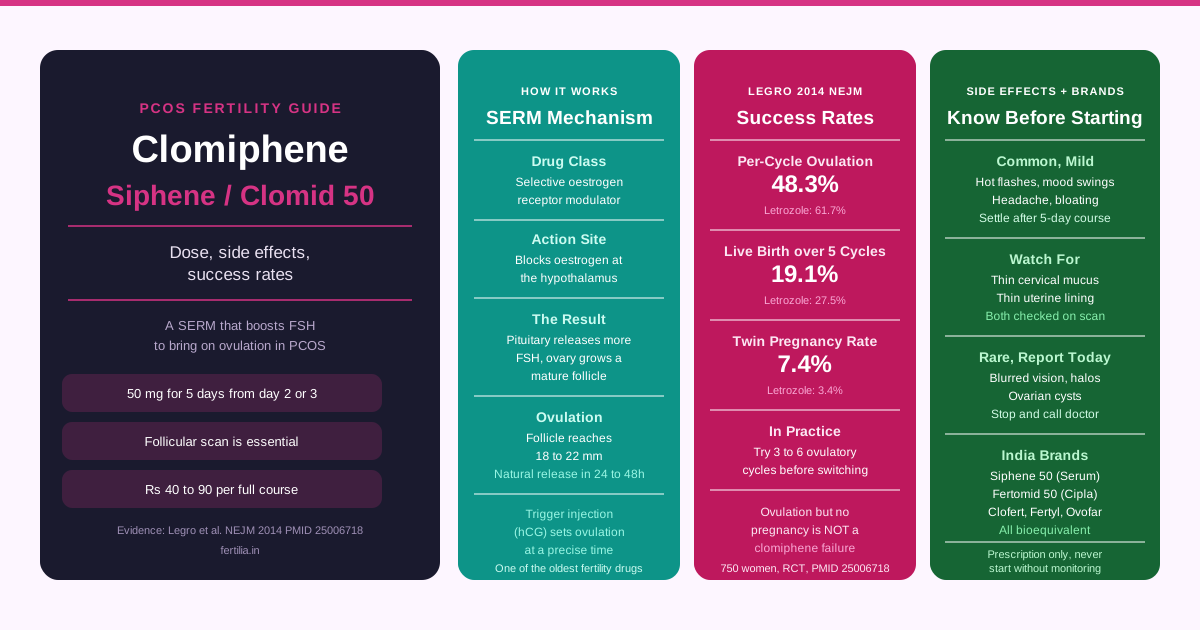
The standard starting dose in India is 50 mg once a day for five days. That is what most Siphene 50 or Clomid 50 or Fertomid 50 prescriptions look like.
If the monitoring scan in the first cycle does not show a mature follicle, the doctor will step the dose up to 100 mg per day in the next cycle, and to 150 mg per day after that if needed. Doses above 150 mg per day are generally not used, because the response usually does not improve much beyond that and the side effects grow.
Most women with PCOS who are going to respond to clomiphene respond at 50 mg or 100 mg. If 150 mg per day for five days is not producing ovulation, a different approach is usually needed.
When to take it
The five-day course starts on cycle day 2, 3, 4 or 5, counting the first full day of proper flow as day 1. Different doctors have small preferences (days 2 to 6, 3 to 7, or 5 to 9); all these windows work, and your doctor’s timing is the right one to follow.
Take the tablet at roughly the same time each day. It can be taken with or without food. Some women find a light meal alongside the tablet helps with the mild nausea a few report on the first day.
Bringing on a bleed if there is no period
Women with PCOS often go long stretches without a period, so if there is no natural flow to start the cycle, your doctor will usually prescribe a short course of a progestogen tablet (medroxyprogesterone or dydrogesterone) to bring on a withdrawal bleed. Once that bleed starts, day 1 is set, and clomiphene begins on the day the doctor has written.
Brands and Cost in India
Clomiphene 50 mg is one of the cheapest fertility medicines available in India, which is one of the reasons it stays in wide use.
- Siphene 50 (Serum Institute): commonly around Rs 40 for a strip of 5 tablets, or Rs 70 to 95 for a strip of 10 (verified against PharmEasy and 1mg listings, July 2026)
- Fertomid 25 / 50 / 100 (Cipla): Rs 70 to 90 for a strip of 10
- Clomid (the original Sanofi/Merck brand): the international name; less commonly stocked in Indian pharmacies today
- Other generics (Clofert, Fertyl, Fertitrig, Ovofar): Rs 35 to 90 per strip depending on pack size and brand
The National Pharmaceutical Pricing Authority ceiling for clomiphene 50 mg is around Rs 9 per tablet, so all of the above sit within the regulated range. Confirm the exact price at your pharmacy; any registered generic clomiphene 50 mg is bioequivalent to the branded ones.
A single five-day course of the standard 50 mg dose usually costs less than Rs 100. That matters, because for many women in India cost is a real factor in which drug their doctor reaches for.
What a Monitored Cycle Looks Like
Clomiphene is meant to be taken with monitoring, particularly in the first one or two cycles. A follicular study, also called folliculometry, is a series of transvaginal ultrasound scans done every two to three days from around cycle day 10.
Each scan measures the developing follicle (or follicles) and the thickness of the uterine lining. The target for ovulation is a dominant follicle of 18 to 22 mm and an endometrial lining of at least 7 to 8 mm. If both are on track, natural ovulation usually follows within 24 to 48 hours of the follicle reaching mature size.
Some doctors will give a trigger injection (an hCG shot such as Pregnyl or Ovitrelle) when the follicle is fully mature, particularly when timed intercourse or IUI is planned. The trigger sets ovulation about 36 hours later, which lets the couple time things precisely.
If the scan by cycle day 14 to 16 shows no dominant follicle, the cycle is anovulatory at the current dose. The dose will be increased in the next cycle. If the scan shows more than two mature follicles above 14 mm, the doctor will usually advise against intercourse or IUI in that cycle to avoid the risk of a triplet or higher-order pregnancy. This over-response is more common at the 100 mg and 150 mg doses.
If you want to understand what the numbers on your scan report mean, our follicular study guide explains each measurement in plain language.
Monitoring is not compulsory for every single cycle once a response has been confirmed, but skipping monitoring altogether means you cannot know whether ovulation is actually happening at the prescribed dose.
Realistic Success Rates
The single most useful data point on clomiphene versus other fertility options comes from the 2014 New England Journal of Medicine trial by Legro and colleagues (Legro RS et al., N Engl J Med 2014;371(2):119-29, PMID 25006718), which randomised 750 women with PCOS and anovulatory infertility across multiple centres to either letrozole or clomiphene for up to five cycles.
The numbers for the clomiphene arm were:
- Per-cycle ovulation rate: approximately 48.3% (compared with 61.7% for letrozole in the same trial)
- Live birth rate per woman over five cycles: 19.1% (compared with 27.5% for letrozole)
- Twin pregnancy rate: 7.4% (compared with 3.4% for letrozole)
These figures are for women with PCOS, open tubes and a partner with a normal semen analysis. In practice, a woman’s individual success depends on her age, ovarian reserve, weight, insulin profile, and any other fertility factors present. Rates are lower after age 35.
One cycle is not the full picture. The cumulative chance of pregnancy rises with each additional ovulatory cycle. A woman who ovulates on cycle one but does not conceive has not “failed” clomiphene; she has completed one of several needed opportunities. Standard practice is to try three to six ovulatory cycles before deciding the drug has done what it can.
If you are unsure whether ovulation is the main barrier or whether other factors need to be checked first, our fertility workup guide walks through what a baseline assessment covers, including AMH, day-3 hormones, tubal patency (HSG) and semen analysis.
Side Effects You Should Know About
Most women tolerate clomiphene well, but its side-effect profile is different from letrozole’s, and it is worth knowing what to expect.
Common and usually mild
- Hot flashes: a warm flush across the chest and face, similar to what women describe in early menopause. This is a direct effect of the anti-oestrogenic action and usually settles once the five-day course is over.
- Mood swings and irritability: many women notice they feel more emotional or on edge during the tablet days. This also settles after the course ends.
- Headaches: usually mild, occasionally troublesome.
- Bloating and mild pelvic discomfort: the ovaries are working harder than usual, and mild fullness is expected.
- Breast tenderness: transient.
Less common but worth knowing
- Ovarian cysts: clomiphene can cause functional ovarian cysts, which usually resolve on their own within a cycle or two. This is one reason a baseline scan is often done before starting a new cycle.
- Visual symptoms: a small number of women report blurred vision, halos or spots during the course. These are rare and reversible on stopping the drug, but they must be reported to your doctor immediately. Clomiphene should not be continued while visual disturbances are present.
- Ovarian hyperstimulation syndrome (OHSS): the risk with oral clomiphene at standard doses is very low. OHSS is primarily a concern with injectable gonadotropins in IVF. For a full explanation of when OHSS matters and what to watch for, see our OHSS guide.
The two effects that matter most for conception
The most important thing to know about clomiphene, and the reason letrozole has overtaken it in first-line international guidelines, is that its anti-oestrogenic effect does not stop at the hypothalamus. It also acts on:
- Cervical mucus: clomiphene can make cervical mucus thicker and drier, which makes it harder for sperm to travel through the cervix into the uterus. Some women who ovulate reliably on clomiphene still struggle to conceive because of this local effect.
- Endometrial lining: clomiphene can thin the uterine lining in some women. A lining below 7 mm at the time of ovulation reduces the chance of implantation. This is why the monitoring scan measures both the follicle and the lining.
Not every woman experiences these effects, and many conceive on clomiphene without any lining or mucus problem at all. But if the scan shows the follicle is developing well while the lining stays thin cycle after cycle, this is usually the point where the doctor considers switching to letrozole, which does not carry these downstream anti-oestrogenic effects.
If your gynec has started you on clomiphene and you want to understand what your scan reports mean, or you are wondering whether to switch to letrozole, you can talk it through with Dr. Suganya Venkat over a video consultation. She is an OB-GYN with over fifteen years of clinical experience and works with women across India online, so distance is not a barrier.
Book a video consultation on WhatsApp
Clomiphene vs Letrozole: How Doctors Choose Today
The 2023 international evidence-based PCOS guideline and the ASRM Practice Committee now recommend letrozole as the first-line drug for PCOS-related anovulatory infertility. Letrozole produced higher live birth rates and fewer twin pregnancies in the Legro trial, and it does not carry the cervical mucus or endometrial thinning effects that clomiphene sometimes causes.
That said, clomiphene is still widely and appropriately prescribed. The situations where a doctor might reach for it include:
- Cost and access: a full course of Siphene 50 is around Rs 40; letrozole is more expensive. In parts of India where women self-pay, the cost difference is real.
- Prescriber familiarity: many senior gynecs have been prescribing clomiphene for decades and know its patterns thoroughly. Comfort with a familiar drug is not a small thing in medicine.
- Some other fertility indications: clomiphene is also used off-label in a few other fertility contexts (such as ovulation induction alongside IUI in unexplained infertility) where its patterns are well established.
- When a woman has done well on it before: if a previous pregnancy was conceived on clomiphene, doctors will often stay with the drug that worked.
If you want to understand our full write-up on the newer alternative, our letrozole guide covers the same ground for that drug, including the side effect profile and where it sits in the treatment ladder.
Switching from clomiphene to letrozole (or vice versa) mid-treatment is a common and reasonable move. It is not a sign that anything has gone wrong.
Clomiphene and Metformin Together
For many women with PCOS, particularly those with insulin resistance, clomiphene is prescribed alongside metformin rather than alone.
The reasoning is direct. Metformin targets insulin resistance, which is one of the underlying drivers of hormonal dysregulation in PCOS. When insulin resistance is not addressed, ovulation induction of any kind tends to be less effective. Studies have shown that combining metformin with clomiphene can improve ovulation and pregnancy rates in women with significant insulin resistance, compared with clomiphene alone.
If you are already on metformin for PCOS management, your doctor will usually continue it when clomiphene is added. The two drugs work through completely different pathways and do not duplicate each other. Our metformin guide covers who benefits from adding it and why.
When Clomiphene Is Not Going to Be Enough
Clomiphene addresses one specific problem: anovulation. It does not address a blocked fallopian tube, a low sperm count, poor egg quality from significantly diminished ovarian reserve, or advanced endometriosis. If any of these are also present, ovulation induction alone is unlikely to lead to pregnancy no matter how well the follicle develops.
A basic fertility workup before starting ovulation induction usually covers:
- Ovarian reserve: AMH and a day-3 FSH plus antral follicle count
- Tubal patency: HSG in most cases
- Semen analysis for the partner
If clomiphene is producing ovulation consistently but pregnancy has not occurred after three to four ovulatory cycles, the next conversation is about why. Is there a tubal factor? Is the semen analysis borderline? Is the lining or mucus not cooperating? The next steps are usually a switch to letrozole, adding IUI, or moving to more targeted treatment. Our IUI vs IVF guide and the do you need IVF decision framework walk through how that conversation is usually structured.
Clomiphene-resistant PCOS
If clomiphene at 150 mg per day for five days does not produce ovulation across two or three cycles, this is called clomiphene resistance. The next steps are typically:
- Switch to letrozole, which works through a different mechanism (aromatase inhibition rather than SERM) and can produce ovulation in women who did not respond to clomiphene.
- Add metformin if not already on it.
- Move to injectable gonadotropins (daily FSH injections), which are more potent, more expensive, and require closer monitoring.
Clomiphene resistance does not mean IVF is the only option. It means the first oral drug has been fully explored and other tools are next.
The Layer Clomiphene Cannot Cover
Clomiphene brings on the ovulation that PCOS was suppressing. What supports it is the metabolic and hormonal environment the follicle is developing in: steady insulin levels, calm inflammation, adequate sleep, and not running on cortisol through the treatment cycle.
None of this is a condition for the drug to work. Clomiphene will often produce ovulation regardless. But women who address the underlying drivers of their PCOS alongside ovulation induction tend to see better follicle quality, better endometrial lining, and are in a stronger position for the pregnancy that follows.
At Fertilia, women using clomiphene or letrozole work on the layer the tablet cannot reach: nutrition calibrated to their cycle, movement that helps insulin sensitivity without stressing the body, and support for the emotional weight that builds during fertility treatment. The medical side of the treatment stays with the prescribing gynec; the lifestyle layer runs alongside it, not in competition.
If you want to see where clomiphene fits into the broader picture of getting pregnant with PCOS, our PCOS and pregnancy guide covers the full arc.
Vernacular Notes
For readers searching in transliterated Hindi or Tamil:
Hindi: Siphene ya clomiphene ki goli PCOS mein anda banane ke liye di jaati hai. Isko period ke doosre ya teesre din se paanch din tak lena hota hai. Sabse zaruri baat: iska scan (follicular study) karwaana. Bina scan ke ye pata nahi chalta ki dawa kaam kar rahi hai ya nahi. Agar teen se chhe ovulation wale cycle ke baad bhi conception nahi hua, toh apni doctor se letrozole ya IUI ke baare mein baat karein.
Tamil (Roman script): Siphene / clomiphene mathirai PCOS-il ovum vidumurai (ovulation) undaakka koduthapadum. Period-in irandaam allathu moondraam naal munthi ainthu naal edukka vendum. Follicular study scan avasiyam. Doctor-udan pesi kondu adhupadi maatram seiyalaam.
Frequently Asked Questions
What is Siphene 50 mg used for?
Siphene 50 is the Serum Institute brand of clomiphene citrate 50 mg. It is prescribed most commonly to bring on ovulation in women who are not ovulating on their own, most often because of polycystic ovary syndrome. It is also used off-label in some other fertility situations, always under the supervision of the treating doctor.
How do I take clomiphene 50 mg for the first time?
The usual starting dose is one 50 mg tablet a day for five days, starting on cycle day 2 or 3 (the day after your period properly starts). If you have not had a period, your doctor will first prescribe a progestogen tablet to bring on a bleed. A follicular monitoring scan from around cycle day 10 will show whether the drug is working. Do not start clomiphene without a doctor’s prescription and a plan for monitoring.
What are the side effects of clomiphene?
The common ones are hot flashes, mood swings, headaches, bloating and mild breast tenderness during the five-day course. Less common are ovarian cysts and, rarely, visual symptoms (blurred vision, halos, spots). Visual symptoms must be reported to your doctor immediately and the drug should not be continued while they are present. Clomiphene can also thin cervical mucus and the uterine lining in some women, which the monitoring scan checks for.
Is clomiphene or letrozole better for PCOS?
The 2014 New England Journal of Medicine trial (PMID 25006718) showed letrozole produced higher live birth rates (27.5% vs 19.1%) and lower twin rates (3.4% vs 7.4%) in women with PCOS. On that basis, most international guidelines now recommend letrozole as first-line. Clomiphene remains a valid and widely used choice, particularly for cost reasons in India and for women who have previously done well on it.
How many cycles of clomiphene before I should move on?
The standard approach is three to six ovulatory cycles (that is, cycles where a scan confirmed ovulation actually happened). If ovulation is occurring but conception has not followed after three to four cycles, the next conversation is about why (tubes, sperm, lining, mucus) and whether to switch drugs, add IUI or move to more targeted treatment. If clomiphene at the maximum 150 mg dose is not producing ovulation at all, the switch happens sooner.
Can I take clomiphene without a scan?
It is possible, but not ideal. Without a monitoring scan, you cannot confirm that the drug is actually producing a mature follicle, whether the lining is thick enough for implantation, and whether more than one follicle is developing. In the first cycle at least, and preferably the first two or three, a follicular study is worth doing.
Does clomiphene increase the risk of twins?
Yes, modestly. The twin rate on clomiphene is around 7 to 8%, compared with about 3 to 4% on letrozole and around 1 to 2% in unassisted pregnancies. This is one reason monitoring matters: if the scan shows more than two mature follicles, the doctor will usually advise against intercourse or IUI in that cycle to avoid the risk of triplets or higher-order pregnancy.
Can I take clomiphene with metformin?
Yes, and for many women with PCOS the combination is used deliberately. Metformin addresses the insulin resistance that often drives PCOS, and combining it with clomiphene can improve ovulation and pregnancy rates in women with significant insulin resistance. If you are already on metformin, your doctor will usually continue it when clomiphene is added.
If you are on Siphene, Fertomid, Clomid or another form of clomiphene and want to understand what your scan reports mean, whether the dose is working, or whether it is time to look at other options, you do not have to figure this out alone.
Talk to Dr. Suganya Venkat on WhatsApp
Fertilia’s PCOS symptom reversal program supports women on ovulation induction with nutrition, movement and cycle-aware planning that works alongside the drug their gynec has prescribed, all delivered online across India and to the diaspora.