You notice it afterwards: a streak of pink on the tissue, a few drops on the sheet, or brown spotting the next morning. Bleeding after sex is one of the symptoms women most often keep to themselves. It feels too private to mention at home, too small to take to a doctor, and too worrying to forget.
So here is the reassuring part first. Bleeding after sex, which doctors call postcoital bleeding, is common, and in most women the cause turns out to be something simple: a sensitive patch on the cervix, an infection that clears with treatment, a small polyp, or dryness. A systematic review found that between 0.7% and 9% of women in the community report it at any one time (Shapley M et al., Br J Gen Pract, 2006, PMID 16762128). It still deserves a check-up, because the cause is usually easy to find once someone looks, and easy to treat once it is found.
I’m Dr. Suganya Venkat, an OB-GYN with more than 15 years of clinical experience. This is the explanation I give women who finally bring it up at the very end of a consultation, often as “one more thing, doctor”.
The short answer: light bleeding after sex most often comes from the cervix (the neck of the womb) or the vaginal lining. The common causes are cervical ectropion, an infection of the cervix or vagina, a cervical polyp, and dryness. Book a gynaecology appointment if it happens more than once, and get care the same day if the bleeding is heavy, comes with severe pain or fever, or you are pregnant.
Here is what this post covers:
- Where the blood comes from
- The common causes, and the clues that point to each
- Bleeding after sex in pregnancy, after delivery, the first time, and after 40
- What the doctor will check
- When to book, and how soon
- What you can do while you wait
- Common questions
Where the Blood Comes From
During sex, the penis or fingers touch the cervix and rub against the vaginal walls. Healthy tissue takes this without bleeding. Tissue that is inflamed, unusually soft, thin, or carrying a small growth can bleed on contact, much like gums that bleed on brushing when they are inflamed. That is why the amount is usually small, pink or bright red at the time, and brown if it shows up the next morning.
There are three usual sources:
- The cervix. This is the most common source. Its surface bleeds easily when it is inflamed, when it carries a polyp, or when the soft glandular cells from inside the cervical canal sit on its outer surface.
- The vaginal wall or entrance. This bleeds when the tissue is dry, thin, or has a small tear.
- The womb itself, less often. A period starting early, or spotting from a polyp inside the womb, can simply coincide with sex and look like bleeding caused by it.
The Common Causes, and the Clues
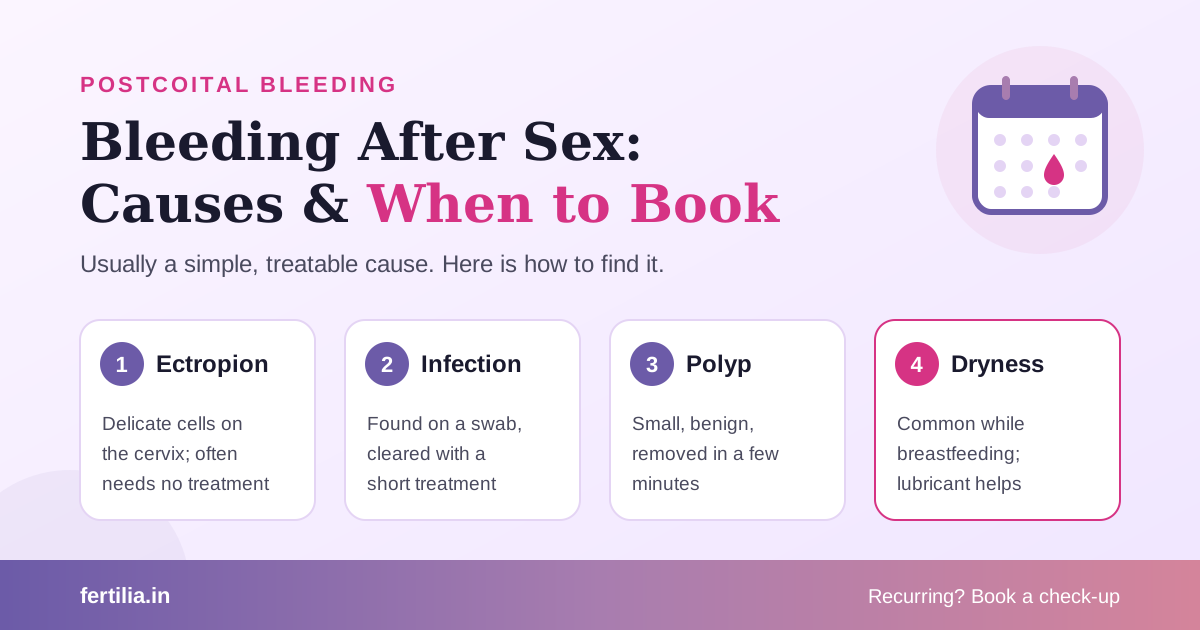
| Cause | Clues that point to it | What usually helps |
|---|---|---|
| Cervical ectropion (“erosion”) | Light pink spotting after sex, sometimes more mucus discharge; common on the pill, in pregnancy and in younger women | Often nothing; treatment only if the bleeding is troublesome |
| Cervicitis (infection of the cervix) | Spotting with new discharge, pain during sex or a lower tummy ache, though often no symptoms at all | Swab tests and antibiotics, usually with treatment for your partner |
| Vaginal infection | Itching, burning, soreness or a change in discharge | Treatment matched to the cause |
| Cervical polyp | Painless spotting after sex, sometimes between periods too | Removal in a few minutes, in the outpatient room |
| Dryness or friction | Stinging or soreness during sex; common while breastfeeding | Lubricant, more time, sometimes a local oestrogen cream |
| Hormonal contraception | Spotting in the first months of a new pill, injection, implant or hormonal IUD | Review of the method with your doctor |
Cervical ectropion (cervical erosion)
This is the most common harmless cause I see in younger women. The soft, red glandular cells that normally line the inside of the cervical canal extend onto the outer surface of the cervix. These cells are more delicate and have blood vessels closer to the surface, so they bleed easily with contact. Ectropion is common on the combined pill, during pregnancy, and in the teens and twenties. Despite the old name “erosion”, it is not a wound, and it is not a sign of cancer.
In a hospital series of 87 women investigated for bleeding after sex who had normal smears, ectropion was the most common cause identified, in about a third of them (Sahu B et al., Arch Gynecol Obstet, 2007, PMID 17429668). Our full guide to cervical erosion and ectropion explains when, if ever, it needs treatment.
Infection of the cervix (cervicitis)
Chlamydia, gonorrhoea and trichomonas can inflame the cervix and make it bleed on contact. These infections often cause few or no symptoms, which is why a swab test is a routine part of the check-up for bleeding after sex, for every woman, married or not. Treatment is usually a short course of antibiotics, with treatment for your partner at the same time so the infection does not pass back and forth.
Treating cervicitis promptly also protects fertility. An untreated infection can travel upwards and cause pelvic inflammatory disease, which can affect the fallopian tubes. Our guide to pelvic inflammatory disease explains how it is recognised and treated.
Vaginal infections
Yeast infection and trichomonas can inflame the vaginal skin. A yeast infection in particular can leave small cracks at the entrance that sting during sex and spot afterwards. The clue is usually a change in discharge, itching, burning or a smell. If your discharge has changed, our guide to vaginal discharge, what is normal and when to worry helps you describe it accurately to your doctor.
Cervical polyps
A cervical polyp is a small, soft growth on the cervix, almost always benign, that bleeds easily when touched. Polyps were found in about one in eight women in the series above (Sahu B et al., 2007, PMID 17429668) and in 5% of 314 women in a London hospital study of bleeding after sex (Rosenthal AN et al., BJOG, 2001, PMID 11212982). Most can be removed in a few minutes in the outpatient room, and the tissue is sent to the laboratory as a routine check.
A polyp inside the womb is a different thing: it is found on ultrasound and removed through a hysteroscope. Our guide to endometrial polyps covers that.
Dryness, friction and small tears
When the vaginal lining is not well lubricated, friction can cause a tiny tear, usually at the entrance. Common reasons include breastfeeding, the first months after delivery, not enough time for arousal, and tension or fear around sex. The clue is soreness or stinging during or after sex. A water-based or silicone-based lubricant, more time, and a slower pace usually solve it. If you use condoms, avoid oil-based products such as coconut oil, because oil weakens latex.
If sex is painful as well as bleeding, our guide to why sex hurts walks through the other causes of pain.
Hormonal contraception
Spotting is common in the first few months of a pill, injection, implant or hormonal IUD, and it can happen to show up after sex. The combined pill can also make an ectropion larger. Do not stop your method on your own without another plan in place; our guide to birth control pill side effects explains which symptoms tend to settle and when to ask for a review.
Less common causes, kept in proportion
Less often, bleeding after sex comes from precancerous changes on the cervix (called CIN), from cervical cancer, or, mainly in women over 40, from changes in the womb lining. This is the reason a check-up is worth doing. The numbers help keep it in proportion. In community estimates, the chance that a woman with bleeding after sex has cervical cancer was about 1 in 44,000 at ages 20 to 24, and about 1 in 2,400 at ages 45 to 54 (Shapley M et al., 2006, PMID 16762128). In the London hospital study, no specific cause at all was found in 49% of women (Rosenthal AN et al., 2001, PMID 11212982).
Two findings shape how doctors investigate. First, a normal last Pap smear is reassuring, but it does not replace an examination when the symptom is new: in the series of women with normal smears, about 7 in 100 had precancerous changes found at colposcopy (Sahu B et al., 2007, PMID 17429668), and these are the changes that are simple to treat when found early. Second, a recent HPV test is useful: in a 2024 study of 390 women referred for colposcopy because of bleeding after sex, none of those with a negative high-risk HPV test had high-grade precancerous changes (Akdam A et al., J Womens Health, 2024, PMID 38502831). So bring your last Pap and HPV reports to the appointment.
💜 Bleeding after sex and not sure what to do next? Message Dr. Suganya on WhatsApp to book a ₹399 video consultation. Keep any Pap smear, HPV or swab reports ready, and we will plan the next step together.
Bleeding After Sex in Particular Situations
When you are pregnant
Pregnancy increases blood flow to the cervix and often enlarges an ectropion, so light spotting after sex can happen and is often harmless. Still, call your doctor the same day for any bleeding in pregnancy, so the cause can be checked, including the position of the placenta later in pregnancy. Go to hospital promptly if the bleeding is more than spotting, or comes with cramps, pain or leaking fluid. If you have been told your placenta is low-lying, ask your obstetrician whether sex is advisable.
If you are not sure whether you are pregnant, a home pregnancy test is a sensible first step. Spotting a week or so before an expected period can be implantation bleeding that happened to follow sex; our guide to implantation bleeding explains how it differs from a period.
After delivery and while breastfeeding
Breastfeeding lowers oestrogen, which leaves the vaginal lining drier and more easily irritated, and a healing tear or episiotomy can also bleed with friction. A lubricant usually helps, and the dryness eases as breastfeeding reduces. Our guide to sex after delivery covers timing and lactational dryness in detail.
The first time
A small amount of bleeding the first time is common as the hymen stretches, though many women do not bleed at all, and neither says anything about the past. Bleeding that is heavy, continues for more than a day, or keeps happening with later intercourse needs a check. Our guide on hymen myths and gynaecological examination answers the common worries around this.
After 40, and after menopause
From around 40, your doctor will think about the womb lining as well as the cervix, especially if you also have bleeding between periods. After menopause, bleeding after sex is most often caused by thin, dry vaginal tissue from low oestrogen, and it is always worth checking. Our sister site Menolia covers this in bleeding after sex in menopause.
What the Doctor Will Check
The examination for bleeding after sex is a routine one, and most women are in and out in a short visit.
- A conversation. When it started, how often it happens, the colour and amount, whether there is pain, discharge or bleeding between periods, your contraception, whether you could be pregnant, and when you last had a Pap or HPV test.
- A pregnancy test, if there is any chance of pregnancy.
- A speculum examination. The doctor looks at the vaginal walls and the cervix. Ectropion, a polyp or an inflamed cervix are usually visible straight away.
- Swabs from the cervix and vagina to test for chlamydia, gonorrhoea and other infections.
- A Pap smear and HPV test, if you are due or have not had one recently. Our guide to cervical screening explains which test is used when.
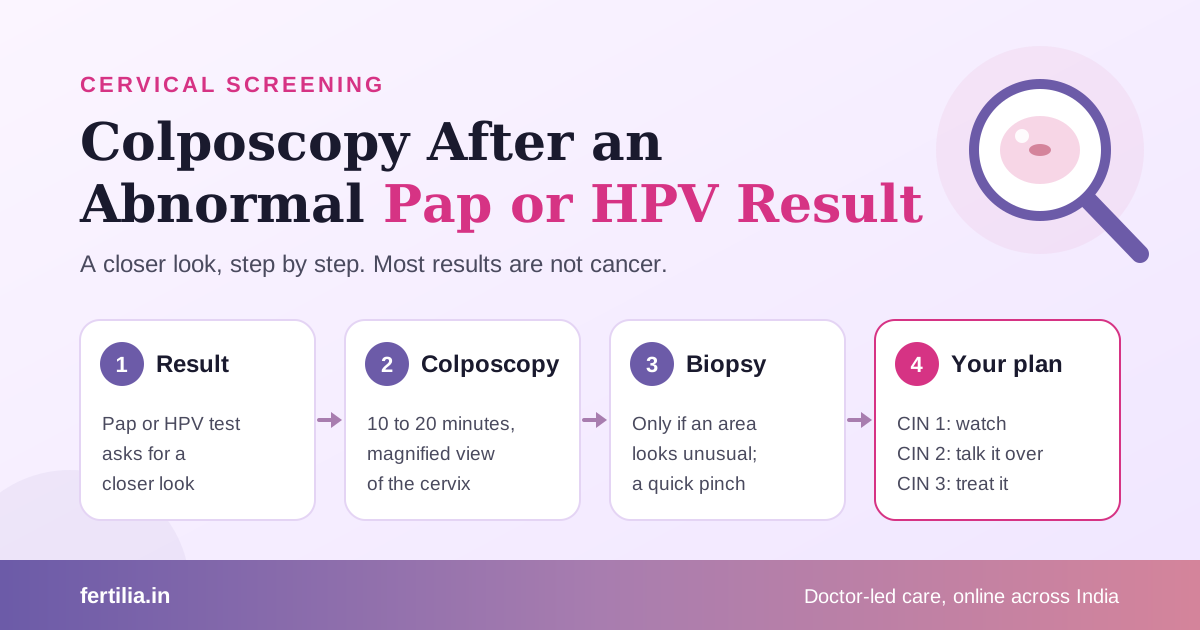
- Colposcopy, a magnified look at the cervix, if the cervix looks unusual, a screening test is abnormal, or the bleeding continues after an obvious cause has been treated. Our colposcopy guide walks you through it step by step.
- A pelvic ultrasound, if the womb lining or a polyp inside the womb needs checking, more often from the late thirties onwards or when there is also bleeding between periods.
If speculum examinations are very painful for you, say so at the start. A smaller speculum and a slower pace make a large difference, and our guide on what to say to your gynaecologist about painful sex gives you the words.
When to Book, and How Soon
A routine gynaecology appointment is reasonable for a single light episode with an obvious reason, such as first-time sex or obvious dryness. If it happens again, book.
Book within the next week or two if:
- It has happened more than once, or keeps recurring over a few weeks
- It comes with new discharge, pain during sex, or bleeding between periods
- You are over 40, or past menopause
- You are overdue for cervical screening
Duration matters more than the amount of blood. In one UK study of 137 women, almost all of those who turned out to have a significant cause had been bleeding after sex for more than four weeks (Alfhaily F, Ewies AA, J Obstet Gynaecol, 2010, PMID 20143983).
Get care the same day if:
- The bleeding is heavy, for example soaking a pad within an hour
- You have severe pain, fever, dizziness or feel faint
- You are pregnant
- The bleeding followed an injury, or sex that was not consensual. You deserve medical care and support, whatever you decide to do next.
What You Can Do While You Wait
- Note it down. The date, how much, the colour, any pain, and the day of your cycle. Three or four entries tell a doctor a great deal.
- Avoid douching, vaginal washes and perfumed products. They irritate tissue that is already sensitive.
- Use a lubricant if dryness plays any part.
- Use condoms, or pause sex, until your swab results are back if an infection is possible.
- Keep taking your contraception unless your doctor advises a change.
- Find your last Pap smear and HPV reports and bring them along.
Talking About It
Many women wait months before mentioning this, or search for it in their own words first, such as “sex ke baad blood aana” in Hindi. Gynaecologists hear about bleeding after sex every week, and it is a medical symptom like any other. If a family member comes with you, you can ask to speak to the doctor alone for part of the visit.
For a wider look at abnormal bleeding patterns, our guide to spotting between periods and Fertilia’s Period Health Guide are useful companions.
Practical Takeaways
- Bleeding after sex is common, and usually benign. Ectropion, infection, polyps and dryness account for most cases.
- It still deserves a check, especially if it happens more than once or lasts more than a few weeks.
- The check-up is simple: a conversation, a speculum examination, swabs, and screening if you are due.
- Bring your last Pap and HPV reports. They change what needs to be done next.
- Treat infection promptly, for your comfort and to protect your fertility.
- Get same-day care for heavy bleeding, severe pain, fever, or any bleeding in pregnancy.
Frequently Asked Questions
Is bleeding after sex normal?
It is common, but it is not something to ignore. A single light episode after first-time sex or very dry sex is often harmless. If it happens again, see a gynaecologist so the cervix can be examined and swabs taken. In most women a simple, treatable cause is found, or nothing serious at all.
Why do I bleed after sex but have no pain?
Painless bleeding after sex most often comes from the cervix, usually a cervical ectropion or a cervical polyp. Both are benign and both are visible on a simple speculum examination. Infection of the cervix can also be painless. Painless bleeding still needs a check, because the cervix needs to be seen to know which cause it is.
Can bleeding after sex be a sign of pregnancy?
Sometimes. Implantation bleeding can happen around a week before an expected period and may simply follow sex by coincidence. Pregnancy also makes the cervix more likely to bleed on contact. If there is any chance you are pregnant, do a home pregnancy test, and call your doctor if it is positive and you are bleeding.
Is it normal to bleed the first time you have sex?
Light bleeding the first time is common as the hymen stretches, and many women do not bleed at all. Neither tells you or anyone else anything about the past. Bleeding that is heavy, lasts more than a day, or keeps happening with later intercourse should be checked.
Should I stop having sex until I am checked?
If an infection is possible, pause sex or use condoms until your swab results are back, so it does not pass between you and your partner. If dryness is the likely cause, a lubricant and a slower pace often help straight away. If sex is painful or the bleeding keeps happening, it is reasonable to pause until you have been examined.
Does bleeding after sex affect fertility?
Most causes, such as ectropion, polyps and dryness, do not affect fertility. Infections such as chlamydia can, if they go untreated and spread to the fallopian tubes, which is one more reason to get swabs done and to treat both partners. If you are trying to conceive, mention the bleeding at your preconception visit.
My last Pap smear was normal. Do I still need to be checked?
Yes, if the bleeding is new or keeps happening. A normal smear is reassuring, but the examination looks at the whole surface of the cervix, which a smear cannot do, and it also picks up polyps and infection. A recent negative HPV test is particularly reassuring, so bring that report too.
Talk It Through Before Your Appointment
Bleeding after sex can feel hard to bring up, even with a doctor. In video consultations at Fertilia, Dr. Suganya Venkat goes through the pattern of bleeding, your contraception, and any Pap, HPV or swab reports with women from across India, and helps you prepare the right questions for the gynaecologist who will examine you locally.
💜 Want to talk about bleeding after sex in private? Message Dr. Suganya on WhatsApp to book a ₹399 video consultation.
This post is for education and does not replace advice from your own gynaecologist, who knows your full history and has examined you.