“I want to talk about something that’s uncomfortable to say” is nine words, and for many of the women I see, those nine words are the hardest part of the entire appointment. Not the disclosure itself, not the follow-up questions, not even the possibility of an examination. Getting the first sentence out.
I am a psychiatrist, and this is a form of rehearsal work I do often: sitting with a woman before her gynaecology visit and helping her find the exact words she will use in the room, because “I don’t know how to say it” is one of the most common reasons sexual pain goes unmentioned for years.
This post is that rehearsal, written down. It is not a general explanation of painful sex. For that, read why does sex hurt. What follows is the literal sentences: what to say to open the conversation, what to say if you freeze, how to answer the questions your gynaecologist will likely ask, how to say you don’t want an examination today, how to ask to bring someone into the room, and what to say if the first response is not the one you needed.
What this post covers:
- The opening line, in three versions depending on your situation
- What to do if you freeze once you’re in the room
- The follow-up questions a gynaecologist is likely to ask, and how to answer each one
- How to say you don’t want an internal examination today
- How to ask to bring someone with you
- What to say if you’re told to relax, have a drink, or wait until after marriage
Start with one sentence
You do not need a full explanation to open this conversation. You need one sentence that gets the topic on the table, after which your gynaecologist will generally ask the questions that carry the rest of the conversation for you.
Pick whichever of these fits, and say it as close to word-for-word as you can. It helps to say it early in the appointment, before the conversation moves on to something else.
If this is a new concern:
“I want to talk about something related to sex. It’s been painful, and I haven’t mentioned it before.”
If you’ve never managed penetration at all, including tampons:
“I think I might have something called vaginismus. I’ve never been able to use a tampon, and penetration hasn’t been possible.”
If you’re not sure it’s serious enough to mention:
“This might be nothing, but sex has been hurting for a while, and I’d like to understand why.”
That third one matters more than it looks. A large number of women I speak with have talked themselves out of raising this exact concern because they weren’t sure it counted as a real problem. It counts. A gynaecologist does not need proof that something is seriously wrong before the concern is worth raising. If the OPD is busy, say your sentence before she starts writing, not after.
If you freeze once you’re in the room
Rehearsing a sentence at home and saying it out loud under fluorescent light with a stranger in a white coat are two different things, and it’s common to get to the appointment and find the words simply will not come.
If that happens, you don’t need to push through it verbally. Write the sentence down beforehand, on your phone or on paper, and hand it over, or read it out. Something like:
“I wrote this down because I was worried I’d lose my nerve: sex has been painful for me, and I want to talk about it.”
Handing over a note gets the same information into the room as saying it aloud, and it takes the pressure off performing the sentence perfectly under stress. Several of the women I work with use this approach for the first appointment, and speak about it directly from the second visit onward, once the topic has already been named once.
💬 If you have an appointment coming up and want to rehearse what to say before you get there, that is exactly the kind of conversation I have with women over video, one on one. You bring what’s actually worrying you, and we work out the words together. A consultation is ₹399. Message the Fertilia team on WhatsApp to book video time with Dr. Sandhiya
The questions she is likely to ask, and how to answer them
Once the topic is open, a gynaecologist will usually ask a short, predictable set of questions to work out what is happening. Knowing them in advance means you are not composing an answer for the first time out loud, in the moment.
“Where does it hurt?” This is asking whether the pain is at the entrance, felt on first contact or attempted entry, or deeper inside, felt with fuller penetration. Answer with whichever is true, or say you’re not sure: “It feels like it’s right at the entrance, like something is blocking it,” or “It’s deeper, more like an ache.”
“When did this start?” There is no wrong answer here, including “always.” Useful versions: “It’s been like this since the first time I tried,” or “It used to be comfortable, and it changed after [an event, or with no clear reason].”
“Does this happen with tampons or during an examination too, or only during sex?” This question is doing real diagnostic work. Pain that shows up with tampons and specula as well as sex points toward a muscle response rather than something specific to intercourse. A true answer is useful even if it feels repetitive: “Yes, I’ve never managed a tampon either,” or “No, tampons are fine, it’s specifically during sex.”
“Has penetration ever been possible, even once, even partially?” Answer exactly what has happened, without rounding up or down. “No, never, not even partially” is a complete answer. So is “It’s happened, but it hurts every time,” or “It worked at first and then stopped.”
None of these questions are trying to catch you out. They are how a gynaecologist narrows down what is causing the pain, and answering plainly, even when the honest version feels awkward, gets you to a plan faster. Painful sex has several distinct causes, and where it hurts and when it started usually points toward one of them fairly quickly.
Saying no to an examination today
Many women delay this whole conversation because they assume raising it means an internal examination happens immediately. It does not have to.
“I’d like to talk this through today without an examination. If one is needed later, I’d like to know in advance, and be able to say stop if I need to.”
That sentence is a complete, reasonable request, not an unusual one. A good gynaecologist can gather most of what she needs from your answers to the questions above, and an examination, when it is genuinely useful, can wait until you are ready for it.
One exception worth knowing so you can raise it yourself: if there is bleeding after sex, discharge that is not usual for you, fever, pain that also happens when you are not having sex, or new pain after menopause, an examination is worth having sooner rather than later, and it is worth saying so out loud. “I would usually want to wait on the examination, but I also have bleeding after sex, so tell me if you think we should look today.” If the exam itself is a large part of what you’re dreading, there are specific, evidence-backed adjustments you can ask for that make it considerably easier, from skipping stirrups to inserting the speculum yourself, covered in fear of pelvic exams and how to make your visit easier.
Bringing someone into the room
If having another person there would make the conversation easier, you’re allowed to ask for that plainly.
“Would it be okay if my sister, friend, or mother sits in with me for this?”
Ask at the reception desk when you check in rather than once you are in the room, so it is settled before you sit down. If a support person changes whether you can get the words out at all, that alone is reason enough to ask, with no further justification needed.
If your gynaecologist is a man, the opening sentence is the same, and you can pair it with a request for a female attendant to be in the room: “Before we start, could a female attendant sit in?” That is a routine request, and it is a reasonable one to make in any consultation, not only this one.
If the first answer is relax, a glass of wine, or it will settle after marriage
This is the part women worry about most, and it deserves a direct answer.
Almost every woman I see with this has never raised it with a gynaecologist before. Painful sex is under-reported, which means it is under-seen in the clinic, which means it is under-practised even by experienced doctors. A doctor who suggests you relax, have a drink before sex, or wait and see if things improve after marriage is very often working from limited exposure to this specific complaint, not carelessness. She may simply not have had many opportunities to build a specific approach to it, and naming the problem plainly is what gives her the chance to.
The move here is not confrontation. It’s a specific, workable follow-up:
“I understand that sometimes helps. For me, this has been going on for [however long], and I’d like to understand what’s actually causing it rather than working around it. Would you be able to point me to someone who sees this kind of pain often?”
That sentence does two things at once. It acknowledges her advice without arguing against it, and it asks for exactly what you need: a referral to someone with more specific experience. Framed this way, it is a request a reasonable clinician can act on immediately, not an accusation she has to defend against. What to look for in a doctor who treats this regularly is worth reading before that next appointment, so you know what a more specific approach actually looks like when you find it.
You are allowed to want a second opinion, and asking for one is not a verdict on the first doctor. It is simply how any specific, less commonly discussed condition tends to get treated well: by finding the person who sees it often.
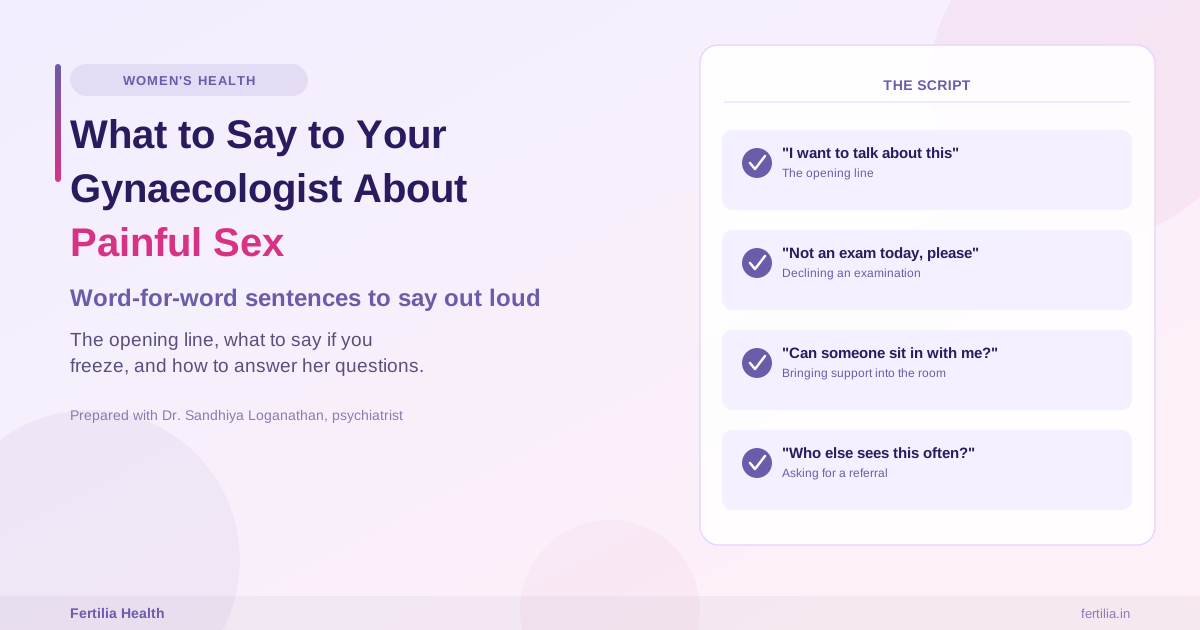
Your script, in one place
- Opening line: “I want to talk about something related to sex. It’s been painful, and I haven’t mentioned it before.”
- If you freeze: hand over a written note instead of saying it out loud.
- Declining today’s exam: “I’d like to talk this through today without an examination.”
- Bringing someone in: “Would it be okay if my sister, friend, or mother sits in with me for this?”
- If the answer is relax, or a drink, or wait until marriage: “I’d like to understand what’s actually causing this. Could you point me to someone who sees this kind of pain often?”
What happens after you say it
The conversation is worth having because what sits on the other side of it is treatable, and the numbers are better than most women expect.
A pooled analysis of 43 observational studies covering 1,660 women found that treatment allowed penetrative intercourse in 79% of cases, independently of which therapy was used, rising to 82% when only moderate and strong quality studies were counted. The same analysis reported that the duration of the problem, the age of the woman, and whether it was primary or secondary did not have a significant effect on the outcome (Maseroli E, Scavello I, et al., The Journal of Sexual Medicine, 2018, PMID 30446469). A 2026 review pooling eighteen studies found the highest success rate in combined psychosexual approaches, which pair psychological support with physical treatment, at 86% (Zulfikaroglu E, The Journal of Sexual Medicine, 2026, PMID 41148166). Which of those paths fits depends on what is causing the pain, and how vaginismus differs from other causes of painful sex sets out how that is worked out.
Very little of it starts, though, until the first sentence gets said out loud.
I’m Dr. Sandhiya Loganathan, a psychiatrist, and this preparation work, finding the words before the appointment, is what I do with women in video consultations at Fertilia before they raise this with their own gynaecologist, wherever in India she happens to be. Where the pain turns out to be vaginismus, Fertilia’s online vaginismus treatment program runs over video across India with a gynaecologist, a psychiatrist and a pelvic floor physiotherapist working from one plan.
Frequently Asked Questions
How do I tell my gynaecologist that sex hurts? Say one plain sentence early in the appointment, such as “I want to talk about something related to sex, it’s been painful, and I haven’t mentioned it before.” You do not need a full explanation to start. Once the topic is named, most gynaecologists ask the follow-up questions that carry the rest of the conversation for you.
What do I say if my doctor tells me to just relax? Acknowledge the advice, then ask directly for what you actually need: “I understand that sometimes helps. For me, this has been going on for a while, and I’d like to understand what’s actually causing it. Could you point me to someone who sees this kind of pain often?” This is a request for a referral, not a confrontation, and most clinicians respond well to it.
Can I bring someone into the room during my gynaecologist appointment? Yes, in most clinics, and asking is simple: “Would it be okay if my sister, friend, or mother sits in with me for this?” There is no requirement to justify the request further. If having someone there is what makes the conversation possible, that alone is reason enough.
How do I say no to an internal examination? You can decline an examination on a given visit while still discussing the concern: “I’d like to talk this through today without an examination. If one is needed later, I’d like to know in advance and be able to say stop.” A careful history usually gives a gynaecologist most of what she needs before any physical exam is required.
What questions will a gynaecologist ask about painful sex? Expect four common ones: where the pain is (entrance versus deep), when it started, whether it happens with tampons or examinations too, and whether penetration has ever been possible at all, even partially. A short honest answer to each one in advance makes the appointment shorter and less stressful.
What if I freeze and cannot get the words out? Write the sentence down beforehand and hand it over, or read it aloud from your phone. A note that says “I wrote this down because I was worried I’d lose my nerve, sex has been painful for me” carries the same information as saying it unprompted, and it removes the pressure of performing the disclosure perfectly under stress.
Is it normal to feel embarrassed talking about painful sex with a doctor? Yes, this is one of the most common reasons sexual pain goes unmentioned for years. The embarrassment does not mean the concern is too small to raise. A gynaecologist does not need proof of a serious problem before a conversation about it is worthwhile.
If you have read this far, you already have the words. The only thing left is saying them out loud, or handing over the note, at your next appointment.
💬 If it would help to practise it once before the appointment, that is what these sessions are for. A consultation is ₹399, over video, from wherever you are in India. Message the Fertilia team on WhatsApp and we will work out exactly what to say, together, before you need it. If you are unmarried and the worry is who else finds out, what a gynaecologist can and cannot tell, and who sees what you say answers that separately.