Many of the women I speak with have been living with painful sex for months or years before they reach me. They have often seen a doctor or two, been examined, been told everything looks normal, and been advised to relax and use more lubricant. When nothing changes, many quietly start avoiding intimacy altogether, and begin to wonder whether the problem is simply in their head.
It is not in their head. There is almost always a real, findable, treatable reason sex hurts.
If sex is painful for you, the first thing I want you to know is that this is one of the most common concerns women bring to me, and being told “everything looks fine” does not mean nothing is wrong. It usually means the cause was not looked for in the right place. This guide walks through the real reasons sex can hurt, organised by where the pain is, so you can understand what might be happening and what you can do about it.
First, the part that matters most
Pain during sex has a medical name, dyspareunia, and it is far more common than most women realise. In one large population survey of nearly 7,000 women, about 1 in 13 reported painful sex that had lasted six months or longer, and many more experience it at some point in life (Mitchell et al., 2017, BJOG). Because it is a private thing to talk about, the real number is almost certainly higher.
Three things are true for the great majority of women who experience it:
- It is common. You are not unusual, and you are not broken.
- It is almost always treatable once the cause is identified.
- You do not have to push through it. Repeatedly enduring painful sex can actually make the problem worse, because the body learns to brace against pain it expects.
That last point is important. The instinct, often reinforced by well-meaning advice, is to “just keep trying.” When sex hurts, the more useful step is to pause the pressure and find out why.
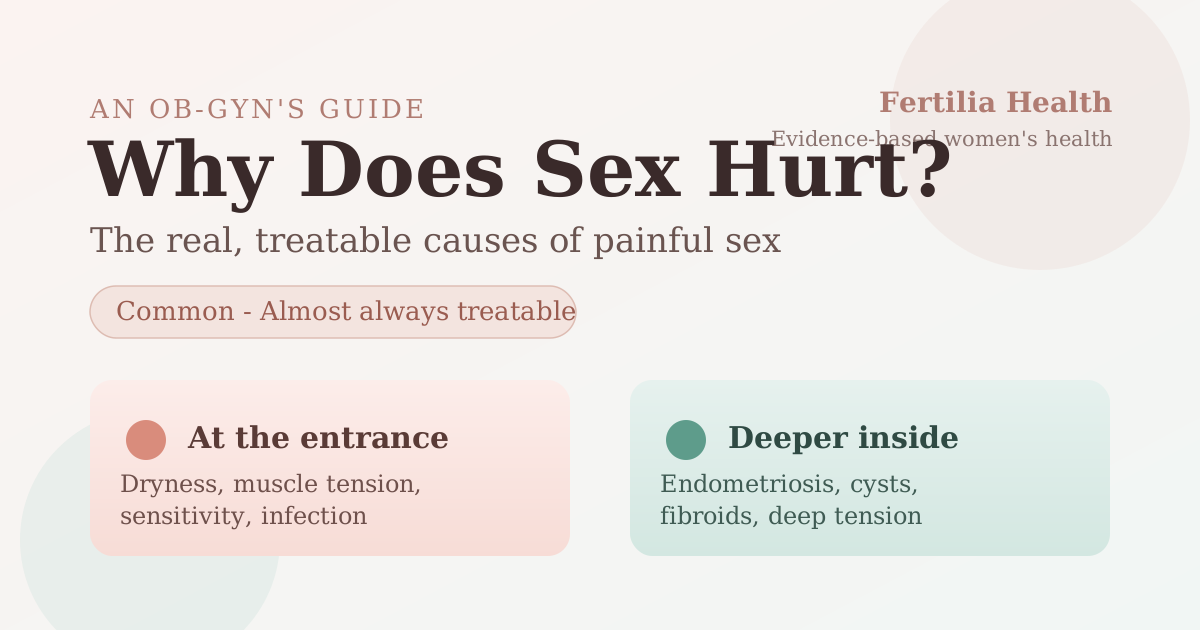
Where does it hurt? Two kinds of painful sex
The single most useful question a doctor asks is where the pain is, because it points to very different causes.
- Pain at the entrance (superficial pain): felt right at the vaginal opening, on first contact or attempted entry. Often described as burning, stinging, tearing, or a sense that entry is blocked.
- Deep pain (deep pain during sex): felt higher up and further inside, usually with deeper penetration or in certain positions. Often described as a cramping, aching, or bruised feeling.
Some women have both. Knowing which one fits you narrows the list considerably, so as you read the next two sections, notice which description sounds like your experience.
Common causes of pain at the entrance
Not enough arousal or natural lubrication. The body produces its own lubrication during arousal, and this takes time, often more time than a couple expects. When entry happens before the body is ready, friction alone can make it hurt. This is common, normal, and one of the easiest things to change.
Vaginal dryness from hormones. Oestrogen keeps the vaginal tissue supple and well lubricated. When oestrogen dips, the tissue becomes thinner and drier and sex can burn or sting. This happens while breastfeeding, with some contraceptive pills, and around menopause, where it is called the genitourinary syndrome of menopause (Portman & Gass, 2014, Menopause). The tissue change is real and physical, not a matter of “not being in the mood,” and it responds well to treatment.
Vaginismus. Here the pelvic floor muscles around the vaginal opening tighten involuntarily, so penetration feels blocked, or like hitting a wall, however much a woman wants intimacy. It is not something she is doing on purpose and not a sign of a physical deformity. Vaginismus is one of the most common reasons for a “nothing looks wrong” examination, because the spasm does not show up on a routine look. If entry feels blocked or impossible, read our honest guide to vaginismus and how it differs from other pain in dyspareunia vs vaginismus.
Vulvodynia or vestibulodynia. Sometimes the pain is a burning or raw sensitivity of the skin at the opening, without any spasm or infection. The nerves in the area have become over-sensitive. This is a genuine, recognised condition, explained in vulvodynia vs vaginismus.
Infections. A vaginal yeast infection, bacterial vaginosis, or a urinary tract infection can all make sex burn or sting, usually alongside itching, unusual discharge, or a stinging sensation when you pass urine. These are quick to diagnose and quick to treat. If you have burning with urination, see UTI in women.
After childbirth. A perineal tear or an episiotomy stitch, combined with the low-oestrogen dryness of breastfeeding, makes early postpartum sex tender for many women. This is common and settles with time and the right steps, covered in painful sex after delivery.
💬 If any of this sounds like what you are living with, you are welcome to simply ask me. Painful sex is one of the most common reasons women reach out, and no question is too small or too private. A short message is enough to begin, with no pressure and no judgement. Message Dr. Suganya on WhatsApp
Common causes of deep pain
When the pain is deeper and comes with fuller penetration, the causes usually lie in the pelvic organs rather than at the entrance.
Endometriosis and adenomyosis. Endometriosis, where tissue similar to the uterine lining grows outside the uterus, is one of the most common reasons for deep pain during sex, and deep pain is often one of its earliest clues (Barbara et al., 2017, Reproductive Sciences). It frequently comes with painful, heavy periods. If your periods are very painful too, read period pain and endometriosis and endometriosis and fertility.
Pelvic inflammatory disease. An infection that has travelled up into the uterus and tubes can cause deep pain, usually with other symptoms such as abnormal discharge, fever, or pelvic pain outside of sex. It needs prompt treatment, so it is worth getting checked.
Ovarian cysts. A cyst on the ovary can cause deep, one-sided pain in certain positions. Most are harmless and resolve on their own, explained in ovarian cysts: when to worry.
Fibroids. Depending on their size and position, these non-cancerous growths in the wall of the uterus can make deep penetration uncomfortable.
Position and depth. Sometimes deep pain is simply about angle and depth on a given day, and shifting position or going gentler resolves it. When it is consistent, though, it is worth looking for one of the causes above rather than assuming it is nothing.
The pain, fear, and tension cycle
There is one more piece that ties many of these together, and it is the reason painful sex can quietly get worse over months. When sex hurts once, the body remembers. The next time, without any conscious decision, the pelvic floor muscles tense in anticipation, arousal drops because part of the mind is braced for pain, and the drier, tighter result makes the next attempt hurt more. Round it goes.
This is not weakness and it is not “all in your head.” It is a normal protective reflex, and understanding it is often the turning point, because it explains why relaxation advice alone rarely works and why the tension needs to be addressed directly. Learning to release the pelvic floor with reverse kegels helps, and where anxiety has become the main driver, the fear of sex looks at that gently.
What you can do now
While you work out the cause, these steps are safe, and several are genuinely effective on their own:
- Give arousal more time. Rushing entry is one of the most common and most fixable reasons for entrance pain.
- Use a good lubricant. A water-based lubricant reduces friction immediately and is especially helpful with breastfeeding or pill-related dryness.
- Treat any infection. If there is itching, unusual discharge, or burning urine, get the infection sorted first, since sex will keep hurting until it clears.
- Do not push through pain. Stopping when it hurts is not giving up. It prevents the body from learning to brace, which is what keeps the cycle going.
- Release, do not clench. If entry feels blocked, tightening harder makes it worse. Gentle pelvic floor down-training works with the muscles rather than against them.
- Find the cause with a doctor. The steps above manage symptoms. A proper examination, tailored to where the pain is, is what identifies the reason so it can be treated at the root.
When it is worth seeing a doctor
Getting this checked is not a sign that something is seriously wrong. It is simply the fastest route to relief, and the news is usually reassuring. It is worth booking a consultation if:
- Sex has been painful for more than a few weeks, or entry feels blocked or impossible.
- The pain comes with abnormal discharge, itching, burning urine, fever, or bleeding after sex.
- Your periods are very painful or heavy alongside the deep pain.
- The pain, or the worry around it, has started to affect your relationship or how you feel about intimacy.
None of these means bad news. Each one simply points to a specific, treatable cause worth naming. Vaginismus, to take one example, responds very well to structured, gentle treatment, with most women reaching pain-free intimacy (Zulfikaroglu et al., 2026, Journal of Sexual Medicine).
At Fertilia, Dr. Suganya and the team work through this with women over a video call, from anywhere in India and abroad. Your own gynaecologist handles any examination and treatment in person; what we add is the layer alongside that, helping you understand the cause, follow a step-by-step plan, and have someone to ask between visits. For pain linked to pelvic floor tension, our online vaginismus program walks through it over 12 weeks with a pelvic floor physiotherapist beside you.
💜 You do not have to live with this, and you do not have to figure it out alone. Whatever the cause turns out to be, painful sex is treatable, and the first step is simply understanding what is happening in your body. Message Dr. Suganya on WhatsApp to talk it through. If you would rather read privately first, Dr. Suganya’s free guide, Navigating Vaginismus, is a gentle place to start.
Frequently Asked Questions
Is it normal for sex to hurt?
A little discomfort can happen occasionally, for example with a rushed start or on a low-arousal day. But sex that is regularly painful, or pain that is severe, is not something you simply have to accept. It is common, and it has a treatable cause worth finding.
Why does sex suddenly hurt when it never did before?
Pain that develops after a period of comfortable intimacy is called secondary, and it usually has a clear trigger: a new infection, vaginal dryness from breastfeeding or a change in contraception, a condition such as endometriosis, or tension that built up after one painful experience. Because there is usually a specific cause, it is worth getting checked rather than waiting for it to pass.
Why does sex hurt after having a baby?
Two things overlap after delivery: healing tissue from a tear or episiotomy, and the low-oestrogen dryness that comes with breastfeeding. Both are common, both are temporary, and both respond to simple measures like a lubricant, giving healing more time, and gentle steps to ease pelvic floor tension. Our guide to painful sex after delivery covers this in full.
Can painful sex be cured?
In the great majority of cases, yes. Once the cause is identified, whether it is dryness, an infection, vaginismus, or a condition like endometriosis, there is a clear treatment path for it. The key is finding the right cause rather than being told to relax and try again.
Does painful sex mean something is wrong with my body?
Not in the sense of being damaged or abnormal. Most causes of painful sex are conditions of muscle tension, hormones, sensitivity, or a treatable infection or inflammation, not a fault in how you are built. An examination is there to name the cause, not to find something to worry about.
What causes deep pain during sex?
Deep pain, felt with fuller penetration, most often points to the pelvic organs: endometriosis or adenomyosis, ovarian cysts, fibroids, or pelvic infection. It is worth investigating, particularly if you also have painful or heavy periods, because naming the cause opens up effective treatment.
Should I stop having sex if it hurts?
Pausing penetrative sex while you find the cause is a reasonable and often helpful step, not a failure. Repeatedly pushing through pain teaches the body to brace and can deepen the problem. Intimacy without penetration is still available to you meanwhile, and most couples return to comfortable sex once the cause is treated.
Related Reading
- Vaginismus: An OB-GYN’s Honest Guide for Indian Women
- Dyspareunia vs Vaginismus: How Doctors Tell the Difference
- Vulvodynia vs Vaginismus: Burning vs Spasm Explained
- Painful Sex After Delivery: Why It Hurts and What Helps
- First-Time Sex Painful? What’s Normal and When It Could Be Vaginismus
- Reverse Kegels: What They Are and Why They Help