A woman messages me on WhatsApp. She has noticed a few drops of blood midway through her cycle. Not her period, just spotting. Her first instinct is to search online, and within ten minutes, she is convinced she has something serious.
I receive these messages regularly. And most of the time, what I tell her is: this is likely a normal variation, and here is why.
Spotting between periods is one of the most common concerns I hear from women across India, whether they are trying to conceive, on contraception, or simply paying closer attention to their cycle for the first time. Most intermenstrual bleeding is benign and self-resolving. Some patterns, though, do benefit from a gynaecologist’s evaluation.
This guide walks you through the difference so you can make a measured decision rather than a panicked one.
Spotting That Is Usually a Normal Variation
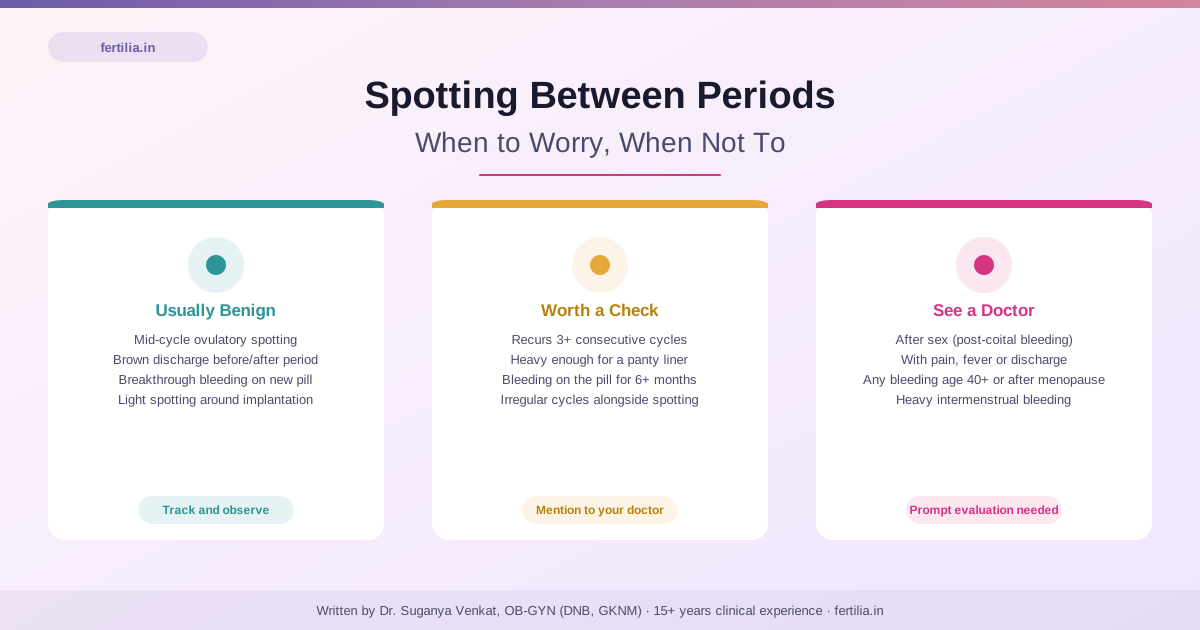
Mid-cycle spotting around ovulation
Some women notice a small amount of pinkish or brown discharge around day 10 to 16 of their cycle, roughly when ovulation occurs. This is called ovulatory spotting, and it has a clear physiological explanation.
As the dominant follicle matures, there is a brief surge followed by a transient dip in oestrogen levels immediately before ovulation. That dip can cause the uterine lining to shed a few cells, producing a small amount of blood mixed with cervical mucus. The result is light spotting lasting a few hours to a day or two at most.
Ovulatory spotting is more common in women who start tracking their cycles closely and notice it for the first time. It is not a sign that anything is wrong.
Brown discharge just before or after a period
Brown discharge in the first one or two days before your period starts, or as it tails off, is almost always old blood oxidising as it takes longer to leave the uterus. This is a normal variation in menstrual flow and does not need investigation.
For more on this, read our guide on Brown Discharge Before Your Period. The same applies to dark brown spotting for a day or two after a period ends. The uterus is simply clearing the last remnants of the previous cycle’s lining.
Breakthrough bleeding on hormonal contraception
Breakthrough bleeding is common in the first three to six months of starting a combined oral contraceptive, progestogen-only pill, hormonal IUS (Mirena), or implant. The uterine lining is adjusting to a different hormonal environment, and occasional spotting during this adjustment period is an expected and well-documented side effect (Glasier 2010, Endocr Rev). It does not mean the contraception is failing or that something is wrong.
If you have been on hormonal contraception for more than six months and still experience regular breakthrough bleeding, that is worth discussing with your prescribing doctor, as dose or formulation may need adjustment. But in the early months, spotting is part of the body’s adaptation. The combined pill side effects guide covers this in more detail.
Light spotting around implantation
If you are trying to conceive, light pinkish spotting around 7 to 12 days after ovulation can sometimes be implantation bleeding, which occurs when a fertilised egg embeds into the uterine lining. It is lighter than a period, often lasting a day or less, and typically appears earlier than your expected period date.
Not every woman who conceives experiences implantation bleeding, and not every woman who spots at this point in her cycle is pregnant. If your period does not arrive and you have been trying to conceive, a home pregnancy test a few days later will give you clearer information. The implantation bleeding guide covers the distinguishing features.
Patterns That Deserve a Gynaecologist’s Attention
The patterns below do not necessarily indicate something serious, but they benefit from examination. Think of this as a checklist, not a list of diagnoses.
Spotting after sex
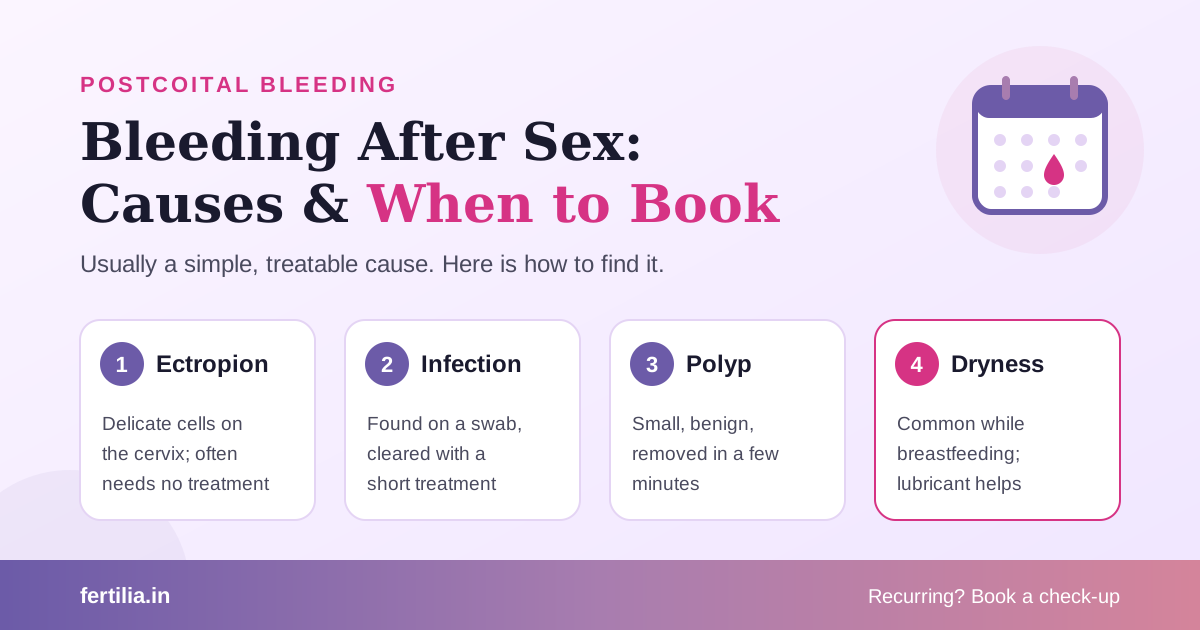
Post-coital bleeding, meaning spotting or bleeding that occurs after intercourse, always warrants evaluation, even if it is light and painless. Common causes include:
- Cervical ectropion: A very common and entirely benign condition in which the inner lining of the cervix (columnar epithelium) extends onto the outer surface, making it more sensitive. It is especially common in women using oral contraceptives and during pregnancy.
- Cervicitis: Inflammation of the cervix, often from an infection, which can cause the tissue to bleed more readily on contact.
- Cervical polyp: A small, benign growth on the cervix.
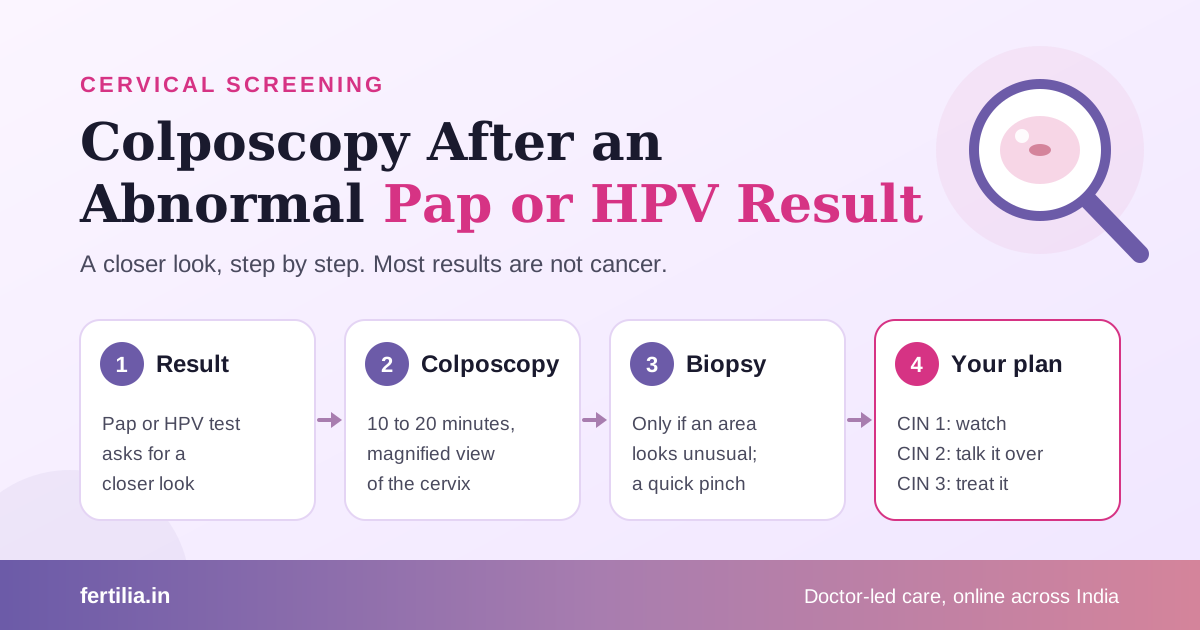
Less commonly, persistent post-coital bleeding can signal cervical changes that need further examination. The only way to distinguish these causes is a speculum examination and, in some cases, a cervical smear or colposcopy. The reassuring fact is that the large majority of women investigated for post-coital bleeding have a benign cause identified.
Spotting that recurs for three or more consecutive cycles
A single episode of mid-cycle spotting in an otherwise regular cycle is usually harmless. Spotting that occurs at the same phase of your cycle, every month, for three or more consecutive months is worth reporting to your doctor. Recurrent intermenstrual bleeding can point to hormonal fluctuations, a small polyp, a thyroid condition, or subtle anovulatory cycles, all of which are identifiable on a basic workup.
Spotting with pelvic pain, fever, or unusual discharge
If spotting is accompanied by pelvic pain, fever, or a change in vaginal discharge (colour, smell, or texture), an infection or inflammatory process may be contributing. This combination warrants prompt evaluation rather than a watch-and-wait approach.
Spotting after age 40
In perimenopause, cycles become irregular, and some intermenstrual spotting can be part of the hormonal transition. However, any bleeding that is heavier than usual, comes with pain, or persists warrants evaluation because the risk of endometrial changes (including polyps and hyperplasia) is higher in women over 40. Any bleeding that occurs after twelve consecutive months without a period requires prompt investigation, regardless of how light it is.
Heavy spotting closer to a light period
If the bleeding between periods is heavy enough to require a panty liner or pad, lasts more than two to three days, or is accompanied by clots, it is closer to abnormal uterine bleeding than to spotting. This warrants investigation through the same pathway as heavy periods.
What Doctors Look For: The Clinical Framework
Gynaecologists use a classification system called PALM-COEIN (developed by the International Federation of Gynecology and Obstetrics, Fraser et al. 2011, Int J Gynaecol Obstet) to categorise the causes of abnormal uterine bleeding, including intermenstrual spotting. The acronym stands for: Polyp, Adenomyosis, Leiomyoma (fibroid), Malignancy/Hyperplasia, Coagulopathy, Ovulatory dysfunction, Endometrial, Iatrogenic, Not yet classified.
In plain language, the most common causes of spotting between periods are:
Structural causes (PALM):
- Polyps: Small, benign growths on the cervix or inside the uterus. Endometrial polyps are particularly common in women over 35 and are one of the most frequently found causes of intermenstrual bleeding on ultrasound. They are almost always benign, but submucosal polyps (inside the uterine cavity) can occasionally affect fertility and can be removed simply via hysteroscopy.
- Adenomyosis: When the uterine lining grows into the uterine muscle, it can cause heavy, irregular periods and intermenstrual spotting. The adenomyosis guide explains the diagnosis and treatment options in full.
- Fibroids (submucosal): Fibroids that project into the uterine cavity can cause irregular bleeding. Fibroids sitting in the uterine wall or on the outer surface rarely cause spotting.
Non-structural causes (COEIN):
- Ovulatory dysfunction: Irregular or absent ovulation, as seen in PCOS, means the uterine lining builds up under prolonged oestrogen exposure and then sheds unpredictably, causing spotting or breakthrough bleeding at unexpected points in the cycle. Why periods go missing in PCOS explains the hormonal mechanism.
- Thyroid dysfunction: Not formally part of the PALM-COEIN framework but clinically significant. Hypothyroidism is common in Indian women, affecting approximately 8 to 11% of women in tertiary care settings (Unnikrishnan and Menon, Indian J Endocrinol Metab 2011). An underactive thyroid disrupts the entire hormonal feedback loop and can cause irregular cycles, including intermenstrual spotting. The thyroid and fertility connection covers how to get this checked.
- Iatrogenic (medication-related): Hormonal contraception, as described above. Also includes progestogens prescribed for other reasons.
- Coagulopathy: Bleeding disorders that affect how blood clots. These are less common but worth considering if there is a family history of heavy bleeding or if other investigations come back normal.
If you have been noting spotting between periods and are unsure whether it needs attention, a short conversation with me over video call can help you decide whether you need further investigation, and what that investigation would involve.
Message Dr. Suganya on WhatsApp (Rs. 399 online consultation)
What a Gynaecologist Will Do
If you visit a gynaecologist for intermenstrual spotting, a standard evaluation typically includes:
- History: When in the cycle does spotting occur? How long does it last? How much is there? Does it happen after intercourse? Are there associated symptoms?
- Cycle and contraceptive history: What is your typical cycle length? Are you on any hormonal medications?
- Examination: A speculum examination to inspect the cervix, and a bimanual pelvic examination to assess the uterus and ovaries.
- Transvaginal ultrasound (TVS): This is often the most informative first investigation. It can identify polyps, fibroids, adenomyosis, ovarian cysts, and the thickness and pattern of the uterine lining.
- Blood tests: Depending on the findings, a thyroid panel (TSH and free T4), hormone levels (FSH, LH, oestrogen, progesterone on the appropriate cycle day), a full blood count to check for anaemia, and occasionally a coagulation screen.
For more on this, read our guide on Ovarian Cyst.
Most causes of intermenstrual spotting are identified through this sequence. Treatment depends on what is found: polyps can be removed, thyroid issues are treated medically, PCOS is managed through hormonal and lifestyle approaches, and so on.
A Note on PCOS and Irregular Bleeding
PCOS is one of the most common causes of irregular cycles in Indian women aged 18 to 40. When ovulation is absent or infrequent, the uterine lining builds up under unopposed oestrogen and then sheds unpredictably, producing spotting or breakthrough bleeding between expected periods.
If your cycles also vary significantly in length (by more than seven days from one cycle to the next), or if you have other PCOS signs such as facial hair, acne, or difficulty losing weight, PCOS is worth discussing with your doctor. Addressing the underlying hormonal picture tends to regulate the bleeding pattern over time. The irregular periods guide covers when irregular cycles need investigation.
What to Track Before Your Appointment
Keeping a simple record for one or two cycles before your appointment makes the consultation more productive:
- Day of the cycle when spotting occurs (Day 1 = first day of your period)
- Duration: How many days does it last?
- Amount: Enough to notice on tissue paper, or enough to stain a panty liner?
- Colour: Pink, red, or brown?
- Timing relative to sex: Does it appear after intercourse?
- Associated symptoms: Cramps, fever, unusual discharge?
Your gynaecologist can work with a structured history far more effectively than with a vague description of bleeding.
FAQ
Is brown spotting between periods normal? Brown spotting is usually old blood that has taken longer to pass through the cervix and has oxidised in the process. A day or two of brown discharge before or after a period, or briefly around the time of ovulation, is normal for many women. If it persists for more than three to four days, recurs every cycle for three or more months, or is accompanied by other symptoms, it is worth discussing with a gynaecologist.
What does mid-cycle spotting mean when I am trying to conceive? Mid-cycle spotting is most often ovulatory spotting, which reflects the brief oestrogen dip around the time of egg release. It can also be implantation bleeding if it occurs 7 to 12 days after ovulation and you may have conceived that cycle. Neither typically prevents conception. If you are uncertain, track your cycle for one to two months and bring the pattern to your appointment.
Can PCOS cause spotting between periods? Yes. In PCOS, irregular or absent ovulation means the uterine lining is not shed at predictable intervals. Instead, it builds up and then sheds unpredictably, producing spotting or breakthrough bleeding between expected periods. Managing the underlying hormonal imbalance, including insulin resistance where present, typically regulates this pattern over time.
Should I worry about spotting while on the pill? Breakthrough bleeding in the first three to six months of starting a combined oral contraceptive is expected and does not indicate a problem with the pill. If spotting starts after a period of stable bleeding on the same formulation, or persists beyond six months, discuss this with your prescribing doctor. The dose or formulation may benefit from adjustment.
When should I see a gynaecologist for spotting between periods? See a doctor if: spotting has occurred in three or more consecutive cycles, spotting happens after sexual intercourse, the bleeding is heavy enough to require a pad, it is accompanied by pain or fever, you are over 40, or you have had no period for twelve or more months and then notice any bleeding at all. A single brief episode of light spotting in an otherwise regular cycle is usually not an emergency.
Can intermenstrual spotting affect my chances of conceiving? It depends on the cause. Ovulatory spotting and implantation bleeding do not affect fertility. However, causes such as endometrial polyps, submucosal fibroids, or anovulatory cycles from PCOS can reduce fertility if left unaddressed. If you are trying to conceive and have been noticing regular intermenstrual spotting for more than two cycles, a basic workup is sensible.
Is spotting between periods during perimenopause normal? Perimenopause brings significant hormonal fluctuations, and some cycle irregularity, including occasional spotting, can be part of the transition. However, heavy, frequent, or painful intermenstrual bleeding in perimenopause warrants evaluation, particularly to assess the uterine lining. Any bleeding that occurs after twelve consecutive months without a period is not a perimenopause variation and requires prompt investigation.
Closing Note
Spotting between periods is one of those symptoms that the internet reliably over-diagnoses. In most women and most cycles, it is a benign variation with a simple explanation. The goal here is not to list every possible worst-case scenario, but to give you the framework to distinguish normal variation from patterns that benefit from a doctor’s attention.
If you are in doubt, a short consultation is far more useful than continued searching. The evaluation is usually straightforward, the reassurance is real when it applies, and the treatable causes, when found, are almost always manageable.
Book a Rs. 399 video consultation with Dr. Suganya
For more on period health, the Period Health Guide at Fertilia covers irregular periods, heavy bleeding, and when to seek investigation.