A scan report comes back with one unfamiliar phrase sitting in the middle of otherwise normal-sounding findings: endometrial polyp. Nothing hurt. Nothing felt wrong. And yet there it is, a growth inside the uterus that nobody warned her about, next to a doctor’s note that says it may need to come out.
I’m Dr. Suganya Venkat, an OB-GYN with over 15 years of clinical experience, and I see this reaction often, both in women who came in for a routine scan and in women who have been trying to conceive for a while and are now looking hard at every line of every report. The word “polyp” carries some unearned alarm, mostly because it sits in the same sentence family as “polyps” elsewhere in the body that are watched more anxiously. An endometrial polyp is a different, usually much simpler, story.
This guide covers what an endometrial polyp actually is, why it forms, how common it is, how it is found, what symptoms it can and cannot explain, what it means for fertility and pregnancy, and the full range of treatment, from doing nothing at all to a same-day hysteroscopic procedure.
What this guide covers
- What an endometrial polyp is and how it differs from a fibroid
- How common polyps are, and who tends to get them
- Symptoms: what a polyp can cause, and what it usually does not
- How polyps are found: ultrasound, saline sonography, hysteroscopy
- The fertility and pregnancy question, with the actual evidence
- When a polyp needs to come out, and when watching is reasonable
- Treatment: watchful waiting versus hysteroscopic polypectomy, and cost in India
- The small but real question of malignancy, and who is at higher risk
What an endometrial polyp is
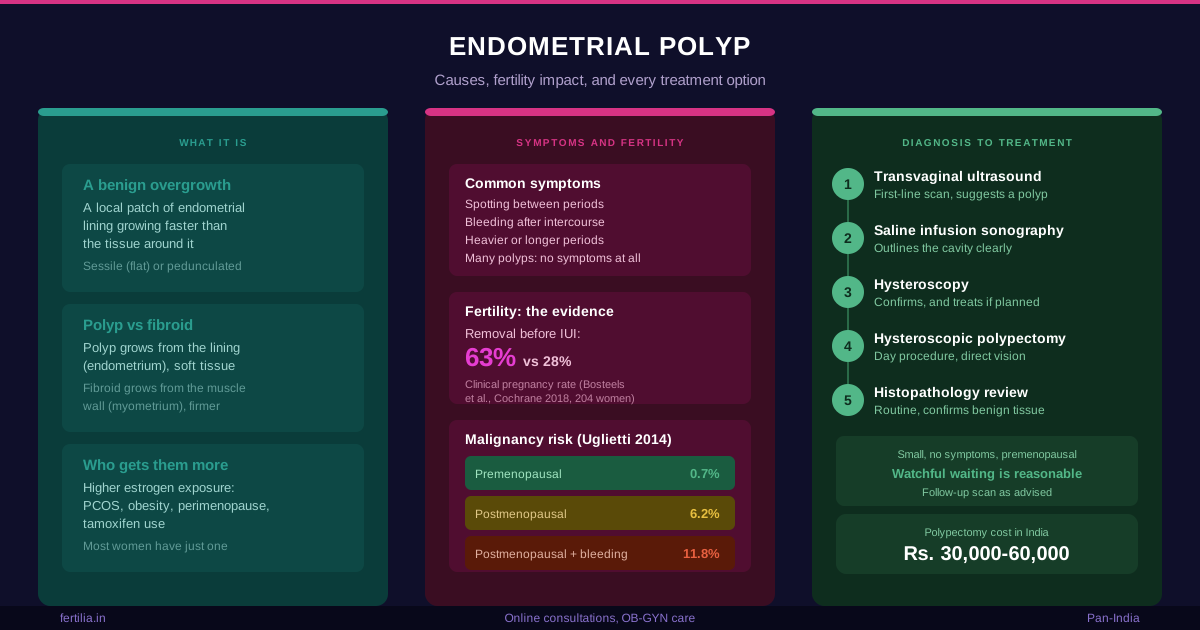
The endometrium is the lining of the uterus, the tissue that thickens every cycle and sheds as your period if pregnancy does not happen. An endometrial polyp is a small, usually benign, overgrowth of that lining. It forms when a local patch of endometrial glands and the supporting stromal tissue grows faster than the tissue around it, creating a soft, finger-like or mushroom-shaped growth that projects into the uterine cavity.
Polyps can be sessile, sitting flat and broad-based against the uterine wall, or pedunculated, attached by a thin stalk that lets the polyp move slightly within the cavity. They range from a few millimetres, easy to miss on a routine scan, to several centimetres, large enough to fill a meaningful part of the cavity. Most women have just one. Some have several.
It helps to know the difference between a polyp and a fibroid, since both show up on a pelvic scan and get confused for each other. A polyp arises from the endometrium itself, the inner lining, and is typically soft. A fibroid (a leiomyoma) arises from the muscular wall of the uterus, the myometrium, and is firmer, more like tightly wound muscle tissue. This matters clinically because they are managed differently and imaging can usually, though not always, tell them apart before treatment.
How common are endometrial polyps
Polyps are common, and their frequency rises with age until menopause and then with certain medication exposures after it. Estrogen drives endometrial growth, and endometrial polyps are estrogen-sensitive tissue, which is part of why they become more frequent through the reproductive years and into the perimenopausal window when estrogen levels can fluctuate and, at times, run unopposed by progesterone for longer stretches of the cycle.
Women taking tamoxifen, commonly prescribed after breast cancer treatment, have a meaningfully higher rate of endometrial polyps because tamoxifen has a weak estrogen-like effect on the endometrium even while blocking estrogen elsewhere in the body. If you are on tamoxifen, routine gynaecological follow-up, including endometrial assessment when your oncology team recommends it, is part of standard care, not a sign that something has gone wrong.
Obesity and PCOS, both associated with higher circulating estrogen relative to progesterone, are also linked to a higher rate of polyp formation. This is the same underlying hormonal picture that drives several other PCOS-related concerns, which is one reason ongoing PCOS management matters beyond just periods and weight.
Symptoms: what a polyp can and usually does not explain
Many endometrial polyps cause no symptoms at all and are found incidentally, during a scan done for another reason, during a fertility workup, or during an annual check. When a polyp does cause symptoms, the most common patterns are:
- Irregular bleeding or spotting between periods. This is the single most common symptom, and often the one that prompts the scan that finds the polyp.
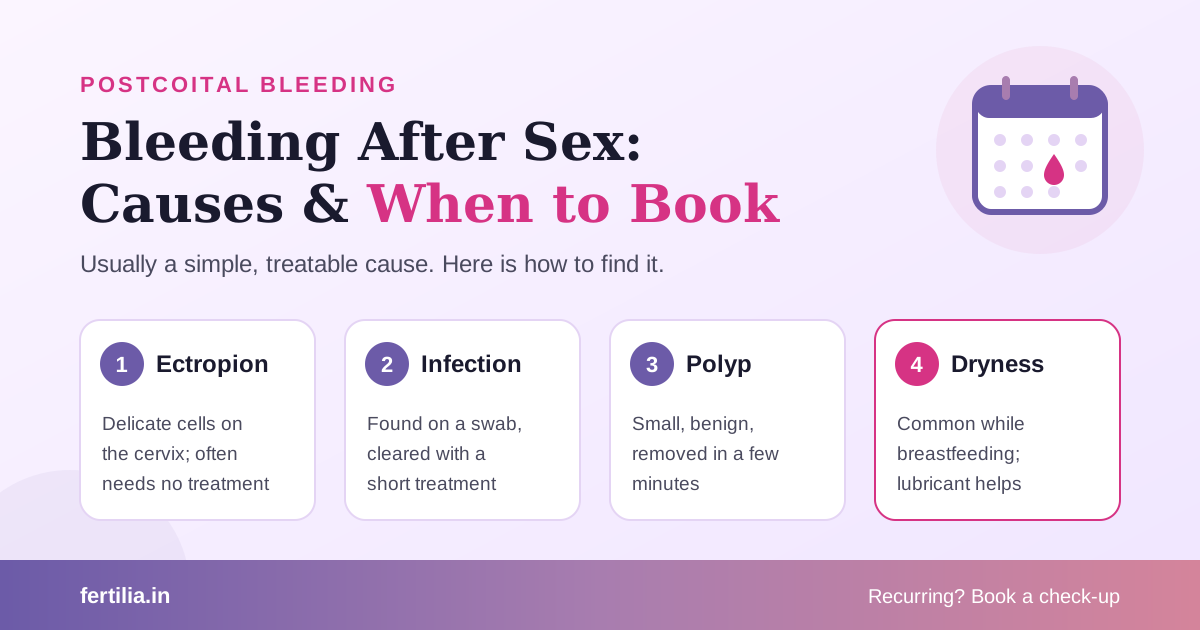
- Bleeding after intercourse (post-coital bleeding). A polyp near the cervical end of the cavity can bleed with contact.
- Heavier or longer periods than usual. A polyp can add to menstrual blood loss without being the only cause. Our guide to heavy periods and every treatment option covers the full range of causes when bleeding is the main concern.
- Bleeding after menopause. In a postmenopausal woman, any bleeding, however light, needs prompt evaluation, and a polyp is one of several possible findings, alongside atrophic endometrium and, less commonly, endometrial cancer.
If you notice spotting outside your usual cycle and are not sure whether it is worth investigating, our guide on spotting between periods walks through which patterns need a closer look.
It is worth saying plainly: a polyp does not usually cause pelvic pain, and it is not the explanation for most cramping. If pain is your main symptom, that points elsewhere, and it is worth naming that clearly to your doctor rather than assuming the polyp found on a scan is the whole answer.
How polyps are found
Transvaginal ultrasound (TVUS) is usually the first test, and it can suggest a polyp when it shows a focal thickening or a distinct mass within the endometrial lining, sometimes with a visible feeding blood vessel on Doppler.
Saline infusion sonography (SIS), where sterile saline is gently instilled into the uterine cavity during an ultrasound, outlines the cavity far more clearly than a standard scan and is considerably better at distinguishing a polyp from a fibroid or from simple endometrial thickening. If your report mentions SIS or sonohysterography, our guide on saline infusion sonography, written by our consultant radiologist Dr. Rajashree NS, explains exactly what the procedure involves and what the findings mean.
Hysteroscopy is both the most accurate way to see a polyp directly and, when needed, the way it is removed in the same sitting. A thin, lit telescope passed through the cervix lets the doctor see the cavity on a screen in real time. This is usually the confirming step when ultrasound findings are uncertain, and it doubles as treatment when removal is planned. If you are trying to understand what the procedure involves and what it costs, our guide to hysteroscopy cost in India breaks down diagnostic versus operative pricing by city.
Endometrial polyps and fertility
This is usually the question underneath the question, especially for women who found their polyp during a fertility workup or after a failed cycle. Here is what the evidence actually shows, not the exaggerated version and not the dismissive one.
A submucosal polyp, one that sits inside the uterine cavity where an embryo would need to implant, can act as a mechanical obstacle. It can sit near the site where the embryo would attach, alter local blood flow, or produce low-grade inflammatory changes in the surrounding lining, any of which could interfere with implantation. This is a plausible mechanism, not a certainty for every polyp in every woman, and size and position matter more than the mere presence of a polyp.
The best evidence on whether removing a polyp actually helps comes from a Cochrane systematic review by Bosteels and colleagues (2018), which looked specifically at hysteroscopic removal of suspected uterine cavity abnormalities, including polyps, before fertility treatment. In women having intrauterine insemination (IUI), the review found that hysteroscopic polyp removal before treatment improved the clinical pregnancy rate compared with diagnostic hysteroscopy alone: an estimated 63% of women achieved a clinical pregnancy after polyp removal, against 28% without it (204 women studied). The review rated this low-quality evidence, meaning the finding is real but based on a modest number of women, and called for more research before IVF specifically, where dedicated trial data was still lacking at the time of the review.
What this means in plain terms: if a polyp is found during a fertility workup, particularly before IUI, removing it is a reasonable step that the evidence supports, and it is a low-morbidity, same-day procedure. It does not mean every polyp is the reason a pregnancy has not happened yet, and it is not a guarantee of pregnancy once removed. It is one factor among several that your fertility team will weigh alongside everything else in your workup, including anything found through recurrent implantation failure investigations if that applies to your history.
Polyps found during pregnancy
Occasionally a small polyp is noted on a scan during an already-established pregnancy. In most cases this is simply monitored and does not need any intervention during pregnancy itself, since removing a polyp requires access to the uterine cavity that pregnancy makes inappropriate. Bleeding from a polyp during pregnancy, when it happens, is usually managed conservatively, and the decision about whether to remove the polyp is revisited after delivery if it is still relevant.
When does a polyp need to come out
Not every polyp needs treatment. The decision depends on symptoms, size, your fertility plans, and, for postmenopausal women, additional factors around bleeding.
Watchful waiting is reasonable when:
- The polyp is small, generally under 1 to 1.5 cm
- There are no symptoms (no abnormal bleeding, no fertility concerns needing investigation)
- You are premenopausal and not currently trying to conceive with an active workup underway
Some small, asymptomatic polyps found incidentally do resolve on their own over a year or two of observation, particularly in premenopausal women, although this is not something to count on rather than simply recheck with a follow-up scan as your doctor advises.
Removal is usually recommended when:
- The polyp is causing abnormal bleeding, spotting, or post-coital bleeding
- The polyp is larger, generally over 1.5 to 2 cm
- You are actively trying to conceive, particularly before IUI or IVF, given the evidence above
- You are postmenopausal, especially with any bleeding, since histology needs to be reviewed
- The polyp is enlarging on serial scans
Treatment: hysteroscopic polypectomy
Hysteroscopic polypectomy is the standard treatment and, in nearly all cases, the only procedure needed. A hysteroscope is passed through the cervix, the polyp is visualised directly, and it is removed using fine instruments or a specialised resecting device, all under direct vision. This is done as a day procedure, usually under light sedation or brief general anaesthesia, and most women go home the same day with minimal downtime, often back to normal activity within a day or two.
Blind procedures like dilation and curettage (D&C) without direct visualisation have a meaningfully lower success rate at actually removing a polyp completely and are not the preferred approach when hysteroscopy is available, which is now the case in most Indian cities.
The removed tissue is always sent for histopathology, a routine and important step that confirms the polyp is benign and rules out the rare case where it is not.
Cost in India: hysteroscopic polypectomy typically falls within the operative hysteroscopy range, roughly Rs 30,000 to 60,000 depending on the city, hospital, and anaesthesia used, broadly in line with the operative pricing detailed in our hysteroscopy cost guide. Government and CGHS-linked facilities can be considerably lower; always confirm the current quote directly with the facility you are considering, since prices do shift.
Recurrence is possible. Roughly a quarter of women who have a polyp removed develop another one over time, particularly if the underlying hormonal drivers (high circulating estrogen relative to progesterone, obesity, PCOS, tamoxifen use) are still in play. This is why addressing those underlying drivers, where possible, is part of a complete plan, not just the procedure itself.
If you would like to talk through a polyp finding on your own report and what it means for your specific situation, you can reach Dr. Suganya Venkat over a video consultation at Fertilia. She works with women across India, entirely online.
The malignancy question
Most endometrial polyps are entirely benign, and the overwhelming majority of women never need to think about this beyond the standard histopathology review after removal. But it is a fair question, and worth answering with real numbers rather than reassurance alone.
A large retrospective study by Uglietti and colleagues (2014), reviewing over 1,200 women who had a polyp diagnosed before hysteroscopy, found an overall malignancy rate of 2.8%. That risk was not evenly spread: in premenopausal women it was 0.7%, dropping to 0.3% in women under 50, while in postmenopausal women it rose to 6.2% overall, and to 11.8% specifically in postmenopausal women who also had abnormal bleeding. Abnormal uterine bleeding in a postmenopausal woman was itself independently associated with a higher chance of malignancy in that study.
What this means practically: your age and menopausal status, along with whether you have any bleeding, meaningfully change how urgently a polyp should be evaluated and removed. This is exactly why any postmenopausal bleeding, even light spotting, deserves prompt evaluation rather than a wait-and-watch approach, and why histology on the removed tissue is routine rather than optional. It is also why the reassurance-first message for premenopausal, asymptomatic women is genuinely evidence-based and not just a kind way of avoiding the topic: the numbers in that group are low.
What you can do this week
- If a scan mentioned a polyp and you have no symptoms, ask your doctor whether watchful waiting with a follow-up scan is appropriate for your situation, rather than assuming removal is automatically the next step.
- If you have abnormal bleeding, spotting between periods, or any postmenopausal bleeding, do not wait it out. Get it evaluated.
- If you are actively trying to conceive and a polyp has been found, discuss timing of removal with your fertility team before your next treatment cycle, particularly if IUI or IVF is planned.
- Ask specifically whether the tissue removed will be sent for histopathology. It should be, as routine practice.
- If your polyp keeps recurring, ask about the underlying drivers, weight, PCOS, or other estrogen-related factors, rather than treating each recurrence as an isolated event.
Frequently Asked Questions
Is an endometrial polyp the same as a fibroid? No. A polyp grows from the endometrium, the inner lining of the uterus, while a fibroid grows from the myometrium, the muscular wall. They look and behave differently, and imaging can usually tell them apart, though sometimes a hysteroscopy is needed to be certain.
Can an endometrial polyp cause infertility? A polyp can contribute to difficulty conceiving, particularly if it is submucosal and sits within the uterine cavity, but it is rarely the sole cause. Removing a polyp before IUI has been shown to improve clinical pregnancy rates in the available evidence (Bosteels et al., Cochrane 2018), which is why fertility specialists commonly recommend removal when a polyp is found during a workup.
Do all endometrial polyps need to be removed? No. Small, asymptomatic polyps in premenopausal women who are not currently trying to conceive with an active workup can often simply be watched with a follow-up scan. Removal is more clearly indicated with symptoms, larger size, active fertility treatment, or after menopause.
Is an endometrial polyp cancerous? The large majority are benign. Population data shows an overall malignancy rate around 2.8%, rising in postmenopausal women, especially with bleeding, and staying low in premenopausal women, especially under 50. This is why the removed tissue is always sent for histopathology, so the answer is confirmed rather than assumed.
What does the removal procedure involve, and is it painful? Hysteroscopic polypectomy is a day procedure done under light sedation or brief general anaesthesia. You will not feel it during the procedure, and most women describe mild period-like cramping for a day or two afterward. Most people return to normal activity within a day or two.
Can a polyp come back after removal? Yes, this happens in a meaningful minority of women, particularly if underlying hormonal factors like obesity or PCOS are still present. Recurrence does not mean the first procedure failed. It means the tissue that formed the original polyp is still exposed to whatever drove its growth.
I am pregnant and a polyp was found on my scan. Should I be worried? Usually not. Small polyps noted during pregnancy are generally monitored rather than treated, since the uterine cavity cannot safely be accessed for removal during pregnancy. Most cause no problems and are reassessed after delivery if still present.
If you have found a polyp on your own report and want to talk through what it means for you specifically, whether that is fertility planning, bleeding that will not settle, or simply understanding your options, you can reach out to Dr. Suganya Venkat for a video consultation at Fertilia. Fertilia works with women across India, entirely online.