Cervical cancer is the second most common cancer in Indian women, behind breast cancer, accounting for more than 1.27 lakh new diagnoses each year in India (Global Cancer Observatory, Globocan 2022, IARC). That number seems large, but there is something important inside it: virtually all of those cases are caused by a virus that develops into cancer only after 10 to 15 years of persistent infection. During that entire window, two simple tests can catch the warning signs, and catching them early means the outcome is almost always straightforward.
For more on this, read our guide on Endometrial Cancer. This is why cervical cancer is described as one of the most preventable cancers. The tools exist. The window is long. You just need to know when to use them.
This post explains the screening ladder from beginning to end. What the Pap smear and HPV test actually check, when to start each one, how often to repeat them, what an abnormal result typically means, and when a follow-up test called a colposcopy becomes the next step.
Why HPV is the starting point
Almost all cervical cancers begin with HPV, the Human Papillomavirus. HPV is a family of viruses, most of which cause no harm. A small number of strains, particularly types 16 and 18, are classified as high-risk because persistent infection with them can cause cell changes on the cervix over time.
The key word is persistent. Most HPV infections, including high-risk types, are cleared by the immune system on their own within one to two years without any symptoms or treatment. In the landmark NEJM cohort of young women, the median duration of a new infection was just eight months (Ho et al., NEJM 1998, PMID 9459645), and natural-history reviews confirm the majority of infections regress without treatment (Moscicki et al., Vaccine 2006, PMID 16950017). It is only when a high-risk infection persists for years without clearing that the risk of cervical cell changes rises.
The progression from initial HPV infection to cervical cancer, when it does occur, typically takes 10 to 15 years. That timeline is the reason screening works so well. The tests do not need to catch cancer. They need to catch the earlier warning signs, which they do reliably.
The two tests that form the screening ladder
Pap smear (cervical cytology)
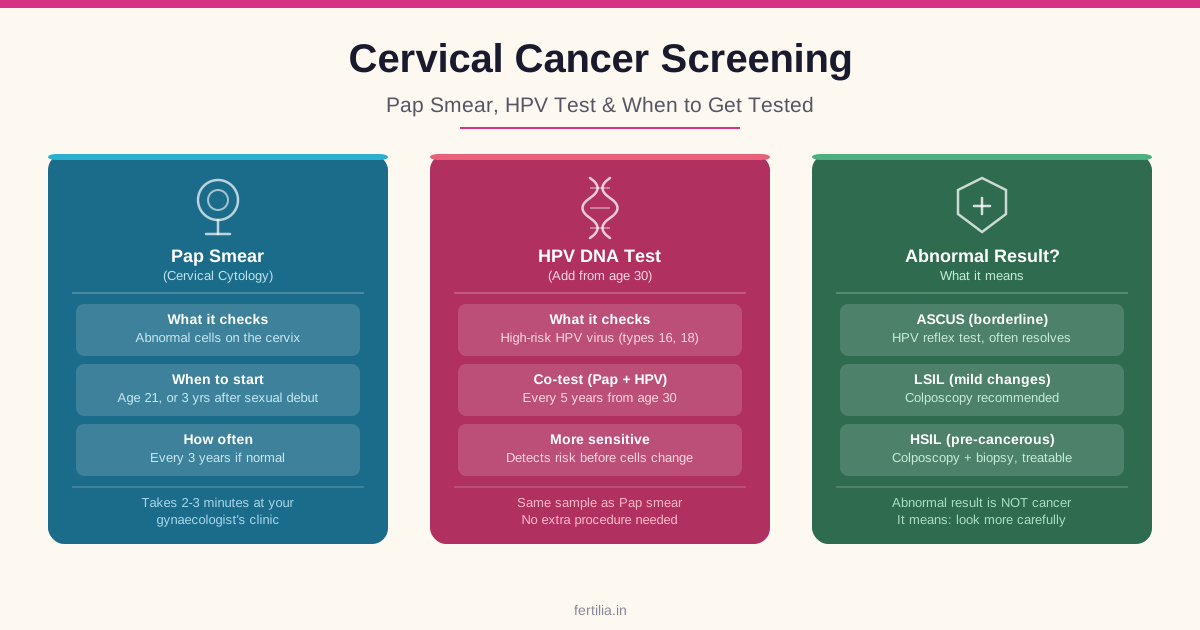
A Pap smear collects a small sample of cells from the surface of the cervix during a routine gynaecological examination. Those cells are sent to a lab and examined under a microscope to check whether any look abnormal.
The Pap smear does not detect the HPV virus itself. It detects changes the virus has caused in the cells, if any are present. In the Bethesda classification system used in India, results range from NILM (normal) at one end to ASCUS, LSIL, ASC-H, and HSIL at the other (each representing increasingly significant cell changes). Cervical cancer itself is a separate category that rarely appears on a routine screening smear.
Most abnormal Pap results, especially in women under 30, reflect mild changes that resolve without treatment.
For a detailed breakdown of what a Pap smear costs at private labs, hospital chains, and government facilities across India, see the Pap smear cost guide.
HPV DNA test
The HPV test checks for the virus itself. A sample is collected from the cervix using the same procedure as a Pap smear, and the sample is tested for the presence of high-risk HPV strains, particularly types 16 and 18, which together account for roughly 70% of cervical cancers worldwide.
The HPV test is more sensitive than the Pap smear for detecting pre-cancerous changes. A negative HPV test is a strong reassurance that the risk of cervical changes in the next several years is very low. This is why guidelines now allow longer intervals between tests when the HPV test is used.
A positive HPV test does not mean cancer, or even that cell changes have occurred. It means the virus is present, which then determines what the next steps in monitoring are.
When to start and how often: the age-by-age guide
The screening schedule recommended for Indian women follows the FOGSI-ICOG Good Clinical Practice Recommendations on cervical cancer screening (updated June 2024, fogsi.org) and the WHO guideline for screening and treatment of cervical pre-cancer lesions (2021, who.int), and it changes meaningfully at two points: age 25 (start) and age 30 (add the HPV test).
Age 25 to 29
Begin screening at age 25. FOGSI sets 25 as the starting age in good-resource settings, using either a Pap smear or a primary HPV test; where resources are limited, organised screening starts at 30 instead. Routine screening below age 25 is not recommended, because transient HPV infections are extremely common in the early twenties and almost always clear on their own. Flagging every transient infection at this stage would generate unnecessary anxiety and follow-up without improving outcomes.
Frequency in this group: a Pap smear every three years, as long as results remain normal.
Age 30 to 65
From age 30, three approaches are all acceptable under current guidelines:
- Pap smear alone, every three years.
- HPV test alone, every five years. This is the WHO’s preferred primary screening method in this age group since 2021, because the HPV test is more sensitive and allows longer screening intervals.
- Co-test (Pap smear plus HPV test together), every five years. The most comprehensive option, done from the same sample in a single visit.
The right approach depends on what your gynaecologist recommends for your individual history and what is available at the facility you use.
After age 65
FOGSI advises that screening can stop at 65 for women whose results have been consistently negative over the previous 15 years. A woman who has never been screened should have a test once at 65 and, if it is negative, can exit screening.
Who continues screening regardless of age
Women who are immunocompromised, including those who are HIV-positive, on long-term immunosuppressive therapy after organ transplantation, or living with conditions that reduce immune function, typically need more frequent screening and continue for longer. Their gynaecologist specifies the schedule.
If you have had the HPV vaccine
Vaccination does not replace screening. The HPV vaccines available in India (Cervavac, Gardasil, Gardasil 9) protect against the most dangerous strains, but not all high-risk strains. They also offer no protection against strains a person was already exposed to before vaccination. The same screening schedule applies, vaccinated or not.
For details on which HPV vaccine suits which age group, dose schedule, and cost in India, see the HPV vaccine guide.
Have questions about your cervical screening or a recent Pap result?
An online consultation takes 20 to 30 minutes and covers your full history, not just the result in front of you.
What an abnormal Pap smear result means
The most important thing to understand: an abnormal Pap smear is not a cancer diagnosis. It is a signal that the cells looked different enough to warrant a closer look. The pathway from an abnormal smear to cancer, if it ever reaches that point, moves through clearly defined intermediate stages over many years, and it is interrupted at each stage by a clinical decision.
Here is what the common results mean in practice:
NILM (Negative for Intraepithelial Lesion or Malignancy): Normal result. Continue routine screening at the standard interval.
ASCUS (Atypical Squamous Cells of Undetermined Significance): The cells look slightly unusual but not clearly abnormal. The standard next step is an HPV reflex test on the same sample. If HPV is negative, a repeat Pap in one to three years is all that is needed. If HPV is positive alongside ASCUS, a colposcopy is recommended.
LSIL (Low-Grade Squamous Intraepithelial Lesion): Mildly abnormal cells, typically consistent with an active HPV infection. Most LSIL results in women under 25 resolve on their own. In women over 25, a colposcopy is usually recommended as the next step.
HSIL (High-Grade Squamous Intraepithelial Lesion): More significant cell changes, considered pre-cancerous. A colposcopy with biopsy is recommended. HSIL is treated with a straightforward in-clinic procedure (LEEP or cone biopsy) that removes the affected tissue. Even untreated, HSIL does not become cancer overnight, but prompt follow-up is recommended.
ASC-H (Atypical Squamous Cells, Cannot Exclude HSIL): Borderline cells that cannot be clearly classified as low or high grade. A colposcopy is recommended.
In every category above, the timeline before anything becomes dangerous is measured in years. There is always time to do the next step properly.
What is a colposcopy
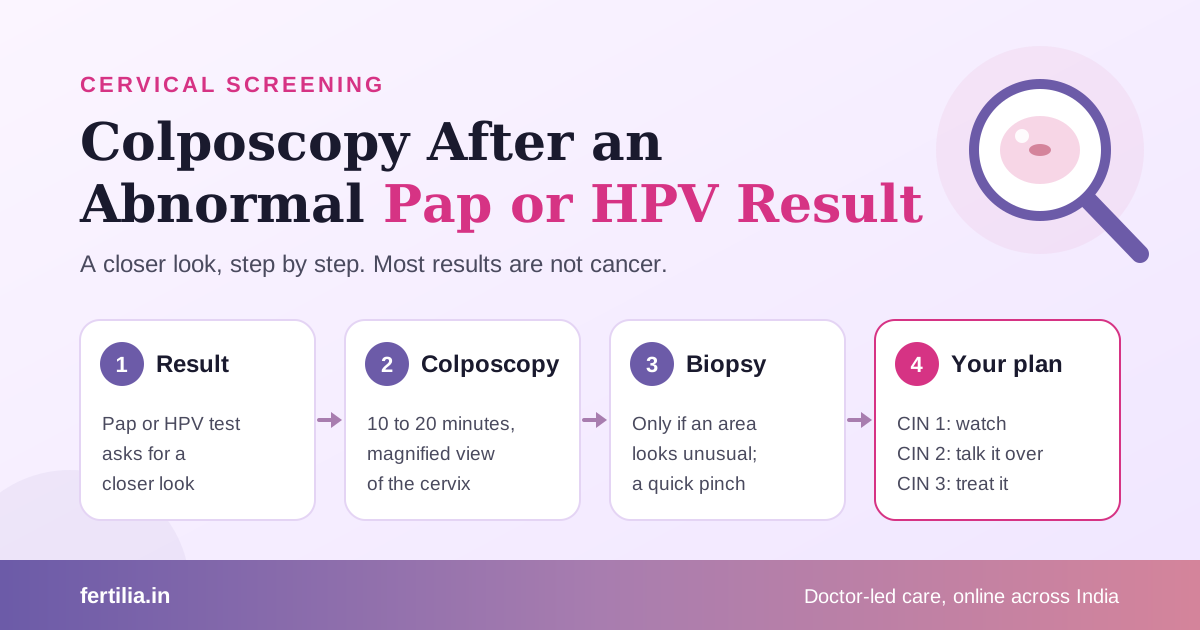
A colposcopy is a closer look at the cervix using a magnifying instrument called a colposcope, which sits entirely outside the body and does not enter it. The gynaecologist applies a dilute acetic acid solution (similar to vinegar) to the cervix, which causes any abnormal areas to appear temporarily white against the normal pink tissue. This helps the gynaecologist identify which areas need closer attention.
If a particular area looks concerning under the colposcope, a small biopsy sample may be taken from that area. The biopsy result, which takes a few days to return from the lab, confirms whether the tissue is truly pre-cancerous and needs treatment, or whether it can be monitored with repeat testing.
Most women describe a colposcopy as uncomfortable rather than painful. The procedure takes about 15 to 20 minutes. A colposcopy is not a cancer treatment, it is a diagnostic step that gives much more information than a smear alone.
Practical notes before your test
Scheduling a Pap smear or HPV test is straightforward with a few points in mind:
- Book the appointment when you are not on your period. Mid-cycle (around 10 to 14 days after the start of your last period) is ideal.
- Avoid vaginal intercourse, vaginal douching, and any vaginal medications for 48 hours before the test, as these can disturb the cervical cell sample and affect results.
- The test itself takes two to three minutes. You will feel mild pressure or a brief cramp when the sampling brush is rotated on the cervix.
- Cytology (Pap) results take 5 to 10 working days at most private labs. HPV DNA test results take 5 to 7 days.
Who needs screening
Cervical screening is for all women who have a cervix. This includes:
- Women who have had the HPV vaccine (same schedule applies)
- Women who are not currently sexually active
For more on this, read our guide on HPV Vaccine Before Pregnancy.
- Women who had a partial hysterectomy (uterus removed but cervix retained)
Women who had a total hysterectomy (uterus and cervix both removed) for a non-cancerous reason do not typically need Pap smears after the procedure. If you are unsure what your surgery involved, your gynaecologist can confirm from your surgical records.
Cervical screening as part of a preconception check-up
If you are planning a pregnancy, an up-to-date Pap smear is one of the standard baseline tests in a preconception workup, alongside thyroid, blood group, haemoglobin, and rubella immunity. Getting the Pap smear done before conception gives you a clean starting point and avoids the need to do it during pregnancy, when interpretation is slightly more complex.
For the full picture of what preconception screening covers, see the preconception check-up guide. For broader fertility baseline tests that gynaecologists routinely recommend before starting to try, see the complete fertility workup guide.
Ready to sort out your cervical screening?
Consultations are online, by video call, across India. The smear itself is done at a lab or hospital near you. What a consultation is useful for is working out whether you are actually due, which test to ask for, where to get it done locally, and what your result means once it comes back.
FAQ
At what age should I get my first Pap smear in India?
FOGSI guidelines recommend starting cervical cancer screening at age 25 in good-resource settings (age 30 where resources are limited), and advise against routine screening before 25. If you are 25 or older and have never had one, the right time to start is your next gynaecological visit.
How often do I need a Pap smear?
If your results are consistently normal: every three years for a Pap smear alone, or every five years if you are doing a co-test (Pap plus HPV test) from age 30. Your gynaecologist may recommend more frequent testing if you have had abnormal results before, are immunocompromised, or have a history of cervical cell changes.
My Pap smear came back abnormal. Should I be worried?
An abnormal Pap smear is not a cancer diagnosis. The most common abnormal result, ASCUS, often resolves with a repeat test or a negative HPV reflex test. Even a finding of HSIL is a pre-cancerous change that is treated straightforwardly and does not become cancer overnight. Follow your gynaecologist’s recommended next step promptly, and recognise that catching it early is exactly what the system is designed to do.
Do I still need Pap smears if I have had the HPV vaccine?
Yes. The HPV vaccines protect against the most dangerous strains but not all high-risk strains, and they do not treat any prior HPV exposure. The same screening schedule applies whether or not you have been vaccinated.
What is the difference between a Pap smear and an HPV test?
A Pap smear looks at cervical cells for abnormal changes. An HPV test looks for the virus that causes those changes. Both can be done from the same cervical sample in a single visit. From age 30, doing both together as a co-test gives the most complete picture and allows a five-year interval if both results are normal.
What is colposcopy and should I be scared of it?
A colposcopy is a closer look at the cervix using a magnifying instrument that sits outside the body. It is recommended when a Pap smear comes back with an abnormal result and the gynaecologist wants a clearer view of the area in question. A small biopsy may be taken during the procedure. Most women find it uncomfortable for a few minutes rather than painful. It is a diagnostic step, not a treatment, and it is the information that guides whatever comes next.
What is karppapaai vaay puthrunooy? Is it the same as cervical cancer?
Yes. In Tamil, cervical cancer is called karppapaai vaay puthrunooy (கர்ப்பப்பை வாய் புற்றுநோய்). The word karppapaai means uterus (womb), and vaay means neck or opening, which corresponds to the cervix. The screening tests, a Pap smear and the HPV test, are the same regardless of the language.
Cervical cancer does not have to happen. The screening tools are accessible, the window is long, and a regular Pap smear combined with an HPV test from age 30 keeps almost every woman safe. If you have been putting off scheduling the test, or have a recent result you want to understand, WhatsApp Dr. Suganya and we can go through it together.