You go for a Pap smear or a routine check-up. The doctor inserts the speculum, takes one look at your cervix, and says: “You have a cervical erosion” or “there is a wound on your cervix.” The word might be “ectropion.” It might be described as “a raw area” or “a red patch that bleeds easily.” Whatever the phrasing, you leave the clinic carrying a name for something on your body you had no idea about before, and the word “erosion” or “wound” suggests something has gone wrong.
It has not.
Cervical erosion is one of the most common findings in women of reproductive age. It is almost never the problem it sounds like. This guide explains exactly what it is, why it develops, what symptoms it can cause, and when, if ever, it needs treatment.
What this guide covers
- What cervical erosion (ectropion) is and why the name is misleading
- What causes it, including the link to the contraceptive pill
- The symptoms it can cause and the ones it cannot
- How it differs from cervical cancer
- When treatment is needed, and what is available in India
What is cervical erosion?
The condition has two names used side by side. “Cervical erosion” is the older, more widely known term. “Cervical ectropion” is the current preferred clinical term. Both refer to the same finding, and both names appear here because “erosion” is still what many Indian women are told at their check-up, and still the term most commonly searched online.
To understand what is happening, it helps to know that your cervix has two distinct types of surface cells.
The outer surface of the cervix (ectocervix) is normally covered by flat, pale-pink cells called squamous epithelium. This is the part your gynaecologist sees when looking through the speculum.
The inner canal of the cervix (endocervical canal) is lined by a different cell type: columnar epithelium. These cells are taller, produce mucus, and appear redder. Under normal conditions, they are mostly tucked inside the canal.
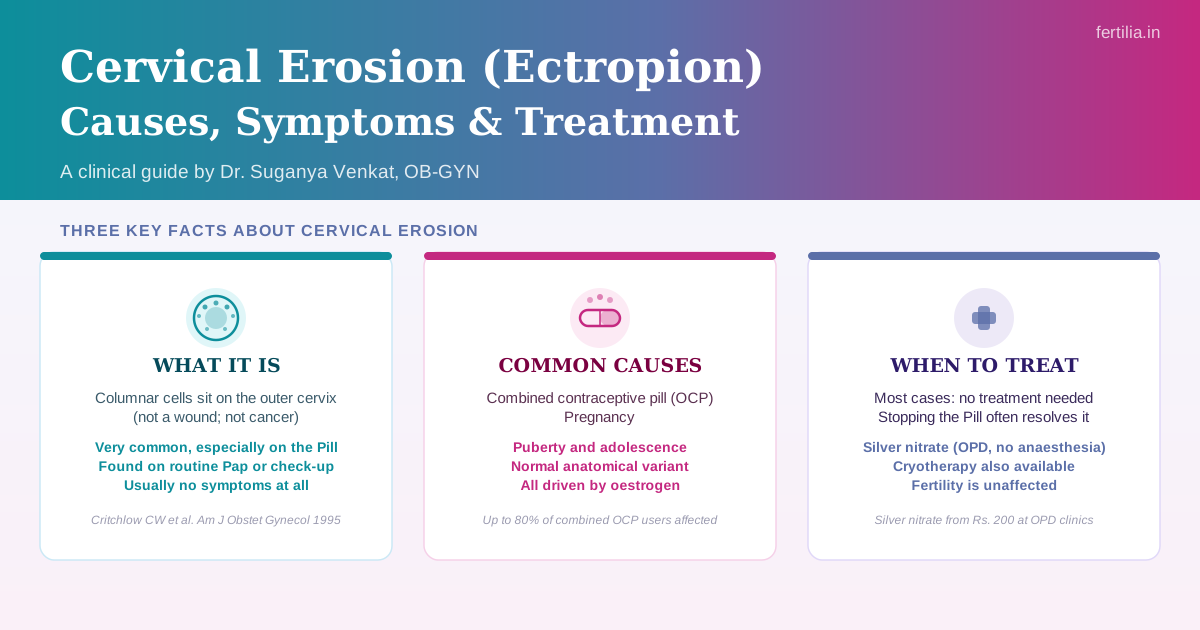
In cervical ectropion, these columnar cells move outward and occupy part of the outer cervix where squamous cells would normally be. The result is a reddish, velvety-looking area around the cervical opening (the os). This can look inflamed or wound-like to the naked eye. Nothing is broken, however. Nothing is eroded. It is a different type of cell sitting in an unusual position.
Why “erosion” is the wrong word
The word “erosion” implies that the surface of the cervix has been worn away, as if there is an open sore. This is not what is happening. The columnar cells are not a sign of injury. They are not a scab forming over a wound. They are not the result of anything you did or did not do.
The correct clinical term, ectropion, comes from the Greek for “turning outward.” The lining of the endocervical canal has turned outward onto the outer surface of the cervix. That is the whole of it.
The confusion the word “erosion” causes is substantial. Women I see who have been told they have a cervical erosion are frequently convinced they have an open sore, a sign of cancer, or a sexually transmitted infection. The answer to all three concerns is almost always no.
What causes cervical ectropion?
The shift from squamous to columnar cells on the ectocervix is driven by oestrogen. When oestrogen levels are high, the columnar epithelium extends outward. This is a physiological process, not a disease process.
Three common situations raise oestrogen and increase the likelihood of ectropion:
Oral contraceptive pills (OCPs). This is the most frequent cause I see in practice. The combined oral contraceptive pill (oestrogen plus progestogen) increases the size of the ectropion area, and the effect is greater the longer the pill has been used (Critchlow CW et al., Am J Obstet Gynecol 1995; PMID 7645632). If you are on the pill and your gynaecologist has found an ectropion, the pill is almost certainly contributing.
Pregnancy. Oestrogen levels rise markedly in pregnancy, and cervical ectropion is extremely common in pregnant women. It is one of the reasons a speculum examination should be done gently in pregnancy: the ectropion bleeds more easily than the surrounding squamous tissue.
Puberty. The hormonal changes in the years around a girl’s first period can cause ectropion in adolescent and young adult women. It often reduces through the twenties as hormone levels settle into an adult cycle pattern.
Some women have ectropion with none of the above: it can be a normal anatomical variation with no identifiable hormonal trigger.
What symptoms does cervical ectropion cause?
Most women with cervical ectropion have no symptoms at all. The finding is incidental, discovered during a Pap smear or an examination done for another reason. No symptoms mean no need for treatment.
When ectropion does cause symptoms, two are most common:
Increased clear or white vaginal discharge. Columnar cells produce more mucus than squamous cells. A larger area of columnar epithelium on the outer cervix means more mucus is secreted. The discharge is typically clear to white, without odour, and without itching. It often increases around ovulation, when oestrogen peaks. This is different from the fishy-smelling discharge of bacterial vaginosis, or the thick white cottage-cheese discharge of a yeast infection. See our guide to normal and abnormal vaginal discharge.
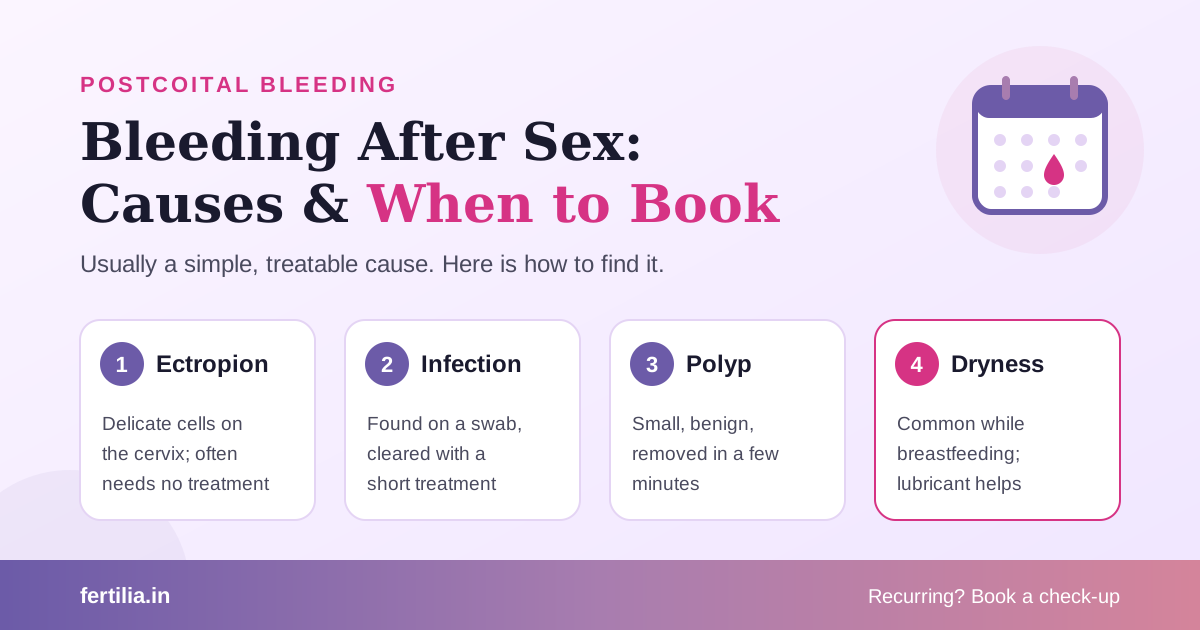
Post-coital bleeding (spotting after sex). Columnar cells on the ectocervix are more fragile and more vascular (richer in blood supply) than squamous cells. During penetration, they can be lightly abraded, causing a small amount of bleeding. The bleeding is typically light pink or brownish and stops within a few hours. Post-coital bleeding is the most common symptom that brings ectropion to attention, and cervical ectropion is the most common benign cause of post-coital bleeding in reproductive-age women.
What ectropion does not cause: period changes, pelvic pain, pain during sex, discharge with a bad odour, or fertility problems. If any of those are present, a different diagnosis needs consideration.
Noticing discharge or spotting after sex and not sure what is behind it? You can message Dr. Suganya directly on WhatsApp for an online consultation: chat on WhatsApp.
Cervical ectropion versus cervical cancer
This is the question most women are asking quietly: could this be cancer?
Cervical ectropion is not cancer. It is not pre-cancerous. It does not increase the risk of developing cervical cancer.
Cervical cancer and its precursor stages (cervical intraepithelial neoplasia, CIN) arise from the transformation zone, the junction between the columnar and squamous epithelium. They are almost always driven by persistent infection with high-risk strains of HPV. The appearance on examination is different from ectropion, and the two conditions are clinically distinct.
A Pap smear samples the transformation zone to look for abnormal cells, and this is why your Pap smear remains important even if ectropion is found: the smear checks the cells of that zone for dysplasia, separate from whether ectropion is present or absent. A normal Pap smear in a woman with ectropion means the cells are healthy. Read our complete guide to Pap smears and HPV testing in India.
Two other conditions are sometimes confused with ectropion on examination:
Cervicitis (an infected cervix, often caused by chlamydia or gonorrhoea) produces a different discharge pattern, typically yellow-green and purulent, with tenderness on examination. These are distinct clinical findings, and a gynaecologist can separate them.
CIN (cervical dysplasia) cannot be diagnosed by the naked eye: it requires colposcopy and biopsy. The red appearance of ectropion alone is not a basis for a dysplasia diagnosis.
Does cervical ectropion need treatment?
In most cases, no.
Asymptomatic ectropion found incidentally on examination does not require treatment. There is no urgency, no risk of progression, and no benefit to treating something that is causing no problems.
The body also frequently resolves ectropion on its own. When a woman stops the oral contraceptive pill, the ectropion often reduces in size over the following months as oestrogen exposure drops. After delivery, similar regression occurs as postpartum hormone levels shift.
Treatment is appropriate when:
- The discharge is heavy enough to be interfering noticeably with daily life (for example, requiring frequent pad or liner changes throughout the day)
- Post-coital bleeding is frequent, persistent, or distressing enough to affect your relationship or require investigation
- The doctor wants a biopsy of the area to confirm the diagnosis, which may be combined with treatment in the same sitting
There is no threshold of appearance that mandates treatment. A large ectropion that causes no symptoms does not need to be treated simply because it is large.
What does treatment involve in India?
When treatment is indicated, the aim is to destroy the columnar cells and allow squamous cells to grow back in their place. Three methods are used in India, all done in an outpatient (OPD) setting without admission:
Silver nitrate cauterisation. A silver nitrate stick is applied to the ectropion area for approximately 60 seconds. No anaesthesia is required. There may be a mild stinging sensation during the procedure and brownish discharge for three to five days afterward as the tissue heals. This is the most widely available option across Indian OPD clinics and typically costs between Rs. 200 and Rs. 800 depending on the facility.
Cryotherapy (cold coagulation). A probe is used to freeze the affected area. The procedure takes a few minutes, causes brief cramping, and is followed by a watery discharge for one to three weeks as the treated tissue clears. Available at most gynaecology departments with cryotherapy equipment.
Diathermy (electrocautery or LLETZ-type). Used more often when a biopsy and treatment are being combined, or in more specialised outpatient settings.
None of these procedures affect fertility. The cervix heals fully, conception and pregnancy are unaffected, and there is no need to delay trying to conceive after ectropion treatment. You will typically be reviewed at four to six weeks to confirm healing.
What to do if you are told you have cervical erosion
If the finding was incidental and you have no symptoms, no treatment is needed. Continue your routine Pap smear schedule and carry on.
If you are on the combined pill and notice increased discharge, discuss with your gynaecologist whether switching to a lower-oestrogen formulation or a progestogen-only pill might help. Often it does.
If you have post-coital bleeding, see your gynaecologist for assessment even if you suspect ectropion. Post-coital bleeding warrants a proper examination and a Pap smear: ectropion is the most common cause, but cervical cancer and cervicitis also need to be ruled out. Read our guide on brown discharge for more context on spotting and when to get assessed.
If you are planning pregnancy, ectropion does not need to be treated first. It does not affect implantation, early pregnancy, or miscarriage risk.
What is it called in Tamil and Hindi?
Women in Tamil Nadu often use the phrase “karppappai vaayal punn” (கர்ப்பப்பை வாய் புண்), meaning “a wound at the mouth of the womb.” In Hindi, it is sometimes described as “garbhashay greeva par ghav” (गर्भाशय ग्रीवा पर घाव), meaning “a wound on the cervix.” Both phrases carry the same “wound” framing that creates the anxiety. The medical finding in both cases is cervical ectropion, and it is not a wound.
If you have been told you have a cervical erosion or ectropion and want to understand whether it needs treatment, or if you have been having discharge or spotting after sex that you want properly assessed, Dr. Suganya is available for an online consultation via video call, anywhere in India. Chat with Dr. Suganya on WhatsApp.
Frequently asked questions
Is cervical erosion the same as a wound on the cervix?
No. “Cervical erosion” is a misleading old name for a benign condition called cervical ectropion. Nothing is broken or worn away. The inner lining cells of the cervical canal are sitting on the outer surface of the cervix, which makes it appear red and slightly raw. It is not a wound, not an infection, and not a sore.
Can cervical erosion cause infertility?
No. Cervical ectropion does not affect the uterus, the fallopian tubes, ovulation, or egg quality. It is not a cause of infertility, and treating it does not improve fertility outcomes. If you are having difficulty conceiving, the ectropion is unlikely to be the reason.
I have spotting after sex. Could it be from an ectropion?
Spotting or light bleeding after sex is the most typical symptom of cervical ectropion. The columnar cells on the outer cervix are more fragile than normal squamous cells and bleed easily with contact. That said, post-coital bleeding always warrants proper assessment, because cervical cancer and infection also need to be ruled out, particularly if you have not had a Pap smear recently.
Is the cauterisation procedure safe? Will it affect my fertility?
Yes, it is safe. Cervical cauterisation (silver nitrate or cryotherapy) is a routine outpatient procedure done across India. No general anaesthesia is needed, no stitches are involved, and fertility is not affected. The cervix heals fully within four to six weeks, and you can try to conceive after that without any concern.
I am on the contraceptive pill and have a lot of clear discharge. Could the ectropion be the reason?
Yes, this is a common combination. The combined pill raises oestrogen, which extends the columnar cell area on the outer cervix. Columnar cells produce more mucus. Clear, odourless increased discharge in a woman on the pill is often from ectropion. If the discharge has no odour and no itch, discuss with your gynaecologist whether the ectropion is the likely cause before pursuing investigation for infection.
Does cervical erosion mean I have HPV?
No. Cervical ectropion is not caused by HPV. It is not an infection or a sexually transmitted condition of any kind. HPV testing and cervical screening are separate investigations that check for different things. Read our guide to HPV vaccination in India.
If I have an ectropion, does my Pap smear still matter?
Yes, very much so. The Pap smear checks for abnormal cells at the transformation zone, which is the junction between the columnar and squamous areas of the cervix. Ectropion and Pap smear results are independent findings. A normal Pap smear in a woman with ectropion means the cells at that junction are healthy. Continue your routine screening as recommended.