When a couple in India has been trying for a year without a pregnancy, the first person sent for tests is almost always the wife. Blood tests, scans, follicle tracking, sometimes a tube test. Her husband’s semen analysis, a simple and inexpensive test, often comes months later, if it comes at all. Sometimes it is suggested only after an IUI has not worked.
I’m Dr. Suganya Venkat, an OB-GYN with more than 15 years of practice, and many of the couples who reach Fertilia over video consultation have been through exactly this sequence. By the time we look at both partners’ reports side by side, there is often a male factor that nobody had looked for. Nothing about it is shameful, and it is far more common than most couples expect. Once it is found, there is usually a clear next step.
This guide is the map. Each specific condition (varicocele, azoospermia, sperm DNA damage) has its own detailed post on this site; here you will find how they all fit together, so you know where you are and what comes next.
What this post covers:
- How often a male factor is involved in a couple’s infertility
- The three groups of causes, and the lifestyle factors that sit on top of them
- Why the semen analysis comes first, and which tests follow an abnormal report
- Treatment options matched to each cause, from lifestyle to surgery to ICSI
- Two couples from our practice who took very different paths
- What male infertility is called in Tamil, Hindi and Telugu
How Common Male Factor Infertility Is
Infertility affects an estimated 15% of couples worldwide. In a global review, a male factor alone accounted for 20 to 30% of cases and contributed to about 50% of cases overall (Agarwal A et al., Reproductive Biology and Endocrinology, 2015, PMID 25928197). Put simply: in about half of the couples who struggle to conceive, the man’s fertility is part of the picture.
That is why the American Urological Association and the American Society for Reproductive Medicine publish a dedicated joint guideline on evaluating and treating infertile men (Schlegel PN et al., Fertility and Sterility, 2021, PMID 33309062). One point from that guideline is worth knowing early: men with infertility have a higher chance of developing other health problems later. A male fertility workup is also a useful general health check for a man who may not have seen a doctor in years.
Infertility is formally defined as no pregnancy after 12 months of regular unprotected intercourse, or after 6 months when the woman is 35 or older (Practice Committee of the American Society for Reproductive Medicine, Fertility and Sterility, 2020, PMID 32115183). Once a couple reaches that point, both partners should be evaluated together, not one after the other.
The Three Groups of Causes
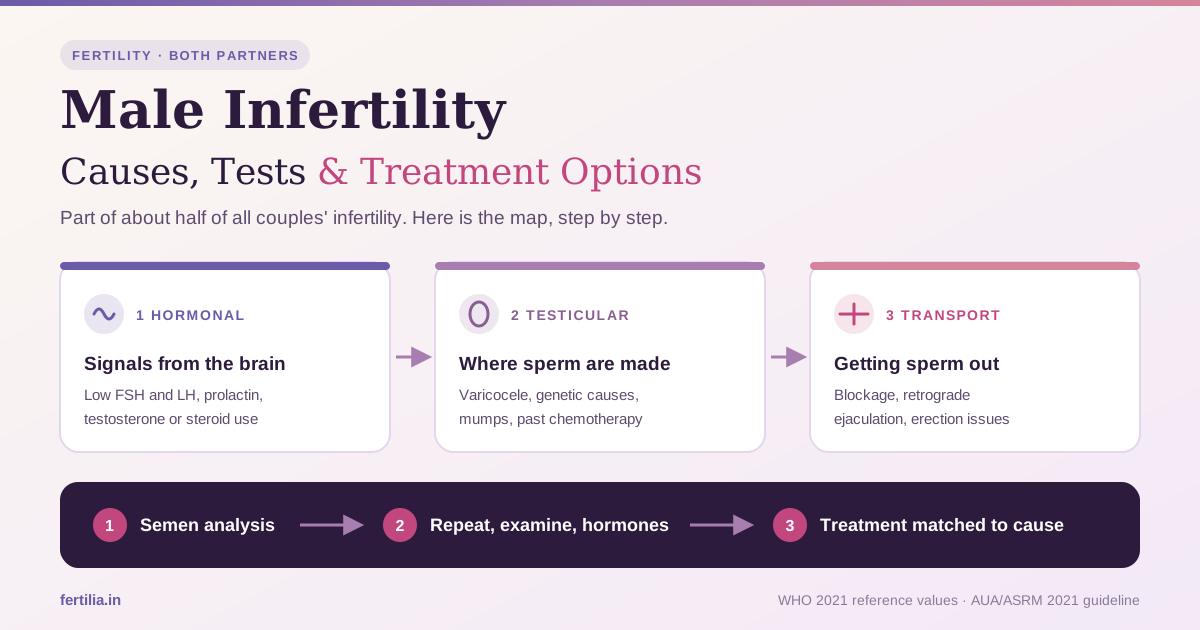
Doctors usually sort the causes of male infertility by where the problem sits on the path from hormone signal to ejaculation. This grouping is useful because it points straight at the right tests and the right treatment.
1. Hormonal causes (before the testes)
The testes make sperm only when the brain sends the right signals (the hormones FSH and LH). When those signals are low, sperm production falls.
- Hypogonadotropic hypogonadism, where the pituitary gland does not send enough FSH and LH. It is uncommon, but it responds well to hormone treatment.
- High prolactin or thyroid problems, which can disturb the same hormone axis.
- Testosterone or anabolic steroid use. This one surprises many men. Taking testosterone from outside suppresses the testosterone made inside the testes, which sperm production depends on, so sperm counts fall (Crosnoe LE et al., Translational Andrology and Urology, 2013, PMID 26813847). Testosterone injections or gels taken for energy, and anabolic steroids used for bodybuilding, can both do this. Once it is recognised, it is often correctable.
2. Testicular causes (inside the testes)
Here the signals are fine, but the sperm-making tissue itself is affected.
- Varicocele, enlarged veins around the testis. A varicocele is found in about 15% of healthy men and up to 35% of men with primary infertility (Alsaikhan B et al., Asian Journal of Andrology, 2016, PMID 26763551). Many men with a varicocele father children without any treatment, so finding one does not automatically mean surgery. Our varicocele and fertility guide explains when repair helps.
- Undescended testis in childhood, even if it was corrected.
- Mumps orchitis (mumps affecting the testes) after puberty.
- Genetic conditions such as Klinefelter syndrome (an extra X chromosome) or small missing segments on the Y chromosome.
- Chemotherapy or radiation. Men facing cancer treatment can store sperm beforehand; our guide on sperm freezing in India covers the process.
3. Transport and ejaculation causes (after the testes)
Sperm are made normally but cannot reach the semen or the vagina.
- Blockage of the tubes that carry sperm, from past infection, surgery, or being born without the vas deferens (the tube that carries sperm out of the testis).
- Retrograde ejaculation, where semen flows backwards into the bladder. It can happen with long-standing diabetes, after some prostate surgeries, or with certain medicines.
- Erection or ejaculation difficulties, which are more common under the pressure of timed intercourse than most couples admit. These are treatable and worth mentioning to the doctor.
The lifestyle layer on top
Across all three groups, everyday factors can push sperm quality down further. A 2026 umbrella review, pooling 43 systematic reviews and meta-analyses, linked obesity, sleep disorders, smoking, some medicines (including certain antidepressants), metabolic syndrome and some viral infections with poorer semen quality, while regular exercise, nut consumption and a healthy dietary pattern were associated with better parameters (Wang QH et al., Asian Journal of Andrology, 2026, PMID 41527944). The authors are careful to note that most of this evidence is low certainty and does not prove cause and effect. Still, these are the factors a man can work on from this week, and our guide on how to increase sperm count goes through each one with Indian food examples.
In a sizeable share of men, no specific cause is found even after a full workup. This is called idiopathic male infertility, and it is still treatable: lifestyle work and assisted reproduction help these couples too.
Step One: The Semen Analysis
Every male workup starts here. It is non-invasive, widely available across India, and it tells you more in one report than any other single male test.
Labs should report results against the WHO Laboratory Manual for the Examination and Processing of Human Semen, 6th edition (WHO, 2021, who.int/publications/i/item/9789240030787). The sample is collected after 2 to 7 days without ejaculation. The main lower reference limits from that manual:
| Parameter | WHO 2021 lower reference limit |
|---|---|
| Semen volume | 1.4 mL |
| Sperm concentration | 16 million per mL |
| Total sperm count | 39 million per ejaculate |
| Total motility | 42% |
| Progressive motility | 30% |
| Normal forms (morphology) | 4% |
Two things matter more than any single number. First, semen results vary a lot from one sample to the next, so an abnormal report should be repeated before conclusions are drawn. Second, these limits are not a pass or fail line for natural conception; they describe the lower end of men who did conceive. Our post on reading your semen analysis report explains each parameter, and the borderline results decision guide covers what to do when numbers sit just below the line.
Step Two: When the Report Is Abnormal
If the repeat semen analysis is also outside the reference range, the AUA/ASRM guideline describes a stepwise evaluation that begins with a proper history and physical examination, followed by targeted tests where they are indicated (Schlegel PN et al., Fertility and Sterility, 2021, PMID 33309062). In practice, this is where a urologist or andrologist (a urologist with training in male fertility) joins the team.
- History and examination. Childhood surgery, mumps, medicines, gym supplements, smoking, alcohol, heat exposure at work, and an examination of the testes and veins. This alone often points to the cause.
- Hormone tests. FSH, LH and total testosterone, with prolactin and thyroid tests when indicated. A high FSH with a low count suggests the testes themselves are struggling; low FSH and LH suggest a signal problem.
- Scrotal ultrasound, when the examination is difficult or the findings are unclear.
- Genetic tests (karyotype and Y chromosome microdeletion), usually advised when there is no sperm or the count is very low. These results change the treatment plan and the counselling for the couple.
- A urine test after ejaculation, when semen volume is very low, to check for retrograde ejaculation.
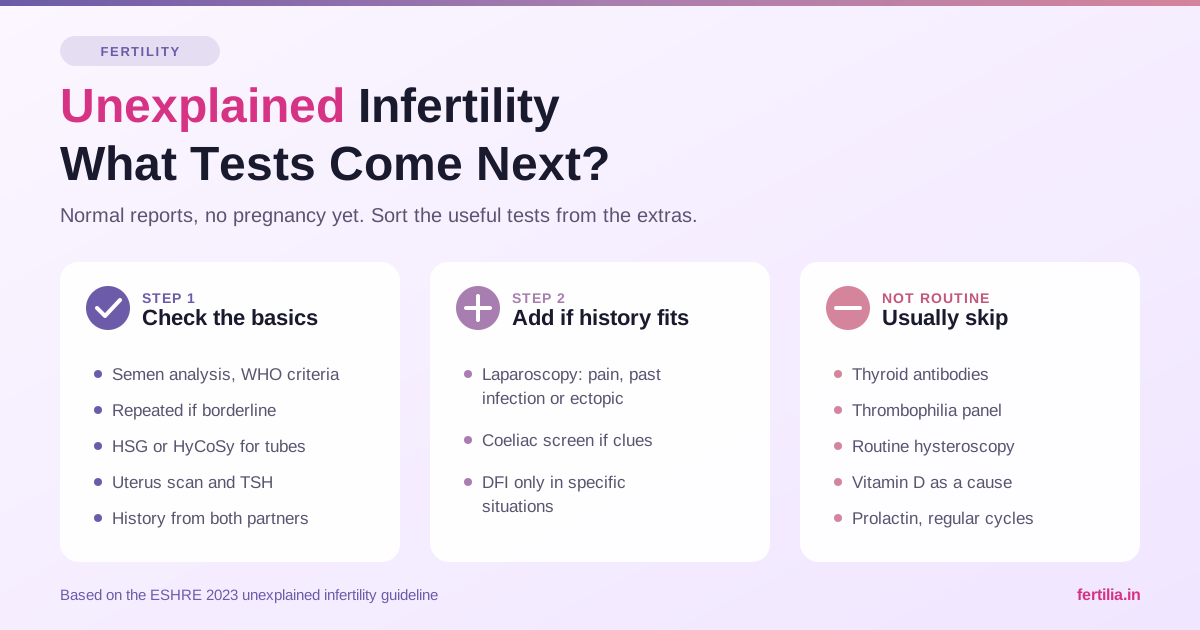
- Sperm DNA fragmentation testing, which is not part of a first workup but is considered in selected situations such as recurrent miscarriage or repeated IVF failure. See our guide on sperm DNA fragmentation (DFI).
If the semen analysis shows no sperm at all, that is azoospermia, and the workup is more specific. Our azoospermia guide covers the obstructive and non-obstructive types and what each means for treatment.
Have a semen analysis report and not sure what it means for your plans? Dr. Suganya reviews both partners’ reports together over a video consultation, so you leave with one plan instead of two separate ones. WhatsApp Dr. Suganya to book a couple’s consultation
Treatment Options, Matched to the Cause
The joint AUA/ASRM guideline concludes that male contributions to infertility are common, and that specific treatments as well as assisted reproduction are effective at managing them (Schlegel PN et al., Fertility and Sterility, 2021, PMID 33309061). The key is matching the treatment to the cause rather than jumping straight to the most expensive option.
| Finding | Usual approach | Read more |
|---|---|---|
| Mild changes, no clear cause | Lifestyle changes for about 3 months, then repeat the test | Increasing sperm count |
| Testosterone or steroid use | Stop under medical guidance; sperm production usually recovers over months | Medicines section below |
| Low FSH and LH | Hormone treatment by a specialist | Medicines section below |
| Palpable varicocele with abnormal semen | Discuss repair with a urologist | Varicocele guide |
| Blockage | Surgical repair or sperm retrieval | TESA and PESA |
| Mild male factor | IUI may be considered | IUI vs IVF |
| Severe male factor | IVF with ICSI | ICSI vs IVF |
| No sperm can be retrieved | Donor sperm, if the couple chooses | IUI with donor sperm |
Lifestyle changes
New sperm take roughly three months to form and mature, so changes made today show up in a semen analysis about three months later. This is the reason we ask couples to commit to a full three-month block before judging the result. Weight, smoking, alcohol, sleep and heat exposure are the main levers.
Medicines
When the hormone signal is the problem, hormone treatment given by a specialist can restore sperm production. For men who have been using testosterone, stopping it is the main step. In studies of hormonal contraception in men, most had normal sperm production return within a year of stopping, and clomiphene citrate has been used to maintain the body’s own testosterone production in men who want to keep their fertility (Crosnoe LE et al., Translational Andrology and Urology, 2013, PMID 26813847). These decisions belong with a urologist or andrologist who can monitor the response.
Antioxidant supplements are widely sold for sperm health. A Cochrane review found very low-certainty evidence that they may improve live birth rates, and concluded that overall the evidence is inconclusive (de Ligny W et al., Cochrane Database of Systematic Reviews, 2022, PMID 35506389). They are a reasonable add-on for some men, but not a substitute for finding the cause.
Surgery
Repairing a palpable varicocele, correcting a blockage, or retrieving sperm directly from the testis are all urologist-led procedures. Each has its own post on this site with the details.
Assisted reproduction
When the numbers are mildly low, IUI places washed sperm closer to the egg. When they are severely low, IVF with ICSI injects a single sperm into each egg, which allows conception even with very few sperm. Many couples with a male factor have their babies this way.
Two Couples, Two Different Paths
Male factor treatment does not have one success story. These two couples from our practice, both shared with their consent, show how different the right path can look.
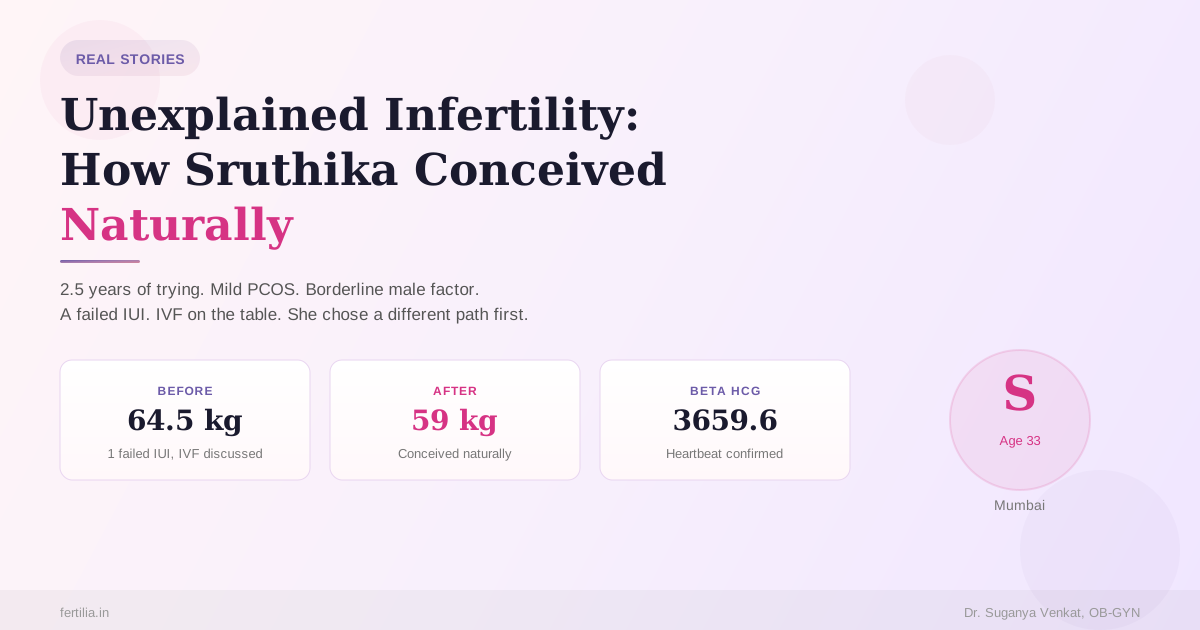
Vikram had only 1% normal sperm forms and a failed IUI behind him. Working on his sedentary routine, eating pattern and stress alongside his wife’s plan, the couple went on to conceive naturally. His full timeline is in Vikram’s story.
Kalai and Ganesh had been trying for nearly four years. Ganesh had already had surgery for a grade III varicocele, but his progressive motility was still 0%. Over six months of preparation together, it rose to 33% by the day of their first IUI, and they walked into treatment ready. Their story is in Kalai and Ganesh: getting treatment-ready together.
One couple conceived on their own, the other prepared well for treatment. Both are good outcomes.
What It’s Called in Tamil, Hindi and Telugu
Many couples search for this in their own language, and the terms below are what you may hear from family or in a clinic.
| Language | Term for male infertility | Semen analysis |
|---|---|---|
| Tamil | aan malattuthanmai (ஆண் மலட்டுத்தன்மை) | vindhu parisodhanai (விந்து பரிசோதனை) |
| Hindi | purush baanjhpan (पुरुष बांझपन) | veerya jaanch (वीर्य जांच) |
| Telugu | purusha vandhyatvam (పురుష వంధ్యత్వం) | semen analysis (the English term is commonly used) |
In practice, most doctors and labs across India use the English words “semen analysis” and “sperm count”, so do not worry if your report uses those terms.
Practical Steps for This Month
- Book the semen analysis now, alongside the wife’s tests, if you have been trying for 12 months (or 6 months if she is 35 or older).
- Follow the collection instructions: 2 to 7 days of abstinence, the full sample, and delivery to the lab within the time they specify.
- Repeat any abnormal result before deciding anything.
- List every medicine and supplement the husband takes, including any testosterone, steroid or bodybuilding products, before the first consultation.
- Start the lifestyle work in parallel. It helps whatever the cause turns out to be.
- Read both partners’ reports together with one doctor, so the plan fits the couple, not just one person.
Frequently Asked Questions
What are the most common causes of male infertility?
Common identifiable causes include varicocele, hormonal problems (including testosterone or steroid use), blockages in the sperm transport tubes, genetic conditions and the effects of past infections such as mumps. Lifestyle factors like obesity and smoking are associated with poorer semen quality on top of these. In a sizeable share of men no single cause is found, and treatment is still possible.
What is the first test for male infertility?
A semen analysis, reported against the WHO 2021 reference values. It is quick, non-invasive and available in most diagnostic labs in India. If it is abnormal, it should be repeated before further tests are planned.
Can male infertility be treated?
Often, yes. Hormonal causes respond to medicines, a varicocele or blockage can be repaired surgically, and lifestyle changes improve semen quality for many men over about three months. When the count stays low, IUI or IVF with ICSI allows couples to conceive even with very few sperm.
Purush baanjhpan ka ilaj kya hai? (What is the treatment for male infertility?)
The treatment depends on the cause found in the workup: lifestyle changes for mild problems, hormone medicines for a hormonal cause, surgery for a varicocele or blockage, and IUI or ICSI when the count stays low. The first step is always a semen analysis.
Does masturbation cause male infertility?
No. Masturbation does not damage sperm production or cause infertility. Before a semen analysis the lab asks for 2 to 7 days of abstinence only so that the sample is collected under standard conditions.
How long does it take for sperm quality to improve?
New sperm take roughly three months to form and mature, so improvements from lifestyle changes or treatment show up in a semen analysis about three months later. After stopping testosterone, recovery can take longer, sometimes up to a year.
Which doctor should a man see for infertility?
A urologist or andrologist handles the male examination, hormonal treatment and surgery. Your gynaecologist or fertility specialist coordinates the couple’s plan. Our guide on which doctor to see for infertility in India explains how these roles fit together.
Male factor infertility is common and, in most couples, there is a clear next step once the cause is known. If you would like both partners’ reports looked at together and a plan you can start this month, Dr. Suganya consults online across India. WhatsApp Dr. Suganya to book your consultation