When a fertility workup finds a varicocele, it typically lands on the husband’s shoulders without much context. The report says Grade II or Grade III, the doctor says it may be affecting the sperm count, and the couple is left with a question that has no obvious answer: should he have surgery now, or wait?
I am Dr. Suganya Venkat, an OB-GYN with fifteen years of experience working with couples navigating fertility challenges at Fertilia. Varicocele comes up often in the couples I see, and the decision around repair is one of the more nuanced conversations I have. The evidence is clearer than it is sometimes presented. This post sets out who benefits from surgery, who does not, and what to expect whichever path you take.
What a Varicocele Is
A varicocele is an abnormal enlargement of the veins within the scrotum, specifically the pampiniform plexus, the network of veins that drains blood from each testicle back toward the body. When these veins become dilated and tortuous, they function like varicose veins in the leg: instead of blood moving efficiently back up, it pools around the testicle.
The reason this matters for fertility is thermal. The testicle needs to stay approximately 2 to 4 degrees Celsius cooler than core body temperature. That is why the scrotum sits outside the body. Pooling blood around the testicle raises the local temperature, and elevated scrotal temperature disrupts sperm production at the DNA packaging and maturation stage. This can reduce count, reduce motility, and increase the proportion of sperm with abnormal shapes. In some men, it also raises sperm DNA fragmentation, which affects fertilisation and early embryo development.
Varicoceles are common. They are present in roughly 15% of men in the general population and in 35 to 40% of men presenting with primary infertility. That prevalence does not mean a varicocele automatically explains a fertility problem. It means a varicocele is worth examining carefully alongside the semen analysis.
How Varicoceles Are Graded
The WHO clinical classification has three grades:
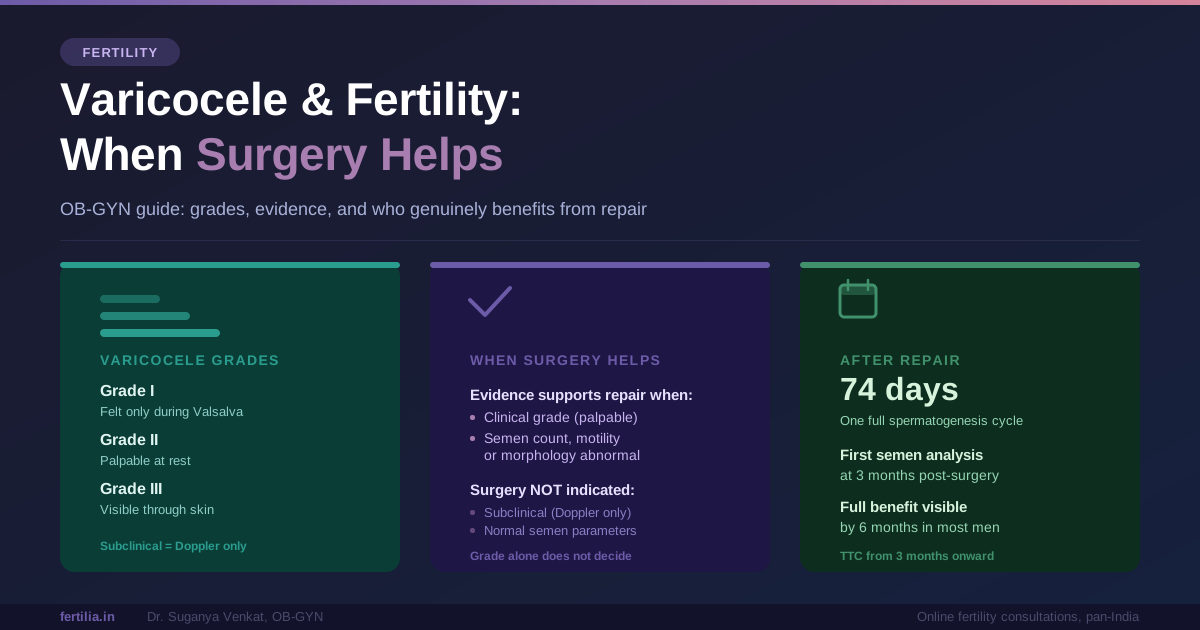
Grade I: The varicocele is not palpable at rest and is only felt when the man performs a Valsalva manoeuvre (bearing down as if straining). You would not know it was there without an examination.
Grade II: Palpable without Valsalva, but not visible through the skin. A clinician or the man himself can feel it on examination.
Grade III: Visible through the scrotal skin without any manoeuvre. When you look, you can see the rope-like veins.
A fourth category worth knowing is subclinical varicocele: found only on scrotal colour Doppler ultrasound, not detectable on physical examination. This distinction is clinically important because the evidence on repair does not apply the same way to subclinical and clinical grades.
Varicoceles occur most commonly on the left side (because the left spermatic vein drains into the left renal vein at a right angle, creating a longer column of blood). Bilateral varicoceles are less common but do occur. A right-sided varicocele in isolation warrants investigation for a secondary cause, such as a mass compressing the vein, before attributing it to the usual anatomy.
How a Varicocele Is Diagnosed
Diagnosis begins with physical examination, ideally by a urologist or andrologist with the man standing and relaxed, then performing Valsalva. A skilled examiner can reliably grade a clinical varicocele this way. Scrotal colour Doppler ultrasound is used to confirm borderline findings, to identify subclinical cases, and to assess blood flow reversal and testicular volume on both sides.
Testicular volume matters because a significantly smaller testicle on the side of the varicocele suggests the condition has been affecting that testicle’s function over time.
If a GP refers the couple to a fertility clinic and a varicocele is noted, the next conversation should be about the semen analysis: what does it show, and is there a pattern that fits with varicocele-related disruption?
The Clinical Question That Drives the Decision
Not every varicocele needs repair. The decision rests on a specific combination of findings:
Clinical varicocele + abnormal semen parameters = the scenario where surgery is supported by evidence.
The evidence base for varicocele repair comes largely from randomised controlled trials in couples where the man had a palpable (clinical) varicocele and his semen analysis showed abnormal count, motility, or morphology. In these couples, Abdel-Meguid and colleagues published an RCT in Fertility and Sterility in 2011 showing that surgical repair improved natural pregnancy rates compared to no treatment, with significantly higher rates of spontaneous conception in the repair group over 12 months. Meta-analyses, including the review by Marmar and colleagues in Human Reproduction in 2007, found similar conclusions: when you select for clinical varicocele plus abnormal semen parameters, repair leads to meaningful improvements in both semen parameters and natural pregnancy rates.
The mechanism makes sense alongside the biology: removing the heat source allows sperm production to recover over successive cycles of spermatogenesis.
When Surgery Is Not the Answer
The evidence picture changes in two situations:
Subclinical varicocele (found only on Doppler, not palpable). Current evidence does not support repair for subclinical varicocele to improve fertility. Randomised trials and systematic reviews have not demonstrated that treating a Doppler-only varicocele improves semen parameters or pregnancy rates, and current reproductive medicine practice guidelines consistently advise against repair for subclinical varicocele in the fertility context. The signal-to-noise ratio in the available evidence is too weak to justify an operation.
Clinical varicocele with normal semen parameters. If the varicocele is palpable but the semen analysis is consistently normal, there is no evidence that repair improves pregnancy rates. The varicocele may not be affecting this man’s sperm production in a meaningful way. Watchful waiting with annual checks is appropriate, and the fertility workup should look at other factors.
If semen parameters are borderline, the right approach is a second semen analysis three months after the first, since sperm parameters have normal biological variability. A single abnormal reading does not establish the baseline. Two consistent analyses three months apart give a much clearer picture.
If your partner’s report has come back showing varicocele alongside abnormal semen parameters and you are trying to make sense of what this means for you as a couple, a video consultation with Dr. Suganya Venkat can help you understand the next steps. Message on WhatsApp at wa.me/919940270499.
What Repair Involves
Varicocele repair, called varicocelectomy, is performed in several ways:
Microsurgical subinguinal approach: Currently the most widely used technique in Indian urology and andrology practices. Using magnification under an operating microscope, the surgeon ligates the dilated veins while preserving the testicular artery and lymphatics. Complication rates (hydrocele formation, arterial injury) are lower with microsurgery than with open or laparoscopic approaches. It is done under spinal or general anaesthesia as a day procedure or with a one-night admission.
Laparoscopic varicocelectomy: Performed under general anaesthesia. Technically feasible, but the microsurgical approach is generally preferred for fertility-related repair because of the precision it allows.
Percutaneous embolisation: A radiological procedure where the dilated vein is blocked from inside using a catheter, done under local anaesthesia. Recovery is faster. Success rates are comparable in experienced centres, though access varies across India.
The choice between approaches depends on the surgeon’s experience, the hospital setting, and the grade and anatomy of the varicocele. A urologist or andrologist with subspecialty training in male fertility is the right person to make that recommendation.
Timelines After Surgery
Sperm production follows a fixed biological clock. A complete cycle of spermatogenesis, from the stem cell to a mature sperm, takes approximately 74 days. On top of that, newly formed sperm travel through the epididymis over roughly 12 more days before they are ready. This means meaningful change in semen parameters takes at least three months after repair, and the full benefit typically shows by six months.
Practical implication: the first semen analysis after surgery is done at three months, not immediately. At six months, most men who will respond to surgery have responded. A repeat semen analysis at that point gives a clearer measure of what the procedure achieved.
Reported outcomes in the evidence base, for the specific population where surgery is indicated, include improvements in total motile sperm count, percentage progressive motility, and sperm morphology. Some men see significant improvement; others see modest improvement; a smaller group see little change despite successful surgical correction, which may indicate that the damage to the testicular environment was longstanding.
If semen parameters remain significantly compromised at the six-month mark despite repair, the fertility plan moves toward assisted reproduction. This is not a failure of the surgery; it is a realistic reading of what repair can and cannot undo. In that scenario, IUI or IVF with ICSI becomes the practical next conversation.
What This Means for the Couple
Couples often come to me after a varicocele diagnosis unsure whose problem to focus on. The answer is that fertility is a couple’s question, and both partners’ health affects the outcome.
While waiting for surgery, or during the months after, the things that support sperm production are the same things that support general health: consistent sleep, stress that is manageable, a diet built around vegetables, dal, dahi, eggs, and whole grains, weight that is stable and not significantly elevated, and avoiding heat to the scrotum (avoiding prolonged hot baths or resting a laptop on the lap for hours daily). These are small adjustments, not a treatment, but they support the environment that spermatogenesis needs.
For women, this period is worth using. Checking her own fertility markers, tracking cycles, taking folic acid, and ensuring her thyroid and iron levels are in order means that when his semen analysis is showing improvement, she is ready too. You can read more about what a complete fertility workup covers for both partners.
There is a real case study on Fertilia of a couple, Kalai and Ganesh, where Ganesh had undergone Grade III varicocele surgery before they joined the program, but his progressive motility remained at 0%. Three months of structured lifestyle work brought his motility from 0% to 33% by the day of their first IUI. The full story is here. It is worth reading for anyone in a similar position.
In Tamil and Hindi
The medical term “varicocele” is used as-is in both clinical and casual conversation across India. Some additional terms you may hear:
| Language | Term used | Notes |
|---|---|---|
| Hindi | varicocele (वेरिकोसील) | Used as-is; sometimes described as “andkosh ki nasein phool jaana” (swelling of testicular veins) |
| Tamil | varicocele (வேரிகோசேல்) | The English medical term is used uniformly |
| Telugu | varicocele | Same |
In Hindi-language searches, the common queries are: varicocele ka ilaj, varicocele surgery ke baad pregnancy, and varicocele ki surgery kab karwani chahiye. This post is written to answer those questions in plain language.
A varicocele diagnosis raises real questions for a couple’s fertility path. If you would like to understand whether surgery is the right next step given the semen analysis and the wider picture, reach out over WhatsApp at wa.me/919940270499. A video consultation is the clearest way to go through the findings together.
FAQ: Varicocele and Fertility
Can a varicocele cause infertility even if the semen count looks normal? If the semen analysis shows normal count, motility, and morphology on two consistent tests, the varicocele is unlikely to be the reason for the fertility difficulty, even if it is palpable. The investigation should look at other factors: ovulation, fallopian tube patency, the woman’s egg reserve. A palpable varicocele with a normal semen analysis does not automatically warrant surgical repair for fertility purposes.
What grade of varicocele is serious enough to need surgery? Grade on its own does not determine whether surgery is indicated. A Grade II varicocele with significantly abnormal semen parameters has a stronger case for repair than a Grade III varicocele with a normal semen analysis. The combination of clinical grade (Grade I, II, or III, palpable on examination) plus documented semen abnormality is the evidence-supported criteria. Subclinical varicocele (found only on Doppler) does not meet this standard.
How much does varicocele surgery cost in India? The cost depends on the surgical approach and the hospital tier. Microsurgical varicocelectomy in a private hospital in India typically ranges from approximately Rs. 40,000 to Rs. 75,000 (multiple Indian health aggregator sites, August 2026). Corporate hospitals may charge higher. Government and public hospitals offer the procedure at significantly lower cost. Percutaneous embolisation is generally priced higher, often Rs. 90,000 or above in centres where it is available. Verify directly with your treating hospital before planning, as costs vary by city and surgeon.
How long after varicocele surgery should we wait before trying to conceive? Give it six months before drawing conclusions about the outcome. The first semen analysis is done at three months to check for early improvement; a clearer picture is available at six months. TTC attempts can begin from around three months post-surgery, as some men see meaningful semen improvement by that point. But many fertility specialists advise the six-month semen analysis before committing to a treatment path, so you are working with accurate numbers.
What if semen parameters do not improve after surgery? Some men do not see meaningful semen improvement even after technically successful repair, particularly if the varicocele was longstanding. In that situation, assisted reproduction is the practical next step. For men with low count but some motility, IUI may be a starting point. For men with very low count, poor morphology, or azoospermia alongside the varicocele history, IVF with ICSI is typically the recommended route. The semen analysis at six months gives the clearest data to make that decision.
Varicocele ki surgery kab karwani chahiye? Yeh ek zaroori sawal hai. Agar varicocele palpable ho (hath se mehsoos ho, andar se) aur semen analysis mein count, motility, ya morphology mein kami ho, toh surgery ke baare mein urologist ya andrologist se baat karna sahi hai. Agar sirf ultrasound mein dikhta hai (subclinical) aur examination mein mehsoos nahi hota, ya semen normal hai, toh philhal surgery ki zaroorat nahi hoti. Semen analysis ek baar aur teen mahine baad karwaiye, phir faisle ke baare mein sochein.
Should both partners be evaluated at the same time as the varicocele workup? Yes. Fertility difficulties almost always involve both partners’ health to some degree. While the varicocele is being assessed and semen parameters are being tracked, the woman’s investigation should run in parallel: ovulation, fallopian tube status, egg reserve, and basic hormonal markers. You can read more about what a full fertility workup involves for both partners. Running the workup together means you have a complete picture before committing to any treatment path, not a partial one.