A semen analysis comes back showing normal count, motility, and morphology. The sperm numbers look fine. The couple has been trying for over a year, or they have had two or three miscarriages without a clear explanation. When I see this pattern, one of the first additional tests I suggest is a sperm DNA fragmentation index.
The standard semen analysis tells you about the number and movement of sperm. It does not tell you anything about the integrity of the DNA packed inside each sperm cell. A sperm can look normal, swim normally, and fertilise an egg, while still carrying significant damage to the genetic material it delivers. This is what sperm DNA fragmentation measures, and it addresses a clinically important gap in what the standard report captures.
This post covers:
- What sperm DNA fragmentation is and how it is tested
- What the numbers mean and where the thresholds lie
- How fragmentation affects natural conception, IVF outcomes, and miscarriage risk
- What can be done, with realistic timelines and expectations
What Is Sperm DNA Fragmentation?
Sperm carry their DNA coiled tightly inside the nucleus, wrapped around proteins called protamines. During sperm production and transit through the male reproductive tract, small breaks can occur in the DNA strands. A single-strand nick can often be repaired by the egg after fertilisation, using the egg’s own DNA repair machinery. A double-strand break is more serious and harder to correct.
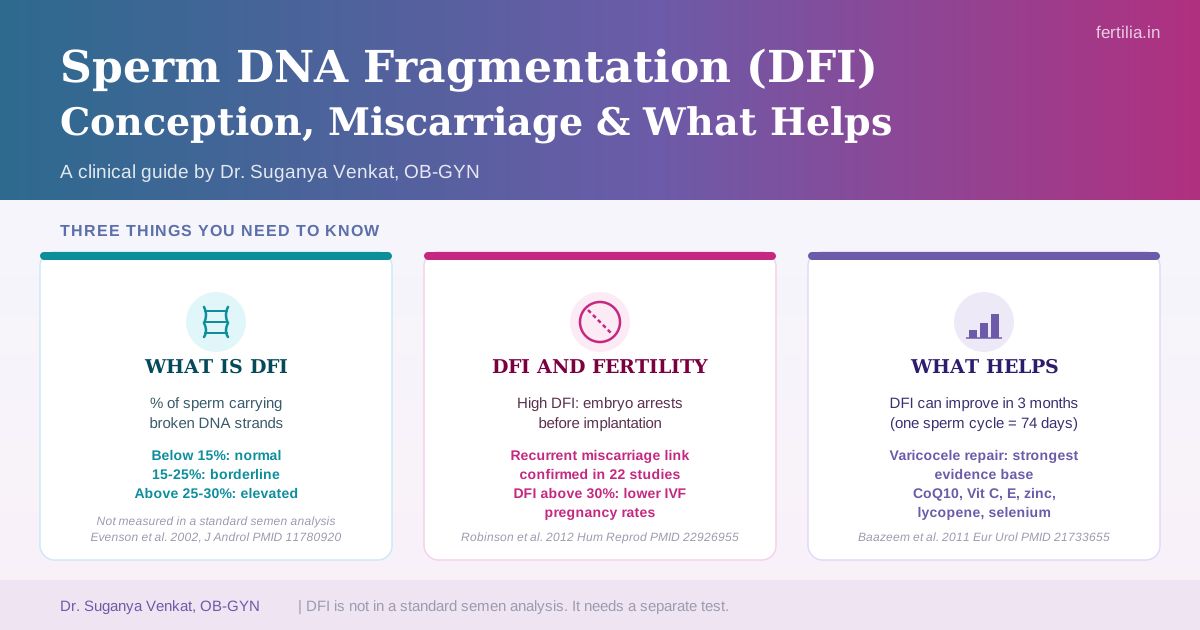
The DNA fragmentation index (DFI) is the percentage of sperm in a sample that carry these breaks. It is expressed as a percentage: a DFI of 20% means 20 out of every 100 sperm in the sample have damaged DNA.
The standard semen analysis, which measures count, motility, morphology, and volume against WHO 2021 reference ranges, does not assess DNA integrity at all. A man with a completely normal semen analysis can have a high DFI. This is why the test is ordered separately, usually when there is unexplained infertility or a history of recurrent pregnancy loss.
Our guide to reading your semen analysis report covers the standard parameters in detail. The DFI goes one step further, to the molecular layer inside the sperm.
How Is the DFI Test Done?
Several laboratory methods can measure sperm DNA damage. The most commonly used in clinical practice are:
SCSA (Sperm Chromatin Structure Assay): Considered the reference standard for DFI testing. A flow cytometer measures how easily sperm DNA can be denatured when exposed to acid. Fragmented DNA denatures more readily. SCSA is well-validated and reproducible across labs, but requires specialised equipment.
TUNEL assay: Detects strand breaks directly by labelling their cut ends with a fluorescent marker. Can be done by flow cytometry or fluorescence microscopy. Widely available at larger fertility labs in India.
SCD (Sperm Chromatin Dispersion) test, also called the Halo test: Measures how much chromatin disperses from sperm nuclei after acid treatment. Sperm with intact DNA produce a large halo of dispersed chromatin; fragmented sperm produce a small halo or none at all. This method is simpler and less expensive than SCSA and is available at more diagnostic labs across Indian cities.
Comet assay: Used mainly in research settings. Measures the extent to which DNA migrates out of the sperm head during gel electrophoresis.
The test requires a fresh semen sample produced by masturbation, usually after 2 to 3 days of abstinence (shorter than the typical 3 to 5 days recommended for a standard semen analysis, for reasons explained in the causes section below). Costs in India range from approximately Rs.2,000 to Rs.5,000 depending on the lab and method.
What the Numbers Mean
DFI thresholds vary slightly depending on the testing method and laboratory. The ranges below are broadly used in clinical practice and apply best to SCSA-based testing:
| DFI Level | Category | Implication |
|---|---|---|
| Below 15% | Normal | Good prognosis for natural conception and assisted reproduction |
| 15 to 25% | Borderline | Natural conception is possible but monthly probability is reduced |
| Above 25 to 30% | Elevated | Significantly impairs natural conception; increases miscarriage risk |
| Above 40% | Very high | Poor prognosis with standard IVF; alternative sperm retrieval strategies apply |
A DFI result is not a diagnosis of infertility by itself. It is one piece of information interpreted alongside the full clinical picture: the female partner’s age, ovarian reserve, the duration of trying, the cause found on investigation, and the complete semen analysis.
What Causes Sperm DNA Damage?
The main underlying mechanism is oxidative stress, specifically excess reactive oxygen species (ROS) in the male reproductive tract. When the antioxidant capacity of seminal fluid cannot neutralise the local ROS load, the DNA inside sperm nuclei accumulates breaks.
Common causes and contributors:
Varicocele: Dilated veins in the scrotum raise scrotal temperature and increase local oxidative stress. Varicocele is the most important surgically correctable cause of elevated DFI. Men with clinical varicoceles typically have significantly higher DFI scores than men without varicoceles, even when their standard semen analysis is near-normal.
Heat exposure: The testes need to be 2 to 3 degrees Celsius cooler than core body temperature for healthy sperm production. Prolonged heat from laptops placed directly on the lap, tight synthetic underwear, long hours of sedentary desk work, occupational heat exposure, and hot baths all raise scrotal temperature and increase oxidative damage.
Infections and inflammation: Prostatitis, epididymitis, and other genital tract infections increase local ROS production. Treating an active infection often improves DFI within one full sperm production cycle.
Smoking: Cigarette smoke is a substantial source of systemic oxidative stress and is consistently associated with higher DFI across the literature.
Excess alcohol: Heavy alcohol intake impairs antioxidant defences. The effect is most consistent at consumption above 14 units per week.
Advanced paternal age: The risk of sperm DNA fragmentation increases gradually from around age 35 and more steeply after 45. This occurs independently of any changes in sperm count or motility.
Obesity: Higher body fat increases systemic oxidative stress and is associated with elevated DFI, particularly with central adiposity.
Prolonged abstinence before the test: Sperm stored in the epididymis for many days accumulate oxidative damage. DFI is typically higher after 5 or more days of abstinence. For the DFI test itself, 2 to 3 days is preferred. If the initial result was obtained after a long abstinence period, repeating the test at the shorter interval is a worthwhile first step before committing to a longer treatment course.
How DFI Affects Your Chances
Natural Conception
After fertilisation, the egg’s own DNA repair machinery (specifically the base-excision repair pathway in the oocyte cytoplasm) can correct a moderate volume of sperm DNA damage. This is why some couples with borderline DFI (15 to 25%) do conceive naturally.
When DFI is consistently above 25 to 30%, the volume of damage exceeds what repair mechanisms can reliably manage. Fertilisation may occur, but the early embryo is more likely to arrest at the cleavage stage before it can implant, or to result in an early pregnancy loss.
Evenson and colleagues (2002, Journal of Andrology, PMID 11780920) demonstrated that a DFI above 27% on SCSA testing was associated with a steep decline in natural conception rates over a 24-month observation period.
Recurrent Miscarriage
This is the implication most frequently missed in standard recurrent pregnancy loss investigations. Workups in India and internationally tend to focus on the woman: antiphospholipid antibodies, parental karyotypes, uterine cavity, thyroid function. The male partner’s DFI is often not checked.
A systematic review and meta-analysis by Robinson and colleagues (2012, Human Reproduction, PMID 22791753) covering 22 studies found that men whose partners had experienced recurrent pregnancy loss had significantly higher DFI scores than fertile controls. The odds of miscarriage were substantially elevated in couples where DFI exceeded the clinical threshold, even when other causes had been excluded.
In any couple with unexplained recurrent pregnancy loss, a DFI test for the male partner is a reasonable addition to the standard investigation. Our post on what tests to get after two miscarriages outlines the full female-side investigation framework; the DFI fills the male-side gap.
IUI (Intrauterine Insemination)
Standard swim-up preparation for IUI does remove some oxidatively damaged sperm and selects for better-motile cells, but the improvement is modest. When DFI is above 25%, the DNA damage is not meaningfully reduced by IUI processing. Moving to IVF-ICSI sooner is generally the better path in this group.
IVF and ICSI
High DFI is associated with higher rates of cycle failure, poorer embryo development past day 3, and lower live birth rates in IVF cycles. Bungum and colleagues (2007, Human Reproduction) found that DFI above 30% was significantly associated with lower pregnancy rates in IVF, with the effect being less marked but still present in ICSI compared to conventional IVF.
ICSI selects a single sperm based on its appearance and motility under the microscope, but DNA integrity cannot be assessed visually. This is why very high DFI still affects ICSI outcomes despite single-sperm selection.
When ejaculated sperm DFI is very high (above 40%) and does not improve with treatment, testicular sperm extraction (TESE) provides an alternative. Sperm collected directly from the testis have not yet passed through the epididymis, where much of the oxidative transit damage occurs. A study by Greco and colleagues demonstrated that using testicular sperm in ICSI cycles for men with high ejaculatory DFI significantly improved fertilisation rates and embryo development compared to using ejaculated sperm. An andrologist or urologist performs the TESE procedure.
If you are deciding whether to move to IVF and DFI is one of the factors on the table, the OB-GYN decision framework for IVF walks through how male factor findings fit into that decision.
If your semen report is normal but the fertility picture is not adding up, or if you have had repeated early losses, DFI is worth asking your doctor about. You can also talk it through with me directly:
I work online with couples across India and can help you make sense of your results in the context of your full clinical picture.
What Can Be Done: Treatment and Timelines
The sperm production cycle takes approximately 70 to 74 days. This means that changes in DFI from lifestyle modifications, antioxidant supplementation, or varicocele repair become measurable at a retest roughly 3 months after the intervention begins. A baseline DFI test, an intervention, and a repeat test 3 months later is a practical and informative sequence.
Treat the Underlying Cause First
If a varicocele is present on examination or ultrasound, microsurgical varicocelectomy by a urologist is the most evidence-supported intervention. A meta-analysis by Baazeem and colleagues (2011, European Urology, PMID 21733620) found that varicocelectomy consistently improved semen parameters and DFI in men with clinical varicoceles. This is the intervention with the strongest evidence base.
If a genital tract infection is identified (prostatitis, epididymitis), appropriate antibiotic treatment typically results in measurable DFI improvement within one spermatogenesis cycle.
Lifestyle Changes
These are low-risk, additive to any other treatment, and supported by consistent evidence across multiple studies:
- Stop smoking entirely (this is the single largest lifestyle-related DFI driver)
- Reduce alcohol intake to under 14 units per week
- Avoid placing laptops on the lap for extended periods; use a desk or tray
- Switch to loose, breathable cotton underwear
- Maintain a healthy weight, particularly addressing central adiposity
- Take standing or walking breaks during long sessions of desk work
- Avoid hot baths and prolonged sauna use during treatment
Antioxidant Supplementation
The rationale is direct: oxidative stress is the mechanism, antioxidants are its counter. Multiple Cochrane systematic reviews by Showell and colleagues (on antioxidants for male subfertility) have consistently found that antioxidant supplementation improves sperm parameters including DFI compared to placebo, though the evidence on live birth rates as an endpoint is still maturing.
Commonly used antioxidants with reasonable clinical evidence:
- CoQ10: 200 to 300 mg daily
- Vitamin C: 500 to 1,000 mg daily
- Vitamin E: 400 IU daily
- Zinc: 15 to 25 mg daily
- Lycopene: found in cooked tomatoes and tomato-based preparations (rasam, tomato curry, sambar)
- Selenium: found in eggs, seafood, and sesame seeds
From an Indian food perspective, antioxidant-rich options that support this pathway include amla (exceptionally high in vitamin C), walnuts, pumpkin seeds, sesame (til), and cooked tomatoes. These food choices are worthwhile additions to the diet but work alongside supplement therapy when DFI is clinically elevated, not as replacements for it.
An andrologist or urologist typically advises on the specific regimen and dose based on the baseline DFI result and any other findings. Most protocols run for at least 3 months before the DFI is retested.
Optimise Abstinence Period
If the initial DFI result was obtained after 5 or more days of abstinence, repeating the test with 2 to 3 days of abstinence can produce a meaningfully lower result in some men. This is a simple, cost-free first check before committing to a longer treatment course.
Testicular Sperm for IVF When DFI Remains High
If DFI remains above 40% after 3 to 6 months of intervention and IVF-ICSI is the planned next step, testicular sperm retrieval (TESE) is the most effective way to bypass the epididymal oxidative environment. This decision is made together by the andrologist, the IVF clinician, and the couple. It adds a minor surgical step but can substantially improve IVF outcomes in this specific group. It is not the first step, and it does not apply to men with moderate DFI, only to those with very high DFI that has not responded to other interventions.
For more on lifestyle and supplement approaches to improving overall sperm parameters, including the evidence behind the most commonly recommended supplements, see the evidence-based guide to sperm count and motility.
A Note on Working With Your Team
High DFI is managed across a team. The andrologist or urologist evaluates for varicocele, manages the surgical option, and guides supplementation. The IVF clinician makes decisions about cycle protocol, ICSI, and whether TESE sperm is indicated. My role, working with couples on fertility care at Fertilia, is to coordinate the full picture, help interpret results across both partners, and walk couples through the decision points.
If your partner’s semen report shows borderline or abnormal parameters and DFI has not yet been tested, that is a reasonable next investigation to request. The guide to borderline semen analysis results explains what to do when the standard report gives ambiguous numbers, and DFI is often the natural follow-up question.
FAQ: Sperm DNA Fragmentation
What is a normal DFI score?
A DFI below 15% is considered normal and associated with good fertility outcomes. DFI between 15% and 25% is borderline; natural conception is possible but monthly probability is lower. DFI above 25 to 30% is elevated and warrants investigation and treatment before continuing natural attempts or starting an IVF cycle. These thresholds apply to SCSA-based testing; other methods use slightly different reference ranges, so ask your lab which system they use.
Is the DFI test available in India?
Yes. The SCD (Halo) test and TUNEL assay are available at most fertility labs and larger diagnostic centres in Indian cities. SCSA-based testing is available at reference labs and major fertility hospitals. A fertility clinician or urologist can order the test from a fresh semen sample. Costs range from approximately Rs.2,000 to Rs.5,000 depending on the lab and the method used.
Can DFI improve with treatment?
Yes, and sometimes substantially. Because sperm production takes 70 to 74 days, measurable improvements from lifestyle changes, antioxidant therapy, or varicocele repair are typically seen at a retest 3 months after the intervention begins. The degree of improvement depends on the underlying cause, the initial DFI level, and which interventions are used.
Why does a normal semen analysis not show DFI?
The standard semen analysis measures count, motility, morphology, and volume. These are observable properties of the sperm population. DNA integrity is a molecular property inside the sperm nucleus that requires a separate laboratory technique to detect. A sperm can be normally formed and motile while carrying broken DNA strands. The two tests are complementary and serve different diagnostic questions.
Should we keep trying naturally if DFI is elevated?
This depends on the DFI level and how long you have been trying. If DFI is borderline (15 to 25%) and you have been trying for less than 6 months (under 35) or 3 months (over 35), starting an antioxidant and lifestyle programme and continuing natural attempts during the 3-month treatment window is a practical approach. If DFI is above 30% and you have been trying for over a year, the clinical conversation usually shifts toward IVF-ICSI on the current cycle while running the supplement programme for a follow-up cycle. Timing depends on your full picture, including the female partner’s age and ovarian reserve.
Does DFI affect which fertility treatment is recommended?
It can. For DFI above 25 to 30%, ICSI is generally preferred over conventional IVF. For very high DFI (above 40%) that does not improve after 3 to 6 months of treatment, testicular sperm retrieval (TESE) combined with ICSI is an option that bypasses the epididymal oxidative environment. The andrologist and IVF team make this decision together based on the DFI level, previous cycle history if any, and the couple’s overall situation.
What is sperm DNA fragmentation called in Hindi?
The clinical term used in Indian fertility centres is “sperm DNA fragmentation” in English transliteration. In Hindi, the approximate phrase is “shukranu DNA vikhandanat” or simply “shukranu DNA damage” (Roman transliteration only; native Devanagari script pending Dr. Suganya sign-off). If your fertility report shows a DFI percentage, that is what this refers to.
If your fertility workup is at the stage where DFI is part of the discussion, or if recurrent early losses have not yet had a clear cause identified, a structured review of both partners’ findings is the productive next step. The complete preconception guide covers the full workup framework for couples who are starting that process.
Talk to Dr. Suganya Venkat on WhatsApp
She works with couples across India through online consultations and can help you map out what the DFI result means in the context of your full clinical picture, and which step to take next.