The conversation about fertility preservation tends to centre on women. Egg freezing gets the headlines. Ovarian reserve tests have their own guides and cost breakdowns. The male side of the equation gets overlooked until someone actually needs it, at which point the questions come quickly: how much does it cost, how does it work, and is my local clinic equipped to do this properly?
Sperm freezing, the medical term is sperm cryopreservation, is one of the simpler fertility procedures available. It involves no anaesthesia, no injections, no hormone stimulation, and no recovery time. The cost is a fraction of what egg freezing or IVF involves. And yet, for the men who need it, getting clear answers ahead of time matters enormously.
This guide covers who should consider sperm freezing, what the process involves, what it realistically costs at fertility clinics across India in 2026, and what to ask before committing to a clinic.
What this post covers:
- Who benefits from sperm freezing and when timing matters
- The step-by-step process at a fertility clinic
- Realistic cost breakdown for India in 2026
- What happens to sperm in long-term storage
- Questions to ask before choosing a clinic
- Frequently asked questions
If you are also looking at the cost of a complete fertility workup, our fertility workup cost guide covers the full panel including semen analysis as part of the picture.
Who Should Consider Sperm Freezing?
Sperm freezing is not only for men with fertility concerns. Many men who freeze sperm have entirely normal semen parameters. They freeze because life is unpredictable, and having a stored sample provides a safety net.
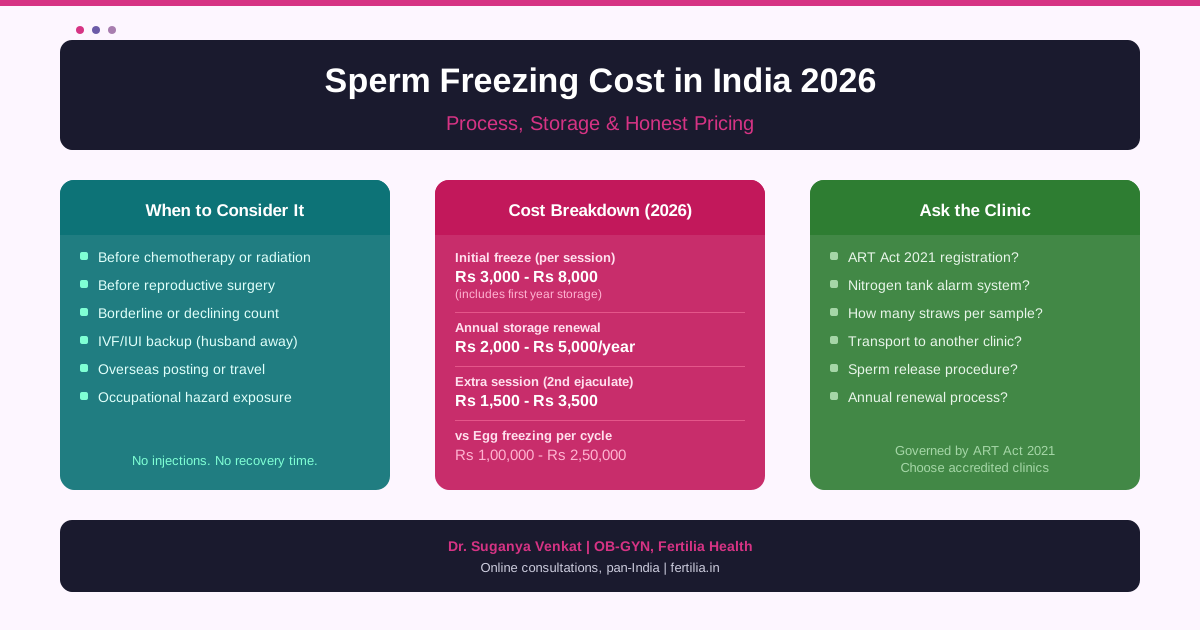
The main reasons men freeze sperm in India fall into five categories.
Before cancer treatment. Chemotherapy and radiation can damage sperm-producing cells in the testes. Some treatments cause temporary reduction in sperm production; others can cause permanent infertility. Freezing a sample before treatment begins is standard practice at oncology centres that coordinate with fertility clinics. The Practice Committee of the American Society for Reproductive Medicine identifies this as a priority: any male patient starting gonadotoxic therapy who may want children in the future should be offered sperm cryopreservation before treatment (Practice Committee, ASRM. Fertility and Sterility. 2019; PMID 31843073).
Before surgery involving the reproductive tract. This includes vasectomy reversal discussions (where freezing ahead of the procedure provides a backup), varicocele surgery, orchiopexy, or any procedure where testicular blood supply may be temporarily compromised. Having frozen sperm available removes some of the pressure from the surgical outcome.
When sperm parameters are borderline or declining. A man whose semen analysis shows a downward trend over two to three samples may choose to freeze at the point when parameters are still within the usable range. Sperm quality can continue to decline with age, certain medications, or untreated conditions. Banking sperm when the count and motility are at their best gives a couple more options later. Our borderline semen analysis guide explains how to read those numbers in context.
For couples undergoing IVF or IUI where the husband may not be present. Egg retrieval happens on a schedule the ovaries dictate, not the calendar. A husband working overseas, travelling for a medical reason, or simply anxious about producing a sample on demand on the day of retrieval can freeze sperm in advance. Most IVF clinics accept frozen samples for fertilisation alongside freshly retrieved eggs.
For occupational or logistical reasons. Armed forces postings, extended offshore work, or jobs with environmental exposures to chemicals or radiation can all make sperm banking a practical precaution. Some men freeze sperm before a prolonged period of absence simply to ensure a sample is available if a couple decides to try for a child while the man is away.
The Step-by-Step Process
Sperm freezing at a fertility clinic or sperm bank in India typically takes one to two hours from arrival to completion. There is nothing invasive about the process.
Step 1: Semen analysis before freezing. Most clinics perform a basic semen analysis on the day of collection, or ask for a recent one if you already have it. This confirms that there is enough viable sperm to make freezing worthwhile. For men whose count is extremely low (severe oligozoospermia, under one million sperm per mL), the clinic may need to discuss whether surgical sperm retrieval is a better route for their specific situation.
Step 2: Sample collection. The sample is produced by masturbation in a private collection room at the clinic, after two to five days of abstinence. Abstinence for this window optimises both sperm count and motility. You bring the collection container directly to the laboratory.
Step 3: Laboratory preparation. The sample is assessed for volume, count, and motility before processing. A cryoprotectant is then added. This is a chemical solution that protects sperm cells from ice crystal formation during freezing, which would otherwise rupture the cell membranes and destroy motility.
Step 4: Freezing and storage. The processed sample is loaded into small sealed straws (typically 0.5 mL each) or vials, then frozen. Most modern facilities use vitrification, an ultra-rapid flash-freezing technique, though controlled-rate slow-freezing is also used for sperm and produces reliable results. Sperm are more resilient to cryopreservation than eggs, which is why the process is simpler and less expensive. The frozen straws are stored in liquid nitrogen at minus 196 degrees Celsius.
Step 5: Storage ongoing. The straws remain in the liquid nitrogen tank for as long as you require storage. In India, the ART Regulation Act, 2021 governs sperm banks and sets standards for consent documentation, facility accreditation, and record-keeping. Reputable clinics issue a storage receipt and provide annual renewal options.
How many samples should you freeze? For routine backup purposes, one to two ejaculates (each producing multiple straws) is usually sufficient. For men banking before chemotherapy, or where parameters are already low, a reproductive specialist may suggest three to five collections over a week to maximise the number of viable straws stored.
What Does Sperm Freezing Cost in India? (2026)
Sperm cryopreservation is significantly less expensive than egg freezing. The process is shorter, requires no medications, and the laboratory work is less resource-intensive.
Costs across India vary depending on the clinic type (large fertility chain versus a smaller independent andrology lab), location (metro versus tier-2 city), and what is included in the initial package.
Initial freeze (per session): Rs 3,000 to Rs 8,000. This typically includes the semen analysis, cryoprotectant preparation, vitrification, and storage for the first year. At large fertility chains (Nova IVF, Cloudnine, Indira IVF, Manipal Fertility), the initial freeze tends to sit at Rs 5,000 to Rs 8,000. At independent andrology laboratories or smaller fertility centres, you may find it at Rs 3,000 to Rs 5,000.
Annual storage renewal: Rs 2,000 to Rs 5,000 per year after the first year. This varies by clinic and by how many straws are stored. Some clinics charge per straw or per vial; others charge a flat annual fee regardless of straw count.
Additional collection sessions: If you want to freeze multiple ejaculates on separate days, each additional session is typically Rs 1,500 to Rs 3,500 at most clinics (lower than the initial session, since the analysis and setup costs are absorbed in the first visit).
Post-thaw analysis (at time of use): This is usually billed separately when sperm is thawed for use, at Rs 500 to Rs 1,500. Some clinics include it in the IVF or IUI cycle cost.
Total realistic cost for most couples:
- One session, first year included: Rs 3,000 to Rs 8,000
- Two sessions (recommended for IVF backup), first year: Rs 5,000 to Rs 12,000
- Ongoing annual storage: Rs 2,000 to Rs 5,000 per year
Always confirm these figures directly with the clinic before you visit, as pricing structures vary and some clinics separate out individual components in their invoices. Prices listed above are representative ranges based on June 2026 data from Indian fertility centres.
For comparison, the egg freezing process (which requires hormone stimulation, monitoring scans, and egg retrieval under sedation) costs Rs 80,000 to Rs 2,50,000 per cycle in India, as covered in our egg freezing cost guide. Sperm freezing is in a different cost category entirely.
What Happens to Sperm During Long-Term Storage?
One question that comes up often is whether sperm quality degrades over years of storage.
The research on this is reassuring. Sperm frozen at minus 196 degrees Celsius are in a state of metabolic arrest. There is no ongoing cellular activity, no ageing, and no chemical degradation at that temperature. Studies have reported successful pregnancies using sperm stored for 20 years or longer, with no difference in fertilisation rates, embryo quality, or birth outcomes compared to shorter storage periods.
What matters more than storage duration is what happens at the point of thawing. Post-thaw motility is consistently lower than pre-freeze motility, typically recovering around 50 to 70 percent of the pre-freeze progressive motility. This is expected and factored into fertility treatment planning. An IVF laboratory uses a technique called ICSI (intracytoplasmic sperm injection, where a single sperm is injected directly into an egg) with frozen sperm, which means even a reduced post-thaw count is usually workable. Our how to increase sperm count guide explains what parameters matter for different fertility treatment pathways.
The post-thaw recovery rate varies by individual. Men with very high pre-freeze sperm counts tend to have more viable sperm available after thawing, even if the percentage motility drops. Men with borderline parameters before freezing may find post-thaw numbers are tighter, which is why freezing multiple samples is recommended when parameters are already low.
What to Ask Before Choosing a Clinic
Not all facilities that offer sperm freezing have the same level of andrology laboratory infrastructure. Before committing, it is worth asking a few direct questions.
Is the clinic or sperm bank accredited under the ART Regulation Act, 2021? Accredited facilities are required to meet specific standards for laboratory conditions, nitrogen tank maintenance, consent documentation, and record-keeping. Ask for the registration number if you want to verify.
How are nitrogen tank levels monitored? A reliable clinic monitors tank nitrogen levels continuously or at minimum daily. An automated alarm system that alerts staff if nitrogen levels drop is standard at well-run facilities. Ask whether they have a backup storage system in case of equipment failure.
How many straws are stored per ejaculate, and how is the sample divided? Understanding this helps you plan. If one ejaculate produces 10 straws and each IVF cycle uses 2 to 3 straws, you have several attempts covered from a single session.
What is the process for retrieving stored sperm? You will need to understand how to authorise a release of your sample for use, what consent documentation is required, and whether the clinic where the sperm is stored is the same as where IVF or IUI will be performed (if not, there will be a transport process).
Can sperm be transported to another city or country? For couples who may relocate or change clinics, it is important to know the clinic’s transport policy. Sperm is typically transported in a dry-shipper (a sealed container with an internal nitrogen-soaked material that maintains temperature without liquid nitrogen). Ask about the cost and logistics.
Questions about sperm freezing or male fertility? Dr. Suganya Venkat consults online (pan-India, video call) and can help you and your partner understand the right steps for your specific situation. Chat on WhatsApp.
What Does the ART Act Say About Sperm Banks?
In India, sperm freezing is regulated under the Assisted Reproductive Technology (Regulation) Act, 2021 (ART Act) and the ART Rules, 2022. Sperm banks must be registered with the National Registry of ART Clinics and Banks, now under the National ART and Surrogacy Registry (NASR). Any facility that collects, stores, or supplies sperm for assisted reproduction must hold a valid registration certificate.
This matters because it creates a legal framework around consent, confidentiality, record-keeping, and storage standards. The Act also sets out how long a facility must maintain records and what happens to stored samples if the facility closes or if the man withdraws his samples.
For the couple, the practical implication is to choose a registered facility and retain your consent documents. These documents specify that only you (and your nominated partner) can authorise use of the stored sperm, providing important safeguards.
Frequently Asked Questions
How long can sperm be stored in India? The ART Regulation Act, 2021 permits sperm storage for up to ten years at a time, with extensions possible in certain circumstances (such as long-term cancer survivorship). In practice, sperm can survive indefinitely at minus 196 degrees Celsius once frozen, as there is no biological ageing at that temperature. The legal limit relates to consent renewal periods, not to biological viability.
Does freezing sperm reduce the chances of a successful pregnancy? Post-thaw sperm motility is typically lower than pre-freeze motility. However, this is accounted for in treatment planning. When frozen sperm is used for IVF with ICSI, which is the standard approach, the fertilisation rates are comparable to fresh sperm cycles in most studies. The success of the overall cycle depends more on egg quality, embryo development, and endometrial receptivity than on whether sperm was fresh or frozen.
Can I freeze sperm at home? No. Sperm must be frozen in a clinical laboratory using medical-grade cryoprotectant and stored in precisely monitored liquid nitrogen tanks. There are no validated home-freezing kits. If you live far from a clinic, some fertility centres have courier collection programmes, where a sample is collected into a specialised kit and transported quickly to the laboratory, but this has strict time constraints and lower viability rates than clinic collection. In-clinic collection remains the gold standard.
What is the difference between sperm freezing and a sperm bank? A sperm bank stores sperm from many donors for use by couples who need donor sperm. Sperm freezing (autologous cryopreservation) is when a man freezes his own sperm for his own future use. Most large fertility clinics offer both services under the same facility. When you contact a clinic about freezing your own sperm, you are asking about autologous sperm cryopreservation, not donor banking.
Does age affect the value of freezing sperm? Unlike eggs, sperm are produced continuously throughout a man’s life, so there is no fixed window for freezing. That said, sperm DNA fragmentation does increase with age, as does the rate of certain genetic mutations in sperm. For couples who anticipate delaying childbearing significantly, banking sperm in a man’s early-to-mid thirties, when DNA integrity is typically highest, is a reasonable consideration. The decision should be based on specific circumstances, not a general age threshold.
For more on this, read our guide on Sperm DNA Fragmentation (DFI). I have a low sperm count. Is it still worth freezing? Yes, in most cases. Even if the count is low, if motility is present, sperm can still be frozen and used for IVF with ICSI. The laboratory will assess whether viable sperm can be recovered post-thaw and advise you on how many straws to aim for. For very severe oligozoospermia (under one million sperm per mL), a reproductive specialist may recommend also evaluating whether surgical sperm retrieval (TESA or PESA) is needed for backup.
What if we never end up using the frozen sperm? This is worth thinking through before freezing. If the couple conceives naturally or through other means and the stored sperm is not needed, most clinics will either discard the sample with your signed consent or continue storage for as long as you pay the annual renewal fee. Some couples keep the sample as a long-term safety net even after conceiving naturally.
Planning IVF or IUI and wondering about sperm freezing as a backup? Dr. Suganya Venkat works with couples across India through video consultations and can help you and your partner understand what to prepare for. Start a conversation on WhatsApp. If you are preparing for IVF or IUI, Dr. Suganya’s IVF Support program helps you and your partner get ready.
The Short Version
Sperm freezing is a low-cost, low-burden procedure that is worth knowing about before you need it. The process takes an hour. The initial cost in India is Rs 3,000 to Rs 8,000 for the first session, with annual storage running Rs 2,000 to Rs 5,000 thereafter. There are no injections, no recovery period, and no disruption to daily life.
The right time to consider it is before a situation arises where freezing is no longer possible: before chemotherapy begins, before surgery, before a long overseas posting, or before borderline sperm parameters decline further. Having a sample in storage does not commit you to anything. It simply keeps a door open.
If you are currently going through a fertility workup or planning an IVF or IUI cycle, our semen analysis guide explains what each parameter on a report means, and the IVF cost guide covers what to expect from the overall cycle cost when frozen sperm is used.
For questions specific to your situation, including whether sperm freezing makes sense at your current stage, Dr. Suganya sees couples online across India.