A woman sends me a message. She has been trying to conceive for 14 months. Her gynaecologist has run blood tests, an ultrasound, an HSG. Her husband has done a semen analysis. The results are mostly normal, with a borderline AMH and a cycle that ovulates but not quite on schedule. Her gynaecologist suggested trying for a few more months.
She is not sure if staying with the same doctor is the right call, or whether she should book directly at an IVF clinic she has seen advertised, or whether there is someone else entirely she should be seeing.
This question, in some form, is one of the most common I receive. Not a lack of effort, not a refusal to engage with the healthcare system. Just genuine uncertainty about what different doctors can and cannot offer, and what the right sequence looks like.
This post answers that directly.
What a Gynaecologist Handles for Infertility
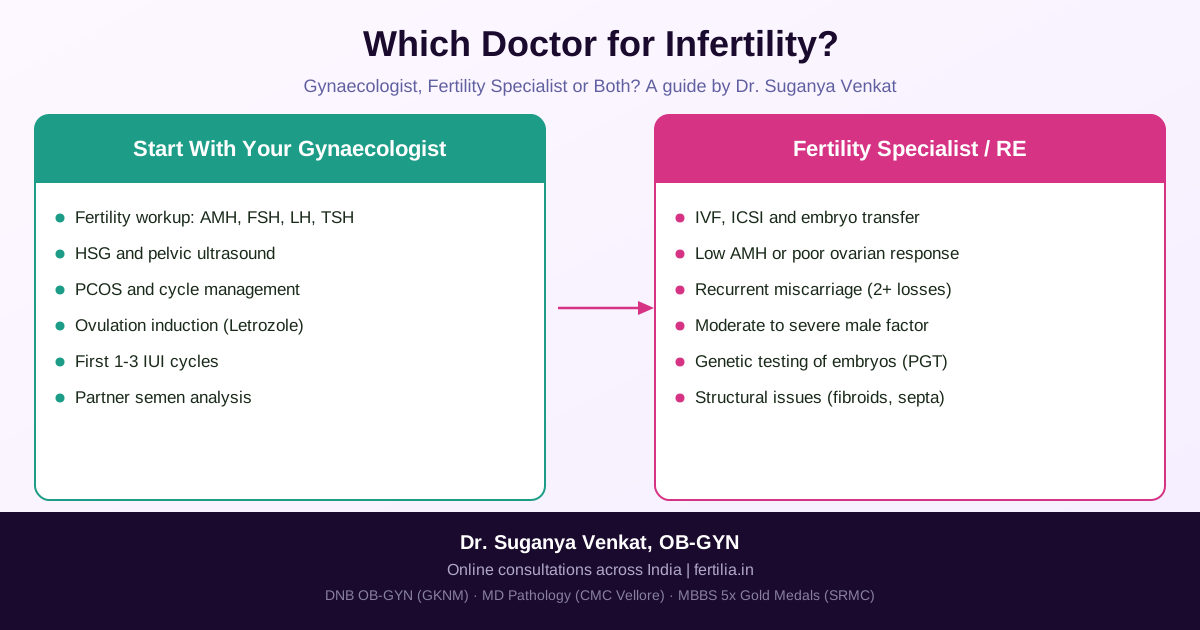
A gynaecologist with experience in infertility is the right starting point for most women. The initial workup does not require a specialist setup. A competent gynaecologist can do all of the following:
The basic fertility workup:
- Day-3 blood panel: FSH, LH, estradiol (these assess how hard the brain is working to drive the ovaries and whether ovarian reserve is adequate for the stage of the cycle)
- AMH: a marker of ovarian reserve, interpreted alongside the antral follicle count on ultrasound
- Prolactin and TSH: rules out prolactin elevation and thyroid disorders, both common and treatable causes of cycle disruption
- Partner semen analysis, sent to a standard andrology lab
Structural assessment:
- Pelvic ultrasound: checks uterus, ovaries, and antral follicle count
- HSG (hysterosalpingography): assesses tubal patency; the HSG report guide explains how to read the results
PCOS and cycle management:
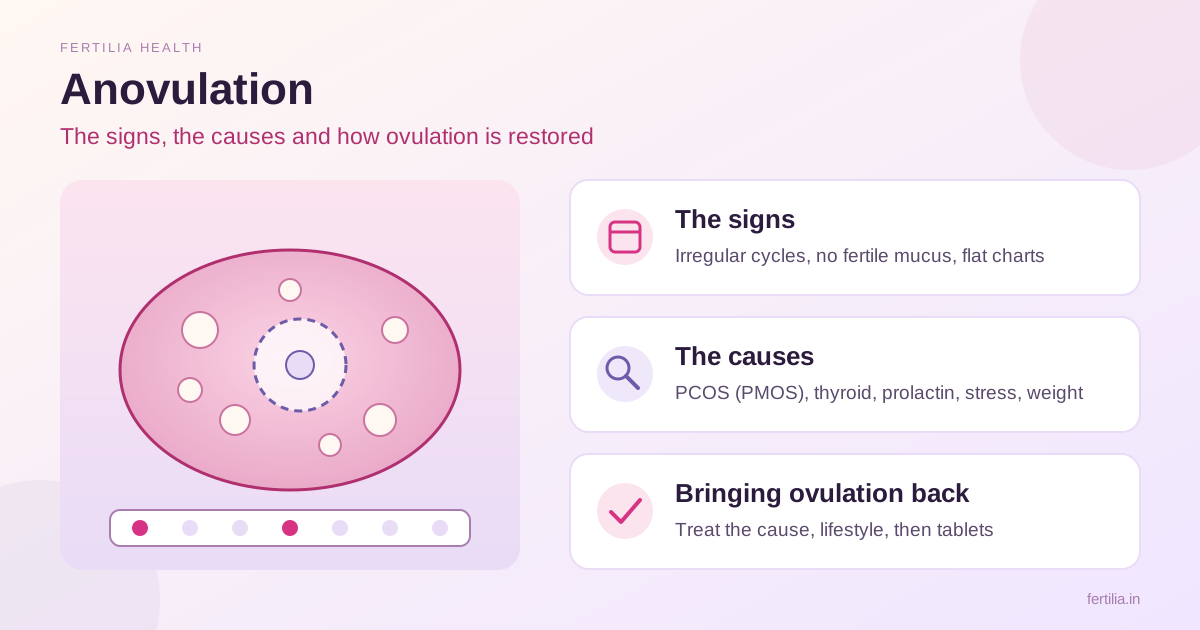
- Diagnosing PCOS using Rotterdam Criteria (two of three: irregular cycles, clinical or biochemical hyperandrogenism, polycystic ovary morphology on ultrasound per Azziz et al. 2009)
- Thyroid optimisation, metformin for insulin resistance, lifestyle guidance
- Monitoring whether ovulation is happening and whether it is happening at a predictable time
First-line fertility treatment:
- Ovulation induction: Letrozole is the current first-line for anovulatory infertility in PCOS (Teede et al. 2023 International Evidence-Based PCOS Guideline, PMID 37580861), followed by Clomiphene; both are prescribed and monitored at the gynaecologist level
- Folliculometry: serial ultrasound to track follicle growth, confirm ovulation, and time intercourse
- IUI (intrauterine insemination): for mild male factor, cervical factor, or unexplained infertility after ovulation is confirmed; most gynaecologists who see fertility patients regularly perform IUI; see IUI cost and what to expect for a full breakdown
If you are under 35, have been trying for under 12 months, have no known structural or hormonal abnormality, and have not yet completed this workup, a gynaecologist is exactly where you should be.
What a Reproductive Endocrinologist or Fertility Specialist Adds
The term “reproductive endocrinologist” (RE) describes a gynaecologist with subspecialty training specifically in infertility and reproductive hormone disorders. In India, this subspecialty pathway is less formally structured than in the United States, where it requires a separate board certification. In practice, an Indian gynaecologist who runs a full IVF clinic with a dedicated embryology lab, who manages hundreds of IVF cycles annually, and who has clinical depth in advanced reproductive medicine, is functionally equivalent to what a Western healthcare system would call an RE.
The title on the door matters less than the scope of services and the experience behind them. What you are looking for is what the clinic can actually do.
A fertility specialist or RE handles situations that go beyond standard ovulation induction and IUI:
IVF, ICSI, and frozen embryo transfer (FET): These require a full IVF lab with incubators, trained embryologists, cryopreservation equipment, and protocols built from managing a substantial volume of cycles. A standalone gynaecology practice without an embryology setup cannot offer this. IVF cost in India 2026 explains what a realistic IVF cycle costs and what those numbers include.
Complex ovarian reserve cases: Very low AMH, a very low antral follicle count, or a poor response to standard ovulation induction in a previous cycle warrants a specialist who regularly manages poor responder protocols. Stimulation strategies for poor responders require tailored protocols that go beyond standard induction tables. See the low AMH and pregnancy guide for how this is approached clinically.
Recurrent pregnancy loss (RPL): Two or more miscarriages calls for investigation that goes beyond the standard fertility workup. Antiphospholipid antibody panel, parental karyotype, uterine cavity assessment, and selective thrombophilia screening are what ASRM and RCOG guidelines recommend. The recurrent miscarriage test guide explains which tests matter and what they are looking for.
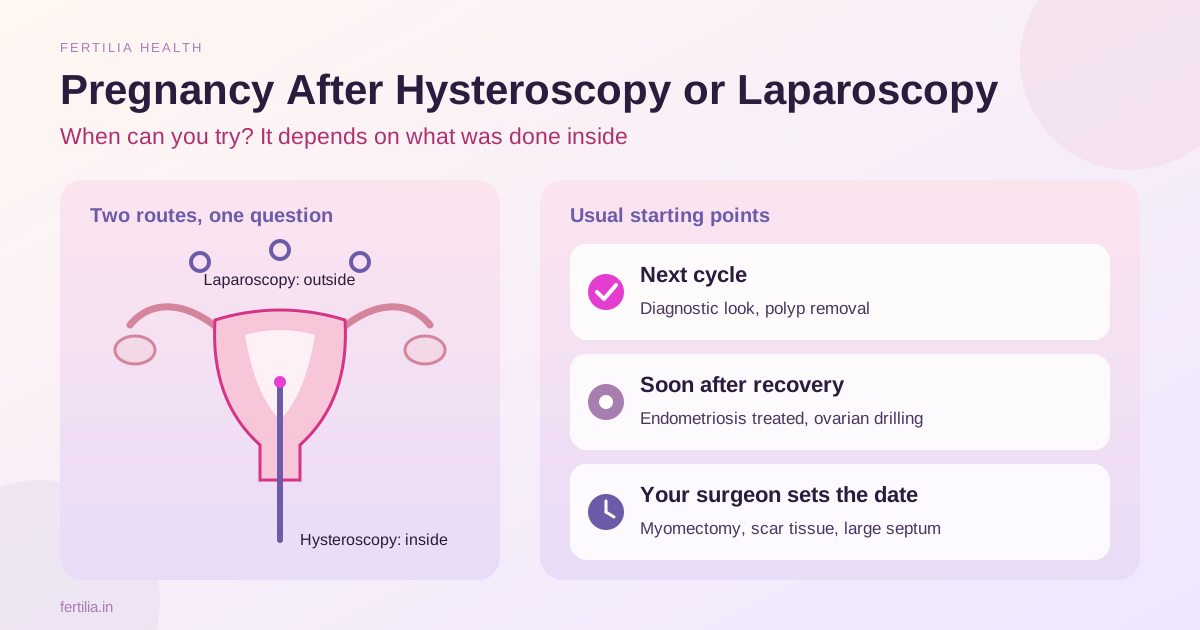
Structural issues needing surgical correction: Submucosal fibroids, uterine septa, intrauterine adhesions (Asherman syndrome), or significant tubal disease may need hysteroscopy or laparoscopy before fertility treatment can work. A fertility specialist coordinates the surgical and medical management within a treatment plan.
Moderate to severe male factor infertility: When the semen analysis shows significantly low count, severely impaired motility, or very poor morphology, ICSI (injecting a single sperm directly into the egg) improves outcomes meaningfully. ICSI requires an IVF lab. The fertility specialist also coordinates with an andrologist or urologist when indicated.
Preimplantation genetic testing (PGT-A, PGT-M): If there is a known heritable genetic condition in the family, or a history of chromosomal losses, embryos can be biopsied and tested before transfer. This requires an IVF lab with PGT capabilities and a genetic laboratory partnership.
Donor egg, donor sperm, or surrogacy programs: These are managed only at fertility centres with the appropriate legal framework, counselling infrastructure, and medical setup.
What a Medical Endocrinologist Does
A medical endocrinologist specialises in metabolic and endocrine conditions: thyroid disorders, diabetes, severe insulin resistance, adrenal conditions, and pituitary abnormalities. They are not a fertility specialist and are not the primary doctor for infertility management.
You may be referred to a medical endocrinologist in specific situations: your thyroid is significantly abnormal and not responding to standard levothyroxine adjustment, prolactin is persistently elevated and a pituitary MRI has flagged a lesion that needs specialist management, or insulin resistance is severe enough to warrant dedicated metabolic input alongside fertility treatment.
For most women with PCOS-related insulin resistance, mild thyroid abnormalities, or moderately elevated prolactin, these are managed directly by the gynaecologist or fertility specialist. A medical endocrinologist is a collaborating specialist in specific situations, not a separate first stop for infertility.
The India-Specific Picture
One thing worth clarifying: in India, the distinction between a “gynaecologist” and a “fertility specialist” or “RE” is not drawn the same way as in Western healthcare systems.
Many of India’s most experienced fertility physicians are gynaecologists who trained in reproductive medicine and built full IVF clinics. Their outcomes, protocols, and expertise are comparable to what a formally-titled RE offers. Conversely, a gynaecology clinic that has recently added an IVF service without a robust embryology team may not deliver the same standard of care, regardless of the title used.
The practical indicators to evaluate a fertility specialist or clinic in India:
- Does the clinic have an in-house embryology lab, or does it send samples to an external lab?
- What is the annual IVF cycle volume? A minimum of 100 to 150 cycles per year is a reasonable threshold for meaningful clinical experience.
- Does the team include a dedicated embryologist and access to an andrologist?
- Does the clinic explain the treatment plan in terms you can understand and evaluate?
These factors matter more than the degree on the wall.
[Not sure which specialist fits your situation? Dr. Suganya can review your workup results and help you decide on the right next step. Message on WhatsApp: wa.me/919940200330]
When to Escalate: The Timeline
The standard guidance from WHO, ASRM (American Society for Reproductive Medicine), and ESHRE:
- Under 35 with no known diagnosis: Try naturally for 12 months, then seek a formal infertility evaluation. This does not mean trying in silence: it means doing the basic workup, having a gynaecologist review it, and returning if 12 months pass without success.
- Age 35 to 37: 6 months of trying, then seek a formal evaluation.
- Age 38 and above: Begin evaluation at the outset. The 12-month waiting period was not designed for this age group.
The 12-month guideline applies to women with no known diagnosis. It was not designed as a waiting period for women who already have findings on their workup.
Escalate sooner when any of the following applies:
- Basic workup has flagged a specific finding (low AMH, blocked tube, significant semen analysis abnormality, uterine anomaly, or polycystic ovaries with long cycles not responding to initial treatment)
- First-line ovulation induction has not worked after 3 to 4 cycles
- There has been a previous ectopic pregnancy
- There is a history of two or more miscarriages
- Endometriosis has been confirmed or is strongly suspected
- Conception is being attempted after treatment for another condition (cancer, premature ovarian insufficiency)
The complete fertility workup guide explains what each test is measuring and how to interpret the results. The IVF decision framework covers when moving to IVF makes clinical sense versus continuing with IUI cycles.
Why the Handoff Is Often Not Clear
A practical challenge in the Indian healthcare system: referrals are not automatic. A gynaecologist may manage a case for 18 months without explicitly signalling that the time has come for a fertility specialist. There is no built-in handoff, and many women do not know to ask for one.
The questions worth asking your gynaecologist directly:
- What does my workup suggest is the most likely reason I have not conceived?
- What would you recommend trying next, and how many cycles before we reassess?
- At what point would you refer me to a fertility specialist or IVF centre?
Clear answers to these three questions tell you whether you are in the right place or whether a specialist consultation is overdue. If these questions are not answered in a way you can understand and evaluate, that is itself useful information.
Where an Online Consultation Fits
An online consultation is not a replacement for a treating gynaecologist. It cannot perform the HSG, the folliculometry, or the IVF cycle.
What it offers: an independent clinical perspective on the workup you already have. When test results are back, a treatment plan has been suggested, or a referral has been offered, a second opinion by an OB-GYN can help you understand whether the findings have been interpreted correctly, whether the proposed treatment is appropriate for your specific situation, and what questions to take back to your treating doctor.
For more on this, read our guide on When to Get a Second Opinion for Fertility or PCOS. The ₹399 consultation with Dr. Suganya is available across India by video call. You can bring your AMH, semen analysis, HSG report, cycle monitoring results, and any other workup you have completed. You leave with a clearer picture of where you stand and what the right next step is. Many women use it before deciding to escalate to a fertility specialist, or as a check-in when their current treatment plan is not moving forward.
You can also download the Getting Pregnant Guide for a full breakdown of what the first year of trying should look like and what the fertility workup covers step by step.
How Infertility Doctors Are Searched Across India
Women across India look for the right doctor in their own language and phrasing. For reference:
| Language | Common search term |
|---|---|
| Hindi | “banjhpan ka doctor,” “prajanan visheshagya,” or “IVF doctor” |
| Tamil | “fertility doctor,” “IVF doctor,” and transliterated queries about not being able to conceive |
| Telugu | “fertility specialist,” “santhaana visheshagya” (approximate), commonly “IVF doctor” |
| Kannada | “fertility specialist,” “IVF specialist” |
In practice, most searches across all languages use English terms or transliterated versions: “IVF doctor,” “infertility doctor,” “fertility specialist near me,” “which doctor for not getting pregnant.” The question is the same regardless of the language it is asked in.
For the related question about PCOS specifically or irregular periods, the PCOS and irregular periods doctor guide covers that scenario in detail.
Practical Summary
- Basic workup not done yet: Start with a gynaecologist. AMH, Day-3 FSH, LH, TSH, prolactin, partner semen analysis, pelvic ultrasound, and HSG are the first layer.
- Workup done, treatment under way: Stay with your gynaecologist through 3 to 4 cycles of ovulation induction or IUI if the findings are relatively straightforward.
- Specific finding flagged (low AMH, tubal issue, significant male factor, structural abnormality): Ask your gynaecologist for a referral to a fertility specialist sooner rather than after a full year.
- Age 38 or older: Begin with a fertility specialist rather than working up slowly over 12 months.
- Two or more miscarriages: A fertility specialist with RPL experience is the appropriate next stop.
- IVF is being discussed: This requires a full fertility specialist setup with an IVF lab and embryology team. A standard gynaecology clinic cannot provide this.
[Have your workup results and want a clear second opinion on what they mean for your plan? Dr. Suganya offers online consultations across India. Message on WhatsApp: wa.me/919940200330]
For that second opinion as part of an ongoing plan, see Dr. Suganya’s Fertility program.
Frequently Asked Questions
When should I stop trying with a regular gynaecologist and see a fertility specialist?
If you are under 35 with no known diagnosis, try for 12 months before a formal infertility evaluation. If the basic workup has already been done and shows specific findings, or if first-line treatment has not worked after 3 to 4 cycles, a fertility specialist referral is appropriate without waiting for the full 12 months. For women 35 and older, escalation timelines are shorter.
Is a reproductive endocrinologist the same as a fertility specialist in India?
Not always in terms of formal certification, but the two often overlap functionally in India. Look for a gynaecologist with an active IVF program, an in-house embryology lab, and a meaningful annual cycle volume. These are more reliable indicators of specialist-level fertility care than the title.
What can a fertility specialist do that my regular gynaecologist cannot?
IVF, ICSI, frozen embryo transfer, poor responder protocols, recurrent pregnancy loss investigation, preimplantation genetic testing, and donor programs all require a specialist setup with an IVF lab and embryology team. These services are not available in a standard gynaecology practice.
Do I need a medical endocrinologist for PCOS or thyroid issues?
Usually not as a first step. PCOS and mild thyroid issues are managed by the gynaecologist or fertility specialist in most cases. A medical endocrinologist becomes relevant when thyroid management is complex, prolactin elevation has a pituitary cause, or insulin resistance is severe enough to need specialist metabolic input alongside fertility treatment.
How do I find a reliable fertility specialist or IVF clinic in India?
Look for an in-house embryology lab, a reasonable annual IVF cycle volume (100 to 150 cycles is a rough minimum for meaningful experience), clear communication about the treatment plan and success rate methodology, and access to an andrologist for male factor cases. Name and hospital branding matter less than these structural features.
I am already seeing a local gynaecologist. Can I also have a consultation with Dr. Suganya?
Yes. An online consultation works alongside your treating doctor, not as a replacement. It is most useful when you want an independent review of your workup results, want to understand whether the current treatment plan is appropriate for your specific situation, or are deciding whether to escalate to a fertility specialist. The ₹399 video consultation is available across India.
My husband and I have been told we have unexplained infertility. Which doctor should we see?
Unexplained infertility means the standard workup has not found a specific cause. Next steps depend on age and how long you have been trying. Under 35, with fewer than 12 months of treatment, continuing with a gynaecologist through ovulation induction and IUI cycles is reasonable. Older, or after 12 months of treatment without success, a fertility specialist referral is appropriate. The IVF decision framework explains when IVF adds value compared to continuing IUI cycles.