“Doctor, my urine culture came back positive, but I don’t have any symptoms at all. Do I really need antibiotics?”
I get this question at almost every booking visit, right after the routine urine test comes back. Women are often surprised, sometimes a little alarmed, that a test they did not expect anything from has come back abnormal when they feel completely fine. It is a fair question, and the answer is one of the few places in pregnancy medicine where “no symptoms” does not mean “no treatment.”
Urinary tract infection in pregnancy is common, and pregnancy genuinely changes how it is managed. The rules that apply outside pregnancy, wait and see if it is mild, treat only if it is bothersome, do not apply here. I’m Dr. Suganya Venkat, an OB-GYN with over 15 years of experience, and this is one of the most frequent reasons women message me mid-pregnancy asking whether what they are taking is actually safe for the baby. This guide covers why that routine urine test matters, which antibiotics are safe at each stage of pregnancy, and the warning signs that mean you need same-day care rather than a wait-and-watch approach.
What this post covers:
- Why pregnancy makes UTI more likely and more consequential
- Asymptomatic bacteriuria: the infection with no symptoms that still needs treatment
- Symptoms of a typical bladder infection in pregnancy
- Safe antibiotics by trimester, in a clear table
- Pyelonephritis: the kidney infection that needs urgent care
- Prevention that works during pregnancy
- What this is called in Tamil, Hindi, and Telugu
Why pregnancy changes the picture
Pregnancy hormones, mainly progesterone, relax the smooth muscle lining the ureters (the tubes carrying urine from the kidneys to the bladder). At the same time, the growing uterus presses against the ureters, particularly on the right side. Both changes slow the normal downward flow of urine. Slower flow means bacteria that would ordinarily be flushed out have more time to multiply and travel upward toward the kidneys.
This is why a bladder infection that would stay a bladder infection outside pregnancy has a meaningfully higher chance of progressing to a kidney infection during pregnancy if it is left untreated. It is also why urine culture, not just a dipstick test, is a standard part of early antenatal screening everywhere, including at Fertilia. We are not looking for symptoms. We are looking for bacteria.
Asymptomatic bacteriuria: why we treat an infection you cannot feel
Asymptomatic bacteriuria means a urine culture shows significant bacterial growth, above the laboratory threshold that defines a true infection, in a woman who has no burning, no urgency, no pain, nothing at all. Outside pregnancy, this is usually left alone. Treating bacteria that are not causing any problem, in a non-pregnant woman, has not been shown to help and mainly adds unnecessary antibiotic exposure.
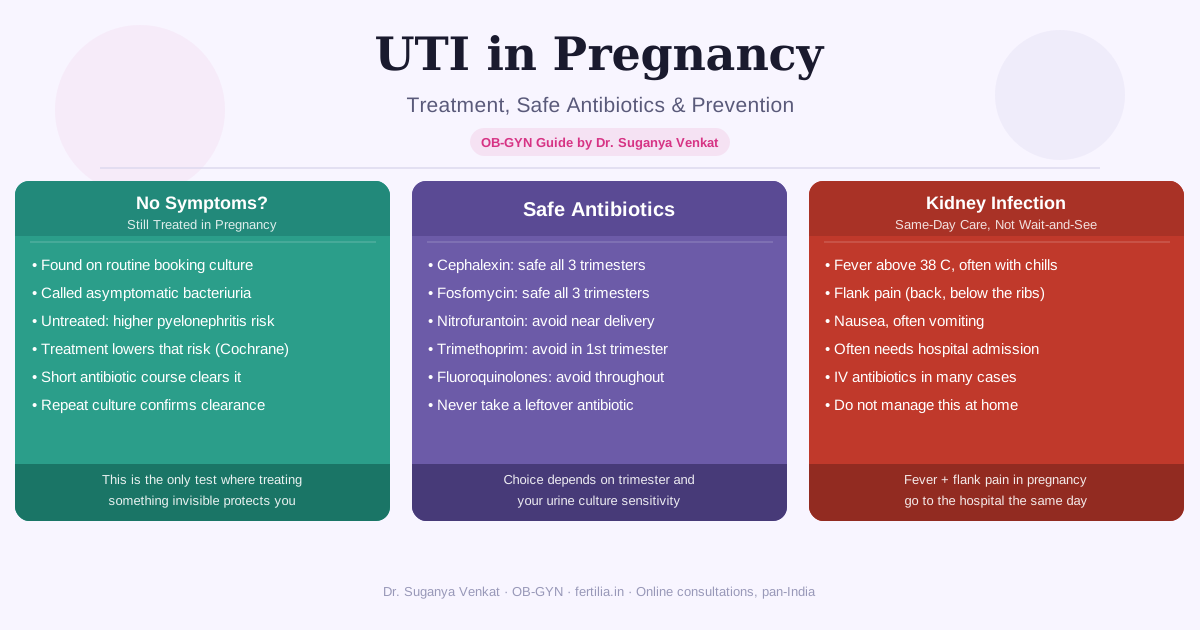
Pregnancy is the exception, and it is an important one. Left untreated, asymptomatic bacteriuria in pregnancy has a substantially higher chance of progressing to pyelonephritis than the same finding outside pregnancy, for the anatomical reasons above. A 2019 Cochrane review of the evidence found that antibiotic treatment of asymptomatic bacteriuria in pregnancy meaningfully reduces the risk of pyelonephritis and of low birth weight compared with no treatment (Smaill and Vazquez, 2019, Cochrane Database Syst Rev, PMID 31765489). That reduction in risk is the entire reason the routine booking urine culture exists, and why we treat a result that is, on paper, invisible to the woman carrying it.
What this means in practice:
- Your urine culture at booking (usually done in the first trimester) screens for this
- If it comes back positive, treatment is recommended even though you feel completely well
- A short course of a pregnancy-safe antibiotic clears it in the large majority of cases
- A repeat culture after treatment confirms it has cleared
If your report shows bacterial growth and your doctor has prescribed antibiotics, this is not an overreaction to a minor finding. It is the single test in pregnancy where treating something you cannot feel prevents something you very much would feel.
Symptomatic UTI: what it feels like
When a bladder infection in pregnancy does cause symptoms, they look much like they do outside pregnancy, with the added complication that early pregnancy itself causes more frequent urination, which can make it harder to tell what is normal and what is infection.
Symptoms that suggest a UTI, not just normal pregnancy frequency:
- A burning or stinging sensation while passing urine (the most reliable symptom, since pregnancy alone does not cause this)
- Urgency that comes on suddenly, along with only passing a small amount each time
- A feeling that the bladder has not fully emptied
- Cloudy or unusually strong-smelling urine
- Mild lower abdominal or pelvic discomfort, distinct from round ligament pain (which is usually sharp and related to movement, on one or both sides)
- Occasionally, streaks of blood in the urine
Ordinary pregnancy frequency, needing to urinate more often simply because the growing uterus presses on the bladder, does not come with burning, pain, or a change in how the urine looks or smells. If those features are present, get a urine test rather than assuming it is “just pregnancy.”
Safe antibiotics for UTI in pregnancy, by trimester
This is usually the part that worries women the most: is the antibiotic itself safe for the baby? The good news is that several well-studied antibiotics are considered safe throughout pregnancy, and the choice mainly depends on your trimester, allergy history, and what your urine culture shows the bacteria are sensitive to.
| Antibiotic | First trimester | Second trimester | Third trimester | Notes |
|---|---|---|---|---|
| Cephalexin (cefalexin) | Safe | Safe | Safe | Considered usable at any stage of pregnancy; a common choice throughout, including close to delivery |
| Amoxicillin-clavulanate | Safe | Safe | Safe | Widely used alternative when culture sensitivity supports it |
| Fosfomycin (single 3 g dose) | Safe | Safe | Safe | One-dose convenience; does not reach adequate kidney tissue levels, so it is used for bladder infection, not kidney infection |
| Nitrofurantoin | Generally used | Generally used | Avoid from 36-38 weeks onward, during labour, or if delivery is expected soon | The concern near term is a rare risk of neonatal red blood cell breakdown (haemolysis), particularly relevant if the baby has G6PD deficiency |
| Trimethoprim (including cotrimoxazole) | Avoid where an alternative exists | Used if needed | Used if needed | Trimethoprim blocks folate metabolism; first-trimester exposure has been linked to a higher rate of neural tube defects (Hernández-Díaz et al., 2001, Am J Epidemiol, PMID 11384952) |
| Fluoroquinolones (ciprofloxacin, norfloxacin, ofloxacin) | Avoid | Avoid | Avoid | Not used in pregnancy at any stage due to effects on developing cartilage seen in animal studies |
| Tetracyclines | Avoid | Avoid | Avoid | Affect developing teeth and bone; not used in pregnancy |
A few practical points sit alongside this table. First, a urine culture sent before starting antibiotics, whenever that is possible without delaying treatment, means the choice can be matched to what the bacteria are actually sensitive to rather than a general best guess. Second, complete the full course even if you feel better after a day or two: stopping early leaves surviving bacteria behind and raises the chance of the infection returning or, worse, of it having been suppressed rather than cleared. Third, please do not take a leftover antibiotic from a previous illness or one a family member has at home. The right choice in pregnancy depends specifically on your trimester and your culture result, and taking the wrong one is not a shortcut, it is a real risk.
International treatment guidelines from the Infectious Diseases Society of America (Gupta et al., 2011, Clin Infect Dis, PMID 21292654) inform how these antibiotics are chosen for uncomplicated infection generally, with the pregnancy-specific restrictions above layered on top by your obstetric team.
If you have a positive urine culture in pregnancy, or symptoms you are unsure about, I would rather you check with me than wait it out. You can reach me directly: WhatsApp +91 99402 70499.
Pyelonephritis in pregnancy: the warning signs that need same-day care
Pyelonephritis is a kidney infection, meaning the bacteria have travelled up from the bladder to one or both kidneys. In pregnancy, this is treated as a genuine medical emergency, not a more severe version of a routine bladder infection.
The features that distinguish pyelonephritis from a simple bladder infection:
- Fever, usually above 38°C, often with chills or shivering
- Flank pain, meaning pain in the back or side, just below the rib cage, on one or both sides (this is different from the lower, central pelvic pressure of a bladder infection)
- Nausea and often vomiting
- May still include the burning and frequency of a lower UTI as well
Pyelonephritis in pregnancy carries a real risk of complications, including preterm labour and, in more severe cases, maternal sepsis, which is why acute pyelonephritis during pregnancy is generally managed with hospital admission and, often, intravenous antibiotics rather than an oral course at home (Jolley et al., 2012, J Matern Fetal Neonatal Med, PMID 22725624).
If you are pregnant and you develop fever with back or flank pain, please do not wait for your next scheduled antenatal visit and do not try to manage it with paracetamol and rest at home. This combination needs same-day assessment, and if you cannot reach your own doctor quickly, go to the nearest hospital.
Prevention that helps during pregnancy
You cannot fully prevent UTI in pregnancy, the hormonal and mechanical changes are simply part of how pregnancy works, but several practical steps genuinely lower the risk:
- Drink water through the day. Aim for pale yellow urine rather than dark or concentrated. Tender coconut water, buttermilk (chaas), and plain water all count.
- Do not delay urinating. Holding urine for long stretches gives bacteria more time to multiply in the bladder. This matters more in pregnancy, when bladder emptying is already less efficient.
- Urinate after intercourse, within about 30 to 60 minutes, to help clear bacteria that may have been pushed toward the urethra.
- Wipe front to back after using the toilet, to keep bacteria from the rectal area away from the urethral opening.
- Wear cotton underwear and avoid staying in a wet swimsuit or sweaty clothing for long periods, particularly in humid weather.
- Attend your booking urine culture and any repeat testing your doctor recommends. This is the single most effective prevention measure available, because it catches asymptomatic bacteriuria before it becomes symptomatic infection or progresses further.
- If you have gestational diabetes, good blood sugar control reduces UTI risk, since higher glucose in the urine supports bacterial growth. Our gestational diabetes guide covers this in detail.
If you have had more than one UTI in this pregnancy, or you had recurrent UTIs before becoming pregnant, mention this at your next antenatal visit. Some women benefit from more frequent urine culture monitoring through the pregnancy rather than only at booking.
What is UTI in pregnancy called in Tamil, Hindi, and Telugu?
| Language | Term | Meaning |
|---|---|---|
| Tamil | கர்ப்ப காலத்தில் சிறுநீர் பாதை தொற்று (karppa kaalathil siruneer paadhai thoru) | Urinary tract infection during pregnancy |
| Hindi | गर्भावस्था में मूत्र मार्ग संक्रमण (garbhavastha mein mutra marg sankraman) | Urinary tract infection in pregnancy |
| Hindi (symptom) | पेशाब में जलन (peshab mein jalan) | Burning on urination |
| Telugu (approximate) | garbha samayamlo mutra naala sankramana | Urinary tract infection during pregnancy (Roman transliteration) |
Whichever term your family uses at home, this is the same condition, and the treatment approach in this guide applies regardless of the language you searched in.
Frequently Asked Questions
Is it safe to take antibiotics for a UTI during pregnancy?
Yes, several antibiotics are well established as safe in pregnancy, including cephalexin, amoxicillin-clavulanate, and fosfomycin, all usable across every trimester. Nitrofurantoin is generally used safely in the first and second trimesters but is avoided from around 36 to 38 weeks and close to delivery. Fluoroquinolones and tetracyclines are avoided throughout pregnancy. Your doctor will choose based on your trimester, allergy history, and urine culture result. Do not self-medicate, and always finish the full prescribed course.
Why do I need treatment if I have no symptoms at all?
This is asymptomatic bacteriuria, and it is treated in pregnancy specifically because untreated bacteria in the urine carry a meaningfully higher risk of progressing to a kidney infection during pregnancy than they do outside it. This is the reason a routine urine culture is done at your booking visit even before any symptoms appear.
Can a UTI in pregnancy harm the baby?
An untreated or poorly treated UTI that progresses to kidney infection (pyelonephritis) is associated with a higher risk of preterm labour. This is exactly why prompt treatment matters, and why even asymptomatic bacteriuria is not left alone in pregnancy. A UTI that is identified and treated appropriately, whether or not it ever caused symptoms, is a manageable and common part of prenatal care, not a reason for alarm.
How do I know if my UTI has become a kidney infection?
The two features to watch for are fever, usually above 38°C, and flank pain, meaning pain in the back or side just below the rib cage. These often come with nausea or vomiting. This combination, in pregnancy, needs same-day medical assessment. A simple bladder infection, by contrast, causes burning, frequency, and lower pelvic discomfort without fever or back pain.
Is nitrofurantoin safe in pregnancy?
Nitrofurantoin is generally considered a reasonable option in the first and second trimesters. It is avoided from around 36 to 38 weeks of pregnancy, during labour, or when delivery is expected soon, because of a theoretical risk of red blood cell breakdown in the newborn, particularly relevant if the baby has G6PD deficiency. Your doctor will choose a different antibiotic, such as cephalexin, if you are close to your due date.
What should I do if I keep getting UTIs during this pregnancy?
Mention it to your doctor rather than treating each episode as unrelated. Recurrent infection in pregnancy sometimes means more frequent urine culture monitoring through the remaining weeks, and it is worth reviewing hydration, urination habits, and hygiene practices together. If you had recurrent UTIs before pregnancy as well, our recurrent UTI guide covers the underlying causes and prevention options in more depth, most of which remain relevant, with pregnancy-safe adjustments, during pregnancy too.
Can I take cranberry juice or home remedies instead of antibiotics?
No, not once a urine culture confirms infection or significant bacterial growth. Home measures like good hydration support comfort, but they do not clear an established bacterial infection, and in pregnancy the stakes of leaving it untreated are higher than outside pregnancy. If your culture is positive, whether or not you have symptoms, antibiotics are the appropriate treatment. For more general guidance on UTI symptoms and home support alongside treatment, see our UTI in women guide.
UTI in pregnancy, whether it shows up as symptoms or only on a routine culture, is one of the most common things I manage in antenatal care at Fertilia, and it is very treatable. If you have a positive urine test, symptoms you are unsure about, or fever with back pain, please reach out rather than waiting: WhatsApp +91 99402 70499. For a broader guide to what to expect and monitor through pregnancy, the comprehensive pregnancy care guide is a good next read, and our pregnancy resource guide covers hygiene and infection prevention alongside the rest of antenatal care.