Turning over in bed at 2 a.m. should not require a strategy. But if you are in the second half of pregnancy and a sharp, dragging ache in your pelvis wakes you every time you shift position, you already know that is not how it works anymore.
Getting out of a car, walking up stairs, or standing on one leg to step into a pair of trousers is suddenly a small calculation: which movement will set it off, and how long will the ache take to settle. Many women describe it as “my hips have given up,” or “something clicked and never clicked back,” or simply “a pain in my lower pelvis that nobody warned me about.”
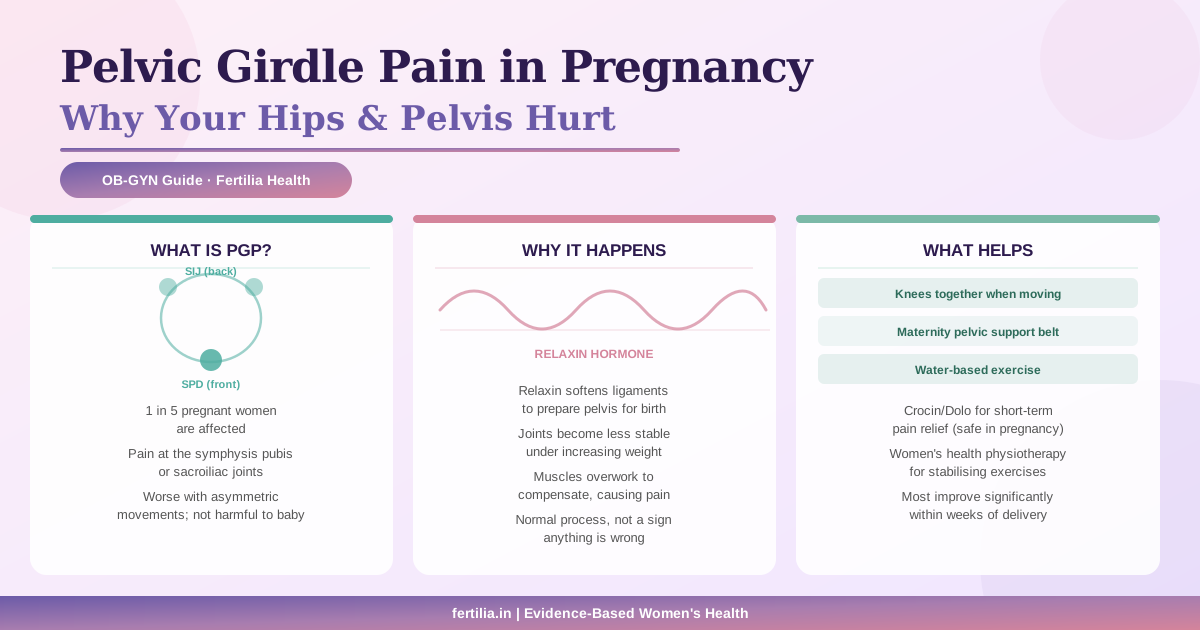
This is pelvic girdle pain (PGP), and it affects roughly one in five pregnant women (Wu et al., Eur Spine J, 2004, PMID 15338362). It is not imagined, it is not “normal discomfort you just have to accept,” and there are specific things that help.
This post covers what pelvic girdle pain is and how it differs from ordinary lower back pain; the relaxin mechanism behind it; the difference between symphysis pubis dysfunction (SPD) and sacroiliac joint pain; activity changes that actually reduce strain; safe relief options during pregnancy; and when to ask for a physiotherapy referral.
What Is Pelvic Girdle Pain?
Your pelvis is a ring, not a single bone. It is made up of three bones connected by three joints: the two sacroiliac joints at the back (where the sacrum meets the ileum on each side) and the symphysis pubis at the front (where the two pubic bones meet). Firm ligaments hold all three joints stable.
Pelvic girdle pain is pain at one or more of these joints. The European Guidelines on Pelvic Girdle Pain define it as pain experienced between the posterior iliac crest and the gluteal fold, near the sacroiliac joints, with or without radiation down the back of the thigh.
Two specific subtypes are worth knowing about:
Symphysis Pubis Dysfunction (SPD) is pain at the front of the pelvis, at or around the pubic bone. Women describe it as burning, sharp, or grinding between the legs, worse when the legs are apart: getting out of bed, stepping over a threshold, climbing stairs one leg at a time.
For more on this, read our guide on Round Ligament Pain. Sacroiliac Joint Pain is pain at the back of the pelvis, around the “dimples” just above the buttocks, sometimes radiating into the buttock or upper thigh. Worse with twisting, rolling over in bed, standing on one leg, or walking uneven ground.
Many women have pain at both sites at the same time. The distinction still matters because the modifications that help differ slightly depending on which joint is generating the most symptoms.
Ordinary lumbar back pain in pregnancy sits higher, in the spinal column above the pelvis, and relates more to postural changes as the abdomen grows. PGP originates at the pelvic joints themselves. Both can coexist, and both respond to similar overall management, but when the pain centres on the pubic bone or the posterior dimples rather than the lower spine, PGP is the more accurate description.
Why It Happens: The Relaxin Effect
In pregnancy, your body produces a hormone called relaxin. It rises sharply in the first trimester (peaking at around 10 to 14 weeks), produced initially by the corpus luteum and later by the placenta. Its purpose is to prepare your pelvis for birth by softening the ligaments that hold the pelvic joints together.
In a non-pregnant pelvis, the symphysis pubis moves less than 2 millimetres under load. With the influence of relaxin, that movement increases. The sacroiliac joints become more mobile too. This is a normal, necessary adaptation.
The problem is that the pelvis is built to be stable. It transfers the weight of your spine to your legs with every step. When the ligaments that provide that stability loosen, the muscles surrounding the pelvis (the pelvic floor, transversus abdominis, gluteals, and hip muscles) have to work much harder to compensate. When those muscles cannot keep up with the extra demand, the pelvis moves more than it should under load, and pain follows.
Layered on top of this: a growing uterus shifts your centre of gravity forward. By the third trimester, total body weight has increased by 10 to 14 kg. The mechanical picture becomes clear. PGP is not a sign that anything is wrong with the pregnancy. It is a mechanical pain from a normal hormonal change meeting an increasing physical load across the second and third trimester.
SPD vs Sacroiliac Joint Pain: Identifying Your Pattern
Understanding which part of the pelvis is generating your pain helps you target the right modifications.
If your pain is mostly at the front (SPD):
- You feel it above the pubic bone or between your legs
- Worse when legs are apart (stepping over a threshold, going up stairs one leg at a time, turning to get out of the car)
- Worse when lifting one leg (putting on trousers, stepping into a bath)
- Sometimes a clicking or grinding sensation at the front
If your pain is mostly at the back (sacroiliac joint pain):
- You feel it around the posterior dimples, in the buttock, or down the back of one or both thighs
- Worse with twisting (reaching behind you, turning over in bed)
- Worse when standing on one leg for any length of time
- Sometimes mistaken for sciatica; PGP usually does not extend below the knee, while true sciatica often does
A simple clinical test is the Active Straight Leg Raise (ASLR): lying flat, try to raise one straight leg about 20 centimetres off the ground. If the leg feels very heavy, difficult to lift, or causes pain in the pelvis, it suggests reduced load transfer across the pelvis. If gentle manual compression of the sides of your pelvis (which a physiotherapist or your doctor can apply) makes the test feel easier, a pelvic support belt is likely to help.
When Does PGP Start?
PGP can begin as early as the first trimester (relaxin peaks at 10 to 14 weeks), but most women notice it from 18 to 24 weeks onwards, as the uterus grows and the mechanical load across the pelvis increases. Symptoms often worsen through the third trimester as the baby descends.
The timing through the day matters. PGP is typically worst after activity and at the end of the day, and better with rest. This load-dependent pattern is the key: managing how load is distributed across your pelvis (not just managing the pain after the fact) is the primary treatment lever.
For most women, PGP improves significantly within the first few weeks to months after delivery, as relaxin falls and the ligaments return to their usual tension. A smaller proportion of women continue to experience symptoms beyond six months postpartum, which is where early postpartum physiotherapy matters.
Activity Modifications That Reduce Strain
These are small changes in how you move. None require special equipment. They work by reducing asymmetric load across the pelvic joints.
In bed at night:
- Sleep with a pillow between your knees, hips, and ankles. A full-length body pillow makes this easier and supports the abdomen at the same time.
- When turning over, keep your knees together and roll your whole body as a single unit rather than twisting. Think of it as log-rolling: hips and shoulders move at the same time.
- Get out of bed by rolling onto your side first, then swinging both legs off together (legs together, not one at a time), then pushing up from the side-lying position.
Getting dressed:
- Sit on the edge of the bed to put on underwear, trousers, or salwar. Do not stand on one leg to step in.
- The same applies to shoes and socks: sit down, cross one ankle over the opposite knee, and dress from a stable seated position.
In and out of the car:
- Sit down in the seat first, then swing both legs in together, keeping your knees together throughout the movement. A plastic bag on the seat helps you pivot.
- Reverse the process to get out: swing both legs out first, then stand.
Stairs and steps:
- Take stairs step-together-step (bring the second foot up to the same step before taking the next) rather than alternating legs in a normal stride.
- Hold the railing. Use the less painful leg to lead.
Lifting and carrying:
- Avoid carrying weight on one side only. Two bags of equal weight are better than one heavy bag.
- Avoid carrying older children on one hip where possible.
- Bend at the knees with a straight back; do not twist and lift at the same time.
Walking:
- Take smaller strides than usual. Wide strides increase the movement across the symphysis pubis.
- Avoid walking on sloped ground, sand, or uneven surfaces for extended periods.
Pelvic girdle pain during pregnancy is manageable with the right support. If symptoms are limiting your sleep or daily activities, reach out to Dr. Suganya directly on WhatsApp for a video consultation across India.
Safe Relief Options During Pregnancy
Paracetamol is the first-line choice for pain relief in pregnancy and is safe at all trimesters. Indian brands: Crocin, Dolo, Calpol. Standard dose: 500 mg to 1 g, up to four times in 24 hours, for short-term use. Take it when you know you have a longer walk or a tiring day ahead, rather than waiting for the pain to peak.
What to avoid: NSAIDs (ibuprofen, diclofenac, mefenamic acid) such as Combiflam, Voveran, Brufen, or Ponstan are generally avoided from 28 weeks (third trimester) onwards because of the risk of premature closure of the ductus arteriosus (a fetal heart vessel) and reduced fetal urine output. Some doctors permit short-term NSAID use in the second trimester for specific situations; discuss with your own doctor before taking anything other than paracetamol.
Pelvic support belt: A maternity support belt or SPD belt sits around your hips (below the iliac crest, not across the uterus) and provides gentle compression that reduces joint movement under load. The Cochrane review by Liddle and Pennick (2015, PMID 26422811) found that a pelvic support belt provides moderate relief for PGP compared to no intervention. It should be worn during activities that cause pain and removed when resting. Maternity support belts are available online in India at around Rs. 800 to 2,000.
Water-based exercise: Moving in a swimming pool removes a significant proportion of your body weight from the pelvis. Walking in chest-deep water for 20 to 30 minutes, or aquanatal classes where available, is one of the most effective and low-risk ways to stay active while managing PGP. Buoyancy reduces joint load without eliminating movement.
Ice and heat: An ice pack wrapped in a cloth over the painful area for 10 to 15 minutes can help in an acute flare. Warm baths provide muscle relaxation. Both are safe when applied externally to the pelvis during pregnancy.
Sleeping positions: A wedge pillow supporting the abdomen from underneath when lying on your side removes gravity from the equation. A folded blanket under the mattress at the hip level is a practical alternative.
When Physiotherapy Is Worth Pursuing
If the activity changes above are not enough, or if PGP is significantly limiting your ability to walk, sleep, or manage daily tasks, asking your OB-GYN for a referral to a women’s health physiotherapist is the right next step.
What a physiotherapist adds is different from what painkillers or a belt provide. They carry out a structured assessment of your pelvic stability, identifying which joints are generating the most pain and how your muscles are compensating (or failing to). From that assessment they build a personalised programme.
The exercises involved are specific and gentle: activation of the transversus abdominis (the deep abdominal layer), pelvic floor engagement, and controlled hip stabilisation. These are done lying down or in water, not as high-impact work. The goal is to reduce the extra load the muscles are carrying as a result of ligament laxity, which reduces strain at the joints and settles the pain.
The Cochrane review by Liddle and Pennick (2015, PMID 26422811) found that specific stabilising exercises delivered by a physiotherapist were more effective than standard prenatal care alone for managing PGP in pregnancy.
Physiotherapy in India for pelvic floor and PGP-specific work is increasingly available in larger cities. Your OB-GYN can refer you to an appropriate practitioner; some women’s health physiotherapists also offer online consultations with home exercise programmes.
For the postpartum period, it is worth keeping in mind that diastasis recti (separation of the abdominal muscles) often coexists with PGP and shares the same root cause of core instability. The diastasis recti self-check and exercises guide covers what to look for after delivery.
What to Tell Your Doctor at the Next Appointment
Four things worth noting down before your prenatal visit:
- When it started: the week of pregnancy, and whether there was a specific trigger (a long walk, a car journey, a sudden awkward movement)
- Which movements make it worse: asymmetric movements like one-leg standing, stairs, turning over
- How it is affecting daily life: disrupting sleep, limiting how far you can walk, interfering with your ability to work
- Whether rest helps: if lying down fully relieves the pain, that is useful clinical information (load-dependent PGP vs. a more constant pain that does not settle with rest)
On rare occasions, the gap at the symphysis pubis can widen significantly (more than 10 mm, called diastasis symphysis pubis), causing very severe pain and requiring an ultrasound to confirm. If your pain is extreme, if you hear a loud click at the front with any movement, or if you cannot bear weight at all, tell your doctor promptly so that this rarer condition can be excluded.
FAQ
What is pelvic girdle pain in pregnancy, and how is it different from back pain?
Pelvic girdle pain comes from the pelvic joints themselves: the symphysis pubis at the front and the sacroiliac joints at the back. Lower back pain in pregnancy sits higher, in the lumbar spine, and usually relates to postural changes as the abdomen grows. PGP tends to be specifically worse with asymmetric movements (one leg at a time, wide stance), while lumbar pain is more positional and aggravated by prolonged sitting or standing. Both can occur together. The pregnancy week-by-week guide covers the full range of physical changes by trimester.
Is pelvic girdle pain dangerous for the baby?
No. PGP is a mechanical pain in the mother’s musculoskeletal system. The baby is not affected by joint instability or maternal discomfort from PGP. However, if your pain is sudden and severe, accompanied by fever, vaginal bleeding, or urinary symptoms, contact your doctor promptly, as those combinations need to be evaluated for other causes.
Will the pain go away after delivery?
For most women, yes. Once relaxin levels fall in the weeks after delivery, the ligaments regain their usual tone and the joints restabilise. Symptoms typically improve within weeks to three or four months postpartum. Returning to activity gradually, and starting pelvic floor and core exercises when your doctor clears you, supports recovery. A smaller proportion of women have symptoms that continue beyond six months postpartum; for those women, postpartum physiotherapy assessment is strongly recommended before resuming high-impact activities.
Can I still exercise with pelvic girdle pain in pregnancy?
Yes, with modifications. Water-based exercise (walking or aquanatal classes in a pool) is usually the most comfortable form of activity. Prenatal yoga with an instructor who understands PGP can also work well. The safe pregnancy exercises guide outlines what is generally considered appropriate by trimester. Avoid high-impact activities, wide-leg postures, asymmetric movements, and running on uneven surfaces. Discuss your specific pain pattern with your physiotherapist to tailor the approach to your situation.
Pregnancy mein neeche dard aur pelvis mein dard kab doctor se milna chahiye?
Agar dard achanak bahut tej ho jaaye, ek jagah se doosri jagah failne lage, ya saath mein bukhaar, peshab mein jalan, ya koi bleeding ho, toh turant apni doctor se milna chahiye. Agar PGP ki wajah se neend poori nahi ho rahi, ya aap zyada walk nahi kar pa rahi hain, ya roz ka kaam mushkil ho raha hai, toh yeh physiotherapy referral ke liye sahi samay hai. Akele pain ka hona zaruri nahi ki koi serious problem ho, lekin doctor se confirm karna sahi hai.
Is a pelvic support belt safe in pregnancy?
Yes. A maternity support belt or SPD belt is safe to wear from the second trimester onwards. It should sit around the hips and upper thighs (not across the uterus or abdomen). Wear it during activities that aggravate your pain and take it off when resting. If wearing the belt makes your pain noticeably worse rather than better, stop using it and discuss with your physiotherapist, as this occasionally indicates that compression is not the right approach for your specific pattern of PGP.
Can pelvic girdle pain be confused with labour pains?
For more on this, read our guide on Labour Pain Management. PGP pain feels like a constant ache or sharp, localised stab at the pelvis or pubic bone, and is directly triggered by specific movements. Labour contractions feel different: they are intermittent (they come and go in waves), they tighten across the whole abdomen, and they increase in frequency and duration over time. The Braxton Hicks vs real labour guide explains how to tell the difference. If you are genuinely unsure whether what you are feeling is PGP or labour, especially if you are before 37 weeks, contact your doctor or go to the nearest hospital.
If pelvic girdle pain is disrupting your sleep, your daily routine, or your confidence about moving through this pregnancy, Dr. Suganya is available for a video call consultation across India. Reach out on WhatsApp, and we can work out what will help most for your specific situation.