Two women can sit in the same waiting room with very different prescriptions. One has been told to take a small aspirin tablet every night from her third month. The other has been shown how to give herself an injection in the tummy every day until after the baby comes. A third woman, who had two early losses, has read online that “everyone with miscarriages needs blood thinners” and wonders why nobody has offered her either.
I’m Dr. Suganya Venkat, an OB-GYN with more than 15 years of clinical experience, and this is one of the most common sources of confusion I see in pregnancy care. The words “blood thinner” get used for two very different medicines, given for different reasons, to different women.
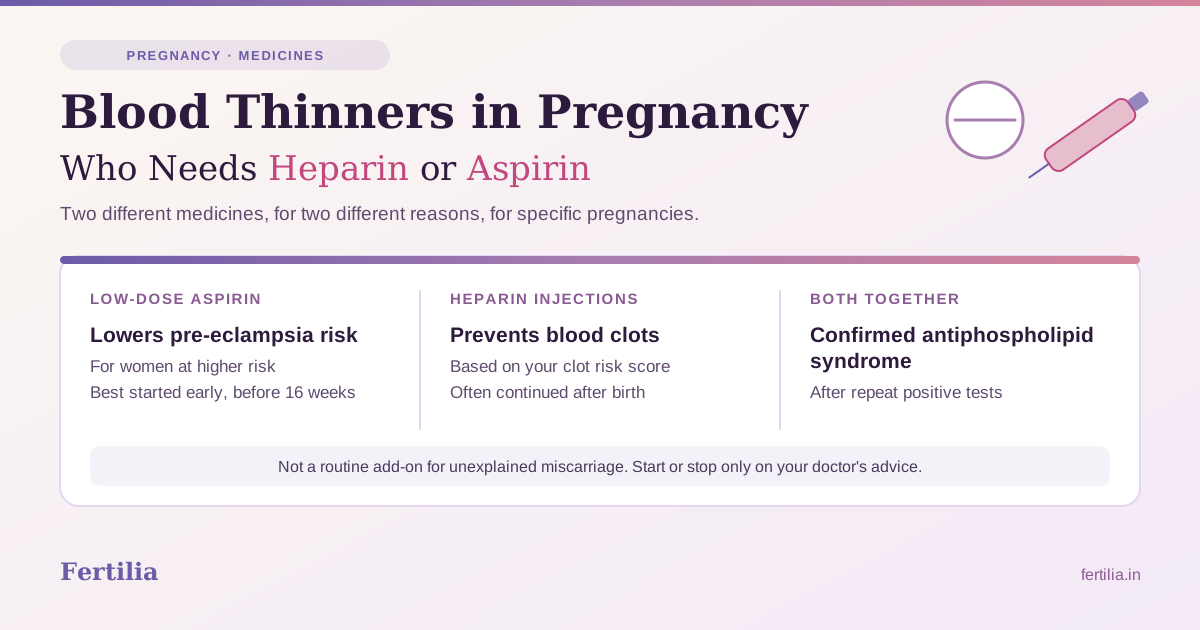
The short answer: low-dose aspirin is mainly prescribed to lower the risk of pre-eclampsia in women who are at higher risk of it. Heparin injections (usually a low-molecular-weight heparin such as enoxaparin) are mainly prescribed to prevent blood clots in women at higher risk of them, and, together with aspirin, for women with confirmed antiphospholipid syndrome. Randomised trials have not shown a benefit from either drug for unexplained miscarriage, so they are not a routine add-on for every woman who has had a loss.
Here is what this post covers:
- How aspirin and heparin differ
- Who is usually prescribed low-dose aspirin, and when it starts
- Who is usually prescribed heparin
- Where the evidence does not support them
- What daily injections involve, including around labour
- Questions to bring to your obstetrician, and common questions
A note before we start: every decision in this post belongs to the doctor who knows your full history. Please do not start, stop, or change either medicine on your own after reading it.
Aspirin and Heparin Work Differently
Both are called blood thinners, but they act on different parts of clotting.
| Low-dose aspirin | Low-molecular-weight heparin (LMWH) | |
|---|---|---|
| How it is taken | A tablet, once a day | An injection under the skin, usually once a day |
| What it acts on | Platelets (the small cells that start a clot) | Clotting proteins in the blood |
| Main reason in pregnancy | Lowering the risk of pre-eclampsia in higher-risk women | Preventing blood clots in the veins (venous thromboembolism) in higher-risk women |
| Used together | In confirmed antiphospholipid syndrome | In confirmed antiphospholipid syndrome |
Venous thromboembolism (VTE) means a clot in a deep vein, usually in the leg (a deep vein thrombosis), which can travel to the lungs (a pulmonary embolism). Pregnancy and the weeks after birth raise this risk. In a 30-year population study, the relative risk of VTE in pregnant or postpartum women was about 4.3, and the yearly rate was five times higher after delivery than during pregnancy (Heit JA et al., Ann Intern Med, 2005, PMID 16287790). That study was in a largely white American population, so the exact numbers may differ for Indian women, but the pattern that the postpartum weeks carry the highest risk is the reason so many heparin plans continue after birth.
Aspirin is not used as the clot-prevention drug in pregnancy. The Royal College of Obstetricians and Gynaecologists (RCOG) states plainly that aspirin is not recommended for thromboprophylaxis in obstetric patients (RCOG Green-top Guideline No. 37a, 2015, amended 2023, rcog.org.uk). So the two are not interchangeable, and one cannot be swapped for the other to avoid injections.
Who Is Prescribed Low-Dose Aspirin
The main reason for aspirin in pregnancy is pre-eclampsia, a condition of high blood pressure with organ involvement that develops after 20 weeks. Our guide to preeclampsia signs and what happens in hospital explains the condition itself. Here the question is who gets aspirin to prevent it.
ACOG Committee Opinion 743, written with the Society for Maternal-Fetal Medicine (2018, reaffirmed 2023, acog.org), recommends low-dose aspirin for women with one or more high-risk factors:
- Pre-eclampsia in a previous pregnancy
- A twin or other multiple pregnancy
- Kidney disease
- Autoimmune disease (for example lupus or antiphospholipid syndrome)
- Type 1 or type 2 diabetes
- Chronic high blood pressure
It says aspirin should be considered for women with more than one moderate-risk factor, such as a first pregnancy, age 35 or older, a BMI above 30, or a family history of pre-eclampsia.
The International Federation of Gynecology and Obstetrics (FIGO) goes a step further and recommends that every pregnant woman be screened for preterm pre-eclampsia in the first trimester, combining her risk factors with blood pressure and, where available, a blood test (placental growth factor) and a uterine artery Doppler scan (Poon LC et al., Int J Gynaecol Obstet, 2019, PMID 31111484). FIGO’s list of maternal risk factors includes South Asian origin and pregnancies conceived through assisted reproduction, which is relevant for many of the women I see. If you are pregnant at 40 or through IVF, ask whether this screening is part of your first-trimester scan.
When it starts, and why timing matters
The best-known trial here is ASPRE. Women at high risk of preterm pre-eclampsia took aspirin 150 mg a day or a placebo, from 11 to 14 weeks until 36 weeks. Preterm pre-eclampsia occurred in 1.6% of the aspirin group and 4.3% of the placebo group, with no significant difference in adverse outcomes for the babies (Rolnik DL et al., N Engl J Med, 2017, PMID 28657417).
Guidelines agree that aspirin works best when started early, but they differ on dose and stopping point:
- ACOG (2018): 81 mg a day, started between 12 and 28 weeks, optimally before 16 weeks, and continued until delivery.
- FIGO (2019): about 150 mg every night, started at 11 to 14+6 weeks, and continued until 36 weeks, delivery, or a diagnosis of pre-eclampsia.
ACOG’s 81 mg reflects the low-dose tablet sold in the United States, and differences like this are why your obstetrician’s plan may not match a number you read elsewhere. Follow the dose and stopping week your own doctor gives you.
Is low-dose aspirin safe in pregnancy?
ACOG Committee Opinion 743 describes daily low-dose aspirin in pregnancy as safe, with a low likelihood of serious complications for mother or baby. The US Preventive Services Task Force review it cites found no increased risk of placental abruption or postpartum haemorrhage, and systematic reviews of the pre-eclampsia trials have shown no increased risk of birth defects. It is not suitable for everyone: tell your doctor if you have ever reacted to aspirin or painkillers such as ibuprofen, have asthma triggered by aspirin, or have a stomach ulcer or a bleeding problem.
Where aspirin alone is not recommended
The same ACOG opinion is clear that, without risk factors for pre-eclampsia, low-dose aspirin is not recommended solely to prevent early pregnancy loss, fetal growth restriction, stillbirth, or spontaneous preterm birth.
💜 Not sure whether aspirin or heparin applies to your pregnancy? Message Dr. Suganya on WhatsApp and go through your history over a ₹399 video consultation, from anywhere in India or abroad.
Who Is Prescribed Heparin
Women at higher risk of blood clots
The RCOG guideline scores every pregnant woman for VTE risk at booking, and again if she is admitted to hospital and after birth. A few of the factors it scores:
| Factor | Points in the RCOG score |
|---|---|
| Previous VTE (other than a single clot after major surgery) | 4 |
| Known high-risk thrombophilia | 3 |
| Conditions such as active lupus, heart failure, or nephrotic syndrome | 3 |
| Hyperemesis (severe pregnancy vomiting) | 3 |
| Ovarian hyperstimulation syndrome (OHSS) | 4 |
| Age over 35 | 1 |
| BMI 30 to 39 | 1 |
| IVF or other assisted reproduction (during pregnancy) | 1 |
| Twin or multiple pregnancy | 1 |
| Caesarean section in labour | 2 |
Source: RCOG Green-top Guideline No. 37a and its September 2026 position statement (rcog.org.uk), checked October 2026. This is a partial list for illustration, not a self-assessment tool.
Under the RCOG position statement, a total of 4 or more during pregnancy means LMWH should be considered from the first trimester, a score of 3 means from 28 weeks, and a score of 2 or more after birth means LMWH should be considered for at least 10 days. Women with a previous clot (apart from a single one after major surgery) should be offered LMWH throughout pregnancy, and every woman with a confirmed previous clot should be offered thromboprophylaxis for at least 6 weeks after birth.
This explains a few situations women ask me about. Many women receive a short course of injections after a caesarean, which our week-by-week C-section recovery guide mentions. And women admitted with severe OHSS after IVF are usually given heparin while in hospital, because RCOG scores OHSS as a strong risk factor for clots.
Women with confirmed antiphospholipid syndrome
Antiphospholipid syndrome (APS) is an autoimmune condition in which antibodies raise the risk of clots and of pregnancy complications, including recurrent miscarriage. It is one of the few causes of repeated loss with a specific, studied treatment.
In women with persistent antiphospholipid antibodies and recurrent pregnancy loss, a Cochrane review found that heparin plus aspirin may increase live births compared with aspirin alone (risk ratio 1.27, 5 studies, 1,295 women). The authors rated this as low-certainty evidence, and noted that the benefit was driven largely by one large trial (Hamulyák EN et al., Cochrane Database Syst Rev, 2020, PMID 32358837). ACOG Committee Opinion 743 also notes that aspirin combined with heparin has been shown to reduce early pregnancy loss in women with APS.
The key word is confirmed. A single positive antibody result is not the diagnosis. The test needs to be persistently positive on repeat testing at least 12 weeks apart, alongside a compatible history. Our guide to recurrent miscarriage tests after two losses explains the antiphospholipid panel and what to ask the lab for.
Women with APS who have also had a previous clot are a separate, higher-risk group. RCOG advises that they be offered higher-dose LMWH and be managed together with a haematologist or rheumatologist.
A note on mechanical heart valves
Women with mechanical heart valves need a plan made jointly by their cardiologist and obstetrician, ideally before pregnancy. RCOG notes that warfarin, which is otherwise avoided in pregnancy because it crosses the placenta, is still used in some of these women when heparin is not suitable. This is specialist care, and it is outside what a general post can guide.
Where the Evidence Does Not Support Blood Thinners
This is the part that often surprises women, and it matters because daily injections have a real cost in money, bruises, and stress.
Unexplained recurrent miscarriage. In a randomised trial of 364 women with unexplained recurrent miscarriage, live-birth rates were 54.5% with aspirin plus heparin, 50.8% with aspirin alone, and 57.0% with placebo. Neither treatment improved the chance of a baby, and bruising, swelling, or itching at the injection site was more common in the combination group (Kaandorp SP et al., N Engl J Med, 2010, PMID 20335572).
Inherited thrombophilia with recurrent loss. In the ALIFE2 trial, women with two or more losses and a confirmed inherited thrombophilia were randomised to LMWH or standard care. Live births were 72% with LMWH and 71% without it. The trial authors advised against LMWH for this group, and against screening women with recurrent loss for inherited thrombophilia (Quenby S et al., Lancet, 2023, PMID 37271152).
That second point needs care. ALIFE2 answers whether heparin prevents miscarriage in these women. It does not answer whether a woman with a high-risk thrombophilia needs heparin to prevent clots. Under RCOG, a known high-risk thrombophilia still adds to her VTE score. Those are two different questions, and your doctor will weigh them separately.
After failed IVF transfers. Adding aspirin or heparin “just in case” after repeated failed transfers is a common request. Our post on recurrent implantation failure covers this in detail: treatment depends on a confirmed indication, not on the failed cycles alone.
If your gynaecologist has not offered you blood thinners after a loss, that is usually a considered decision that follows this evidence, not an oversight. If you are unsure, it is completely reasonable to ask what the plan is based on.
What Daily Heparin Injections Involve
Most women on LMWH learn to inject themselves at home after a short demonstration from a nurse or doctor. It is usually given once a day, under the skin, and the dose depends on your weight and the reason it is prescribed.
Side effects to expect. Small bruises at injection sites are common. A systematic review of 2,777 pregnancies treated with LMWH found significant bleeding in 1.98% (generally associated with obstetric causes), allergic skin reactions in 1.80%, and no cases of heparin-induced thrombocytopenia, a rare drop in platelets. The authors concluded LMWH is both safe and effective to prevent or treat VTE in pregnancy (Greer IA et al., Blood, 2005, PMID 15811953). RCOG notes that routine anti-Xa blood level monitoring is not needed when LMWH is used for prevention.
Around labour and delivery, RCOG advises:
- If you have any vaginal bleeding, or once labour starts, do not inject the next dose. Go to hospital, and the team there will decide the next dose.
- An epidural or spinal anaesthetic is ideally given at least 12 hours after a preventive dose, or at least 24 hours after a treatment (higher) dose. Write down the time of every injection so you can tell the anaesthetist exactly.
- For a planned caesarean, the dose on the morning of surgery is usually skipped.
- The first dose after birth is given as soon as possible, provided there has been no heavy bleeding; if you had an epidural or spinal, the team times it around that.
Breastfeeding. RCOG states that LMWH and warfarin are both safe in breastfeeding, so you do not need to stop feeding your baby to continue your injections.
Practical Takeaways: Questions for Your Obstetrician
If you are pregnant, or planning a pregnancy with any of the risk factors above, these questions help you understand your own plan:
- Has my risk of pre-eclampsia been assessed, and does it place me in the group who should take aspirin?
- If yes, what dose, from which week, and until which week?
- What is my VTE risk score at this stage of pregnancy, and will it be rechecked after delivery?
- If heparin is advised, is it for clot prevention, for antiphospholipid syndrome, or both?
- What should I do with my injection if I start bleeding or go into labour?
- How long do I continue after the baby is born?
When to call your doctor or go to hospital without waiting: pain, swelling, or warmth in one calf or thigh; sudden breathlessness; chest pain; or coughing blood. These can be signs of a clot and need same-day assessment. Our post on varicose veins in pregnancy explains how ordinary vein swelling differs from the signs of a deep clot.
Frequently Asked Questions
Can I take aspirin on my own to prevent miscarriage?
No. Low-dose aspirin is not recommended to prevent early pregnancy loss in women without antiphospholipid syndrome (ACOG Committee Opinion 743). Aspirin is prescribed for pre-eclampsia risk or, alongside heparin, for confirmed APS. Please start it only on your obstetrician’s advice, so the dose and start week are right for you.
Is low-dose aspirin safe in pregnancy?
For women who need it, yes. ACOG considers daily low-dose aspirin safe in pregnancy, with no increase in placental abruption or postpartum haemorrhage in the trials it reviewed. Let your doctor know about any reaction to aspirin or ibuprofen, aspirin-triggered asthma, stomach ulcer, or bleeding disorder before you start.
When should low-dose aspirin be stopped in pregnancy?
It depends on the protocol. FIGO advises continuing until 36 weeks, delivery, or a diagnosis of pre-eclampsia, while ACOG advises continuing until delivery. ACOG notes that stopping time has not been linked to excess bleeding. Follow the stopping week your own obstetrician gives you.
Are heparin injections safe for my baby?
LMWH has a long safety record in pregnancy. In a review of 2,777 pregnancies, it was judged both safe and effective for preventing and treating clots, with no cases of heparin-induced thrombocytopenia (Greer IA et al., 2005). RCOG describes LMWH as the agent of choice for clot prevention during pregnancy and after birth.
I have a thrombophilia report (factor V Leiden, prothrombin gene, protein S). Do I need heparin?
It depends on the specific result and your history. For preventing miscarriage, the ALIFE2 trial found no benefit from LMWH in women with recurrent loss and inherited thrombophilia. For preventing clots, a known high-risk thrombophilia adds to your RCOG VTE score, especially with a family history of clots. Ask your obstetrician which of the two questions your result is being used to answer.
Can I have an epidural if I am on blood thinners?
Usually, yes, with careful timing. RCOG advises waiting at least 12 hours after a preventive LMWH dose, or 24 hours after a treatment dose. ACOG notes that low-dose aspirin on its own is not a reason to avoid an epidural. Tell the labour team when you took your last dose of each medicine.
Do I need heparin after IVF?
Not routinely. Under the RCOG scoring, IVF adds one point to the VTE score during pregnancy, so it may tip some women into a plan when combined with other risk factors. Women admitted with severe OHSS are usually given heparin. Taking heparin only to improve implantation after failed transfers is not supported without a confirmed indication.
Getting the Right Plan for Your Pregnancy
Blood thinners in pregnancy work best when they are matched to a clear reason. For some women, a daily aspirin from the third month or a course of injections is one of the most useful things in their care. For many others, the best plan is good routine care without either.
At Fertilia, Dr. Suganya Venkat helps women review their history, earlier pregnancies, and test reports so they understand where they stand and can have a clearer conversation with the obstetrician delivering their baby. If you are planning a pregnancy after a loss or a clot, our pregnancy care program supports you through it, alongside your obstetric team.
💜 Ready to understand your own risk and plan? Message Dr. Suganya on WhatsApp to book a ₹399 video consultation. Bring your previous pregnancy history and any reports, and we will go through what applies to you.