“Doctor, I have PCOS. Does that mean I will need IVF to get pregnant?”
Many women ask me this at the very first consultation, often before we have even looked at a single report. Somewhere along the way, PCOS (or PCOD, as most of us still call it in India) and “test tube baby” got joined together in their minds.
The short answer: most women with PCOS do not need IVF. The usual problem in PCOS is that ovulation does not happen regularly, and that can often be treated with simpler steps first: lifestyle and weight care where relevant, then a tablet such as letrozole, then injections or ovarian drilling. The 2023 international PCOS guideline places IVF as a third-line option for anovulatory PCOS, offered when those earlier treatments have not worked, unless there is another clear reason to go straight to IVF (Teede HJ et al., Hum Reprod, 2023, PMID 37580037). When IVF is needed, women with PCOS tend to respond strongly to the injections, so the cycle is planned a little differently to keep it safe. Pregnancy and live birth rates per cycle are broadly similar to women without PCOS.
Here is what this post covers:
- Where IVF sits in the PCOS treatment sequence
- The situations where IVF comes earlier
- How an IVF cycle is different when you have PCOS
- How clinics keep the cycle safe from OHSS
- Fresh or frozen transfer, and one embryo or two
- What outcomes to expect, and how to prepare
If your question is about IUI versus IVF in general, our guide on IUI vs IVF covers that. This post stays with the PCOS-specific questions.
Where IVF Fits in PCOS Treatment
PCOS (renamed PMOS, polyendocrine metabolic ovarian syndrome, in 2026) affects fertility mainly by making ovulation irregular or absent. The eggs are there. The signal to release one each month is what goes off track. So the first aim of fertility treatment is to help your own ovaries ovulate, one egg at a time, and to let conception happen inside the body.
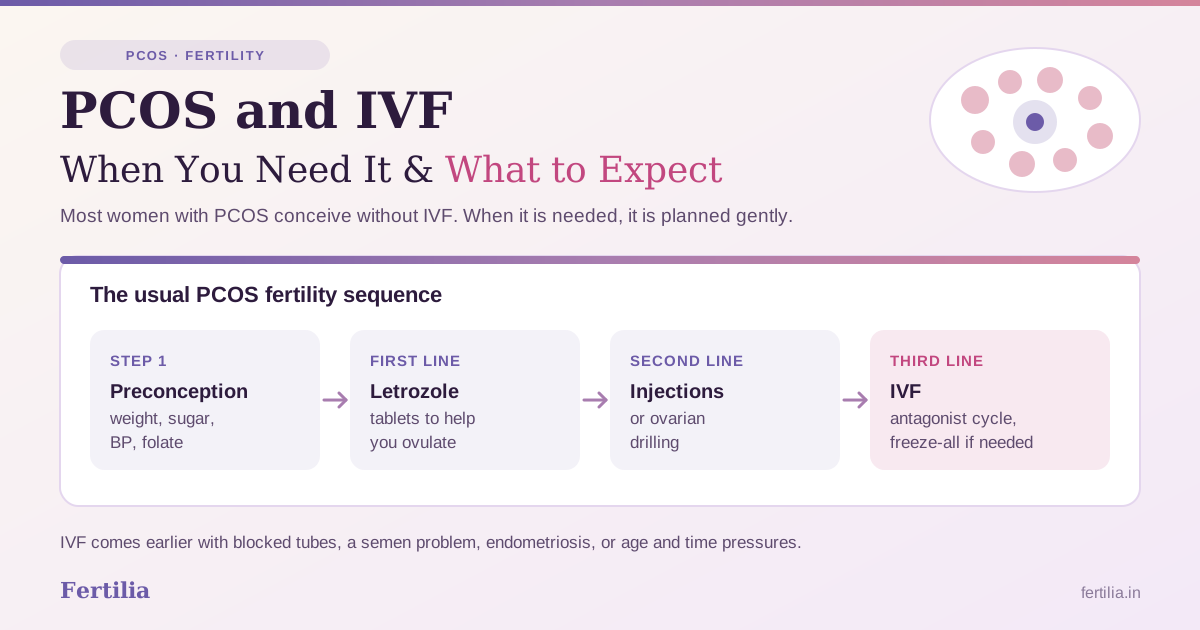
The 2023 international PCOS guideline sets out a sequence for women whose only fertility issue is anovulation (Teede HJ et al., Hum Reprod, 2023, PMID 37580037):
- Preconception care first. Weight, blood pressure, diet, sleep, smoking, alcohol, folate and emotional health are all looked at and improved before and during treatment. The guideline also asks doctors to explain that excess weight lowers pregnancy and live birth rates after fertility treatment.
- First line: letrozole. The guideline says letrozole should be the first-line medicine for ovulation induction in PCOS. In a trial of 750 women with PCOS treated for up to five cycles, letrozole led to more cumulative live births than clomiphene, 27.5% of women compared with 19.1% over the whole treatment period rather than per cycle (Legro RS et al., N Engl J Med, 2014, PMID 25006718). Our guide to letrozole for PCOS covers doses and monitored cycles.
- Second line: gonadotrophin injections or ovarian drilling. If letrozole does not lead to ovulation or pregnancy, low-dose injections with careful scan monitoring, or laparoscopic ovarian drilling, are the next options.
- Third line: IVF. The guideline says IVF could be offered when first- or second-line ovulation induction has failed, in the absence of an absolute indication for IVF.
This order exists because the earlier steps are simpler, cheaper and less demanding on your body and your calendar, and many women conceive along the way. It is not a rule that you must spend years on each step. How long to stay on each one depends on your age, your other test results and how long you have already been trying.
When IVF Comes Earlier
The sequence above is for women whose only issue is ovulation. In real life, PCOS often sits alongside something else, and that can move IVF up the list. The common reasons are:
- Blocked or damaged fallopian tubes, seen on an HSG or at laparoscopy
- A significant semen problem in the husband’s semen analysis
- Endometriosis that is affecting fertility
- Age and time already spent trying, where a slower route uses up time that matters
- Repeated well-monitored cycles without success, even when ovulation is happening
This is why I ask couples to complete the basic workup (tubes, semen analysis, ovulation and hormone tests) before planning treatment. A woman with PCOS whose tubes are blocked will not be helped by six cycles of letrozole, and finding that out early saves months. Our decision framework for IVF walks through how these factors are weighed together.
💜 Not sure whether your next step is letrozole, injections or IVF? Message Dr. Suganya on WhatsApp with your reports, and talk it through over a ₹399 video consultation from anywhere in India or abroad.
How IVF Is Different When You Have PCOS
In IVF, injections of follicle stimulating hormone (FSH) are used to grow several follicles at once, the eggs are collected, fertilised in the lab, and an embryo is placed in the womb. The steps are the same with PCOS. What changes is how your ovaries respond.
Women with PCOS usually have many small follicles waiting in the ovaries, which is also why their AMH level tends to be high. When FSH injections start, more of these follicles can respond together. A meta-analysis of nine studies comparing women with PCOS and matched women without PCOS found (Heijnen EM et al., Hum Reprod Update, 2006, PMID 16123051):
- Women with PCOS had about three more eggs collected per egg retrieval (3.4 on average)
- The number of eggs that fertilised was similar in both groups
- Cycles in women with PCOS were more likely to be cancelled before egg collection
- Pregnancy and live birth rates per cycle were similar in both groups
So, per cycle, PCOS does not lower your chances in IVF. Your ovaries simply need a gentler hand, because a strong response brings one specific risk that your clinic will plan around: ovarian hyperstimulation syndrome (OHSS).
How Clinics Keep the Cycle Safe
OHSS happens when the ovaries over-respond and fluid shifts out of the blood vessels into the abdomen. Most cases are mild: bloating, a heavy feeling and some discomfort that settle on their own. The guideline asks clinics to explain the higher OHSS risk to women with PCOS before treatment starts and to offer ways to reduce it (Teede HJ et al., Hum Reprod, 2023, PMID 37580037). Those ways are now routine.
The antagonist protocol
There are two main ways to stop the body releasing eggs early during stimulation: the long agonist protocol and the antagonist protocol. Our post on IVF stimulation protocols explains both in detail. For PCOS, the antagonist protocol has a clear advantage.
A meta-analysis of 50 trials looked at women with PCOS separately and found no difference in ongoing pregnancy rates between the two protocols, while OHSS was about half as common with the antagonist protocol (Lambalk CB et al., Hum Reprod Update, 2017, PMID 28903472). The 2023 guideline recommends the antagonist protocol for women with PCOS, mainly because it allows the next safety step (Teede HJ et al., Hum Reprod, 2023, PMID 37580037).
A different trigger, and freezing the embryos
The trigger is the final injection that matures the eggs before collection. In an antagonist cycle, the clinic can use a GnRH agonist trigger instead of the usual hCG trigger. The guideline recommends this agonist trigger, with all suitable embryos frozen, when a fresh transfer is not planned or when the OHSS risk is raised (Teede HJ et al., Hum Reprod, 2023, PMID 37580037). Freezing the embryos means no pregnancy hormone arrives in that same cycle to keep the ovaries stimulated, so the cycle settles down after egg collection.
Alongside this, your doctor will usually start with a moderate injection dose and adjust it according to your scans and blood tests. The OHSS guide covers what mild symptoms feel like at home and which signs mean you should call your clinic the same day.
Metformin during IVF
Many women with PCOS ask whether to take metformin through their IVF cycle. A Cochrane review of 13 trials with 1,132 women with PCOS found that metformin may reduce the incidence of OHSS, but found no conclusive evidence that it improves live birth rates, and it may result in more side effects. The review also found that, in a short antagonist protocol, metformin may reduce live birth rates, based on a single low-quality trial (Tso LO et al., Cochrane Database Syst Rev, 2020, PMID 33347618). The guideline suggests metformin could be considered mainly when the long agonist protocol is used, since the antagonist protocol already offers the agonist trigger and freeze-all route (Teede HJ et al., Hum Reprod, 2023, PMID 37580037). If you already take metformin for blood sugar, keep taking it and ask your IVF doctor how they want to handle it during the cycle. Our post on metformin for PCOS covers its wider role.
Fresh or Frozen Transfer, and One Embryo or Two
Fresh or frozen
A multicentre trial randomly assigned 1,508 women with PCOS having their first IVF cycle to either a fresh transfer or freezing all embryos and transferring them later (Chen ZJ et al., N Engl J Med, 2016, PMID 27509101). Frozen transfer led to:
- More live births after the first transfer: 49.3% compared with 42.0%
- Fewer pregnancy losses: 22.0% compared with 32.7%
- Less OHSS: 1.3% compared with 7.1%
- More preeclampsia (high blood pressure in pregnancy): 4.4% compared with 1.4%
That last point matters, and it is why the decision is made case by case rather than as a blanket rule. In that trial, up to two day-3 embryos were transferred, which differs from how many clinics work today. Our post on frozen vs fresh embryo transfer explains how clinics weigh these factors.
One embryo at a time
The guideline says that IVF is effective in anovulatory PCOS and that elective single embryo transfer keeps multiple pregnancies low (Teede HJ et al., Hum Reprod, 2023, PMID 37580037). The same guideline notes that pregnancies in women with PCOS carry a higher chance of gestational diabetes and high blood pressure, and a twin pregnancy adds to that. Transferring one good embryo at a time, and keeping the rest frozen for later, is the safer path for you and your baby. See our guide to single vs double embryo transfer for the trial evidence.
What about IVM?
In vitro maturation (IVM) collects immature eggs with little or no hormone stimulation and matures them in the lab. Because the ovaries are barely stimulated, there is no OHSS risk. The trade-off is a lower chance of a baby. In a trial of 351 women with PCOS, one cycle of unstimulated IVM led to ongoing pregnancy (resulting in live birth) within six months in 22.3%, compared with 50.6% after standard IVF (Zheng X et al., Hum Reprod, 2022, PMID 34849920). The guideline says IVM could be considered as an alternative, particularly for women who have had severe OHSS before, and only in centres with the expertise to do it well (Teede HJ et al., Hum Reprod, 2023, PMID 37580037).
What Outcomes to Expect
Your chances in IVF depend far more on your age, egg numbers, embryo quality and the health of your womb lining than on the PCOS label itself. The Heijnen meta-analysis above found similar pregnancy and live birth rates per cycle in women with and without PCOS. Because women with PCOS often have more eggs collected, many end up with extra embryos frozen, and those give further chances to transfer without a new round of injections.
For age-wise figures, see our guide to IVF success rates in India. When you compare clinics, ask for live birth rates per egg collection in your age group, since a clinical pregnancy rate per transfer can look better than the number that matters to you.
Preparing for IVF When You Have PCOS
The months before an IVF cycle are the part you have the most control over. The 2023 guideline asks doctors to check blood pressure and offer an oral glucose tolerance test (OGTT) to all women with PCOS who are planning pregnancy or seeking fertility treatment (Teede HJ et al., Hum Reprod, 2023, PMID 37580037). Both are simple, and both help your team plan a safer pregnancy.
From there, the work is everyday and unglamorous. Meals built around dal, vegetables, curd and millets such as ragi or jowar, with rice and roti portions that suit your body. A daily walk you can keep up through the injection weeks. Sleep that is protected. Folic acid started early, at the dose your doctor advises, since the guideline suggests a higher dose for women with a BMI above 30. Our post on preparing your body for IUI or IVF has a fuller checklist, and the free PCOS Reversal Guide covers the metabolic side.
I’m Dr. Suganya Venkat, an OB-GYN with more than 15 years of clinical practice, and in Fertilia’s online IVF Support program I work alongside a woman’s IVF specialist rather than in place of them. Her fertility clinic handles the stimulation, egg collection and transfer. We look after blood sugar, weight where it matters, nutrition, sleep and the emotional load of the weeks in between. If you would like to see what that preparation looks like for one couple, read how Lalitha, who has PCOS, and her husband Vivek prepared for their first IVF cycle.
Questions to Ask Your IVF Doctor
- Is IVF my next step, or is there an earlier treatment we have not tried yet?
- Which protocol will you use, and will it allow an agonist trigger if I respond strongly?
- What is your plan if many follicles grow: freezing all embryos, or a fresh transfer?
- How many embryos will you transfer, and why?
- Should I continue metformin during the cycle?
- Which OHSS symptoms should I watch for, and whom do I call?
Practical Takeaways
- Most women with PCOS conceive without IVF. Letrozole is the first-line medicine when ovulation is the only issue.
- IVF comes earlier if there are blocked tubes, a significant semen problem, endometriosis, or age and time pressures.
- With PCOS, the ovaries respond strongly. Expect more eggs, and a cycle designed to prevent OHSS.
- The antagonist protocol with an agonist trigger and freeze-all is the guideline-recommended way to lower OHSS risk.
- Per cycle, women with PCOS have pregnancy and live birth rates similar to women without PCOS.
- Get your blood pressure and an OGTT checked before treatment, and use the waiting months for metabolic care.
💜 Planning IVF with PCOS and want your body ready for it? Talk to Dr. Suganya on WhatsApp to start with a ₹399 online consultation, or read about the IVF Support program.
Frequently Asked Questions
1. Does every woman with PCOS need IVF? No. Most women with PCOS conceive with simpler treatment. The 2023 international guideline recommends letrozole as the first-line medicine for ovulation, with gonadotrophin injections or ovarian drilling as second-line options. IVF is usually offered after these have not worked, or earlier if there is another reason, such as blocked tubes or a significant semen problem.
2. Is IVF successful with PCOS? Yes. A meta-analysis comparing women with and without PCOS found similar pregnancy and live birth rates per IVF cycle. Women with PCOS usually have more eggs collected, which can mean extra frozen embryos for later transfers. Your own chances depend mainly on your age, egg and embryo quality, and the rest of your workup.
3. Is OHSS more likely with PCOS? The risk is higher because the ovaries respond strongly to injections, and your clinic will plan for it. The antagonist protocol, a GnRH agonist trigger and freezing all embryos when the response is high are the main ways the risk is lowered. Most OHSS is mild and settles on its own. Contact your clinic immediately, rather than waiting for a callback or your next appointment, if you have worsening abdominal pain, breathlessness, vomiting you cannot stop, rapid weight gain or are passing much less urine, so you can be assessed urgently. If breathlessness is sudden or severe, or you have chest pain or collapse, go to the nearest emergency department straight away.
4. Is frozen embryo transfer better than fresh for PCOS? In a trial of 1,508 women with PCOS, freezing all embryos and transferring later gave more live births after the first transfer (49.3% vs 42.0%) and less OHSS, but a higher rate of preeclampsia. Many clinics now freeze embryos when the response is strong. The choice is made for your situation.
5. Should I lose weight before IVF if I have PCOS? If your BMI is above the healthy range, improving weight and blood sugar before treatment is worth doing. The 2023 guideline asks doctors to explain that excess weight lowers pregnancy and live birth rates after fertility treatment. Even a modest change, with better food and regular walking, can help, and your doctor can help you decide how long to spend on this before starting.
6. Can I take metformin during IVF? It depends on your protocol. A Cochrane review found metformin may lower OHSS risk but found no conclusive evidence that it improves live birth rates, and it may cause more side effects. In a short antagonist protocol, one low-quality trial suggests it may reduce live birth rates. The guideline suggests it mainly when the long agonist protocol is used. If you take it for blood sugar, do not stop it on your own; ask your IVF doctor how to continue it during the cycle.
7. PCOD hai, kya IVF hi option hai? In English: “I have PCOD, is IVF my only option?” PCOD and PCOS are used interchangeably in India, and for most women the answer is no: IVF is not the only option. Ovulation treatment with letrozole comes first when ovulation is the only problem, and IVF is kept for when that has not worked or when there are other factors.
Have questions about PCOS and IVF? Message Dr. Suganya on WhatsApp: wa.me/919940270499