Many women come to me after reading that PCOS “starts in the gut.” Some have already bought a stool test kit, cut out wheat and dairy, or started a gut cleanse. Others are simply confused: their gynaecologist talks about hormones and ovaries, while the internet talks about bacteria. Both conversations are about the same body, and the research connecting them is more interesting, and more modest, than either side usually suggests.
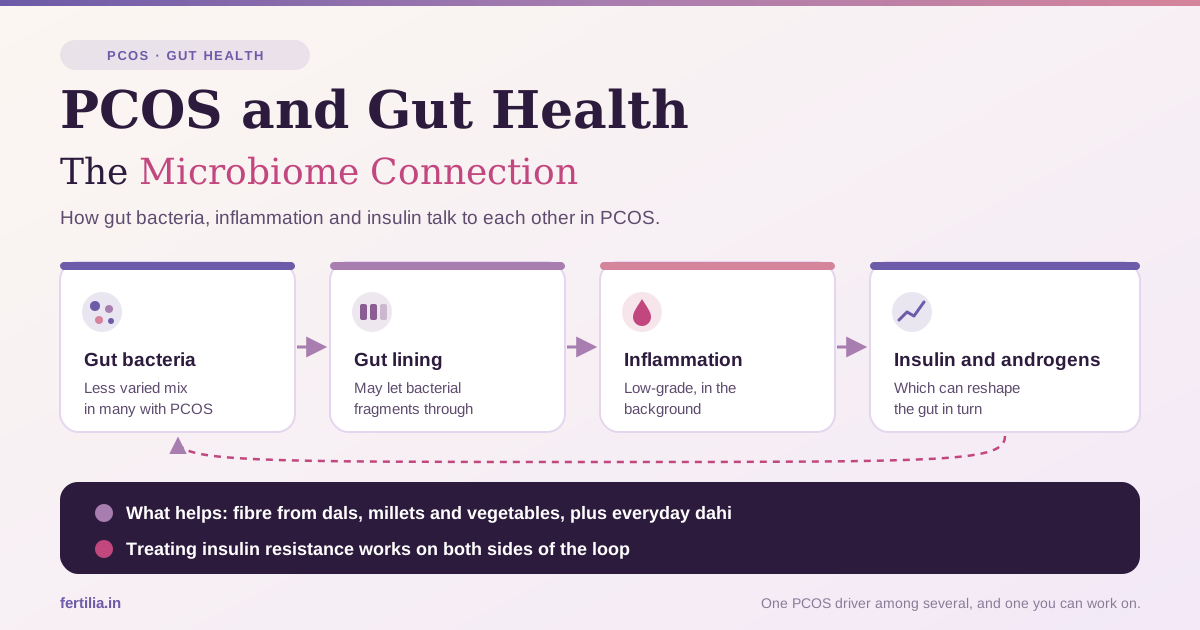
The short version: when 28 studies were pooled, women with PCOS had, on average, a less varied mix of gut bacteria than women without it. The best-supported explanation is a two-way loop. Higher androgen (male-type hormone) levels appear to reshape the gut, and an altered gut may in turn feed the low-grade inflammation and insulin resistance that keep PCOS symptoms going. Most of the cause-and-effect evidence still comes from animal studies, so gut changes are best seen as an associated feature and possible contributor alongside other PCOS drivers, not the root of everything. The practical steps that help are ordinary ones, and none of them needs a special test.
Here is what this post covers:
- What the human studies have found about gut bacteria in PCOS
- How “leaky gut” connects to inflammation and insulin resistance, and how strong that evidence is
- Which comes first: the hormones or the bacteria
- What shapes your gut in PCOS
- What you can do, and what to skip
If you are looking for probiotic supplement trials (strains, doses, prices), that is covered separately in PCOS and Probiotics: What the Evidence Shows. This post is about the mechanism: how the gut and PCOS talk to each other.
What the Studies Have Found in Women With PCOS
Your gut holds trillions of bacteria, together called the gut microbiome. Researchers usually describe it in two ways: how varied it is (diversity) and which bacteria dominate (composition).
Diversity is lower in PCOS. A 2023 systematic review and meta-analysis by Li et al. (BMC Med, PMID 37559119), pooled 28 studies covering 1,022 women with PCOS and 928 controls. Women with PCOS had lower microbial evenness and phylogenetic diversity. The review also noted fewer Lachnospira and Prevotella and more Bacteroides, Parabacteroides and Escherichia/Shigella, a pattern the authors read as a loss of bacteria that make short-chain fatty acids (gut-protective compounds made when bacteria ferment fibre) and a shift towards a more pro-inflammatory community.
The pattern tracks androgen levels. In a Polish study by Torres et al. (J Clin Endocrinol Metab, 2018, PMID 29370410), 73 women diagnosed with PCOS by the Rotterdam criteria had lower gut diversity than 48 healthy women. Women with polycystic-looking ovaries on ultrasound but no other PCOS features fell in between the two groups. Higher total testosterone, hyperandrogenism and hirsutism (excess facial and body hair) were each linked to lower diversity.
Indian data are starting to appear. A Kashmiri study (Hassan S et al., Genes, 2022, PMID 35205422) compared 19 women with PCOS who had not taken any medication with 20 controls and found several bacterial groups enriched in PCOS, including Bifidobacterium, a genus usually thought of as a “good” bacterium. A 2026 study from western India by Khade et al. (Future Microbiol, PMID 41738431) of 57 women with PCOS and 30 controls found that the overall gut community differed between the two groups, a difference linked to hyperandrogenism, and that women with PCOS had markedly fewer bacteria from Oscillospiraceae, a family that makes short-chain fatty acids.
That Kashmiri finding is a useful reminder: the PCOS gut is not simply “missing the good bacteria.” The changes vary between studies, populations and diets, and nobody has yet defined a single “PCOS microbiome” that a lab could test you against.
The Leaky Gut, Inflammation and Insulin Link
The idea that ties all of this together was set out in 2012 by two researchers, Tremellen and Pearce, as the “Dysbiosis of Gut Microbiota” or DOGMA theory (Med Hypotheses, PMID 22543078). It runs like this:
- A diet that disturbs the balance of gut bacteria makes the gut lining more permeable (the “leaky gut” you may have read about).
- Fragments of bacterial cell walls, called lipopolysaccharide or LPS, pass into the bloodstream.
- The immune system reacts with low-grade, background inflammation.
- That inflammation interferes with how cells respond to insulin, so the body makes more insulin to compensate.
- High insulin pushes the ovaries to make more androgens and disrupts normal follicle development, which shows up as irregular periods, acne, excess hair and the “string of pearls” appearance on scan.
It is a neat explanation, and it fits with what we already know about insulin resistance in PCOS. But it was published as a hypothesis, and the human studies that tested its individual steps have given mixed answers.
Some evidence supports it. Zhang et al. (Eur J Endocrinol, 2015, PMID 25336505) measured zonulin, a blood marker of gut permeability, in 78 women with PCOS and 63 controls. Zonulin was higher in PCOS, and it rose with insulin resistance and with more severe menstrual irregularity. González et al. (J Clin Endocrinol Metab, 2019, PMID 30590569) gave saturated fat to 19 women with PCOS and 19 ovulating women and measured the response over the following hours. Women with obesity, with or without PCOS, showed a rise in circulating LPS. The bigger that LPS response, the lower the woman’s insulin sensitivity and the higher her androgen output.
Some evidence does not. In a pilot study by Lindheim et al. (PLoS One, 2017, PMID 28045919), 24 women with PCOS had less diverse gut bacteria than 19 controls, but showed changes in only some markers of gut barrier function, and the authors concluded that gut leakiness was not the driving factor in that group. A larger study by Lingaiah et al. (BMJ Open, 2021, PMID 34226215) compared 104 women with PCOS against 203 women of matched body weight, at age 46, and found no difference in zonulin or other gut permeability markers. Zonulin tracked body weight, insulin resistance and inflammation in both groups, which led the authors to suggest that metabolic factors, rather than PCOS itself, drive these gut changes.
Put together, the most reasonable reading is this: gut permeability and LPS may contribute to inflammation and insulin resistance in some women with PCOS, particularly where weight and metabolic factors are already in play, but leaky gut is not a universal cause of PCOS.
💜 Wondering whether gut health is part of your PCOS picture? Message Dr. Suganya on WhatsApp to talk through your symptoms and reports over a ₹399 video consultation.
Which Comes First: The Hormones or the Bacteria?
This is the question that matters most, and the evidence points in both directions at once.
Hormones change the gut. In the human studies above, hyperandrogenism keeps appearing as the factor most closely linked to the gut changes: in Torres et al. from Poland and in Khade et al. from western India. A study by Insenser et al. (J Clin Endocrinol Metab, 2018, PMID 29897462), which compared women with PCOS, women without it and men, found that the gut community was shaped by sex, sex hormone levels and obesity together. In other words, part of the PCOS gut pattern may be a consequence of the hormonal environment.
The gut can change the hormones, at least in animals. In 2019, Qi et al. (Nat Med, PMID 31332392) found that a bacterium called Bacteroides vulgatus was raised in women with PCOS, along with lower levels of two bile acids. When stool bacteria from women with PCOS were transferred into mice, the mice developed disturbed ovarian function, insulin resistance and infertility. The researchers traced this to reduced levels of interleukin-22, an immune signal, and interleukin-22 in turn improved the PCOS-like features. A separate mouse experiment by Torres et al. (Endocrinology, 2019, PMID 30924862) found that PCOS-model mice housed with healthy mice, and so exposed to their gut bacteria, showed improvement in both reproductive and metabolic features.
These are strong findings, but they are in mice. No human trial has yet shown that changing the gut bacteria reverses PCOS. So when I explain this to women in my consultations, I describe it as a loop that probably runs both ways: androgens and insulin shape the gut, and the gut feeds back into insulin and inflammation. That is useful, because it suggests that working on either side of the loop may help the other.
This also fits with the reason PCOS was renamed in 2026 as PMOS, Polyendocrine Metabolic Ovarian Syndrome: it is a whole-body metabolic and hormonal condition, not just an ovary condition. You can read more in our post on the PCOS to PMOS rename.
What Shapes Your Gut Bacteria in PCOS
From the research so far, four things stand out as shaping the gut community in women with PCOS. Most of them are things you can work on.
1. Androgen levels. As above, higher testosterone is the factor most consistently linked to lower gut diversity in PCOS. In principle, treatment that brings androgens down could help the gut too; that is still an open research question.
2. Body weight and insulin resistance. Both the Insenser and Lingaiah studies found that obesity and metabolic factors mattered alongside PCOS: in the Insenser study, obesity shaped the gut community, and in the Lingaiah study, the gut permeability marker tracked weight and insulin resistance rather than the PCOS diagnosis. This is encouraging, because insulin resistance is one of the most responsive PCOS drivers to food, movement and, where needed, medication.
3. What you eat, day to day. Gut bacteria respond to food quickly. In a widely cited study by David et al. (Nature, 2014, PMID 24336217), switching people to a diet made entirely of animal products or entirely of plant products changed the structure of their gut community within a short period. The bacteria that live on fibre are the ones that make short-chain fatty acids, which is why a diet built around dals, millets, vegetables and whole grains matters more for your gut than any single “superfood.”
4. Medicines, including metformin. Many women with PCOS take metformin. In a randomised trial in people with previously untreated type 2 diabetes, Wu et al. (Nat Med, 2017, PMID 28530702) found that metformin had strong effects on the gut microbiome over four months, and that some of its blood-sugar benefit appears to work through those gut changes. That study was not done in PCOS, so we cannot assume the same effect, but it shows that the gut is one of the places metformin works. Separately, the stomach upset some women feel in the first weeks of metformin is common and usually settles with a low starting dose taken with food.
What You Can Do for Your Gut With PCOS
None of what follows requires a test, a special product or a restrictive diet. It is the same foundation that improves insulin resistance, which is the point: you are working on both sides of the loop at once.
Eat more fibre, from more kinds of plants. Aim to include a dal or legume, a millet or whole grain, and two or three vegetables across your day. Ragi, jowar, rajma, chana, moong, urad dal, methi leaves and seasonal vegetables all feed the fibre-fermenting bacteria. For a ranked list with portions, see our 30 high-fibre Indian foods for PCOS guide.
Keep fermented foods in your routine. Homemade dahi, buttermilk (moru/chaas) and fermented idli or dosa batter are part of most Indian kitchens already. They have not been tested as a PCOS treatment, but they are sensible everyday foods. If you are considering a probiotic capsule on top of this, the trial evidence is in our probiotics post.
Go easy on fried and heavily processed food. The González study suggests that large loads of saturated fat can raise LPS in the blood, especially in women carrying extra weight. You do not need to give up ghee or coconut entirely, but regular deep-fried snacks, bakery items and packaged foods are worth cutting back.
Treat insulin resistance directly. Regular movement (a daily walk after meals is a good start), steady sleep, and, if your doctor recommends it, metformin all work on the metabolic side of PCOS. Inositol is also widely used, but its possible metabolic benefits remain uncertain, and it is not a substitute for metformin. Because the gut and insulin appear to feed into each other, progress here may help your gut as well.
Give it time and keep it simple. Change one or two things at a time and give each a couple of months before judging it. Gut bacteria shift quickly, but symptoms like irregular cycles and acne take longer to follow.
At Fertilia, this is how I approach the gut with women in the 90-day PCOS Symptom Reversal program: as one part of the metabolic picture, addressed through food, movement and treatment of insulin resistance, alongside whatever medical care the woman’s own gynaecologist is already providing.
What to Skip
Several popular gut products are sold to women with PCOS. Based on the current evidence, these are not worth your money:
- Stool microbiome test kits. They can list which bacteria were found in a sample, but there is no validated “healthy PCOS gut” to compare the result against, and the result will not change your treatment.
- IgG food intolerance panels. These are often sold alongside gut programs and lead to long lists of foods to avoid. We have explained why they mislead in our post on IgG food sensitivity tests.
- Gut cleanses and long elimination diets. Cutting out many foods at once can reduce the variety of fibre your gut bacteria depend on. If you have a diagnosed problem such as coeliac disease or lactose intolerance, that is different, and your doctor will guide you.
- Faecal transplants for PCOS. The transfer experiments above were done in mice. This is not a PCOS treatment for women outside a research setting.
I’m Dr. Suganya Venkat, an OB-GYN with more than 15 years of clinical experience, and the gut question I am asked most is “which test should I do?” For PCOS, the useful tests are the ones you probably already know: a blood sugar check (an oral glucose tolerance test gives the most accurate picture, and a fasting insulin level is not usually needed), a lipid profile, thyroid function and androgen levels, with your doctor choosing which you need based on your symptoms and history. These tell us far more about what to treat than a stool report can today.
💜 Want a plan that covers your gut, insulin and hormones together? Talk to Dr. Suganya on WhatsApp to start with a ₹399 online consultation, available anywhere in India and abroad.
Frequently Asked Questions
1. Is PCOS caused by poor gut health? Not on current evidence. Women with PCOS do tend to have less varied gut bacteria, and an altered gut may feed into inflammation and insulin resistance. But human studies also suggest that higher androgen levels and body weight change the gut, so the relationship probably runs both ways. PCOS has a genetic basis and several drivers. Gut changes are an associated feature and may contribute in some women, but that has not been confirmed in human studies.
2. What is “leaky gut” and does it happen in PCOS? “Leaky gut” describes a gut lining that lets more bacterial fragments, such as LPS, into the bloodstream, where they can trigger low-grade inflammation. One study found higher levels of the permeability marker zonulin in women with PCOS, while a larger study found no difference once body weight was matched. It may play a part in some women, especially alongside weight gain and insulin resistance, but it is not found in everyone with PCOS.
3. Does PCOS cause bloating or other stomach problems? The microbiome studies measured bacteria and blood markers, not symptoms like bloating, so they cannot answer this directly. Bloating has many common causes, including constipation, lactose intolerance and the early weeks of metformin. If stomach symptoms are frequent, painful or come with weight loss or blood in the stool, see a doctor so the cause can be checked properly.
4. Should I get a gut microbiome test for my PCOS? For most women, no. Consumer stool tests can describe which bacteria are present, but there is no agreed “PCOS microbiome” to compare against, and the results do not change treatment. Blood tests for blood sugar, androgens, thyroid and lipids are far more useful for planning PCOS care.
5. Can improving gut health improve PCOS symptoms? The direct human evidence is still limited. Mouse studies show that changing gut bacteria can improve PCOS-like features, and small human probiotic trials show modest improvements in insulin markers. The steps that support your gut (more fibre, fewer fried and processed foods, regular movement) also improve insulin resistance, so they are worth doing for both reasons.
6. Does metformin affect gut bacteria? Yes. A randomised trial in people with type 2 diabetes found that metformin changed the gut microbiome substantially over four months and that some of its blood-sugar benefit appears to work through those changes. This has not been studied in the same way in PCOS. The stomach upset some women feel when starting metformin is common and usually settles with a low starting dose taken with food.
7. Which Indian foods are best for gut health with PCOS? Fibre-rich staples feed the bacteria that produce protective short-chain fatty acids: dals and legumes like rajma, chana and moong, millets like ragi and jowar, and a variety of vegetables. Homemade dahi, buttermilk and fermented idli or dosa batter are good everyday fermented foods. Variety across the week matters more than any single food.
Have questions about gut health and your PCOS? Message Dr. Suganya on WhatsApp: wa.me/919940270499