You are partway through your IVF stimulation cycle. Your injections are going in on schedule. Then, a few days in, your abdomen starts to feel full and heavy. Your jeans are noticeably tighter than yesterday. You are not in sharp pain, but you do not feel quite like yourself.
Is this ovarian hyperstimulation syndrome? Is it serious? Should you call the clinic?
These are the questions I hear most often during the stimulation phase of an IVF cycle. The short answer is that most women going through IVF experience at least mild bloating, and most do not develop OHSS that needs medical attention. But OHSS is the one IVF complication you do need to understand, because women who develop a moderate or severe form benefit from care earlier rather than later.
This post covers what OHSS is, who is at higher risk, what the grades mean in practical terms, and exactly which symptoms should prompt a call to your doctor.
What OHSS Is
Ovarian hyperstimulation syndrome (OHSS) happens when the ovaries respond more strongly than expected to the hormonal injections used to grow multiple follicles during IVF. Instead of producing a few follicles, the ovaries may recruit many, growing large and producing high levels of oestradiol.
When hCG (the trigger shot used to mature eggs before retrieval) is given, it activates a protein called vascular endothelial growth factor (VEGF) within the follicles. In an exaggerated response, VEGF causes tiny blood vessels to become more permeable than normal. Fluid from the bloodstream seeps into the abdomen, and in severe cases, into the chest as well. The result is bloating, fluid accumulation, and a thickening of the blood that raises the risk of clotting.
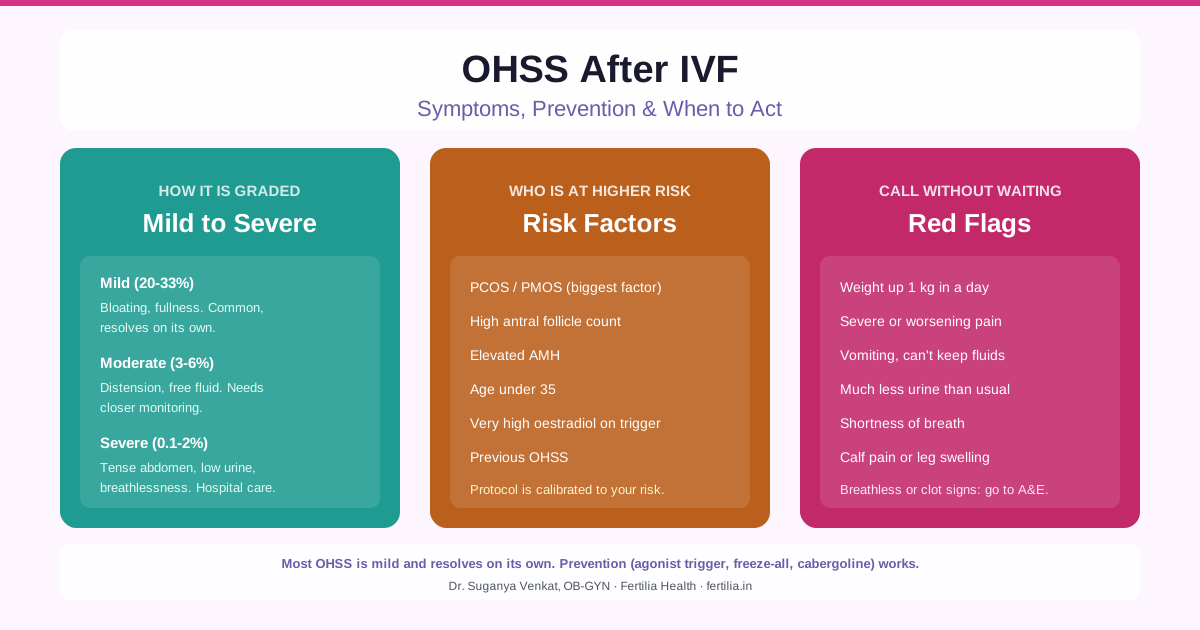
OHSS affects roughly 20-33% of IVF cycles in mild form. Moderate OHSS occurs in about 3-6% of cycles. Severe OHSS is uncommon, estimated at 0.1-2% of cycles (Delvigne & Rozenberg, Human Reproduction Update, 2002, PMID 12498425). Life-threatening OHSS is rare, but it exists, which is why understanding the grading system matters.
Who Is at Higher Risk
Not every woman going through IVF develops OHSS. These factors increase the likelihood:
PCOS (or PMOS, as the condition was renamed in 2026). Women with PCOS have more resting follicles and tend to respond more strongly to stimulation. This is the single largest risk factor. Women with PCOS have a two- to four-fold higher risk of moderate-to-severe OHSS compared to women without it. If you have PCOS and are planning IVF, your doctor should be calibrating your protocol specifically for this.
High antral follicle count (AFC). A high resting follicle count means more follicles are available to recruit. If your AFC was above 20-25 on your baseline scan, your doctor will monitor your response carefully. Understanding your AFC scan report.
Elevated AMH. High AMH correlates with the likelihood of a stronger stimulation response. It informs how your protocol is designed, and a high value is a signal for your reproductive endocrinologist to start at a lower dose. What AMH levels mean for you.
Age under 35. Younger ovaries tend to be more responsive. This is generally good news for egg yield, but it means the stimulation needs careful calibration to avoid over-recruitment.
Very high oestradiol on trigger day. An oestradiol level above 3,000-4,000 pg/mL on the day of the trigger shot suggests a large number of maturing follicles and a higher OHSS risk.
Previous OHSS. If you developed moderate or severe OHSS in a prior cycle, your doctor will modify the protocol for this one. Prior OHSS is among the most reliable predictors of future OHSS.
If you have more than one of these factors, your doctor will typically adjust the starting dose, monitor you more frequently, and have a prevention strategy planned from the beginning.
The Four Grades of OHSS
OHSS is classified into four grades. Knowing them helps you contextualise what you are experiencing and understand what level of response is needed.
Mild OHSS (Grades 1-2)
Symptoms: bloating, abdominal discomfort, nausea, a feeling of fullness. On ultrasound, the ovaries are enlarged (typically 5-12 cm), but there is minimal or no free fluid in the abdomen.
This is common, particularly in women with high AFC or PCOS. It is not dangerous. It resolves on its own as the stimulation phase progresses and hormone levels settle, usually within one to two weeks if no pregnancy occurs. Rest, light activity, adequate fluid intake, and daily monitoring are the main recommendations.
Moderate OHSS (Grade 3)
Symptoms: more pronounced bloating and nausea, visible abdominal distension, and free fluid in the abdomen visible on ultrasound (ascites). The ovaries are larger (typically 8-12 cm). Women often notice their abdomen looks measurably rounder and their clothes feel much tighter.
Moderate OHSS usually resolves without hospitalisation, but it requires closer monitoring. Your doctor will track your weight, urine output, and blood parameters including haematocrit, electrolytes, and kidney function.
Severe OHSS (Grade 4)
Symptoms: tense and painful abdominal distension, significantly reduced urination, repeated vomiting, shortness of breath. Blood tests show a high haematocrit (above 45%) due to fluid loss from the circulation, and there may be fluid in the chest (pleural effusion).
Severe OHSS requires hospitalisation. Treatment includes intravenous fluids, albumin infusion, anticoagulant medication to reduce clot risk, and close monitoring of blood parameters.
Critical OHSS (Grade 5)
Symptoms: massive ascites, haematocrit above 55%, severely reduced or absent urination, or symptoms of a blood clot (leg pain, arm swelling, chest pain, shortness of breath). This grade is rare but life-threatening and needs emergency care.
The practical takeaway: mild symptoms during IVF stimulation are expected and normal. The shift from mild to moderate tends to be gradual, which is why tracking your own weight and symptoms at home matters.
What to Monitor at Home
The most useful thing you can do during a stimulation cycle is monitor yourself in a simple, structured way. You do not need to spend the stimulation phase in a state of anxiety. You need to know what your normal baseline feels like and what a change from that baseline looks like.
Daily weight check. Weigh yourself each morning before eating, after using the bathroom, in similar clothing. A gain of more than 1 kg in 24 hours, or more than 3 kg over three to four days, suggests fluid retention and should be reported to your clinic.
Abdominal discomfort level. Mild bloating and a feeling of fullness are expected throughout stimulation. If discomfort escalates to pain you would rate as 6 or above out of 10, or if it becomes constant rather than coming and going, contact your clinic.
Urine output. You should be passing urine regularly throughout the day. If you notice significantly less urine than usual, or if it becomes dark and concentrated, drink more fluid and contact your clinic. Decreased urine output is one of the key signs that fluid is not staying in the circulation where it belongs.
Nausea and vomiting. Mild nausea is common. If you are vomiting repeatedly or cannot keep fluids down for four to six hours, contact your clinic the same day. Dehydration worsens OHSS and can escalate a moderate presentation toward a severe one more quickly.
Hydration. Aim for at least two to two and a half litres of fluid per day. Electrolyte-containing fluids are particularly useful because they replace the sodium and potassium that shift when fluid leaks out of the circulation. Diluted coconut water (nariyal pani) with a pinch of salt, or plain ORS (oral rehydration solution) available at any Indian pharmacy, work well alongside plain water.
What to expect during the two-week wait after your embryo transfer.
If you are in the middle of an IVF cycle and uncertain whether what you are feeling is within normal range, a video call with Dr. Suganya can give you clarity the same day.
She consults online, pan-India, at ₹399.
WhatsApp Dr. Suganya to book.
When to Call Your Doctor Without Waiting
These are the symptoms that should not wait until your next scheduled scan or blood test:
Rapid weight gain. More than 1 kg in one day, or 3 kg over three to four days.
Severe or worsening abdominal pain. Pain that has moved from mild to significant and is not easing with rest or position changes.
Persistent vomiting. Cannot keep water or food down for more than four to six hours.
Decreased urination. Noticeably less urine than your normal daily output, or urine that is dark yellow or amber.
Shortness of breath. Any difficulty breathing, or inability to breathe comfortably while lying flat.
Leg swelling or calf pain. Could indicate a deep vein thrombosis (blood clot), a rare but recognised complication of severe OHSS due to blood thickening.
Dizziness or feeling faint. A sign of significant hemoconcentration, meaning the blood has thickened due to fluid loss.
If you experience shortness of breath, leg swelling with pain, or abdominal pain that is rapidly worsening, do not wait for your clinic to call back. Go to the nearest emergency department.
How Doctors Prevent OHSS
Prevention is now a well-understood part of IVF practice. If your doctor identifies you as high-risk before or during stimulation, several approaches are available.
Low starting dose and step-up titration. The protocol starts at a lower-than-standard stimulation dose and is adjusted based on your serial scan and oestradiol response, rather than following a fixed schedule.
GnRH antagonist protocol with GnRH agonist trigger. Antagonist protocols (using drugs like cetrorelix or ganirelix to prevent premature ovulation) allow the use of a GnRH agonist trigger instead of the standard hCG trigger. A GnRH agonist trigger produces a short, self-limiting LH surge that matures the eggs with far less risk of triggering the VEGF-driven leakage. A 2011 Cochrane review of 17 randomised trials found GnRH agonist trigger significantly reduced the risk of OHSS without reducing pregnancy rates in antagonist cycles (Youssef et al., Cochrane Database Syst Rev, 2011, PMID 21249699).
Freeze-all strategy. When OHSS risk is high, your doctor may recommend retrieving the eggs, fertilising them, and freezing all resulting embryos rather than proceeding to a fresh transfer. You return one to two cycles later for a frozen embryo transfer (FET) when your ovaries have settled. This eliminates the risk of late OHSS, which is driven by the rising hCG of early pregnancy. Devroey and colleagues described this approach as forming the basis of an “OHSS-free clinic,” and the strategy is now supported by good evidence (Devroey, Polyzos & Blockeel, Human Reproduction, 2011, PMID 21828116).
For more on this, read our guide on Frozen Embryo Transfer (FET). Cabergoline. A dopamine agonist tablet (brand name Dostinex in India), started on the day of the trigger shot and taken for approximately eight days, reduces the VEGF-mediated vascular permeability that drives fluid leakage. Álvarez and colleagues showed that cabergoline significantly reduced hemoconcentration and ascites in hyperstimulated women without affecting implantation rates (J Clin Endocrinol Metab, 2007, PMID 17456571). It is commonly used alongside the GnRH agonist trigger and freeze-all in high-risk cases.
Intravenous albumin at egg retrieval. In some cases, an albumin infusion at the time of egg retrieval helps maintain colloid osmotic pressure and reduces fluid leakage in the immediate post-retrieval period.
If you have PCOS, a high AFC, or have been told your oestradiol is rising quickly, it is worth having a direct conversation with your reproductive endocrinologist before the trigger shot about which prevention strategies they have planned and why.
Preparing your body well before an IVF cycle.
Early OHSS and Late OHSS
OHSS occurs in two time-related patterns, and understanding the difference matters for women doing a fresh transfer.
Early OHSS develops within the first nine days after egg retrieval. It is caused by the hCG trigger shot. If embryos are frozen and no fresh transfer takes place, early OHSS resolves as the hCG clears from the body over seven to fourteen days. The ovaries shrink gradually, the discomfort eases, and the cycle is closed.
Late OHSS develops more than ten days after egg retrieval and is driven by the hCG produced by an early pregnancy. If a fresh transfer was done and implantation occurs, the rising pregnancy hCG can significantly worsen and prolong the OHSS. This is why the freeze-all strategy is particularly recommended for high-risk women: it closes out the stimulation cycle cleanly and removes the late OHSS risk, while all embryos are preserved safely for a later transfer.
If you did have a fresh transfer and your OHSS symptoms are escalating rather than improving during the two-week wait, contact your clinic before your beta-hCG test date. Do not wait to find out the result before reporting symptoms that concern you.
What OHSS Treatment Looks Like
Mild OHSS: rest, avoid strenuous physical activity, maintain fluid intake of two to two and a half litres daily (include electrolytes), and monitor your weight and urine output. Most mild OHSS resolves without any intervention beyond this.
Moderate OHSS: your clinic will schedule more frequent monitoring visits. Blood tests track haematocrit, kidney function, and electrolytes. Paracentesis (removing abdominal fluid through a needle under ultrasound guidance) may be offered if tense ascites is causing significant discomfort. Most moderate OHSS is managed outpatient.
Severe OHSS: hospitalisation. Treatment includes intravenous fluids to support the circulation, albumin infusion, low-molecular-weight heparin (to prevent thrombosis), and paracentesis as needed. The team monitors closely until the ovaries settle, typically within ten to fourteen days if there is no ongoing pregnancy hCG driving the process.
The key point here: OHSS is treatable. In the vast majority of cases it resolves completely, and your fertility is not affected by having had OHSS. Your doctor’s job is to catch the escalation before it becomes severe, and your job is to report symptoms that tell them something is changing.
IVF success rates in India by age: what the data shows.
You should not have to navigate an IVF cycle alone with questions like these sitting unanswered.
Dr. Suganya Venkat consults online, via video call, pan-India, for women in the middle of or preparing for an IVF cycle. She can help you make sense of your scan reports, blood results, and symptoms.
WhatsApp Dr. Suganya for a ₹399 online consultation, available pan-India.
Frequently Asked Questions
Is bloating during IVF stimulation always OHSS?
No. Bloating is a common and expected side effect of ovarian stimulation. When the ovaries grow multiple follicles and enlarge significantly, the abdomen feels fuller. This is a normal response to stimulation, not OHSS. OHSS specifically refers to an exaggerated response where fluid leaks out of blood vessels into the abdomen. Mild bloating during stimulation is nearly universal; moderate-to-severe OHSS requiring intervention affects a much smaller proportion of women.
When after egg retrieval does OHSS typically develop?
Early OHSS typically begins three to nine days after egg retrieval. You may notice symptoms worsening in the days immediately following the procedure. Late OHSS begins more than ten days after retrieval and is associated with pregnancy hCG if a fresh transfer led to implantation. If you had a fresh transfer and symptoms are escalating in the second week after retrieval, contact your clinic.
Does OHSS affect the embryos or the resulting pregnancy?
No. OHSS does not damage the embryos themselves. If all embryos are frozen, they are completely unaffected by any OHSS that occurs in the retrieval cycle. If a fresh transfer was done and a pregnancy results, the pregnancy itself is not harmed by the OHSS, though the OHSS may worsen due to the rising hCG. Freeze-all followed by a frozen embryo transfer (FET) eliminates the late OHSS risk and, in high-responders, often produces comparable or better pregnancy rates than a fresh transfer.
What should I eat and drink during OHSS?
Maintain adequate protein intake, as protein helps keep fluid within the circulation. Dal, paneer, curd (dahi), eggs, and fish are all useful. Avoid heavy or very spicy meals if you are nauseated. The main priority is fluid: two to two and a half litres daily, including electrolyte-containing drinks. Diluted coconut water (nariyal pani) with a small pinch of rock salt, or standard ORS sachets from a pharmacy, are practical options alongside plain water. Avoid alcohol.
क्या OHSS IVF के बाद खतरनाक है? (Is OHSS dangerous after IVF?)
ज़्यादातर महिलाओं को हल्का OHSS होता है, जो खुद ठीक हो जाता है। लेकिन अगर पेट में ज़्यादा दर्द हो, पेशाब बहुत कम हो रही हो, वजन तेज़ी से बढ़ रहा हो, या सांस लेने में तकलीफ हो, तो तुरंत अपने डॉक्टर को बताएं। इन लक्षणों को नज़रअंदाज़ न करें।
(Most women have mild OHSS, which resolves on its own. But if you have significant abdominal pain, much less urination than usual, rapid weight gain, or any difficulty breathing, contact your doctor straight away. Do not ignore these signs.)
Does having PCOS mean I will definitely get OHSS during IVF?
No. Having PCOS means you are at higher risk, not that OHSS is certain. Many women with PCOS go through IVF with no significant OHSS because the protocol was calibrated to their risk from the start: lower stimulation doses, frequent monitoring, a GnRH agonist trigger, and a freeze-all strategy when oestradiol is rising quickly. Discussing your PCOS with your reproductive endocrinologist before stimulation begins, so the protocol is planned around your specific AFC and AMH, is the most practical step you can take.
What is a freeze-all cycle and how does it change OHSS risk?
A freeze-all cycle means all embryos created during the stimulation cycle are cryopreserved, and no fresh transfer takes place. You return one to two months later for a frozen embryo transfer (FET). This eliminates late OHSS entirely, because late OHSS is driven by the pregnancy hCG from a fresh implantation. Without a fresh transfer, there is no rising pregnancy hCG to prolong or worsen the OHSS from stimulation. Freeze-all has become a well-supported option in women at high risk of OHSS, with pregnancy rates from FET now comparable to or in some groups better than fresh transfer. For more on how to approach IVF preparation, read our IVF preparation guide.