“Doctor, my gynaecologist gave me a tablet to get my periods. Is it treating my PCOS, or only covering it up?”
I hear some version of this question almost every week. Often the tablet turns out to be a combined birth control pill, even though nobody used that word when it was prescribed. The woman has been taking it for months, her bleeds now come on time, and she is not sure whether that means she is getting better.
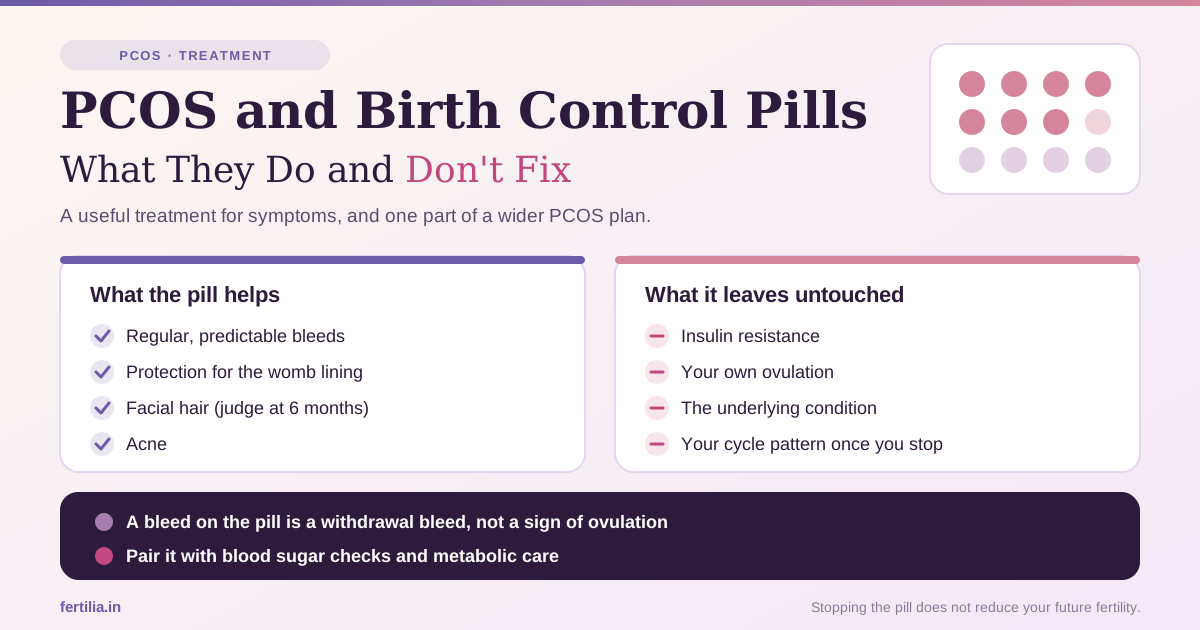
The short answer: in PCOS, the combined pill is a well-supported treatment for three things: irregular cycles, excess facial and body hair, and acne. It works by lowering the activity of androgens (male-type hormones) that drive those symptoms, and it protects the lining of the womb. It does not correct insulin resistance, it does not make your own ovaries ovulate, and it does not change the underlying condition. When you stop it, your cycle goes back to whatever pattern your body has at that point. That is why the pill works best as one part of a plan rather than the whole plan.
Here is what this post covers:
- How the pill works in PCOS
- What it helps: cycles, the womb lining, hair and acne
- What it leaves untouched: insulin resistance, ovulation and the diagnosis itself
- What happens when you stop, including when you want to conceive
- Who should not take it, and the questions to ask at your next review
If your question is about general side effects of the pill (nausea, spotting, mood changes, clot risk), that is covered in our OB-GYN guide to birth control pill side effects. This post stays with the PCOS question.
How the Pill Works in PCOS
Most pills prescribed for PCOS are combined pills: a synthetic oestrogen (usually ethinylestradiol) plus a progestin. They act on PCOS in two ways.
First, they quieten the monthly signal (LH) from the brain that tells the ovaries to make hormones, so the ovaries produce less testosterone. Second, the oestrogen prompts the liver to make more sex hormone-binding globulin (SHBG), a protein that binds testosterone and keeps it inactive. A meta-analysis of 42 studies in healthy women found that combined pills lowered free (active) testosterone by an average of 61% and raised SHBG with every type of pill studied (Zimmerman Y et al., Hum Reprod Update, 2014, PMID 24082040). Those women did not have PCOS, but this is the same mechanism we rely on when the pill is used for PCOS symptoms.
The bleed you get in the pill-free or placebo week is a withdrawal bleed. It happens because the pill’s hormones are paused, not because you ovulated. This is the most useful single fact about the pill in PCOS: a regular bleed on the pill tells you the pill is doing its job. It does not tell you that your own cycle has recovered.
What the Pill Helps With
Irregular cycles and the womb lining
The 2023 international PCOS guideline states that combined pills could be recommended for adults with PCOS to manage irregular cycles and excess hair growth (Teede HJ et al., Hum Reprod, 2023, PMID 37580037). It is one of the guideline’s main medical options for these symptoms.
Part of its value is protecting the endometrium (womb lining). When ovulation happens rarely, the lining is exposed to oestrogen month after month without progesterone to balance it. The same guideline notes that women with PCOS have a higher risk of endometrial hyperplasia (overgrowth of the lining) and endometrial cancer, and in the same breath says the overall chance of endometrial cancer is low and routine screening is not recommended (Teede HJ et al., Hum Reprod, 2023, PMID 37580037). It lists cycle regulation, regular progestogen therapy and weight management as the ways to keep that risk down. A combined pill provides the regular progestin and the regular shedding of the lining. If you are not on any treatment and go more than three months without a period, mention it to your doctor so the lining can be looked after.
Excess facial and body hair
Hirsutism (excess facial and body hair) does improve on the pill, but slowly. Hair grows in cycles that last months, so existing coarse hairs have to shed and be replaced by finer ones. The Endocrine Society’s hirsutism guideline suggests a combined pill for most women, adding an anti-androgen only if the response is not good enough after six months (Martin KA et al., J Clin Endocrinol Metab, 2018, PMID 29522147). The 2023 PCOS guideline uses the same six-month minimum before adding an anti-androgen such as spironolactone (Teede HJ et al., Hum Reprod, 2023, PMID 37580037).
So I ask women to judge the pill on hair at the six-month mark, not at six weeks. Many stop in the second month because nothing seems to change, and decide it “did not work.” Threading, waxing or laser alongside the pill is fine and gives quicker visible results while the pill works underneath. For what drives the hair growth and what else helps, see our guide to PCOS facial hair.
Acne
A Cochrane review of 31 trials found that in all nine placebo-controlled trials with data for analysis, combined pills reduced acne lesion counts and severity compared with placebo (Arowojolu AO et al., Cochrane Database Syst Rev, 2012, PMID 22786490). Most of those trials were in women with acne in general rather than PCOS specifically, but the androgen-lowering effect behind them is the same. In my experience, skin usually needs about three months on the pill to show a clear change. Our post on PCOS acne covers the skincare and other treatments that can go alongside.
Which pill, and which dose
The 2023 guideline does not name one best pill or progestin for PCOS. It finds no clinical advantage of higher-dose ethinylestradiol (30 µg or more) over lower doses for hirsutism, suggests the lowest effective oestrogen dose (around 20 to 30 µg), and places pills containing 35 µg ethinylestradiol with cyproterone acetate as second-line because of their higher clot risk (Teede HJ et al., Hum Reprod, 2023, PMID 37580037). If your strip lists cyproterone acetate among its ingredients, that is a reasonable thing to raise at your next review. Any switch is a decision to make with your gynaecologist, not alone.
💜 Not sure what your pill is doing for your PCOS? Message Dr. Suganya on WhatsApp with your pill strip and reports, and talk it through over a ₹399 video consultation from anywhere in India or abroad.
What the Pill Does Not Fix
Insulin resistance
Insulin resistance is one of the main PCOS drivers, and the pill does not treat it. A meta-analysis of 35 studies in women with PCOS found that pill use was not associated with clinically significant harm to blood sugar or insulin measures, while HDL cholesterol and triglycerides both rose (Halperin IJ et al., Hum Reprod, 2011, PMID 21059754). In other words, on average the pill neither damages nor repairs metabolism.
There is one finding worth knowing. In a trial of 149 women with PCOS and higher body weight who were trying to conceive, 16 weeks of the pill alone increased the proportion with metabolic syndrome, while women who took the pill together with a structured weight-loss programme showed no such rise (Legro RS et al., J Clin Endocrinol Metab, 2015, PMID 26401593). The practical lesson is to pair the pill with metabolic care.
This is also why the 2023 guideline suggests metformin over the pill for metabolic goals, and says that adding metformin to the pill may help most in women with a BMI above 30, diabetes risk factors, impaired glucose tolerance or from higher-risk ethnic groups (Teede HJ et al., Hum Reprod, 2023, PMID 37580037). Your doctor can tell you whether any of these apply to you. Our posts on insulin resistance in PCOS and metformin for PCOS explain how this side of PCOS is checked and treated.
Your own ovulation
The pill prevents ovulation while you take it, which is how it works as contraception. It does not train your ovaries to ovulate regularly later. Whatever was causing irregular ovulation before you started (insulin resistance, higher androgen levels, weight changes, or simply the way your ovaries work) is still there when you stop, unless something else has changed in the meantime.
The condition itself
PCOS (renamed PMOS, polyendocrine metabolic ovarian syndrome, in 2026) is a long-term hormonal and metabolic condition with a genetic basis. The pill manages its symptoms for as long as you take it. You can read more about the name change in our post on the PCOS to PMOS rename.
Testing while you are on it
The pill also changes your blood tests. The 2023 guideline notes that androgen levels are very hard to interpret while you are on a combined pill, and that if they truly need to be measured, the pill should be stopped for at least three months with other contraception used in the meantime. It also notes that AMH (anti-Müllerian hormone) may be lowered by current or recent pill use (Teede HJ et al., Hum Reprod, 2023, PMID 37580037). So if you are on the pill and a hormone report comes back “normal,” it may be showing the pill’s effect rather than your own levels. Tell whoever orders the test that you are on the pill.
What Happens When You Stop
After your last pill, you will usually have one withdrawal bleed. What comes next is your own cycle, and in PCOS it often returns to the pattern you had before: long gaps, or periods that are hard to predict. This is the underlying condition showing itself again. Our post on your period after stopping the pill walks through the normal timelines.
There is one pattern to mention to your doctor. If your periods were regular before you ever started the pill and became irregular only after stopping, that timeline matters. ⚠️ It may not be true PCOS, and it is often transient, settling over a few months as your own cycle re-establishes. It deserves assessment rather than an automatic label.
Fertility after the pill
The pill does not reduce your future fertility. A meta-analysis of 22 studies covering 14,884 women found a pooled pregnancy rate of 83.1% within 12 months of stopping contraception, and the length of time someone had taken the pill did not affect how quickly fertility returned (Girum T et al., Contracept Reprod Med, 2018, PMID 30062044). Those were women in general, not women with PCOS. For PCOS, what shapes the months after stopping is how regularly you ovulate on your own, which is the same question you would have faced without the pill.
When you want to conceive
When you are ready to try, stop the pill and watch your cycles. If you are not ovulating, the 2023 guideline names letrozole as the first-line medicine for ovulation induction in women with PCOS who have no other fertility factors (Teede HJ et al., Hum Reprod, 2023, PMID 37580037). In a large trial of 750 women with PCOS, letrozole led to more live births than clomiphene, 27.5% compared with 19.1% (Legro RS et al., N Engl J Med, 2014, PMID 25006718). Our guide to letrozole for PCOS covers doses and what to expect.
A common belief is that taking the pill for a few months before trying will “set” the cycle. The evidence points the other way. In the same 149-woman trial mentioned above, women who took the pill for 16 weeks before ovulation induction had a cumulative ovulation rate of 46%, compared with 60% after a weight-loss programme and 67% with both together. Live births were 12%, 26% and 24%, a difference that did not reach statistical significance in a trial of that size (Legro RS et al., J Clin Endocrinol Metab, 2015, PMID 26401593). The months before conception are better spent on the metabolic side.
Who Should Not Take the Combined Pill
The combined pill is not suitable for everyone, and the 2023 guideline asks doctors to discuss contraindications individually and to consider PCOS features such as higher weight and cardiovascular risk (Teede HJ et al., Hum Reprod, 2023, PMID 37580037). Your doctor will usually check for:
- A past blood clot in the legs or lungs, or a strong family history of clots
- Migraine with aura
- Smoking if you are 35 or older
- High blood pressure that is not well controlled
- Active liver disease or a history of breast cancer
- Having had a baby in the last few weeks
If the combined pill is not right for you, there are other routes. The guideline suggests metformin for irregular cycles when the pill is not suitable or not tolerated, progestin-only options for protecting the womb lining, and anti-androgens for hair growth, but only alongside another reliable contraceptive because anti-androgens can affect a developing male baby (Teede HJ et al., Hum Reprod, 2023, PMID 37580037).
How the Pill Fits Into a Wider PCOS Plan
I’m Dr. Suganya Venkat, an OB-GYN with more than 15 years of clinical practice, and when a woman joins Fertilia’s online PCOS program already on a pill her gynaecologist prescribed, I do not ask her to stop it. The pill keeps handling what it handles well: cycles, the lining, hair and skin. What we add is the part it leaves alone: blood sugar and insulin, weight where that is relevant, sleep and stress, and a clear plan for the day she wants to come off it.
That plan is usually unglamorous. Meals built around dal, vegetables and millets like ragi or jowar, with portions of rice and roti that suit her. Regular movement she can keep up. A blood sugar check if it has not been done. The 2023 guideline itself notes that active lifestyle care and metformin have similar effects on metabolic measures, so this part of the plan counts as treatment in its own right (Teede HJ et al., Hum Reprod, 2023, PMID 37580037). If you want a structured way to start, our PCOS Reversal Guide is a free download.
Questions to Ask at Your Next Review
- What is this pill treating in my case: cycles, hair, acne, the lining, or contraception?
- How long should I give it before we judge whether it is working?
- Does my pill contain cyproterone acetate, and is that the right choice for me?
- Has my blood sugar been checked, and do I need metformin or lifestyle support as well?
- What is the plan when I want to stop, or when I want to conceive?
Practical Takeaways
- A regular bleed on the pill is a withdrawal bleed. Your own cycle shows itself only after you stop.
- Give the pill about three months for acne and six months for facial hair before judging it.
- The pill does not treat insulin resistance. Pair it with a blood sugar check and metabolic care.
- Stopping the pill does not cause PCOS and does not reduce your future fertility. Your own cycle pattern returns.
- Taking the pill to “set” your cycle before conceiving is not supported by trial evidence. If you are not ovulating after stopping, letrozole is the first-line medicine.
- Do not stop or switch a prescribed pill on your own. Make the change with your gynaecologist so you are not left without contraception.
💜 Want a plan that covers what the pill does not? Talk to Dr. Suganya on WhatsApp to start with a ₹399 online consultation, or read about the PCOS Symptom Reversal program.
Frequently Asked Questions
1. Does the birth control pill cure PCOS? No. The combined pill treats PCOS symptoms (irregular cycles, excess hair growth and acne) and protects the womb lining for as long as you take it. It does not change the underlying condition or correct insulin resistance, so symptoms usually return after stopping unless other factors such as weight or blood sugar have also changed.
2. Can the pill cause PCOS or make it worse? The pill does not cause PCOS. When you stop it, the cycle pattern you had underneath returns, which can look like PCOS appearing for the first time. On metabolism, a meta-analysis of 35 studies found no clinically significant harm to blood sugar or insulin measures in women with PCOS on the pill, though HDL cholesterol and triglycerides rose. Pairing the pill with lifestyle care is the sensible approach.
3. How long can I take the pill for PCOS? Many women take it for years when it suits them. There is no fixed cut-off, but your eligibility should be reviewed at regular check-ups, including blood pressure, migraine pattern, smoking and weight. Your plan may change when you want to conceive or if a new health issue appears.
4. Will my periods be regular after I stop the pill? You will usually have one withdrawal bleed, then your own cycle takes over. In PCOS that cycle is often irregular again, because the pill was managing the pattern rather than changing it. If your periods were regular before you ever started the pill, tell your doctor, as a new irregularity after stopping may not be PCOS and is often temporary.
5. Should I take the pill to regulate my cycles before trying to conceive? Trial evidence does not support this. In a trial of overweight women with PCOS, 16 weeks of the pill before ovulation induction gave a lower ovulation rate (46%) than a weight-loss programme (60%) or both together (67%). If you are not ovulating after stopping, letrozole is the first-line ovulation medicine in the 2023 international guideline.
6. Can I take metformin and the pill together? Yes, they are often used together. The 2023 international guideline suggests the combination may help most in women with a BMI above 30, diabetes risk factors, impaired glucose tolerance or from higher-risk ethnic groups. For women with a lower BMI, adding metformin may offer little extra benefit, so the decision depends on your own metabolic picture.
7. Is the bleed on the pill a real period? No. It is a withdrawal bleed caused by the pause in the pill’s hormones, not by ovulation. It is still useful, because it sheds the womb lining regularly, but it does not tell you whether your own ovaries are cycling.
Have questions about the pill and your PCOS? Message Dr. Suganya on WhatsApp: wa.me/919940270499