After you read what IVF costs in India, the next question is almost always the same one: but will it work?
It is a fair question. Spending ₹1.5 to ₹3.5 lakh on a single cycle is not a small decision. You want to understand what the money is actually buying you in terms of a realistic chance of pregnancy.
The problem is that “IVF success rates” is a phrase that gets used loosely, and the numbers you see advertised by fertility clinics in India can vary enormously. Some clinics publish 50%. Others quote 30%. Research papers use different denominators, different endpoints, and different populations. By the time you have read three clinic websites and two research papers, you are more confused than when you started.
For more on this, read our guide on IUI vs IVF. This post cuts through that. It explains what success rate figures actually measure, where the reliable age-wise data comes from, what the numbers look like in practice for Indian women, and which factors genuinely move the needle for your individual situation.
The Different IVF Success Metrics, Explained
This is the most important thing in this entire post: there is no single number called “the IVF success rate.” There are several different metrics, and they measure very different things.
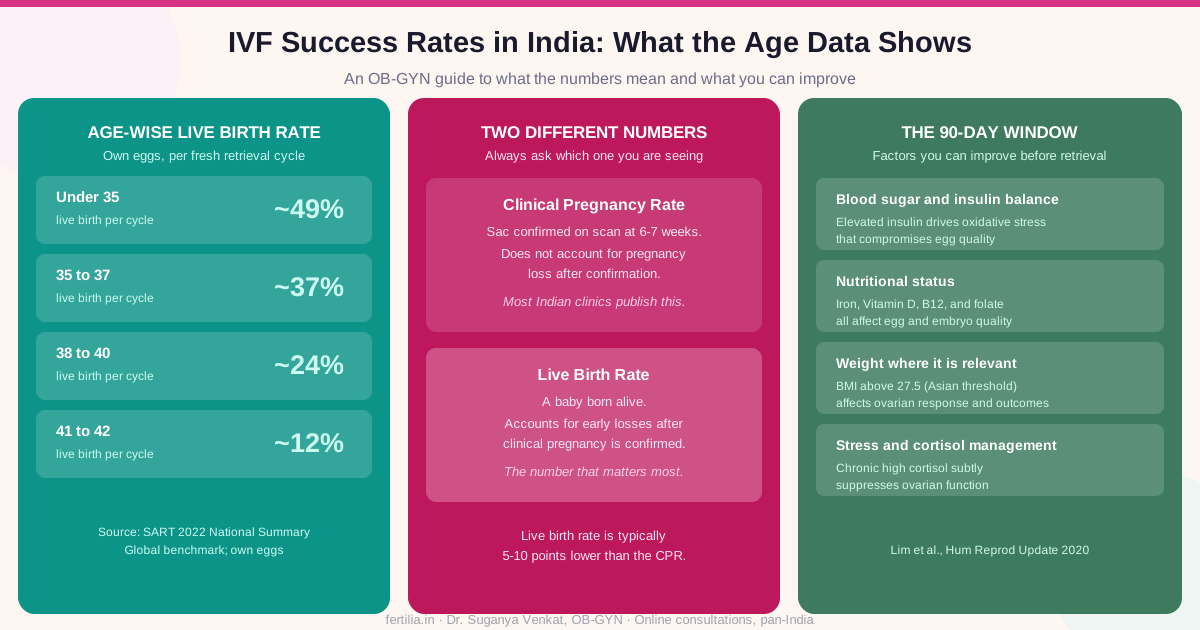
Clinical pregnancy rate is how most Indian fertility clinics report their outcomes. It means: a gestational sac was visible on ultrasound around 6 to 7 weeks. The pregnancy was confirmed. But a confirmed pregnancy at 6 weeks is not the same as a baby in your arms. Miscarriages, chemical pregnancies, and failed heartbeats all happen after a clinical pregnancy is declared. Clinical pregnancy rates are typically 5 to 10 percentage points higher than live birth rates.
Biochemical pregnancy rate (or positive beta hCG rate) is even higher. Some clinics publish this. It means a blood test showed a positive pregnancy hormone. But hCG levels that do not rise appropriately, or that fall, mean the pregnancy has not implanted successfully. These are sometimes called chemical pregnancies. A positive blood test is not a clinical pregnancy.
Live birth rate is the number that matters. This is the percentage of IVF cycles that result in a baby born alive. It is the most honest measure, and it is the one that most research papers use as the primary endpoint. It is also the lowest of the three numbers. When comparing clinics or studies, always ask which metric they are using.
Cumulative live birth rate is the percentage of patients who achieve a live birth after multiple IVF cycles (usually three to six). This number is higher than the per-cycle rate because patients who do not succeed in cycle one can try again, often using frozen embryos from the same egg retrieval. Cumulative success across multiple cycles is more encouraging than single-cycle data, and it is often more relevant to what a patient’s full treatment journey will look like.
Age-Wise IVF Success Rate Data
Age is the single most significant predictor of IVF success. This is not a judgment. It is biology. The quality and quantity of eggs decline with age, and egg quality is the dominant factor determining whether an embryo develops, implants, and continues as a healthy pregnancy.
The most rigorous and consistently published age-wise IVF data comes from SART, the Society for Assisted Reproductive Technology in the United States, which collects outcome data from several hundred fertility clinics every year. The 2022 SART national summary reports the following live birth rates per egg retrieval cycle using the patient’s own eggs:
| Age Group | Live Birth Rate per Retrieval (Own Eggs) |
|---|---|
| Under 35 | ~49% |
| 35 to 37 | ~37% |
| 38 to 40 | ~24% |
| 41 to 42 | ~12% |
| 43 and above | ~4% |
These are live birth rates, not clinical pregnancy rates. They represent the proportion of fresh egg retrieval cycles that result in a baby born.
What about India specifically? Indian fertility clinics are registered with the ICMR (Indian Council of Medical Research) and data is compiled through the National ART Registry. Most published Indian academic data reports clinical pregnancy rates, not live birth rates. At well-established Indian IVF centres, published clinical pregnancy rates for women under 35 using their own eggs typically range from 35 to 45 per cent per fresh cycle. Converting to estimated live birth rates (by applying the standard miscarriage adjustment of roughly 12 to 18 per cent for this age group), the live birth rate at these centres is approximately 28 to 38 per cent per fresh cycle.
For women over 38, miscarriage risk rises significantly because chromosomally abnormal embryos become more common. This is why the drop in live birth rate is steeper in the 38 to 42 age bracket.
A note on donor eggs: The age figures above are for a patient’s own eggs. When donor eggs are used, the success rate reflects the age and health of the donor, not the recipient. Live birth rates with donor eggs at established Indian centres typically fall in the 45 to 55 per cent range per cycle for most recipients, because the eggs come from younger women.
What These Numbers Mean in Practice
If you are 33 and beginning your first IVF cycle, a live birth rate of around 35 to 45 per cent per cycle means: in any given cycle, there is roughly a one-in-three chance of bringing home a baby. That is not a guarantee. But it is also not a long shot.
If you need multiple cycles, the cumulative picture is more encouraging. A landmark study published in the New England Journal of Medicine (Malizia et al., 2009; PMID 19144939) followed 6,164 patients over multiple IVF cycles. It reported two numbers for every age group, and the gap between them matters more than either one. For women under 35, the cumulative live birth rate after six cycles was 86 per cent on the optimistic estimate and 65 per cent on the conservative one. The optimistic figure assumes women who stopped treatment would have done as well as those who continued; the conservative figure assumes none of them would have had a baby. The truth sits between. For women aged 40 and over the same two estimates were 42 per cent and 23 per cent.
The practical implication: most women who are going to succeed with IVF will do so within three cycles. The step-down in per-cycle success rate after cycle three is more pronounced than the step-down between cycles one and two.
[WhatsApp CTA]
If you are preparing for IVF and want to understand how the 90-day window before your cycle affects your individual odds, speak with Dr. Suganya. She works with women across India over video call to support the preparation phase: egg quality, endometrial health, weight optimisation where it matters, and stress management during the wait. Message on WhatsApp.
Factors That Affect Your Individual Odds
The population-level success rate tells you where you are starting from. These factors tell you how far from that average you might be sitting, in either direction.
Ovarian reserve (AMH and AFC). AMH (anti-Mullerian hormone) and AFC (antral follicle count on ultrasound) reflect how many eggs your ovaries are likely to produce in response to stimulation. A lower ovarian reserve means fewer eggs retrieved per cycle, which means fewer embryos available for transfer, which reduces the per-cycle probability of success. It does not mean zero chance. AMH does not predict egg quality, and there are women with very low AMH who conceive on their first cycle. But it does affect the number of attempts the eggs from one retrieval will support.
For more on how AMH and AFC compare as reserve tests, read AMH vs AFC: Which Ovarian Reserve Test Tells You More?.
Sperm parameters. Sperm count, motility, and morphology all affect fertilisation rates and embryo quality. When sperm parameters are borderline, ICSI (intracytoplasmic sperm injection, where a single sperm is injected directly into the egg) is typically used. ICSI is now standard in most Indian IVF cycles regardless of sperm quality, but when parameters are significantly reduced, fertilisation rates and embryo quality may still be lower even with ICSI.
Uterine factors. The endometrium (the lining of the uterus) needs to be receptive for an embryo to implant. A thin endometrium (below 7 mm), fibroids distorting the uterine cavity, uterine polyps, or Asherman’s syndrome (adhesions inside the uterus) all reduce implantation rates. These are often identifiable and sometimes correctable before transfer.
Number of good-quality embryos available. More eggs retrieved generally means more embryos, which means more attempts. A cycle that produces 10 to 12 mature eggs gives your team more options than one that produces two or three. This is not entirely in your control, but the 90-day period before egg retrieval is when egg maturation is happening, and it is when optimisable factors (oxidative stress, nutrient status, blood sugar, weight) most directly affect the quality of the eggs that go into retrieval.
The clinic and protocol. Embryology expertise, laboratory conditions, and individualised stimulation protocols genuinely vary between centres. This is not a reason for anxiety or to second-guess your specialist. It is a reason to ask your fertility team specific questions: what is your clinical pregnancy rate for my age group, and how does that translate to live birth rates?
Cumulative Success: How Multiple Cycles Change the Picture
One of the most common misconceptions about IVF is that a failed first cycle means something is fundamentally wrong. It often does not. Embryo implantation is an intricate biological process, and not every chromosomally normal embryo implants even under ideal conditions.
The cumulative success framework matters because:
Most patients with frozen embryos from one egg retrieval have more than one attempt available. If your retrieval produces five blastocysts (day-five embryos), a failed fresh transfer does not mean starting from scratch. The frozen embryo transfer cycles that follow use those already-created embryos, at a fraction of the cost of a fresh cycle.
The endometrium has another chance. Sometimes the lining is not at its best in the fresh transfer cycle due to the hormonal load of stimulation. A frozen embryo transfer in a subsequent, less medically dense cycle can result in better implantation conditions.
Your body may respond differently across cycles. Stimulation protocols can be refined based on how your ovaries responded the first time. The second cycle for many patients is adjusted meaningfully from the first.
This is also why the per-cycle success rate, taken in isolation, can be misleading. A centre with a 35 per cent live birth rate per cycle and a strong embryo-freezing programme may result in higher cumulative success for patients over two to three years than a centre with a 40 per cent fresh-cycle rate but poor laboratory conditions for vitrification.
What You Can Do Before Your IVF Cycle
The 90-day period before your egg retrieval cycle is the window that matters most for modifiable factors. Eggs take approximately 90 days to mature from the early antral follicle stage to the point of ovulation (or retrieval in an IVF cycle). What is happening in your body during those 90 days influences the quality of the eggs that will be retrieved.
The factors that are genuinely within your influence during this window include:
Blood sugar and insulin balance. Ask your treating team to review any known diabetes, PCOS or blood-sugar concern when planning IVF. Your care plan should address your individual health needs without promising that dietary changes will improve egg quality or make a cycle succeed.
Nutritional status. Iron deficiency is common in Indian women and affects oocyte quality and endometrial receptivity. Vitamin D deficiency, B12 deficiency, and folate status are similarly linked to both egg quality and embryo development. A basic nutritional screen before starting your stimulation cycle is worth running.
Weight where it is medically relevant. Rittenberg’s review found lower live birth rates after IVF/ICSI among women with BMI at least 25 compared with those below 25; it did not test whether losing weight improves ovarian response or live birth rates (2011, Reproductive BioMedicine Online, PMID 21885344). A separate review of 12 randomized trials in women with obesity found more total pregnancies after pre-IVF weight-loss interventions, particularly unassisted conceptions, but uncertain effects on IVF-only pregnancies and live births (Michalopoulou et al., 2025, Annals of Internal Medicine, PMID 40789178). Discuss weight management and IVF timing with your specialist; these results do not establish a weight-loss target that guarantees a better cycle.
Stress and cortisol. The relationship between chronic psychological stress and IVF outcomes is real but often overstated. Acute stress during a cycle does not appear to directly prevent implantation. However, chronic high-cortisol states alter LH pulsatility and can suppress ovarian function subtly over the preparation period. The reason to manage stress before IVF is not to prevent a single bad day from ruining your chances. It is to support a lower-cortisol baseline across the pre-cycle preparation window.
For a structured approach to the pre-IVF preparation period, read How to Prepare Your Body for IUI or IVF: A 90-Day Guide.
Frequently Asked Questions
What is the average IVF success rate in India? At established Indian fertility centres, the clinical pregnancy rate per fresh IVF cycle for women under 35 using their own eggs is typically 35 to 45 per cent. This converts to an estimated live birth rate of roughly 28 to 38 per cent per fresh cycle after accounting for early pregnancy loss. For women over 38, the per-cycle live birth rate is lower: approximately 10 to 20 per cent at age 38 to 40, and below 10 per cent at age 42 and above. These are ranges, not guarantees, and individual outcomes vary based on multiple factors.
What is the difference between clinical pregnancy rate and live birth rate in IVF? A clinical pregnancy rate counts cycles where a gestational sac was confirmed on ultrasound around 6 to 7 weeks. A live birth rate counts cycles that ended with a baby born alive. Clinical pregnancy rates are always higher than live birth rates because early pregnancy losses (miscarriages, blighted ova, failed heartbeats) occur between those two points. When a clinic publishes a success rate, it is worth asking which measure they are using.
Does age matter a lot for IVF success? Yes, significantly. Egg quality declines with age, and egg quality is the primary determinant of whether an embryo develops normally, implants, and continues as a healthy pregnancy. The live birth rate per fresh cycle using own eggs drops from around 49 per cent under age 35 to around 37 per cent at 35 to 37, 24 per cent at 38 to 40, and around 4 per cent above 43 (SART 2022 national data). Women who use donor eggs have success rates that reflect the donor’s age, not theirs.
How many IVF cycles does it usually take to get pregnant? Most women who are going to succeed with IVF do so within three cycles. A cumulative analysis of over 6,000 patients by Malizia et al. (NEJM 2009, PMID 19144939) found cumulative live birth rates for women under 35 after six cycles of 86 per cent (optimistic) or 65 per cent (conservative), depending on how you count the women who stopped treatment. For women aged 40 and over the same estimates were 42 and 23 per cent. Having frozen embryos from one egg retrieval makes the cost and physical burden of subsequent cycles significantly lower.
Can IVF success be improved by changing diet or lifestyle? Modifiable factors do affect outcomes, but with nuance. The pre-IVF preparation window (roughly 90 days before egg retrieval) is when nutritional status, blood sugar balance, weight, and stress management most directly influence egg quality and endometrial receptivity. Changes made in this window can meaningfully affect the quality of eggs retrieved and, in some situations, how the endometrium responds. They do not guarantee a different outcome, but they support the best conditions possible for your cycle.
Is a failed IVF cycle a sign that IVF will never work for me? Not necessarily. A failed first cycle is common even with good embryos, because implantation involves factors that cannot be fully predicted or controlled. If a chromosomally normal embryo was transferred to a well-prepared endometrium and did not implant, the next step is usually reviewing the protocol, the endometrial preparation, and any uterine factors before the next transfer. Your fertility specialist will guide this review. A single failed cycle is data, not a verdict.
What is a realistic conversation to have with my IVF specialist before starting? Ask for their centre’s live birth rate (not just clinical pregnancy rate) for your age group, using your own eggs if that is what is planned. Ask how many eggs they expect to retrieve based on your AMH and AFC, and how many blastocysts they typically see from that number. Ask about their frozen embryo transfer protocol and their endometrial preparation approach. This gives you a more grounded picture than headline success rates.
If you are in the pre-IVF planning stage and want to work through what your specific preparation window could look like, Dr. Suganya works with women across India via video call. She covers the medical picture alongside the lifestyle and nutritional factors that you can address in the 90 days before your retrieval cycle. Message on WhatsApp to set up a ₹399 consultation.
For more in this series, read IVF Cost India 2026: What You’ll Actually Pay, How to Prepare Your Body for IUI or IVF, and AMH Normal Range by Age: What Indian Women Should Know.