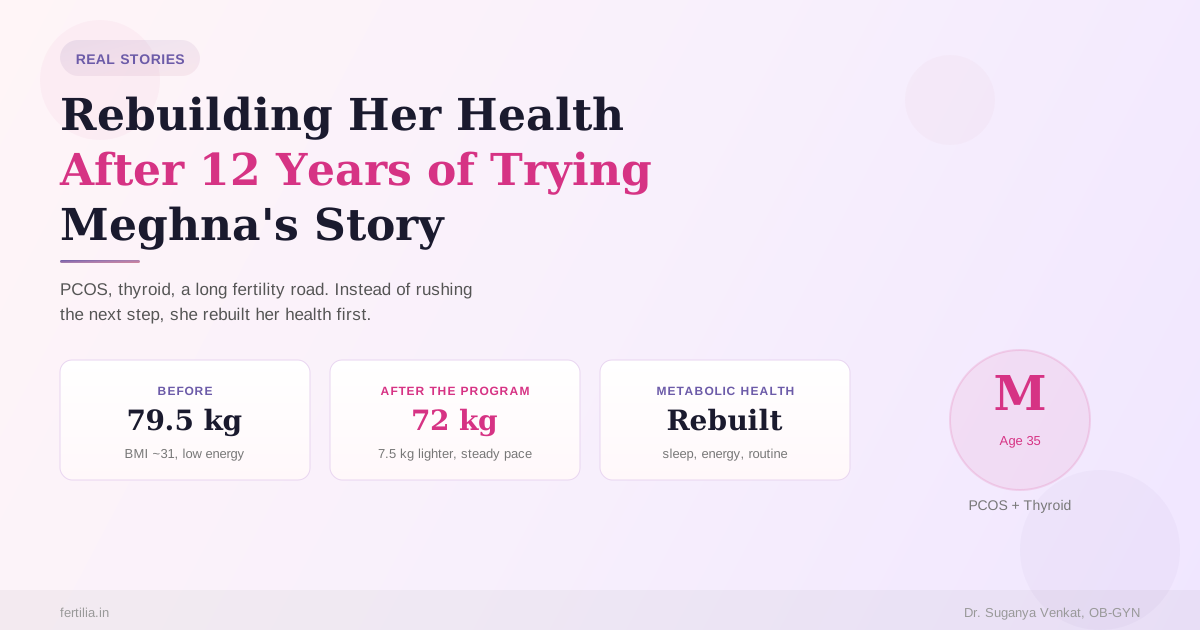
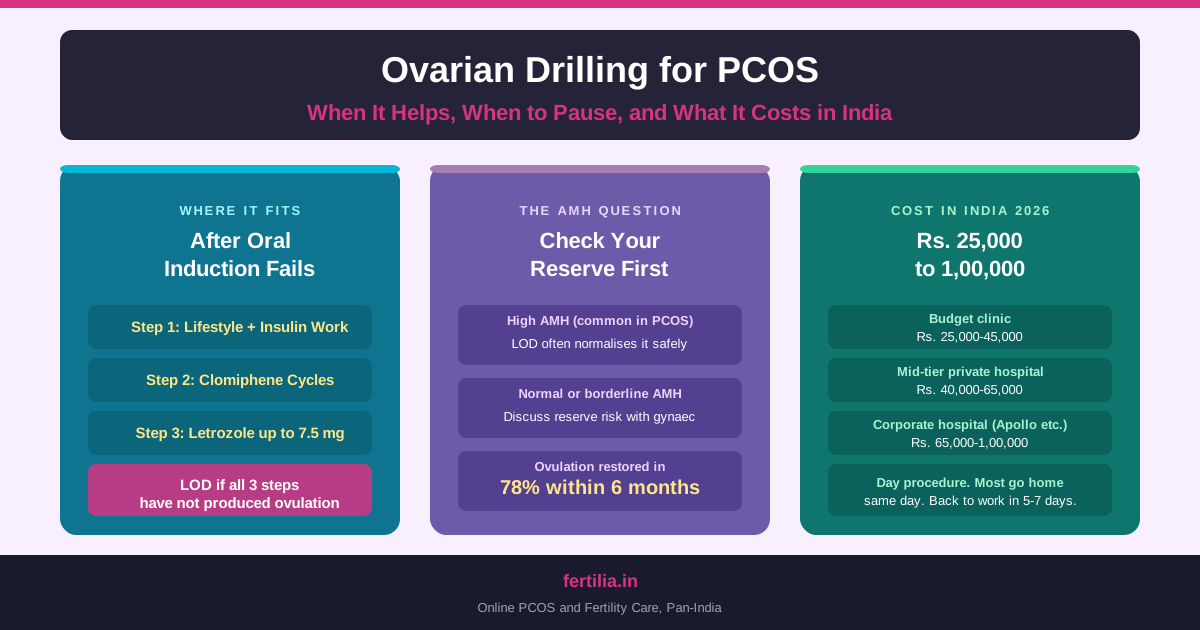
She had already tried two rounds of clomiphene and three rounds of letrozole. Each time, the follicular study showed either no dominant follicle, or one that stalled before reaching the right size. Her gynaecologist had now mentioned “laparoscopic ovarian drilling” and told her it was a small procedure that could reset things.
She came to an online consultation at Fertilia not certain whether to say yes.
I am Dr. Suganya Venkat, an OB-GYN with fifteen years of clinical experience. Ovarian drilling is a procedure that comes up often in discussions at Fertilia, especially for women with PCOS who have not responded to oral ovulation induction. This post covers what the procedure is, who it genuinely helps and who should pause before agreeing to it, what it costs across India right now, and what to expect through recovery and beyond.
What Ovarian Drilling Is
Laparoscopic ovarian drilling, commonly called LOD, is a short surgical procedure done under general anaesthesia. Three small incisions, each less than a centimetre, are made in the lower abdomen. A laparoscope (a thin camera) is passed through one, and a surgical instrument through another. The surgeon makes a series of punctures on the surface of each ovary, typically between eight and twelve per ovary, using heat from electrocautery or the focused energy of a laser.
The mechanism is worth understanding. In PCOS (also called PMOS, polyendocrine metabolic ovarian syndrome, following the 2026 international consensus renaming), the ovaries carry elevated androgen-producing stromal tissue. This excess androgen disrupts the normal FSH/LH signalling that triggers ovulation each cycle. Ovarian drilling selectively destroys a portion of that androgen-producing tissue. Androgen levels drop, the LH/FSH ratio normalises, and the hormonal environment becomes more conducive to follicle development and spontaneous ovulation.
The effect is not permanent. It tends to last one to three years in women who respond. Some women continue to ovulate naturally beyond that window. The response varies, but the evidence in the right candidate is well established in surgical gynaecology literature.
Where LOD Sits in the Treatment Sequence
This framing matters, and it is the detail that sometimes gets lost when ovarian drilling is presented simply as “the next step.”
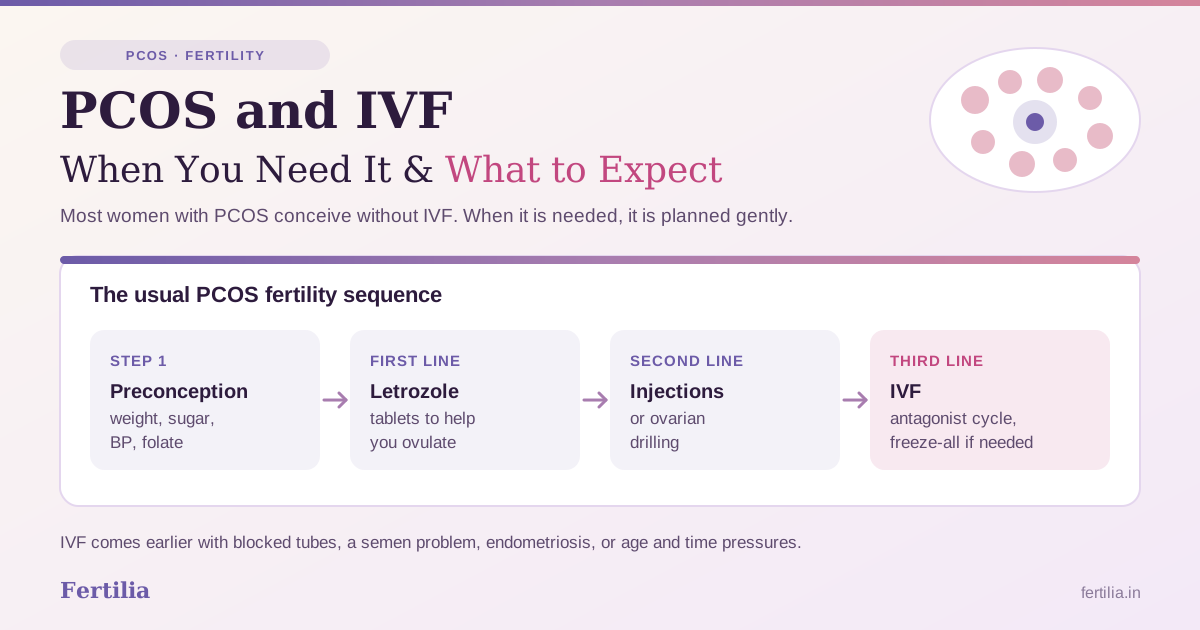
Ovarian drilling is not first-line treatment for PCOS anovulation. It belongs after:
Lifestyle work has been attempted seriously. Particularly when insulin resistance is a significant driver, weight normalisation and dietary changes can restore ovulation on their own in a meaningful proportion of women. Surgery on an ovary in someone whose core metabolic driver has not been addressed is skipping a step. Our guide to insulin resistance in PCOS covers this layer in detail.
Clomiphene citrate has failed across three to four monitored cycles. Clomiphene citrate (Siphene) is an oral ovulation-induction agent that has been in use for decades. When monitored follicular studies confirm no dominant follicle despite standard dosing, the response is classified as clomiphene resistance.
Letrozole at escalating doses has also failed. Letrozole at 2.5 mg, 5 mg, and 7.5 mg is now the preferred first-line agent for anovulatory PCOS. If three to four monitored cycles at maximum dose produce no ovulation, the condition is clinically described as oral-induction-resistant PCOS. This is the threshold at which LOD becomes a genuine conversation.
At that point, the two routes ahead are injectable gonadotropins (FSH injections, typically combined with IUI) or laparoscopic ovarian drilling. Gonadotropins are effective but require monitoring every single cycle, carry a higher risk of multiple pregnancies, and involve ongoing costs each month. LOD is a one-time procedure that, when it works, gives several natural ovulatory cycles without the cycle-by-cycle monitoring load. A published review in Gynecological Endocrinology noted that LOD is more cost-effective than gonadotropins as a single treatment precisely because one procedure can produce multiple ovulatory cycles. For women to whom this comparison matters, whether in terms of cost, access, or preference, it is a real advantage.
A 2019 meta-analysis comparing letrozole directly with LOD in clomiphene-resistant PCOS found the two approaches to be approximately equivalent in live birth outcomes. The choice between them, in the right clinical context, comes down to individual factors: age, ovarian reserve, whether gonadotropins have been tried, and what fits the woman’s life.
Who Genuinely Benefits
Not everyone with PCOS anovulation and a failed response to oral agents is a good candidate. These are the profiles that tend to respond well to LOD:
LH-dominant PCOS. Women with a markedly elevated LH relative to FSH on their hormone panel often respond particularly well. The procedure directly corrects this imbalance by reducing androgen-driven LH dysregulation. If your blood tests have repeatedly shown a high LH/FSH ratio, this is worth discussing specifically with your gynaecologist.
Normal or high AMH with oral-induction resistance. Women with good ovarian reserve who simply do not respond to tablets tend to have better outcomes from drilling than women whose reserve is already borderline. The procedure works on the hormonal environment; it requires a functioning follicle pool to produce results.
Women under 35 with time to use the window. The ovulatory window that LOD creates is most useful to women who have natural cycles to use it. For a younger woman with adequate reserve, a one to three year period of natural ovulatory cycles is meaningful. The equation changes in women approaching their late thirties.
Those preparing for IUI. Ovarian drilling is sometimes used before IUI to establish the ovulatory environment that IUI monitoring can then work with. If the plan is IUI and ovulation has not been established, LOD as a preparatory step can simplify the process considerably.
Those who cannot access or afford monthly gonadotropin cycles. Injectable FSH is expensive when used repeatedly over multiple cycles. For women for whom the cumulative cost of gonadotropins is not feasible, a single LOD procedure can be the more practical route to achieving ovulation.
The AMH Question: The Conversation Worth Having
This is the part of the LOD discussion that does not always make it into a busy outpatient clinic visit, and it is the one I want to be direct about.
Ovarian drilling reduces AMH. Multiple peer-reviewed studies have documented a significant fall in anti-Müllerian hormone levels after LOD, and the drop is not negligible. AMH is a marker of ovarian reserve, specifically the functional follicle pool. A fall in AMH reflects a reduction in that pool.
The follow-up question is: does it recover?
For women with high baseline AMH (as is common in PCOS, where AMH is often elevated significantly above normal range), the fall tends to bring AMH to a more normal physiological level, not into the deficient range. For these women, the post-procedure AMH is sometimes actually healthier than the pre-procedure one.
For women whose AMH is already on the lower end of normal, the picture is less predictable. Several studies have shown that significant AMH drops after LOD do not always recover fully to baseline in women with borderline starting reserve.
Before agreeing to the procedure:
- Have your AMH tested if it has not been done recently. Our guide on AMH normal ranges for Indian women by age covers what the numbers mean in clinical practice.
- Ask your gynaecologist specifically what your AMH is and how it sits for your age.
- If your AMH is already at the lower end of normal, this changes the benefit-risk calculation. A gynaecologist who is guiding you through this deserves to have that conversation with you explicitly.
The “100+ surgeries avoided” line in Fertilia’s clinical record is largely made up of cases like this: women told that ovarian drilling or another procedure was the natural next step, where a careful look at reserve and drivers revealed a workable medical or lifestyle path first. I mention this not to steer you away from surgery where it is genuinely the right option, but to say that the decision deserves the full information set.
What the Procedure Involves
For most women, LOD is a day procedure. You arrive in the morning, have the surgery under general anaesthesia, spend a few hours in recovery, and go home the same day. Some hospitals observe overnight for comfort.
The anaesthesiologist will take a pre-procedure history. You will be asked not to eat or drink for several hours before. The procedure itself takes around thirty to forty-five minutes.
A chromopertubation (a dye test where diluted methylene blue is passed through the fallopian tubes under direct vision) is often performed at the same time, since the surgeon already has a direct view of the pelvis. This gives tubal patency information that is useful to have while you are already under anaesthesia. If the tubal dye test is being added, confirm this in your pre-procedure discussion, as it may affect the quoted cost.
After the procedure, expect some abdominal bloating and cramping for two to four days, roughly comparable to a bad period. Standard pain relief, rest, and avoiding strenuous activity for a week are the main aftercare steps. Most women return to normal daily activity within five to seven days.
The incisions are small enough that scarring is generally not a concern, and the procedure does not alter the external anatomy in any visible way.
Ovarian Drilling Cost in India (2026)
Costs vary significantly by city, facility type, and whether the procedure is done alone or combined with a chromopertubation or diagnostic laparoscopy step. For context on what a combined laparoscopy involves, see our diagnostic laparoscopy for infertility guide.
| Facility type | Approximate cost range |
|---|---|
| Budget private fertility clinic | Rs. 25,000-45,000 |
| Mid-tier private hospital | Rs. 40,000-65,000 |
| Tertiary or corporate hospital (Apollo, Fortis, Manipal, Rainbow) | Rs. 65,000-1,00,000 |
| Adding chromopertubation to the same procedure | Rs. 5,000-15,000 additional |
These ranges reflect published hospital data and aggregator platforms current at the time of writing (August 2026). The Apollo Hospitals website quotes Rs. 50,000-1,00,000 for the procedure. Practo data for Bangalore shows a range of Rs. 26,000-43,000 across private clinics. Indira IVF and similar fertility chains typically quote Rs. 30,000-60,000.
Corporate hospital quotes usually include the anaesthesiologist fee, OT charges, and one night of hospitalisation. Always confirm the full package before the procedure, including whether consumables, post-operative medication, and the chromopertubation are included.
Government medical college hospitals and AIIMS-affiliated centres perform LOD at substantially lower cost, typically under state health scheme rates. If cost is a significant factor, ask your gynaecologist whether a referral to a public teaching hospital is possible.
Working through your PCOS treatment options and not sure where LOD fits in your specific situation? You can discuss this in an online consultation with Dr. Suganya Venkat at Fertilia.
After the Procedure: What to Expect
Most gynaecologists recommend waiting for one natural period before actively trying to conceive, to allow the ovaries to settle into their new hormonal environment. The first ovulation after LOD can occur as early as four to six weeks post-procedure, though some women take two to three months to establish regular cycles.
A follicular study two to three months after the procedure is the practical way to confirm whether ovulation has resumed. If it has, you have a window of natural ovulatory cycles to use. Your gynaecologist will advise on how long to try naturally before adding IUI as a next layer, typically guided by your age and how many cycles have passed.
A 2025 study found that ovulation was restored in 78% of women and menstrual regularity returned in 72% of women within six months of LOD. These are realistic figures for the eligible population. The procedure works in most women for whom it is appropriate.
If ovulation does not resume within three to four months, your gynaecologist may trial letrozole again alongside the altered ovarian environment. Some women who did not respond to letrozole before LOD respond to it after, because the hormonal landscape has changed.
Ovarian Drilling in Hindi: What Women Search For
Many women in India search for this topic in Hindi or in mixed-language terms:
| Search term | What it refers to |
|---|---|
| Andashay mein chhed karna | Ovarian drilling procedure |
| PCOS mein andashay ka chota operation | Small ovarian surgery in PCOS |
| Ande nahi bante PCOS mein (andashay mein follicle nahin) | No ovulation in PCOS |
| Laparoscopy PCOS ke liye | Laparoscopy for PCOS anovulation |
| Andashay drilling ki cost | Cost of ovarian drilling |
The question behind most of these searches is: will this give me back my ovulation? In the right candidate, LOD does exactly that, and the evidence for it is sound.
Frequently Asked Questions
Is ovarian drilling the right next step after letrozole at maximum dose fails?
When letrozole at 7.5 mg across three to four monitored cycles has not produced a dominant follicle, LOD becomes a serious option. Whether it is the right step for you depends on your AMH, your age, whether gonadotropins have been discussed, and your operating gynaecologist’s assessment of your ovaries on imaging. It is not automatically the next step for every woman in this situation, but it is a reasonable and evidence-based one for many.
Does ovarian drilling affect future fertility?
For most women, the procedure does not harm long-term fertility and improves it by restoring ovulation. The AMH effect is the main caution: in women with already-borderline reserve, the procedure carries more risk than in those with normal or high AMH. For women whose AMH is clearly in a healthy range, the available evidence is generally reassuring.
How many punctures are made?
Most surgeons use eight to twelve punctures per ovary. Too few may not achieve the necessary androgen-lowering effect; too many risks unnecessary tissue damage. Experienced laparoscopic surgeons calibrate this based on ovarian size and the tissue response during the procedure.
Can I conceive naturally after LOD, or will I need IUI?
Many women conceive naturally in the ovulatory cycles that follow LOD, without IUI. The post-procedure window is the period for natural conception attempts. If ovulation has resumed but conception has not occurred after a reasonable number of cycles (your gynaecologist will give a number based on your age and clinical situation), IUI uses those natural cycles and adds insemination as the next layer.
Does the procedure hurt?
You are under general anaesthesia during the procedure itself. Afterwards, most women describe two to four days of abdominal cramping and bloating comparable to strong period pain. Paracetamol and ibuprofen handle this for most women. Severe or worsening pain, fever above 38 degrees, or heavy vaginal bleeding after the procedure are reasons to contact your doctor promptly.
PCOS mein andashay ka operation kitna safe hai? (How safe is the ovarian surgery in PCOS?)
LOD is one of the more routine laparoscopic procedures in gynaecology. The risks are those of any laparoscopy: anaesthesia response, wound infection, and a very small risk of injury to nearby structures. In an experienced surgical facility, it is considered safe. The PCOS-specific consideration is the AMH effect discussed earlier in this post.
Can I avoid ovarian drilling altogether?
For many women, yes. The PCOS program at Fertilia works through the lifestyle and metabolic layer before considering any procedural option. Addressing insulin resistance, normalising weight where appropriate, and using structured ovulation induction with proper monitoring often avoids the need for surgery. For women who have genuinely worked through these steps and still do not ovulate with maximum oral therapy, LOD is a valid and well-evidenced option worth discussing with their gynaecologist.
If you are trying to understand whether ovarian drilling is right for your PCOS or whether there are steps still worth trying first, you can talk it through in an online consultation with Dr. Suganya Venkat at Fertilia.
Talk to Dr. Suganya on WhatsApp
For a full picture of PCOS and what drives it, read: PCOS Symptoms, Root Causes & Natural Treatment. And if you are mapping the path from PCOS diagnosis to pregnancy, this post covers the step-by-step approach: PCOS to Pregnancy: A Step-by-Step Approach.
You can also download the PCOS Reversal Guide for a structured overview of what each phase of treatment looks like, from lifestyle changes through medical and procedural options.