Your gynaecologist has mentioned fibroid surgery. The procedure has a name, myomectomy, but what it actually involves, what it costs at a private hospital in India, and what it means for your fertility is not yet fully clear. You have another appointment coming up and you want to walk in knowing the right questions to ask.
This post covers the practical ground: when surgery is genuinely needed versus when watchful waiting is a reasonable choice, the three main surgical routes and how they differ, what fibroid surgery costs in India by route and hospital type, what recovery looks like for each approach, and how long to wait before trying to conceive.
When Fibroid Surgery Is Needed
Most fibroids do not need to be removed. This is worth stating clearly at the start, because the word surgery carries weight, and many women with fibroids on a scan report will never need an operation.
The decision to operate is guided by four factors: what symptoms you have, where the fibroid is sitting, how large it is, and what your plans are for having children.
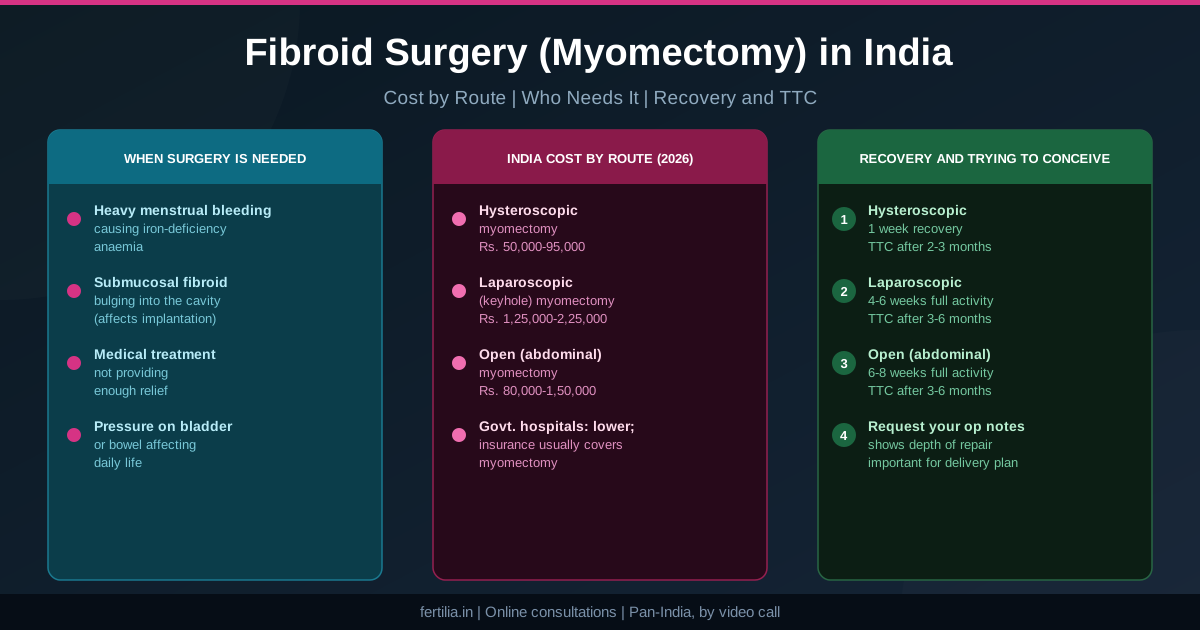
Heavy menstrual bleeding causing anaemia. If your periods are soaking through pads rapidly, you are passing large clots, or your haemoglobin has dropped below normal because of blood loss month after month, that is bleeding at a level that is not sustainable long-term. When medical management has not controlled it adequately, surgery becomes a reasonable option. If you would like to understand what the anaemia picture looks like in the blood tests, our guide on iron deficiency anaemia explains what the results mean and how the condition is managed.
A submucosal fibroid distorting the uterine cavity. Submucosal fibroids sit inside or bulge into the uterine cavity, the space where an embryo implants after fertilisation. Even a relatively small fibroid in this location can reduce implantation rates and raise the risk of early pregnancy loss. These have the clearest evidence for requiring treatment before planned fertility treatment or when a woman has had unexplained early losses. For the full picture of how fibroid location affects fertility, read our companion post: Can I Conceive Naturally with Fibroids?
Significant pressure symptoms. A large fibroid pressing on the bladder causes frequent urination or the persistent feeling of not emptying fully. One pressing on the bowel causes constipation or a heavy lower abdominal feeling. When these symptoms are affecting daily life and have not responded to other management, the surgical conversation becomes relevant.
Failure of medical management. Several approaches can reduce fibroid-related bleeding and shrink fibroid size in the short term: GnRH analogues, tranexamic acid, progesterone-based options. When these have not provided enough relief, or when a woman cannot tolerate them long-term, surgical options are the logical next step.
What does not automatically mean surgery: a fibroid found incidentally on a scan in a woman with no symptoms, a small intramural or subserosal fibroid in someone not yet trying to conceive, or fibroids that are being monitored and are stable in size over time. For information on what heavier periods might mean after 35, our guide to heavy periods, fibroids, adenomyosis, and PCOS covers the differential picture.
For women with fibroid-related heavy bleeding who are not yet ready for surgery and whose fibroids do not distort the uterine cavity, hormonal options including the Mirena IUD can provide effective interim relief and are worth discussing with your gynaecologist.
Your gynaecologist is the right person to make the surgical recommendation. This post is meant to help you understand the options, not to second-guess what they have advised.
Three Surgical Routes
The approach your surgeon recommends will depend on where the fibroid is sitting, how many there are, how large they are, and the facilities available. Each route has a different entry point, a different recovery period, and a different implication for future pregnancies.
Hysteroscopic Myomectomy
Hysteroscopic myomectomy is used for submucosal fibroids, those inside or bulging into the uterine cavity. The surgeon passes a thin camera (hysteroscope) through the vagina and cervix. There are no cuts on the abdomen at all. The fibroid is shaved away from inside the uterus using resectoscope instruments.
This is typically a day procedure or requires one night in hospital. Recovery is fast: most women return to normal activity within a week.
From a fertility perspective, restoring the normal shape of the uterine cavity after removing a submucosal fibroid has solid evidence behind it. Implantation rates generally improve once the cavity is cleared. Most gynaecologists recommend waiting two to three months before trying to conceive, to allow the uterine lining to heal fully.
One uncommon but important risk is the development of intrauterine adhesions after any procedure inside the uterine cavity. This is rare when performed by an experienced surgeon using careful technique, but it is worth being aware of. Our guide on Asherman’s syndrome explains what intrauterine adhesions involve if this is a concern. For the broader cost landscape of hysteroscopy procedures in India, our hysteroscopy cost guide provides a breakdown.
Laparoscopic (Keyhole) Myomectomy
For intramural and subserosal fibroids (those within the muscle wall or on the outer surface of the uterus), the laparoscopic approach uses three to four small cuts on the abdomen, each under a centimetre. A camera and thin instruments are passed through these openings, and the fibroid is removed and brought out through the same small incisions.
Recovery is faster than open surgery: usually one to two nights in hospital, light activity within two weeks, and full activity within four to six weeks. There is no large abdominal scar.
Laparoscopic surgery requires a surgeon with specific laparoscopic training and becomes more technically demanding for very large fibroids (above 8 to 10 centimetres) or when multiple fibroids sit in difficult positions near the fallopian tubes or blood vessels. In those situations, the open approach may allow more precise reconstruction of the uterine wall.
Open (Abdominal) Myomectomy
Open myomectomy uses a horizontal incision in the lower abdomen, positioned similarly to a caesarean section scar. The uterus is exposed directly, fibroids are removed, and the uterine wall is stitched in layers.
The advantage is that there is no limit on the size or number of fibroids, the surgeon has direct vision and tactile feel, and the uterine wall can be reconstructed layer by layer with maximum precision. For women with very large fibroids, multiple fibroids across the uterus, or complex anatomy, this approach often gives the most thorough surgical result.
Recovery is longer: three to five days in hospital, approximately four weeks before returning to light activity, and six to eight weeks before full activity. There is an abdominal scar. Open surgery is not a lesser option. In the right clinical situation, it is the approach that allows the most careful uterine repair.
A Note on Uterine Artery Embolisation (UAE)
UAE is a radiology-based procedure that blocks the blood vessels feeding the fibroids, causing them to shrink. It works well for controlling bleeding and pressure symptoms.
UAE is generally not recommended for women who are planning to conceive. The procedure affects blood flow to the broader uterine tissue, and pregnancy outcomes after UAE are less predictable than after myomectomy. If fertility is part of your plan, tell your treating team explicitly. Myomectomy is the fertility-preserving surgical approach.
If you are trying to understand which of these options makes sense for your specific situation, you are welcome to speak with Dr. Suganya Venkat over a video consultation.
Fibroid Surgery Cost in India (2026)
The cost of fibroid surgery in India varies by surgical route, fibroid complexity, hospital type, and city. The estimates below are drawn from publicly available hospital and aggregator data (2025-2026) and reflect private hospital rates. Government medical college hospitals charge significantly less, often one-quarter to one-third of private rates, though availability and waiting times vary by institution.
| Surgical Route | Approximate Cost (Private Hospital) |
|---|---|
| Hysteroscopic myomectomy | Rs. 50,000-95,000 |
| Laparoscopic (keyhole) myomectomy | Rs. 1,25,000-2,25,000 |
| Open (abdominal) myomectomy | Rs. 80,000-1,50,000 |
| Robotic myomectomy (where available) | Rs. 2,50,000 and above |
Approximate ranges based on publicly available aggregator and hospital data, India, 2025-2026. Actual quotes vary by facility, surgeon experience, number of fibroids, and room category.
What Drives the Variation
Number and size of fibroids. A single 3-centimetre fibroid requires less operating time and fewer resources than four fibroids across different locations. Complex cases cost more across all routes.
Hospital tier. A corporate chain hospital (Apollo, Fortis, Manipal, Cloudnine) will quote more than a well-regarded city private hospital. The surgical technique is the same; the difference lies in the brand, the room category, and the built-in consultation costs.
Anaesthesia. Hysteroscopic procedures can sometimes be done under sedation rather than general anaesthesia. Open and laparoscopic procedures require general anaesthesia, which adds to the overall cost.
City. Metro cities (Chennai, Mumbai, Delhi, Bengaluru, Hyderabad) generally run higher than tier-2 cities (Coimbatore, Pune, Jaipur, Kochi) for the same procedure at equivalent hospital tiers.
Insurance Coverage
Most health insurance policies in India cover myomectomy as a surgical procedure, since fibroids are a diagnosed medical condition rather than a cosmetic concern. Pre-authorisation is typically required. Check your policy’s waiting period for gynaecological procedures: many policies carry a one to two year waiting period for conditions that existed before the policy was taken. If surgery is being planned, it is worth checking this in advance.
Recovery Timeline by Route
Hysteroscopic Myomectomy
Time in hospital: Day procedure or one night.
Return to light activity: Two to three days.
Return to full activity: One week in most cases.
What to expect: Light spotting for one to two weeks. Your first period after the procedure may be lighter or heavier than usual as the lining settles. Cramping in the first few days is normal and usually managed with paracetamol.
Laparoscopic Myomectomy
Time in hospital: One to two nights.
Return to light activity (walking, desk work): Two weeks.
Return to full activity: Four to six weeks.
What to expect: Shoulder or neck discomfort for one to two days after surgery is common and is caused by the gas used to inflate the abdomen during the procedure. It resolves on its own. Some bloating and abdominal discomfort in the first week or two is normal.
Open (Abdominal) Myomectomy
Time in hospital: Three to five days.
Return to light activity: Four weeks.
Return to full activity: Six to eight weeks.
What to expect: The abdominal incision heals well when kept clean and dry. Pain in the first week is managed with prescribed medication. From the second week onward, paracetamol and rest are usually sufficient.
Trying to Conceive After Myomectomy
The uterus needs time to heal after fibroid removal before it can carry a pregnancy safely.
After hysteroscopic myomectomy: Most gynaecologists advise waiting two to three months before trying. The lining heals relatively quickly because no muscle wall incision was made.
After laparoscopic or open myomectomy: The standard guidance is three to six months before trying to conceive. The exact recommendation depends on how deep into the muscle wall the fibroid extended and how the repair was closed. Your surgeon’s specific advice should take precedence over any general figure, because they know the depth and configuration of the repair.
Delivery planning after myomectomy. A myomectomy scar on the uterine wall is relevant to delivery planning. For women who had a laparoscopic or open myomectomy with a deep muscle repair, many obstetricians in India recommend caesarean delivery to reduce the risk of uterine rupture during labour. This is a conversation to have with your obstetrician when you become pregnant. Your myomectomy operation notes (the surgical report) are worth requesting and keeping, as they document the type and depth of the repair. If this intersects with a previous caesarean, our guide on VBAC in India may also be relevant.
For a broader view of what to expect when planning for pregnancy after surgery, the complete guide to getting pregnant covers the full fertility picture.
Will Fibroids Come Back?
Myomectomy removes the fibroids present at the time of surgery. It does not eliminate the underlying tendency of some women’s uteruses to form new fibroids over time.
Data from longer-term follow-up studies suggest that roughly 15 to 30 percent of women will develop new fibroids significant enough to cause symptoms or require attention within five years of myomectomy. The risk is higher in younger women and in those who had multiple fibroids at the initial surgery.
This does not mean surgery was not the right decision. The bleeding is controlled, the cavity is restored, and in many cases the recurrence window is exactly the time a woman needs to conceive and complete her family.
I am Dr. Suganya Venkat, an OB-GYN with over fifteen years of clinical experience, and through online consultations at Fertilia I regularly work with women at different points in this journey: deciding whether surgery is needed, recovering and planning next steps, or now ready to start trying to conceive. If you are at any of these points and would like to talk through where you are, a video consultation is a reasonable next step.
Questions to Ask Your Surgeon Before the Operation
Your gynaecologist is the right person to make the surgical recommendation. What this post aims to do is help you walk into that appointment informed. Some questions worth raising before consenting to a procedure:
Where exactly is my fibroid sitting, and is it inside, touching, or outside the uterine cavity?
Why is the approach you are recommending (hysteroscopic, laparoscopic, or open) the most suitable for my fibroids specifically?
How deep into the uterine muscle will the repair go, and will that affect how long I should wait before trying to conceive?
Will you recommend a caesarean section when I am pregnant, based on the location and depth of the repair?
These are reasonable questions for any gynaecologist, and the answers will help you understand your specific situation before giving consent.
If you have fibroids and would like to discuss the surgical recommendation, or you have already had a myomectomy and want to plan your next steps for conceiving, you can speak with Dr. Suganya Venkat through a video consultation.
Frequently Asked Questions
How do I know if I actually need fibroid surgery or can wait and watch?
Watchful waiting is appropriate for fibroids that are not causing significant symptoms and are not distorting the uterine cavity. Surgery becomes a reasonable next step when heavy bleeding is causing anaemia and has not responded to medical management, when a submucosal fibroid is blocking or distorting the cavity, when pressure symptoms are affecting daily life, or when a woman is planning fertility treatment and the fibroid’s location is relevant to implantation. Your gynaecologist’s recommendation should weigh all these factors together, not size alone.
Is laparoscopic myomectomy better than open surgery for fibroids?
For suitable fibroids, laparoscopic myomectomy gives equivalent outcomes to open surgery with a faster recovery and no large abdominal scar. However, very large fibroids, multiple fibroids in complex positions, or anatomy that requires careful layer-by-layer uterine reconstruction may be better handled with the open approach. Neither is universally superior. The right choice depends on your specific fibroids and your surgeon’s assessment of what allows the safest and most complete repair.
Can I still get pregnant after fibroid surgery?
Yes, for most women. Hysteroscopic removal of a submucosal fibroid typically improves implantation rates by restoring normal cavity shape. Laparoscopic and open myomectomy are fertility-preserving procedures: the fibroids are removed and the uterus is kept intact. Most women are advised to start trying after a waiting period of two to six months, depending on the route and depth of repair. Your surgeon’s specific guidance on timing matters most.
How much does fibroid surgery cost in India?
Approximate private hospital ranges for 2026: hysteroscopic myomectomy Rs. 50,000-95,000; laparoscopic myomectomy Rs. 1,25,000-2,25,000; open (abdominal) myomectomy Rs. 80,000-1,50,000. Government medical college hospitals charge significantly less. Health insurance covers myomectomy in most policies, subject to a waiting period. The actual quote will vary by hospital tier, city, fibroid complexity, and surgeon.
How long is recovery after myomectomy?
Recovery depends on the surgical route. Hysteroscopic myomectomy: back to normal activity within one week. Laparoscopic myomectomy: light activity in two weeks, full activity in four to six weeks. Open myomectomy: light activity in four weeks, full activity in six to eight weeks. Your surgeon’s discharge instructions will specify what to avoid and when.
What is myomectomy called in Hindi, and how is it different from hysterectomy?
In Hindi, fibroid surgery is commonly referred to as rasoli ka operation or garbhashay ki rasoli ka operation (गर्भाशय की रसोली का ऑपरेशन). Myomectomy specifically means the removal of fibroids while keeping the uterus intact. This is different from hysterectomy (bachi dani nikalna, गर्भाशय निकालना), which removes the entire uterus. Myomectomy is the fertility-preserving surgical approach and is appropriate for women who want to have children.