Something shifts. You have had roughly the same periods for years, manageable, predictable, something you worked around without much thought. Then, somewhere in your mid-to-late thirties, they change. Heavier than before. More clots. More days. You need to change protection twice as often as you used to. You feel drained in a way that does not fully resolve once the bleeding stops.
This is one of the most common patterns I see. And the question I hear most often is: why is this happening now?
The short answer is that the most likely causes of heavy periods shift significantly after 35. What was probably a PCOS or thyroid picture at 25 is more likely to be fibroids, adenomyosis, or a hormonal transition at 37 or 42. Getting the right diagnosis changes the treatment entirely, and many women spend years on treatments that do not address the actual cause.
This post walks through the three most common culprits after 35, how to tell them apart, and what each one typically needs.
Why Periods Often Change After 35
Before getting into the specific causes, it helps to understand why this decade is when things tend to shift.
Fibroids are most prevalent in the 35 to 50 age window. Research published in the American Journal of Obstetrics and Gynecology (Baird et al. 2003) found that by age 50, more than half of women have fibroids detectable on imaging, though only about 20 to 25 per cent will have symptoms that affect their daily life. The years between 35 and 45 are when fibroids most commonly become symptomatic.
Adenomyosis tends to worsen year on year. It is associated with prior uterine surgeries, multiple pregnancies, and cumulative exposure of the uterine wall to oestrogen. Research by Chapron et al. (2020, Nature Reviews Disease Primers) confirms the 35 to 50 age group has the highest prevalence of symptomatic adenomyosis.
Perimenopause begins earlier than most women expect. Ovarian reserve starts declining in the mid-to-late thirties. By 38 to 42, oestrogen levels can fluctuate unpredictably, progesterone levels drop, and cycles that were regular for years can suddenly become heavier or less predictable. This is not a disease in itself, but it does change the clinical picture significantly.
PCOS does not disappear after 35, but its contribution to heavy bleeding often changes character. Many women with PCOS in their twenties see some natural regularisation in their thirties. Others continue to have anovulatory cycles that make periods unpredictable, and sometimes very heavy when they do arrive.
For more on this, read our guide on Scanty or Very Light Periods. The practical implication: heavy periods that start or worsen after 35 deserve a systematic look. A pelvic scan is almost always the right first step, regardless of what your periods were like before.
The Three Most Common Causes
Fibroids (Uterine Leiomyomata)
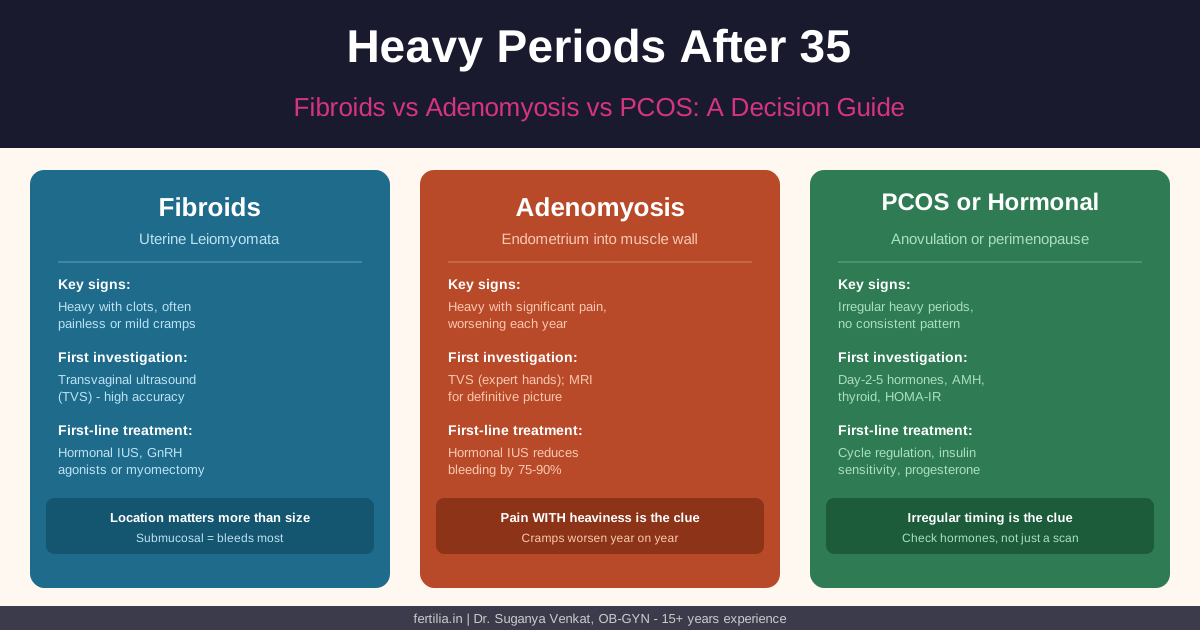
Fibroids are benign growths of the uterine muscle. Their effect on bleeding depends almost entirely on where they sit in the uterus, not on their size.
Submucosal fibroids sit inside or just below the uterine lining. These are the ones most directly responsible for heavy bleeding and clots. Even a small submucosal fibroid can cause significant bleeding because it disrupts the normal mechanism by which the uterine lining contracts to seal blood vessels at the end of a period (Stewart et al. 2017, Nature Reviews Disease Primers).
Intramural fibroids sit within the muscle wall. Larger ones can press on the lining and increase bleeding. Smaller intramural fibroids often cause no menstrual change at all.
Subserosal fibroids sit on the outer surface of the uterus and rarely affect periods.
Pattern with fibroids:
- Periods are heavier and longer, often with clots
- Pain is usually mild or absent unless the fibroid is large or twisting
- There may be a sense of heaviness or fullness in the lower abdomen
- Anaemia and fatigue that worsens month on month is common
How fibroids are confirmed: A transvaginal ultrasound (TVS) is the standard first investigation. It has 92 to 98 per cent sensitivity for detecting submucosal fibroids and intramural fibroids that distort the uterine cavity (Dueholm et al. 2001, Ultrasound in Obstetrics and Gynecology). A saline infusion sonography or hysteroscopy can give additional detail if needed.
For the treatment picture, the Mirena and heavy periods guide covers the hormonal IUS as a first-line option, and the heavy periods treatment options guide covers the full ladder from tablets to myomectomy. One more fact worth knowing when weighing options in your mid-forties: fibroids are oestrogen-sensitive, and most shrink after menopause, which sometimes changes the surgery-versus-wait calculus.
Adenomyosis
Adenomyosis is the condition where the endometrial glands that normally line the uterine cavity grow into the muscular wall of the uterus itself. The result is a uterus that is often enlarged, tender, and bleeds excessively because the muscle cannot contract properly to limit the bleed.
Pattern with adenomyosis:
- Heavy periods with significant clots, similar to fibroids in volume
- Unlike fibroids, adenomyosis almost always causes significant period pain: cramping that starts one to two days before the period and continues through the first two to three days is very characteristic
- The uterus can feel tender on pelvic examination, particularly just before and during menstruation
- Pain during intercourse (particularly deep penetration) is reported by many women with adenomyosis
- Symptoms tend to build progressively over years rather than appearing suddenly
The overlap with endometriosis: Adenomyosis and endometriosis frequently coexist. Approximately 42 per cent of women with endometriosis also have adenomyosis. If you have adenomyosis, it is worth discussing endometriosis evaluation with your gynaecologist, particularly if you have a history of painful periods or fertility challenges.
How adenomyosis is confirmed: A transvaginal ultrasound in expert hands has approximately 83 to 84 per cent sensitivity for adenomyosis. MRI provides greater specificity and clearer anatomical detail, particularly for focal adenomyosis (an adenomyoma, which can resemble a fibroid on TVS). In practice, the combination of a clear symptom history and good imaging is usually sufficient to make a working diagnosis and begin treatment.
Treatment options for adenomyosis: The hormonal IUS is the established first-line treatment for adenomyosis and reduces menstrual blood loss by 75 to 90 per cent in the majority of women (Osuga et al. 2020). Dienogest (a progestogen) has strong evidence specifically for adenomyosis and is increasingly used in India. GnRH agonists can be used for a limited period. For women who have completed their family and have not responded to medical treatment, hysterectomy is curative.
The adenomyosis guide goes into much more detail on diagnosis, staging, and each treatment option.
PCOS After 35, and the Perimenopause Overlap
PCOS does not resolve at a fixed age. A woman in her mid-to-late thirties who had PCOS in her twenties may still have it. But the hormonal picture changes with age, and classic irregular anovulatory cycles can shift into a pattern of heavier, more irregular periods as ovarian reserve and insulin dynamics evolve.
There is also the perimenopause piece. Women in their late thirties and early forties can have erratic oestrogen levels before perimenopause is formally diagnosed. FSH levels begin to fluctuate, cycles can shorten, and the uterine lining may be exposed to prolonged oestrogen without adequate progesterone to oppose it, leading to a thickened lining and heavier bleeding.
Pattern with PCOS or anovulatory cycles:
- Periods arrive irregularly: sometimes three weeks apart, sometimes eight weeks
- When they do arrive, they can be very heavy (a thickened lining shedding at once) or very light, depending on how long the lining had been building
- No consistent pattern on cycle tracking
- History of PCOS earlier in life, or symptoms such as hirsutism, acne, and irregular cycles since menarche
How to assess this: A day-2 to day-5 hormone panel (FSH, LH, oestradiol, prolactin, thyroid) alongside an AMH level gives a clear picture of where a woman sits relative to perimenopause and ongoing PCOS. Insulin resistance testing (HOMA-IR or fasting insulin-to-glucose ratio) remains relevant at any age for women with a PCOS history.
For PCOS-related heavy or irregular periods, the same foundations apply as at 25: insulin sensitivity work, cycle regulation, and when indicated, progesterone support to protect the lining during long anovulatory gaps.
Check Haemoglobin Before Anything Else
Whatever the underlying cause, heavy periods lead to iron deficiency anaemia far more often than women expect. NFHS-5 data shows 57 per cent of Indian women of reproductive age are anaemic, and heavy menstrual bleeding is the leading contributing cause.
If your periods have been heavier than usual for more than two or three cycles, a complete blood count (CBC) and serum ferritin are worth getting before or alongside any other investigations. A ferritin below 30 mcg/L indicates depleted iron stores even when haemoglobin is still in the normal range.
A haemoglobin below 10 g/dL in the context of heavy periods is a medical priority. It warrants concurrent treatment (iron supplementation, dietary change, or occasionally intravenous iron) alongside whatever investigation and management plan you put in place. Waiting for the investigation to be complete before addressing the anaemia prolongs the time you are functioning on a significantly depleted iron reserve.
India-relevant iron foods include palak, rajma, kala chana, methi, ragi, til, and dates. The iron-rich foods guide has a food-by-food breakdown.
Message Dr. Suganya on WhatsApp (Rs. 399 online consultation)
Scan First or Hormonal Trial First?
This is the question that comes up when women have already seen a gynaecologist and want to understand the reasoning behind their management plan.
A pelvic scan (TVS) makes sense as the first step when:
- Periods have suddenly become much heavier with no prior history of heaviness
- There are significant clots (larger than 2.5 cm, approximately the size of a 10-rupee coin)
- A feeling of pelvic heaviness or fullness is present
- The periods come with severe cramps that are new or have worsened significantly in the past one to two years
- You are 40 or older and have not had a scan in the last two years
A transvaginal ultrasound is low-cost, quick, and immediately informative. At diagnostic centres and public hospitals in India, it costs approximately Rs 800 to Rs 2,500. There is very little reason to skip it.
A hormonal trial first may be appropriate when:
- A recent TVS has been done and is either normal or shows only small intramural fibroids not distorting the uterine cavity
- The periods are heavy but regular in timing (suggesting ovulatory cycles with a structural or hormonal contribution)
- The clinical examination is unremarkable
- NICE NG88 (the UK’s national guideline on heavy menstrual bleeding) supports offering either a hormonal IUS or a combined oral contraceptive as an empirical first-line treatment in this context
The key practical point: a hormonal IUS works across most causes of heavy menstrual bleeding and is a legitimate first-line treatment even when the precise cause has not yet been confirmed. It reduces bleeding by 80 to 95 per cent on average (NICE NG88). Starting it without a scan in a woman with a normal history and examination is not an error. But if a three to six month hormonal trial fails to control the bleeding, a pelvic scan and further evaluation should follow, not simply a switch to the next prescription.
Three Questions to Clarify Before Your Appointment
When you see your gynaecologist, having clear answers to these three questions will move the consultation forward quickly.
1. How heavy? Count pad or tampon changes at their worst. Clinically significant bleeding means soaking a pad or tampon fully within two hours or less at peak flow, or passing clots larger than a 10-rupee coin. If you have used the blood clots guide to assess clot size, bring that information with you.
2. Pain pattern? Does the heaviness come with significant cramps that are new or have worsened over the past year or two? Or is it heavy but largely painless? Pain alongside heaviness points toward adenomyosis or endometriosis. No pain with heavy clots points more toward fibroids.
3. Cycle timing? Are the heavy periods arriving at a predictable interval like clockwork, or are they irregular in timing? Regular heavy periods suggest a structural cause. Irregular heavy periods suggest an anovulatory or hormonal component.
FAQ
Q: Can heavy periods after 35 just be a normal perimenopause change that does not need treatment? A: Heavier periods from hormonal fluctuations in the late thirties and early forties can be a normal variation. But normal does not mean treatment is unavailable or unwarranted. If the heaviness is affecting your quality of life, your iron levels, or your daily functioning, that is reason enough to address it. Accepting it as an unavoidable phase of life is not necessary when effective options exist.
Q: My scan showed a small fibroid. Does that explain heavy periods? A: Size alone does not determine impact on bleeding. A 1 cm submucosal fibroid sitting inside the uterine cavity can cause significant heavy bleeding. A 5 cm intramural fibroid sitting in the muscle wall with no cavity distortion may cause no bleeding change at all. Location matters far more than size. Ask your gynaecologist specifically whether the fibroid is submucosal, intramural, or subserosal, and whether it distorts the cavity.
Q: I have PCOS. Can I also have adenomyosis? A: Yes. PCOS and adenomyosis are independent conditions and can coexist. Women with PCOS who have anovulatory cycles are exposed to prolonged oestrogen without adequate progesterone, which is itself a risk factor for adenomyosis developing over time. If your periods are heavy and painful, with pain that has worsened over the years, adenomyosis evaluation is worth discussing even with a PCOS diagnosis.
Q: Will a hormonal IUS help regardless of whether I have fibroids or adenomyosis? A: For most women with either condition, yes. The hormonal IUS delivers levonorgestrel directly into the uterus, thins the lining, and reduces blood loss by 80 to 95 per cent on average. It is effective for adenomyosis, for fibroids that do not distort the uterine cavity, and for anovulatory or PCOS-related heavy periods. It does not address the underlying structural cause, but it controls bleeding effectively while you and your gynaecologist decide on a longer-term plan. The one situation where it is not suitable is when a large submucosal fibroid distorts the cavity so much that the IUS cannot sit in the correct position.
Q: Could thyroid problems be causing heavier periods after 35? A: Yes, and it is worth checking. Hypothyroidism slows uterine contractility and can prolong and worsen bleeding. A TSH test is simple and inexpensive. I include TSH in the initial workup for any woman presenting with sudden-onset heavy periods. In India, thyroid disease affects approximately 8 to 11 per cent of women (Unnikrishnan and Menon 2011, Journal of the Association of Physicians of India), making it a common enough cause to test routinely.
Q: My periods are heavy and I am still trying to conceive. Does the cause matter for fertility? A: It does matter. Submucosal fibroids that distort the uterine cavity affect implantation and are usually removed before fertility treatment. Adenomyosis affects implantation as well, and a specialist discussion about its management before IVF is advisable. If PCOS is the driver, ovulation induction is the relevant treatment path. Getting the diagnosis right first means that any fertility treatment is actually targeted at the correct problem rather than running alongside an unaddressed structural issue.
Q: How do I know whether my heavy periods need a second opinion? A: If you have had heavy periods for more than six months, have had a scan that did not find a clear cause, and a hormonal trial has not improved things significantly, a second opinion is a reasonable and normal next step. The guide to when to seek a second opinion walks through that decision for PCOS and fertility concerns, and the same principles apply to period health.
Heavy periods after 35 are common, but they are not simply something to manage around. Most women who get a proper diagnosis find that there is a clear, treatable cause and that effective options exist well short of surgery.
Book a Rs. 399 video consultation with Dr. Suganya
For tools to track your cycle and period patterns, the Period Health Guide at Fertilia covers irregular periods, heavy bleeding, and when to seek investigation. If your cycle has also become more irregular alongside getting heavier, the irregular periods guide covers the hormonal picture in more detail.