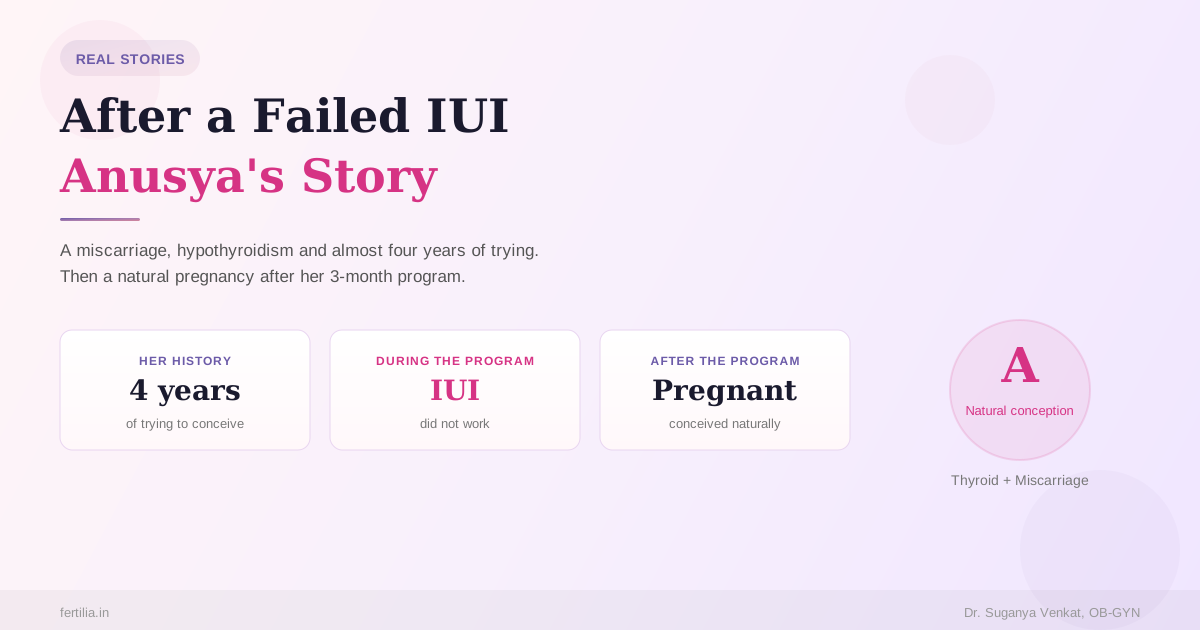
Name has been changed to protect patient privacy. Clinical details and images are shared with the patient’s consent.
Anusya was 29 when she joined Fertilia, and she had been trying to conceive for almost four years. She had lost a pregnancy at 12 weeks, she had hypothyroidism, and during the program an IUI cycle did not work. Then, after completing her three months with us, she conceived naturally.
Where Anusya Started
She was working from home, and her history was not a simple one.
- She had hypothyroidism for about three years, and was taking her thyroid tablet every day. Her recent TSH was 1.8 mIU/L, so her thyroid was well controlled when she came to us.
- In February 2023 she had a miscarriage at 12 weeks, followed by a D&C.
- She had already been through ovulation induction and follicle monitoring.
- Her AMH was 3.6 ng/mL, a reassuring marker of egg reserve (it reflects quantity, not quality), and her HSG showed at least one fallopian tube was fully open.
On paper, many of her reports looked encouraging. That is often the hardest place to be. When the tests look reasonable and a pregnancy still is not happening, it is easy to start wondering what you are doing wrong. Anusya was not doing anything wrong. She needed someone to look at the whole picture with her.
Looking at the Whole Picture
During our first consultation, I went through her fertility history, her earlier investigations, her thyroid profile, and how her days actually looked. I am Dr. Suganya Venkat, an OB-GYN, and with a history like hers I always want to understand the life around the reports as well.
A few things stood out. Her thyroid was in a good place, and the most important job there was to keep it that way, with her medication and regular checks continuing under her doctor’s care. We also reviewed both partners’ fertility investigations, because a fertility plan should never look at only one person. If you live with an underactive thyroid and are trying to conceive, our guide on conceiving with hypothyroidism explains what to keep an eye on.
The rest of the picture was about her daily life. Long work-from-home hours meant she sat for most of the day. Her meal times shifted with her work. Cooking felt like one more task she did not have time for. None of these are failures. They are the ordinary shape of a busy life, and they were the places where we could help.
Together, we set out a clear plan:
- Keep her thyroid steady, with her medication and regular monitoring
- Support ovulation tracking and well-timed intercourse
- Balanced, simple meals she could make on a work day
- Less uninterrupted sitting, and regular, sustainable movement
- Steadier meal times and a more consistent daily routine
- Attention to stress and sleep
Food That Fits a Busy Work Day
Our nutritionists, Elakiya and Noor Nisha, built her plan around one honest fact: Anusya did not have much time to cook. A plan that needed long hours in the kitchen would have lasted a week.
So they kept it simple. Quick, balanced plates with protein, carbohydrates and fibre in sensible portions, with several options to swap between so she did not get bored. Regular meal times mattered as much as what was on the plate, along with enough water through the day.
This is how her plates looked:
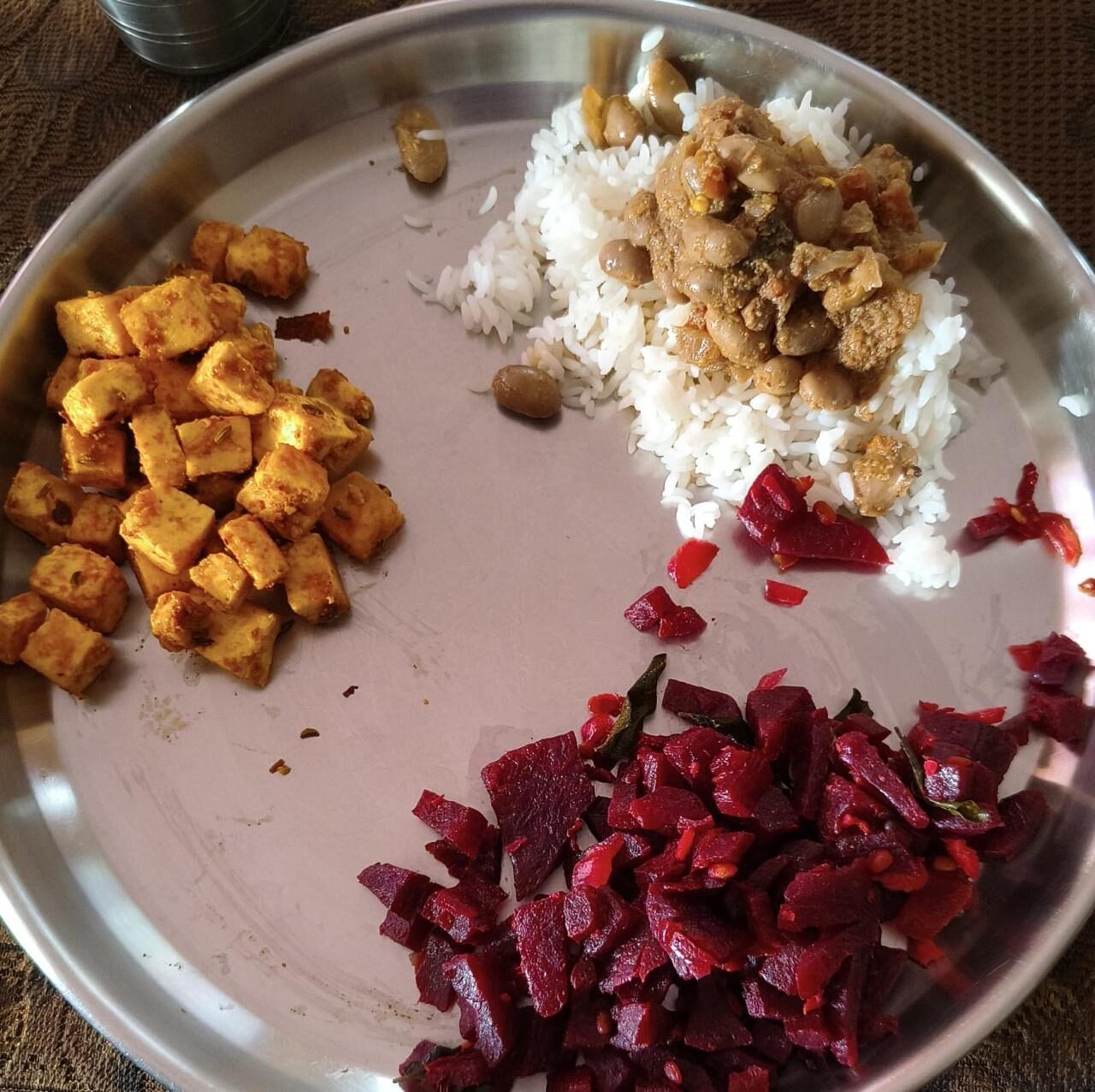
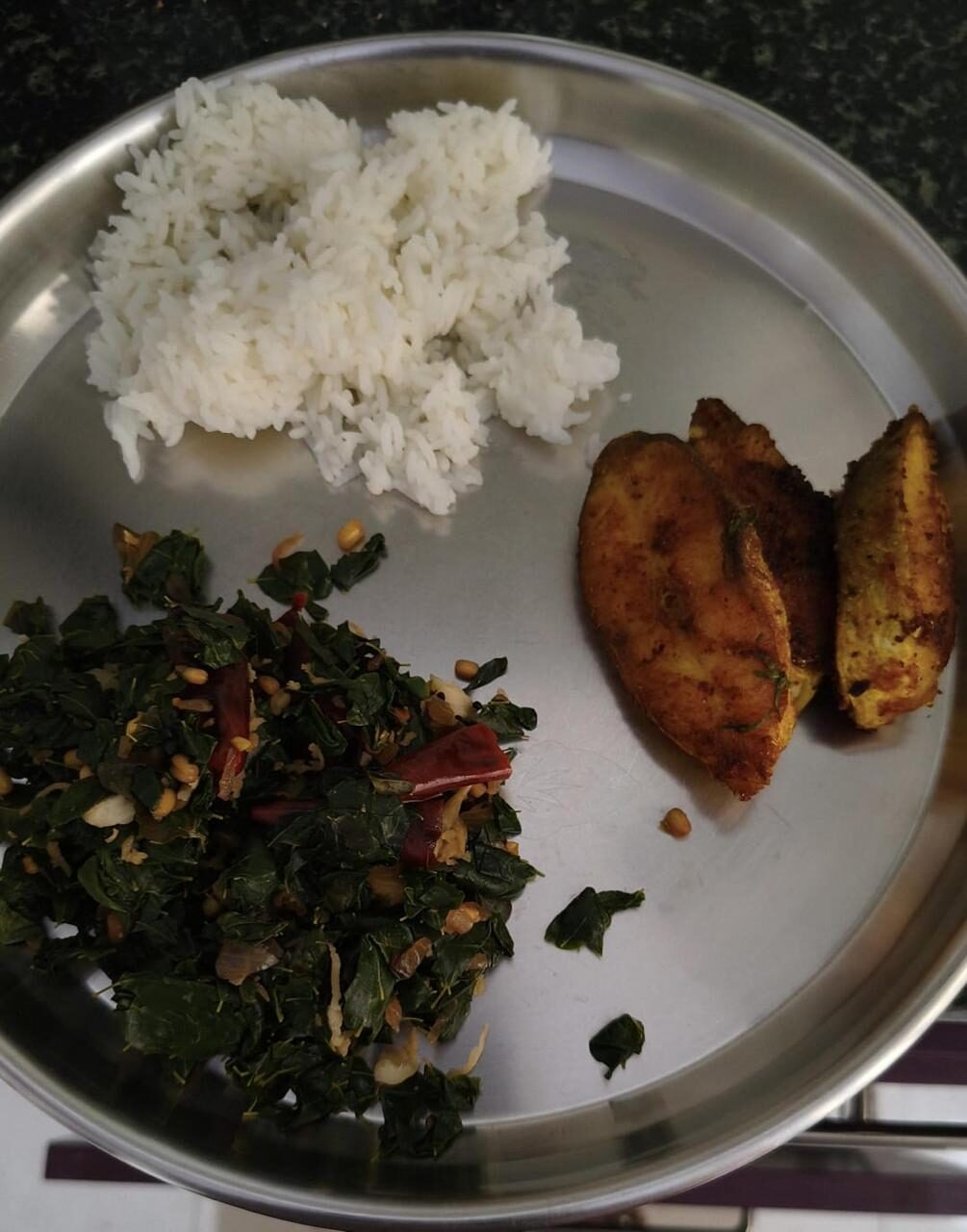

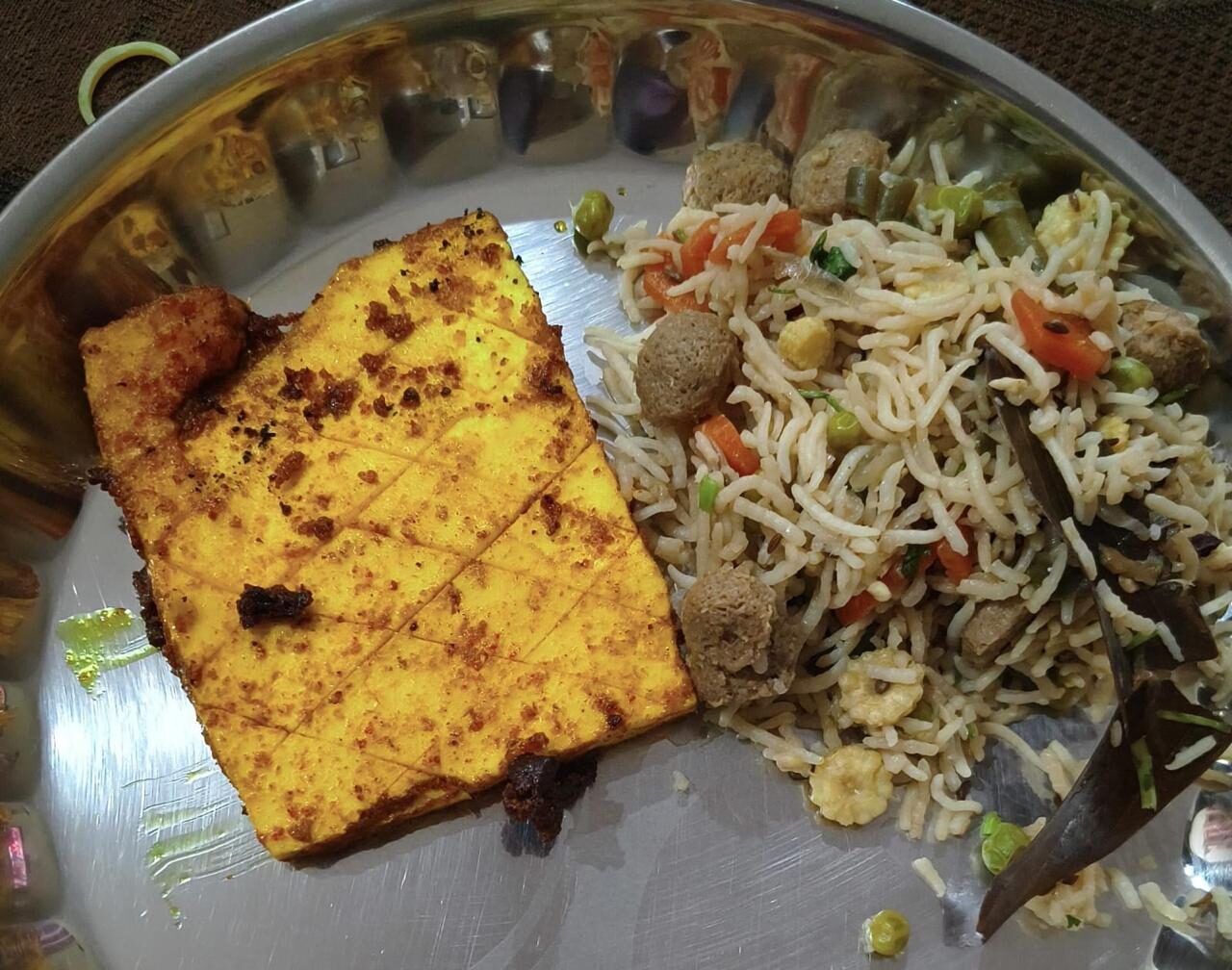
Nothing on these plates is exotic. Paneer, chana, keerai, fish, beetroot, corn, rice. Ordinary home food, put together with a little more balance and eaten at steadier times. That is usually what lasts.
Getting Up From the Desk
When Anusya joined, her days were almost entirely sedentary. Long working hours, one meeting after another, and very little reason to stand up.
We started with something she could actually do between calls: stand up or walk for a few minutes every 45 to 60 minutes, and cut down the long unbroken stretches of sitting. Once that felt normal, we added regular walking and more structured activity. The aim was a habit she could keep on her busiest day.
Alongside this, we worked on the quieter foundations: going to bed and waking at steadier times, getting enough sleep, and finding small ways to manage the stress that builds up over years of trying.
A Setback, and She Kept Going
During the program, Anusya also went through an IUI cycle. It did not work.
After a pregnancy loss, years of evaluations and ovulation treatment, a negative result can feel heavier than it looks from outside. What she did next is the part I want women reading this to notice. She did not stop. She kept going with her routine, her meals and her movement. If you are facing that same moment, our post on what happens after a failed IUI walks through what is usually reviewed before the next step.
If you have been trying for a long time and your reports keep coming back “mostly normal”, you do not have to work it out alone. Dr. Suganya can look at your whole picture with you over a video consultation. Talk to Dr. Suganya on WhatsApp
Two Lines
After completing her 3-month program with Fertilia, Anusya conceived naturally.
She sent us this message, with the photo of her test:
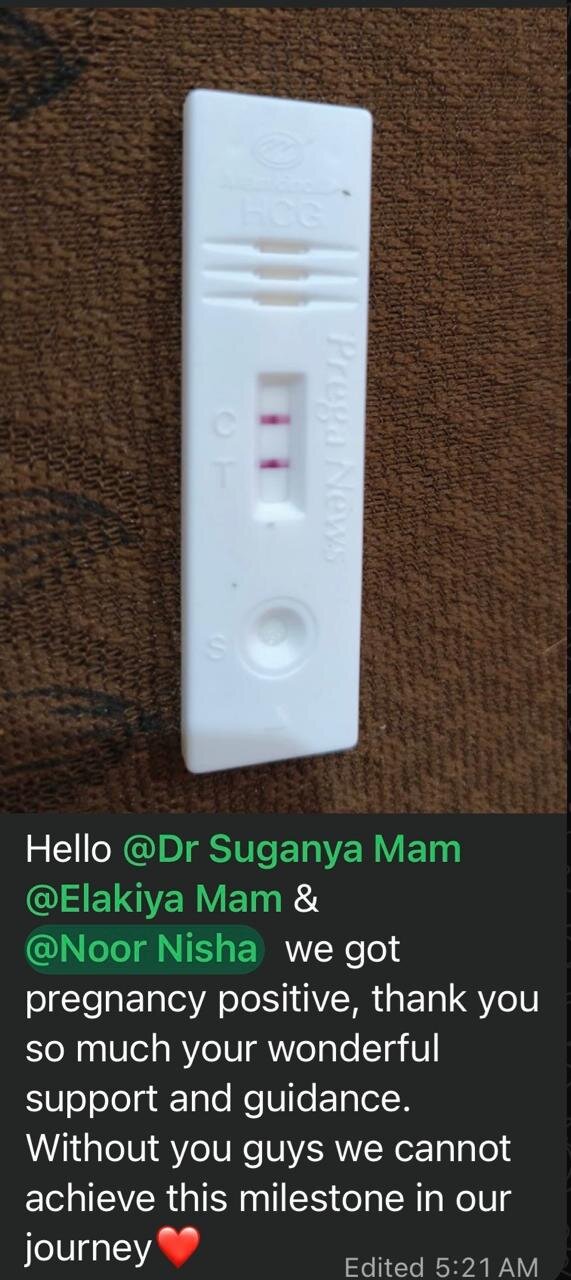
“We got pregnancy positive, thank you so much your wonderful support and guidance. Without you guys we cannot achieve this milestone in our journey.”
It is worth being clear about what this story does and does not show. Anusya’s pregnancy came from many things together: her own doctors’ care over the years, her well-managed thyroid, her body’s own timing, and the steady work she put in over these three months. No single program can claim a pregnancy. What we can say is that she went into this stretch of her journey with a steadier routine, better meals, more movement and more support than before, and that she conceived naturally after a loss, years of trying and a failed IUI. For this couple, that was a very special milestone.
In Her Own Words
Anusya also left us a review:
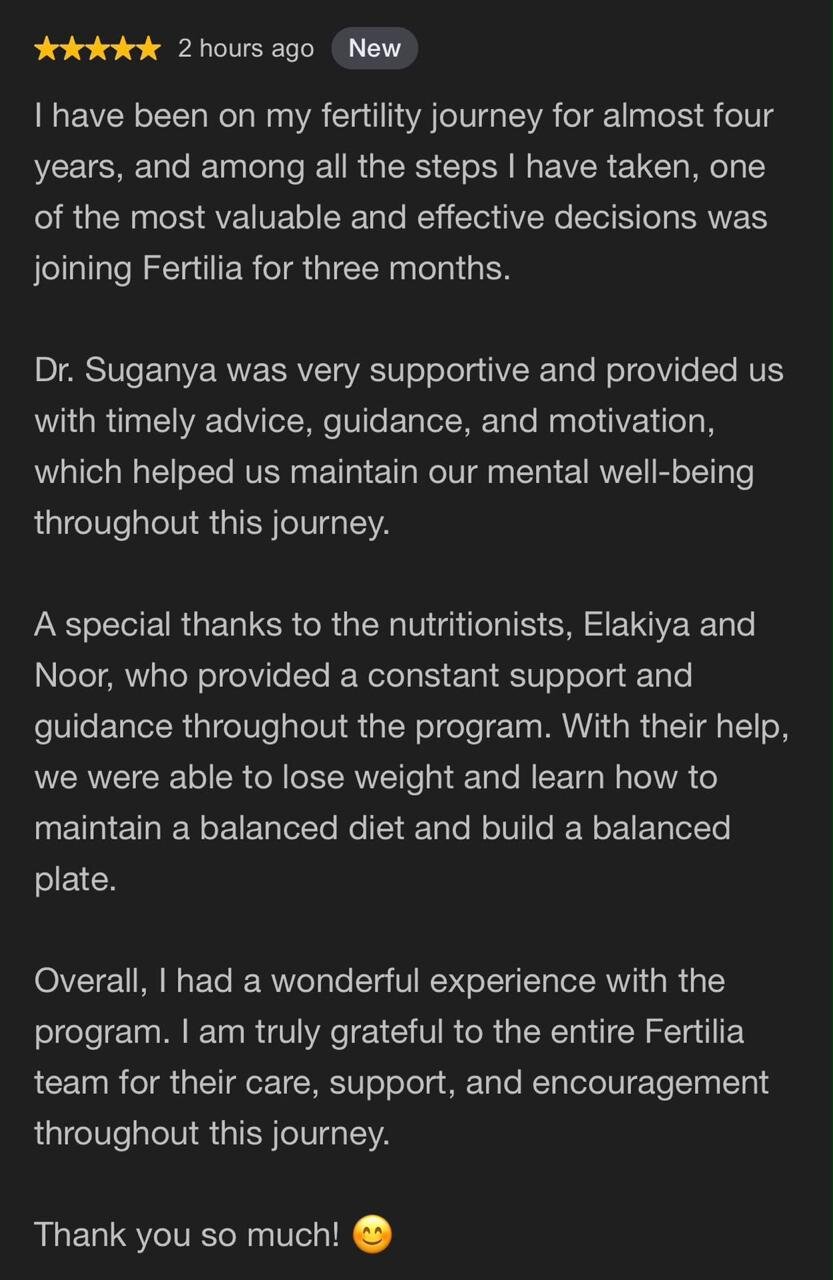
“I have been on my fertility journey for almost four years, and among all the steps I have taken, one of the most valuable and effective decisions was joining Fertilia for three months.”
“With their help, we were able to lose weight and learn how to maintain a balanced diet and build a balanced plate.”
Dr. Suganya’s Note
Anusya had already been through a great deal: a loss at 12 weeks, years of tests and treatment, and then a failed IUI in the middle of our program. Her thyroid was already well looked after, so our work was about everything around it: her plate, her routine, her desk-bound days, her sleep and her stress. She kept to that work even after the IUI did not work, and three months later she was pregnant without treatment.
Every Journey Is Different
If you are reading this after a miscarriage, or after a treatment cycle that did not work, please hold on to this: a single negative result says little about what comes next. Many women who have had a loss go on to have a healthy pregnancy, and our guide on how soon you can try again after a miscarriage explains what the evidence says about timing. And if a new pregnancy after loss brings its own worry, that is common too. Dr. Sandhiya Loganathan has written gently about coping with anxiety when you are pregnant again after a miscarriage.
You can read more journeys like Anusya’s on our stories page.
Dr. Suganya and the Fertilia team work with you one-on-one, fully online by video call, wherever you are in India. Your doctors’ care continues; we add the lifestyle, nutrition and support layer around it. Start a conversation with Dr. Suganya on WhatsApp
Frequently Asked Questions
Can you conceive naturally after a failed IUI?
Yes, it happens. A failed IUI cycle does not mean natural conception is impossible, and it does not mean IUI will never work for you. What it does mean is that it is worth reviewing the whole picture before the next step, both partners’ reports included. Anusya conceived naturally after an unsuccessful IUI and the completion of her 3-month program.
Does hypothyroidism stop you from getting pregnant?
Most women with hypothyroidism can conceive, especially when their thyroid is well controlled. The key is to keep taking your medication as prescribed and to have your levels checked regularly with your doctor while you are trying. Once you get a positive pregnancy test, let your treating doctor know promptly, because the dose often needs adjusting early in pregnancy. Anusya’s thyroid was already well controlled when she joined, and that care continued throughout.
Is it possible to have a healthy pregnancy after a miscarriage at 12 weeks?
Many women go on to have a healthy pregnancy after a miscarriage, including a later first-trimester loss like Anusya’s. It is reasonable to talk to your doctor about whether any tests are needed before trying again, and to give yourself time to heal emotionally as well as physically.
Why did the plan focus on sitting less?
Anusya worked long hours from home and spent most of the day sitting. Breaking that up with short standing or walking breaks every 45 to 60 minutes, and then adding regular walks, is one of the simplest changes a busy woman can make. It supports overall health, energy and weight, and it fits around a work day without needing a gym.
What did Anusya eat during the program?
Simple, balanced home-cooked plates that were quick to make: paneer, chana, keerai, fish, beetroot, corn and rice in sensible portions, with steady meal times and enough water. Her nutritionists gave her several options to rotate so the plan stayed easy to follow on busy days.
Do you work with women who are already having fertility treatment like IUI or IVF?
Yes, often. Many women come to us while they are under a fertility specialist’s care. Your treatment continues with your own doctor; we support the nutrition, movement, routine and emotional side around it. All consultations happen online by video call, anywhere in India.
Every story we share is real, verified, and published with the patient’s consent. Names and identifying details are changed to protect privacy.