Most women who are told they have fibroids ask the same question immediately: can I still have children?
The answer, for most women, is yes. Most women with fibroids conceive naturally, carry healthy pregnancies, and never need surgery because of their fibroids. But there is a longer answer, because some fibroids do affect fertility, and the difference comes down to where the fibroid is growing and how much it distorts the uterine cavity.
For more on this, read our guide on Can I Conceive with Adenomyosis Naturally?. This post covers what you need to understand about fibroid location, what the evidence says about each type’s impact on conception, and when treatment is genuinely worth considering before trying for a baby.
What Fibroids Are
Fibroids (also called uterine myomas or leiomyomas, and known as garbhashay ki rasoli in Hindi) are non-cancerous muscle growths that develop in or around the uterus. They are extremely common: roughly 20 to 40 percent of women of reproductive age have at least one fibroid, though many never know because fibroids often cause no symptoms at all.
Fibroids are not cancer. They do not become cancer. Having fibroids does not mean something is fundamentally wrong with your body. It means a particular kind of muscle overgrowth is happening in the uterus, which is very common in women from their late twenties through their forties.
Location Is What Matters Most
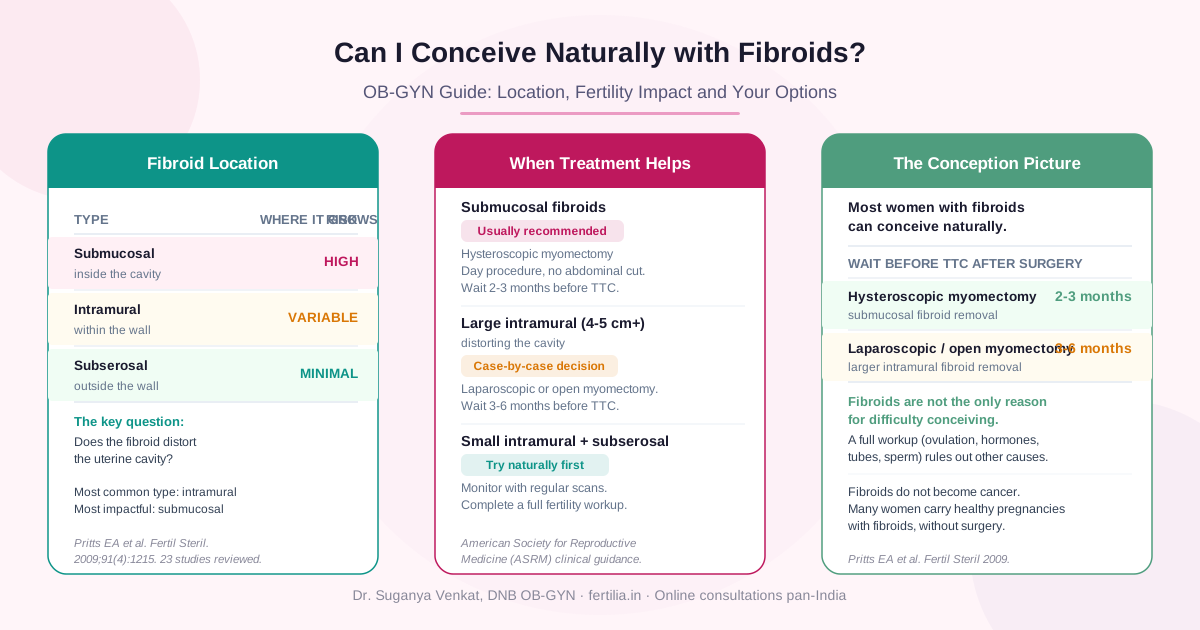
Fertility specialists think about fibroids primarily by where they are growing, not just by their size. There are three main types based on location, and each has a different relationship with fertility.
Submucosal fibroids grow inside the uterine cavity itself, bulging into the space where an embryo would implant after fertilisation. These are the least common type, making up roughly five to ten percent of all fibroids, but they have the strongest connection to fertility difficulty. A fibroid that distorts the shape of the uterine cavity makes it harder for an embryo to find a good surface to attach to, and may raise the risk of early pregnancy loss. Even a relatively small submucosal fibroid can reduce implantation rates.
Intramural fibroids grow within the muscular wall of the uterus. These are the most common type, accounting for the majority of all fibroids diagnosed. Whether an intramural fibroid affects fertility depends heavily on its size and how much it presses into the cavity. Small to medium intramural fibroids that do not distort the cavity have a much smaller effect on pregnancy rates. Large intramural fibroids, typically those measuring 4 to 5 centimetres or more, can physically reduce the space inside the uterus or alter blood flow to the lining in ways that matter for implantation.
Subserosal fibroids grow on the outer surface of the uterus, projecting outward. Because they sit outside the cavity and do not contact the endometrial lining, they generally do not reduce fertility. A very large subserosal fibroid in an unusual position could theoretically place pressure on the fallopian tubes, but this is uncommon.
The key question for any fibroid is not just how big it is, but whether it is distorting the uterine cavity.
What the Evidence Shows
A systematic review published in Fertility and Sterility by Pritts and colleagues in 2009 brought together data from 23 studies involving more than 4,000 women and confirmed the pattern that fertility specialists work with clinically.
Submucosal fibroids significantly reduced both clinical pregnancy rates and implantation rates compared with women without fibroids. Removing submucosal fibroids improved these outcomes. Intramural fibroids also reduced pregnancy rates, but the effect was more variable and less pronounced. Subserosal fibroids showed no significant effect on fertility outcomes.
This evidence has shaped how most gynaecologists approach fibroid management. Submucosal fibroids that are visible inside the cavity are generally worth treating before a planned fertility treatment cycle or when there have been unexplained early losses. Intramural and subserosal fibroids are managed more conservatively in most situations.
If you have fibroids and want to understand what they mean for your specific situation, you can speak with Dr. Suganya in a video consultation.
When Fibroids Are Not the Reason for Difficulty Conceiving
Here is something worth keeping in mind: most women with fibroids do not have fertility problems because of their fibroids. Most fibroids are intramural or subserosal. Most are small enough not to distort the cavity. Most women with fibroids who try to conceive are able to do so.
A fibroid on a scan report is a finding, not a verdict.
If you have been trying to conceive for more than 12 months, or more than 6 months if you are over 35, a full fertility workup should explore all possible reasons, not just the fibroids. The workup covers ovulation testing, a hormonal panel (FSH, LH, AMH, prolactin, thyroid), a semen analysis for your partner, and an assessment of the fallopian tubes if there is any history of infection or previous surgery. Attributing difficulty conceiving to fibroids when the tubes are actually blocked, or when ovulation is not happening regularly, means the real cause goes unaddressed for longer.
For more on what a thorough fertility workup involves, see our complete guide to getting pregnant.
When Treatment Is Worth Considering Before TTC
For submucosal fibroids, the clearest case for treatment before trying to conceive is a fibroid that is visibly distorting the uterine cavity on scan. These are typically removed by hysteroscopic myomectomy: a procedure done through the vagina and cervix, with no incisions on the abdomen, under anaesthesia, usually as a day procedure. Recovery is a few days of lighter activity. Most gynaecologists advise waiting two to three months before trying to conceive after a hysteroscopic myomectomy, while the uterine lining heals.
For more on this, read our guide on Trying to Conceive & Mental Health. The outcomes after removal of submucosal fibroids are generally encouraging. Many women see an improvement in their period pattern alongside their fertility prospects once the uterine cavity is restored to a normal shape.
For intramural fibroids, the decision is more nuanced. If a fibroid is small (below 3 to 4 centimetres) and not encroaching on the cavity, most gynaecologists recommend trying to conceive naturally first, with the fibroid monitored by repeat scan over time. If a fibroid is large enough to visibly indent the cavity, or if a woman has had unexplained failed treatment cycles or multiple early losses, the discussion about removal becomes more relevant.
Laparoscopic or open myomectomy is used for larger intramural or subserosal fibroids when removal is indicated. These procedures involve a longer recovery period, typically six to twelve weeks depending on the approach, and women are advised to wait three to six months before trying to conceive. The uterine wall needs time to heal properly before carrying a pregnancy.
For subserosal fibroids, treatment before conception is rarely recommended unless the fibroid is very large or causing significant pressure symptoms. The evidence does not support removing fibroids that sit entirely outside the cavity when the primary concern is fertility.
Fibroids During Pregnancy
Many women with fibroids carry healthy pregnancies without any complications related to the fibroids. Fibroids do not always change significantly during pregnancy, though in some cases they grow modestly in the first trimester under the influence of rising pregnancy hormones.
The complications more commonly associated with large fibroids in pregnancy, such as increased risk of preterm birth or placental separation, are more relevant for fibroids that are large or in particular positions. For most women with small to medium-sized fibroids, pregnancy proceeds normally and the fibroids are monitored alongside your routine antenatal care.
If a fibroid grows into a position that would obstruct the birth canal, a caesarean section may be recommended. A myomectomy is not typically performed during pregnancy itself.
After Myomectomy: The Conception Timeline
Once the healing period after a myomectomy is complete, two to three months for a hysteroscopic procedure and three to six months for laparoscopic or open surgery, the evidence shows improved conception rates for women who had submucosal fibroids removed. For women who had larger intramural fibroids removed, results vary more by individual situation.
One thing worth knowing before surgery: fibroids can recur after myomectomy. The reported recurrence rate is roughly ten to fifteen percent over a five-year period. Many recurrences are small and do not require further treatment. If you have had a myomectomy and are planning to conceive, keeping up with follow-up scans over time is sensible.
A myomectomy does not automatically mean a caesarean section for a future delivery. In many cases a vaginal birth remains possible. If the incision on the uterine wall was deep or extensive, your obstetrician may recommend a planned caesarean to avoid a small risk of the scar area under strain during labour, but this is an individual decision made with your delivery team.
When IVF or IUI Comes into the Conversation
For women whose fibroids have been treated, or for those with intramural fibroids not distorting the cavity, natural conception is the starting point. IVF is not required simply because fibroids are present on a scan.
IVF or IUI becomes a discussion when other factors are at play alongside fibroids: blocked tubes, a partner’s semen analysis with concerns, or age and diminishing ovarian reserve. In IVF cycles where a woman has multiple large fibroids, some specialists will recommend a myomectomy before starting a cycle to optimise the uterine environment, particularly when previous cycles have not led to implantation. This is always an individual decision.
For women managing both endometriosis and fibroids, or wondering how a separate uterine condition affects the fertility picture, see our post on conceiving with endometriosis.
Practical Steps If You Have Fibroids and Are TTC
Know your fibroid type and location. An ultrasound report describing fibroids should ideally specify whether they are submucosal, intramural, or subserosal, their approximate size in centimetres, and whether they are distorting the uterine cavity. If your report only says “fibroids noted” without this detail, a focused scan that specifies location is worth requesting.
Complete a full fertility workup. A known fibroid can be a red herring that draws attention away from a more treatable cause. A hormonal panel, ovulation confirmation, and your partner’s semen analysis are all part of a complete picture. Our post on blocked fallopian tubes and fertility impact covers one common finding the workup can reveal.
Support iron levels if periods are heavy. Fibroids, particularly submucosal and large intramural ones, often cause heavier periods. Over time this can lead to iron deficiency, which itself affects energy and egg quality. Foods rich in iron that are easy to include regularly: palak (spinach), rajma, kala chana, methi, and til (sesame). Eating them alongside a source of vitamin C (like amla, lemon, or tomato) improves iron absorption.
Discuss timing carefully with your gynaecologist. If surgery is recommended, ask specifically about the waiting period before trying to conceive, the type of closure used in the uterine wall, and whether a caesarean will be advised for a future pregnancy. These are important questions to have answered before making a decision about surgery.
Monitor over time. A fibroid that was 2 centimetres three years ago may or may not have changed. Regular monitoring with a scan every 6 to 12 months gives you the information needed to make decisions as your situation evolves.
Fibroids and adenomyosis are closely related conditions that can coexist. If your ultrasound shows a thickened or heterogeneous uterine wall alongside fibroids, see our post on adenomyosis: symptoms, causes and treatment.
Questions about your fibroids, your cycle, and what the next step looks like? Book a Rs 399 video consultation with Dr. Suganya.
Frequently Asked Questions
Can fibroids prevent pregnancy entirely? Most fibroids do not prevent pregnancy. The clearest connection between fibroids and fertility difficulty is with submucosal fibroids that significantly distort the uterine cavity. These reduce implantation rates and can raise the risk of early loss; removing them generally improves outcomes. Small to medium intramural fibroids often have no impact on conception. Subserosal fibroids sitting on the outside of the uterus generally do not affect fertility. Whether your specific fibroids are a significant factor depends on their type, location, and size, which is why a scan reviewed by a gynaecologist is the starting point.
For more on this, read our guide on Hashimoto’s and Conception. What size fibroid affects fertility? There is no single size threshold that applies to all fibroids. For submucosal fibroids, even smaller ones matter if they distort the cavity. For intramural fibroids, most specialists start a discussion about treatment when a fibroid is 4 to 5 centimetres or more and visibly affecting the cavity on scan. Smaller intramural fibroids that do not touch the cavity are generally watched rather than treated before trying to conceive.
Can I get pregnant while having fibroids, or do I need surgery first? Many women conceive and carry healthy pregnancies without any fibroid surgery. If your fibroids are intramural or subserosal and not distorting the cavity, trying to conceive naturally first is the standard approach. Surgery is typically considered before conception when a submucosal fibroid is visibly inside the cavity, or when there is a clear reason to believe the fibroid is contributing to implantation failure or repeated early losses. Your gynaecologist advises based on your specific scan findings and history.
Will fibroids grow during pregnancy? Some fibroids grow modestly in the first trimester when pregnancy hormone levels are high, while others stay the same size or even shrink. Most do not cause problems during pregnancy. Larger fibroids, particularly those in certain positions, carry a slightly higher risk of preterm birth or placental complications, but many women with fibroids have entirely smooth pregnancies. You will typically have additional monitoring scans if fibroids are present.
Can fibroids cause miscarriage? Submucosal fibroids that distort the uterine cavity have been associated with higher rates of early pregnancy loss. This is one reason hysteroscopic removal of a submucosal fibroid is often discussed when a woman has had unexplained early losses or failed implantation in IVF cycles. Intramural and subserosal fibroids are not consistently linked to miscarriage in the evidence, though very large fibroids may play a role in some situations. Our post on recurrent miscarriage tests covers the full workup after two or more losses.
How long after myomectomy can I try to conceive? The waiting period depends on the procedure type. After a hysteroscopic myomectomy (removing a submucosal fibroid through the cervix, no abdominal incision), most surgeons recommend waiting two to three months. After a laparoscopic or open myomectomy involving the uterine wall, the waiting period is typically three to six months, sometimes longer depending on the extent of the surgery. Follow your surgeon’s specific guidance for your case.
Do fibroids always need treatment? No. Many women with fibroids, including those who are actively trying to conceive, do not need treatment and are simply monitored with regular scans. Treatment is considered when fibroids are causing significant symptoms like heavy or painful periods, when they are clearly distorting the uterine cavity, or when there is reason to believe they are contributing to fertility difficulty. Watching and waiting is a legitimate and often correct approach for fibroids that are not causing problems. Our related post on heavy periods after 35 covers what heavy bleeding can indicate and when to seek further assessment.