“Doctor, I am always tired. I thought it was just life.”
I hear some version of this almost every week. A woman in her thirties, managing a household, a job, or both, walks in with tiredness she has lived with so long she has stopped expecting otherwise. She has been told it is stress. She has taken vitamins. She has rested more, and still feels depleted.
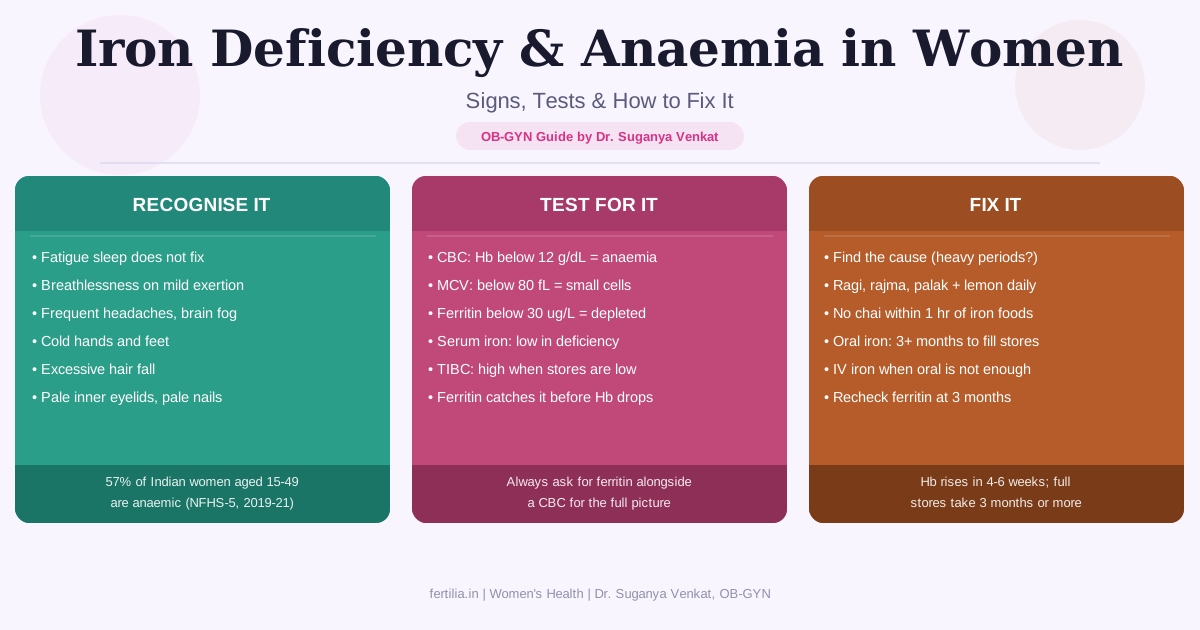
In many of these women, the blood test tells the story clearly: ferritin is low, haemoglobin is low, and the body has been running on empty for months, sometimes years. Iron deficiency is the most common nutritional deficiency worldwide, and Indian women are at the centre of it. The fifth National Family Health Survey (NFHS-5, 2019-21) found that 57% of women aged 15 to 49 years in India are anaemic. More than half.
This post is for every woman who has been told her tests are “slightly low” and sent home without an explanation, and for every woman who suspects something is wrong but does not know which tests to ask for.
Iron Depletion and Anaemia: Two Different Stages
Understanding this distinction changes when you act.
Iron deficiency develops in stages, and most women only hear about the final one. In the first stage, your iron stores (measured by a test called ferritin) begin to fall. Your haemoglobin is still normal and your red blood cells look fine on a count. If a doctor orders only a CBC (complete blood count), the report can appear entirely normal. The problem is invisible unless someone thinks to check ferritin.
In the second stage, stores are depleted enough that the body cannot produce haemoglobin at its usual rate. Red blood cells begin to come out smaller and paler. Ferritin is low, serum iron is low, and the body is working harder to compensate. Haemoglobin may still be within the quoted reference range but trending down.
By the third stage, haemoglobin drops below the threshold and full iron deficiency anaemia is confirmed. This is usually when symptoms become undeniable. But the problem started long before this point.
Why this matters: if you are in stage one or two, you can restore iron levels before anaemia develops. Waiting until stage three means you need more time, and sometimes more intensive treatment, to recover.
Why Indian Women Are Particularly at Risk
Several factors tend to stack on top of each other.
Menstrual blood loss is the single biggest cause in women of reproductive age. Every period removes iron. Women with heavy periods lose significantly more. Fibroids, adenomyosis, and PCOS with irregular or heavy cycles all increase loss further. If you want to understand whether your periods are heavy enough to affect your iron, our guide to heavy menstrual bleeding causes and treatment options covers this in detail.
Dietary absorption is lower on a plant-based diet. Iron in plant foods (called non-haem iron) is less readily absorbed than iron in meat and fish. Most traditional Indian diets are predominantly plant-based, which is nutritionally sound in most ways, but it means the conversion from food iron to body iron is less efficient. Tea and coffee at mealtimes make this worse. Both contain tannins that bind to iron in the gut and significantly reduce how much your body absorbs. A cup of chai with a meal can reduce iron absorption from that meal by as much as 60%.
Reproductive demands add ongoing pressure. Pregnancy requires substantially more iron. Delivery involves blood loss. Breastfeeding continues the demand. Women who go through multiple pregnancies without recovering iron stores between them rarely arrive at the next pregnancy with adequate reserves.
For more on this, read our guide on Iron Tablets in Pregnancy. Calcium competition is less well known. Calcium and iron use the same absorption pathway. Taking a calcium supplement with an iron-rich meal can reduce how much iron your body absorbs from that meal, which is why doctors space iron and calcium supplements several hours apart.
Symptoms That Are Easy to Miss or Misattribute
Fatigue is the most common and the most easily dismissed. It is the tiredness that sleep does not fix, the heaviness in the legs when climbing stairs, the need to rest after activities that used to feel effortless.
Other signs women commonly attribute to overwork or stress: breathlessness during mild exertion (walking quickly, carrying something upstairs), headaches most days, poor concentration and difficulty holding a train of thought, and a general sense of feeling flat or foggy.
There are also signs that are less obvious. Cold hands and feet even in warm weather. Hair fall that seems excessive. Iron is essential for the hair follicle cycle, and significant deficiency (even without full anaemia) is associated with increased shedding. Restless legs at night: an uncomfortable urge to move the legs that disrupts sleep, typically worse in the evenings. Pallor in the inner rim of the lower eyelid and in the nail beds. Spoon-shaped nails (a condition called koilonychia) appear in more longstanding cases. Cravings for ice, clay, or non-food items (pica) are a striking sign of severe iron deficiency that women rarely volunteer without being asked.
These symptoms are each, on their own, unremarkable. Tired, cold, headaches, hair fall: every woman in her thirties has a list that looks something like this. It is the pattern together, especially alongside known risk factors such as heavy periods or a recent pregnancy, that points toward iron deficiency.
If any of this sounds familiar, a blood test is the simplest next step. You can message Dr. Suganya on WhatsApp to get your results reviewed or to know which tests to ask for at your next appointment.
Which Blood Tests to Ask For
A full blood count (CBC or complete haemogram) is the standard first test, and it gives useful information.
Haemoglobin (Hb): The headline number. The World Health Organization defines anaemia as Hb below 12 g/dL in non-pregnant women and below 11 g/dL in pregnant women. Below 8 g/dL is moderate to severe anaemia and usually warrants prompt treatment.
MCV (Mean Corpuscular Volume): The size of your red blood cells. Low MCV (below 80 femtolitres) means the cells are smaller than normal, which is typical of iron deficiency anaemia. This helps distinguish it from other types of anaemia caused by, for example, B12 or folate deficiency.
MCH (Mean Corpuscular Haemoglobin): How much haemoglobin is in each cell. Low MCH, alongside low MCV, points strongly toward iron deficiency.
The CBC alone has a gap, though. It can confirm you are anaemic, but it does not measure your iron stores. You can be iron deficient for months before the Hb drops. For a complete picture, ask for:
Serum ferritin: This measures your stored iron. It is the single most useful test for catching iron deficiency early. Ferritin below 30 micrograms per litre indicates iron deficiency even when haemoglobin is still normal. Below 12 micrograms per litre means stores are fully depleted. Camaschella’s 2015 review in the New England Journal of Medicine (PMID 25946282) identifies ferritin as the most sensitive and specific marker for iron deficiency in women without inflammatory conditions.
Serum iron and TIBC (Total Iron-Binding Capacity): Often ordered together. In iron deficiency, serum iron is low and TIBC is elevated (the body upregulates its iron-transport capacity to catch whatever iron is available). These are useful when the diagnosis is still unclear after a ferritin result.
Peripheral blood smear: If the picture is mixed or if thalassaemia trait needs to be excluded, a smear allows the lab to look at the shape and size of your cells directly. This is not routinely needed for straightforward iron deficiency, but your doctor may request it in certain situations.
Reading Your Results
A few reference points to orient you:
If ferritin is below 30 micrograms per litre and you have symptoms, this is sufficient reason to treat, even when your Hb is still normal. You are in the depletion stage, and this is the right time to act.
If Hb is below 12 g/dL and ferritin is low, you have iron deficiency anaemia. The severity of correction needed depends on how far below threshold both values sit.
If Hb is low but MCV is normal and ferritin is normal, iron deficiency is not the cause. Your doctor will look at other possibilities: vitamin B12, folate, thyroid function, thalassaemia trait, or anaemia of chronic disease. These require different management and a different set of follow-up tests.
A result is a starting point for a conversation, not a verdict to navigate alone. What your numbers mean for you depends on your symptoms, your history, and your current situation.
How to Fix Iron Deficiency
Step one: find why it is happening. Iron deficiency does not arise on its own in most cases. The question behind every iron-deficient woman is where the iron is going. Heavy menstrual bleeding is the most common answer for women of reproductive age. Treating the reason for the loss is as important as replacing the iron. If periods are heavy due to fibroids, adenomyosis, or PCOS, those conditions need attention alongside the iron correction. For women over 35 specifically, our guide to heavy periods after 35 explains the most common structural causes and what investigation looks like.
Step two: food first. The dietary iron layer matters for treatment and for preventing recurrence once stores are restored. The key practical principles: pair iron-rich foods with a vitamin C source in the same meal (tomatoes, lemon, amla, raw onion, guava) because vitamin C converts non-haem iron to a more absorbable form. Avoid tea or coffee within an hour before or after iron-rich meals. Indian foods with meaningful iron content include ragi, rajma, masoor dal, palak (especially with lemon), sesame seeds (til), moringa, and kala chana. Our iron and calcium rich foods resource has a complete food list with portions and practical guidance. The Indian nutrition post iron-rich foods for pregnancy also covers the best food sources with a meal plan, useful whether or not you are pregnant.
Step three: oral iron supplementation. When food alone cannot correct a confirmed deficiency, oral iron is the first treatment. The most commonly used forms are ferrous sulphate, ferrous fumarate, and ferrous gluconate. The standard advice is to take iron on an empty stomach, 30 to 60 minutes before a meal, with plain water or water with a squeeze of lemon. Many women find this causes nausea, particularly in the early weeks. Taking it with a small amount of food reduces nausea and only modestly reduces absorption. Both approaches work; consistent adherence over time matters more than perfect timing. Black stools are normal and expected with oral iron. Constipation is common; drinking enough water and eating sufficient fibre helps manage it.
It takes time. Haemoglobin typically begins to rise within 4 to 6 weeks of consistent supplementation. Restoring the full ferritin stores takes 3 months or more. Stopping early once you feel better is the most common reason for recurrence.
Step four: intravenous (IV) iron when oral is not enough. IV iron is used when oral iron is not tolerated, when absorption is impaired (as in inflammatory bowel disease or malabsorption conditions), when anaemia is severe and needs to be corrected quickly, or when the underlying blood loss exceeds what tablets can keep up with. It is given as a day procedure and typically takes one to two hours. Ferric carboxymaltose and iron sucrose are among the formulations available in India. The procedure corrects iron stores substantially faster than oral tablets and is safe when administered in a supervised clinical setting.
Iron and Fertility, Pregnancy, and Postpartum
Iron deficiency in the context of fertility is relevant in two directions. On one side, severe anaemia affects egg quality and ovulation in a small proportion of women. On the other, preconception iron stores predict how well the body handles the increased iron demand of pregnancy. Correcting deficiency before conception is one of the most straightforward forms of preconception preparation. If you are thinking about trying to conceive, see what the fertility program addresses in terms of nutritional and metabolic groundwork.
During pregnancy, iron deficiency anaemia (particularly when severe in the first and second trimester) is associated with an increased risk of preterm birth and low birth weight. This is why iron supplementation is recommended as a routine part of prenatal care in India, not a conditional prescription for women who already have low Hb. The pregnancy program addresses iron alongside the rest of the nutritional and lifestyle picture at pregnancy care.
The postpartum period compounds the problem for many women. Delivery involves blood loss. If iron stores were already low going in, they fall further. Breastfeeding continues the demand. Many women in the first weeks after delivery are significantly iron deficient but attribute everything they feel to “new mother tiredness.” A blood test at the 6-week postnatal check that includes ferritin, not just Hb, can clarify whether what you are experiencing is normal recovery or iron-related depletion needing treatment. The postpartum program supports recovery from all of this, including nutritional restoration in the weeks and months after delivery.
[If you are unsure whether your fatigue, hair fall, or low test results are iron-related, or you want your blood test results reviewed, message Dr. Suganya on WhatsApp at +91 99402 70499. She will help you figure out the next step.]
Frequently Asked Questions
What is the difference between iron deficiency and iron deficiency anaemia? Iron deficiency means the body’s stored iron (measured by ferritin) is low. Iron deficiency anaemia means haemoglobin has also fallen below the normal threshold because stored iron can no longer support adequate red blood cell production. You can be iron deficient for months before anaemia develops. A ferritin test is the only way to catch this gap. If your doctor has only checked haemoglobin and declared it “normal,” asking specifically for a ferritin result is a worthwhile next step.
My Hb is 10.8. Should I be worried? An Hb of 10.8 g/dL in a non-pregnant woman falls in the mild-to-moderate anaemia range (the WHO threshold for anaemia in non-pregnant women is 12 g/dL). It warrants treatment, though it is not an emergency. A serum ferritin ordered alongside it will confirm whether iron deficiency is the cause. If it is, your doctor will typically start oral iron supplementation and recheck Hb in 4 to 6 weeks to confirm it is rising. Treating the reason for the deficiency (such as heavy periods) is equally important.
What is a normal ferritin level for women? Most labs report a reference range of roughly 12 to 150 micrograms per litre for women. However, many haematologists and iron specialists use a functional threshold: ferritin below 30 micrograms per litre may be sufficient to cause symptoms (fatigue, hair fall, restless legs, poor concentration) even when haemoglobin is still technically normal. If your ferritin is below 30 and you have these symptoms, the result supports treatment even if the lab does not flag it as abnormal.
Does iron deficiency cause hair fall? Yes. Iron is necessary for the hair follicle growth cycle. Iron deficiency, even without full anaemia, has been associated with a type of diffuse hair shedding called telogen effluvium, where more hairs than usual enter the resting and shedding phase at the same time. Hair fall from iron deficiency typically improves once stores are restored, though it can take several months for new growth to become visible. Thyroid function is worth checking alongside ferritin if hair fall is a prominent concern, as hypothyroidism is another common cause.
खून की कमी के लक्षण क्या हैं? (What are the symptoms of anaemia in Hindi?) Khoon ki kami (खून की कमी) is the common Hindi term for anaemia or iron deficiency. The main symptoms are: hamesha thakaan ya kamzori (constant tiredness that rest does not fix), seedhi chadhte waqt sans lena (breathlessness going up stairs), baar baar sar dard (frequent headaches), haath pair thande rehna (cold hands and feet), baal jhadna (hair fall), aur aankhon ki neechi palkein pale rehna (pale inner eyelids). A simple CBC blood test with serum ferritin confirms it and guides the right treatment.
What is ratasokai (ரத்தசோகை) and how is it treated? Ratasokai (ரத்தசோகை) is the Tamil term for anaemia, literally meaning blood fatigue or blood weakness. Iron deficiency is the most common cause in women of reproductive age in Tamil Nadu, as in the rest of India. Treatment begins with finding the cause (most commonly heavy periods), correcting the diet (ragi, palak with lemon, rajma, sesame seeds, moringa), and supplementing with oral iron for 3 or more months as prescribed. When oral iron is not enough, IV iron is available as a day procedure and corrects stores faster.
How long does it take to recover from iron deficiency anaemia? Haemoglobin typically begins to rise within 4 to 6 weeks of consistent oral iron supplementation. You may notice some improvement in energy before that. However, fully restoring ferritin stores (the body’s iron reserve) takes 3 months or longer. This is why it is important not to stop iron tablets as soon as you feel better. A repeat ferritin test at 3 months confirms whether stores have recovered. If the underlying cause (such as heavy periods) continues, maintenance iron or treatment of the cause will be needed to prevent recurrence.
Iron deficiency anaemia is one of the most common and most treatable conditions in women’s health. The barrier is rarely treatment availability. It is recognition: getting the right tests, understanding what the results mean, and knowing what to do next.
If you have been feeling tired for longer than feels normal, or if you have reports showing low values you are not sure how to act on, you can message Dr. Suganya directly on WhatsApp at +91 99402 70499 and she will help you figure out exactly what needs to happen next.