Most women who have Asherman’s syndrome find out about it the same way. They had a procedure, often a D&C (dilation and curettage) after a miscarriage or a retained placenta, and their periods afterward were never quite the same. Lighter than before. Sometimes absent altogether. And when they tried to conceive again, nothing happened.
The connection between the procedure and what followed is not always explained at the time. Asherman’s syndrome sits in a gap between what gynaecologists tell women before a uterine procedure and what those women notice in the months that follow.
This post covers what Asherman’s syndrome is, how it is diagnosed, what treatment looks like, and the fertility picture after treatment for women in different situations.
What Asherman’s Syndrome Is
Asherman’s syndrome describes a condition in which scar tissue forms inside the uterine cavity, replacing the normal endometrial lining. These adhesions (bands of scar tissue) can be thin and filmy, or thick and fibrous. In severe cases, they may partially or completely close the uterine cavity.
The endometrium is the tissue that grows and sheds with each menstrual cycle. When scar tissue replaces it, three things can happen. Periods become lighter or stop entirely, because there is less responsive lining to shed. Cyclic pelvic pain can develop if blood is trapped behind adhesions and cannot drain. And implantation of an embryo becomes difficult or impossible, because the remaining lining may not respond to hormonal signals the way it should.
The condition is named after Joseph Asherman, an Israeli gynaecologist who systematically described the pattern in 1948, though the clinical problem had almost certainly existed much longer.
What Causes Asherman’s Syndrome
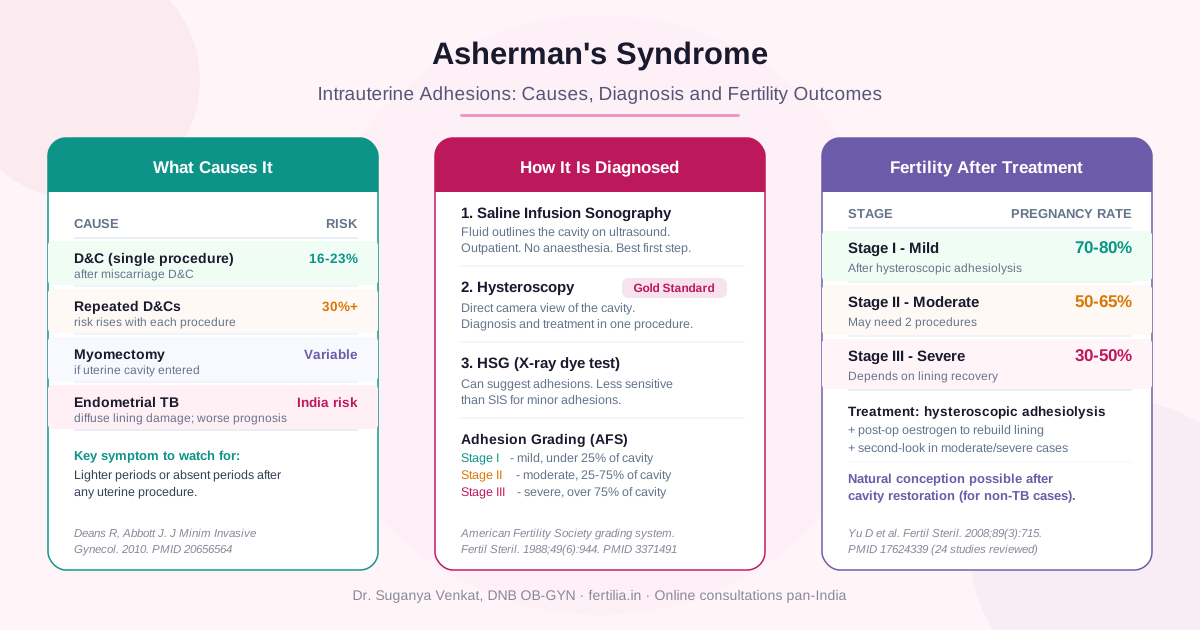
The most common cause is a D&C, performed after a miscarriage to remove retained pregnancy tissue, after a pregnancy termination, after a retained placenta following delivery, or for abnormal uterine bleeding. After a D&C for incomplete miscarriage specifically, studies suggest intrauterine adhesions develop in 16 to 23 percent of cases (Deans R, Abbott J. J Minim Invasive Gynecol. 2010;17(5):555-569. PMID 20656564). After repeated D&Cs, the risk rises substantially.
Other causes include:
- Myomectomy, particularly if the surgeon entered the uterine cavity to remove a fibroid
- Hysteroscopic procedures that involved resection of uterine tissue
- Severe uterine infection (endometritis) that was inadequately treated
- Endometrial tuberculosis, which deserves its own section for women in India
Endometrial Tuberculosis: An India-Specific Cause
Genital tuberculosis is considerably more common in India than in Western countries, reflecting the country’s overall TB burden. When TB affects the endometrium, it does not simply create localised adhesions. It can destroy the endometrial lining diffusely, leaving behind a thin, scarred cavity that does not respond normally to oestrogen.
This matters clinically because the treatment and prognosis for TB-related Asherman’s differ from post-D&C Asherman’s. Women with unexplained secondary amenorrhea or infertility in India, especially if there is a history of contact with TB, low-grade fever, night sweats, or unexplained weight loss, should have a TB workup alongside their uterine cavity evaluation.
TB endometritis requires anti-TB medications first. Surgical adhesiolysis before completing TB treatment is unlikely to be effective, and even after treatment, the prognosis depends on how much functional endometrium survives. This is a situation that genuinely benefits from a specialist evaluation before any surgical decision.
Symptoms to Know
The most common symptom is a change in period pattern after a uterine procedure. The change can be subtle, a reduction in flow, or complete, with periods stopping altogether. Some women notice cyclic pelvic pain around the time periods would be expected, without any actual bleeding. This happens when blood accumulates behind adhesions and cannot drain.
Infertility, failed embryo transfers in IVF, or recurrent pregnancy loss can also be the first indication of intrauterine adhesions, sometimes without any obvious change in periods.
If your periods changed after a D&C or uterine procedure, especially if they became significantly lighter or stopped, and particularly if you have been having difficulty conceiving since, Asherman’s syndrome is worth investigating.
How Asherman’s Syndrome Is Diagnosed
Saline Infusion Sonography (SIS)
Also called a sonohysterogram, SIS is the most practical first step for most women. A small amount of saline is placed into the uterine cavity while an ultrasound is performed. The fluid outlines the cavity and makes adhesions visible. SIS is done in an outpatient setting without anaesthesia and is considerably more sensitive than a standard ultrasound for detecting intrauterine adhesions.
Hysteroscopy
Hysteroscopy is the gold standard. A thin camera is passed into the uterine cavity, allowing direct visualisation of the adhesions, their extent, and their type. In many cases, the diagnostic hysteroscopy also becomes the treatment in the same procedure. For any woman where SIS suggests adhesions, or where clinical suspicion is high, hysteroscopy is the definitive next step.
HSG (Hysterosalpingography)
The X-ray dye test used to assess the uterine cavity and tubes can sometimes suggest intrauterine adhesions. Irregular filling defects or a distorted cavity outline on an HSG report may prompt further evaluation with SIS or hysteroscopy. However, HSG is less sensitive for minor adhesions than either of the other two tests. A normal HSG does not rule out mild adhesions. If your periods changed after a D&C and your HSG was normal, a SIS or diagnostic hysteroscopy is still worth considering if clinical suspicion remains.
For a full walkthrough of what HSG findings mean, including what “adhesions” in an HSG report implies, see the HSG report guide.
How Adhesions Are Graded
The most widely used grading system assigns a score based on how much of the uterine cavity is involved, what type of adhesions are present (filmy, fibromuscular, or dense connective tissue), and the menstrual pattern. This places adhesions in one of three stages.
Stage I (mild): less than one-quarter of the cavity involved, thin or filmy adhesions, normal or slightly reduced menstrual flow.
Stage II (moderate): between one-quarter and three-quarters of the cavity involved, mixed thin and firmer adhesions, reduced menstrual flow.
Stage III (severe): more than three-quarters of the cavity involved, thick or connective tissue adhesions, very scant periods or none at all.
The grade matters because it directly shapes the prognosis and how many procedures are likely needed. Even Stage III Asherman’s caused by a D&C, as opposed to TB, often has a meaningful treatment pathway.
Did your periods change after a D&C or uterine procedure?
Lighter periods, absent periods, or difficulty conceiving after a uterine procedure are all worth discussing with a doctor. A ₹399 online consultation with Dr. Suganya covers your history and helps you work out whether an investigation for Asherman's syndrome is the right next step.
WhatsApp Dr. SuganyaTreatment: Hysteroscopic Adhesiolysis
The primary treatment for Asherman’s syndrome is hysteroscopic adhesiolysis. A hysteroscope is passed into the uterine cavity, and the adhesions are divided under direct vision using small scissors or, for thicker adhesions, energy-based instruments. The goal is to restore the normal shape and volume of the uterine cavity.
What Happens After Surgery
After adhesiolysis, most gynaecologists prescribe oestrogen therapy for several weeks, using an oral form or a transdermal patch, to stimulate regrowth of the endometrial lining. A follow-up hysteroscopy or SIS is usually scheduled four to eight weeks later to assess whether the cavity has remained clear and whether the lining has responded.
Some surgeons place a small balloon or intrauterine device temporarily after surgery to keep the cavity walls apart while healing occurs. This is common practice when adhesions were more extensive.
For moderate to severe adhesions, a second-look hysteroscopy is often planned regardless of symptoms, because adhesions can reform silently in the weeks after surgery, even when oestrogen is given.
When More Than One Procedure Is Needed
For mild adhesions, a single procedure may be sufficient. For moderate or severe adhesions, one surgery is often not enough. A staged approach is standard: first procedure to achieve maximum safe division, second-look and further division if needed, then a period of hormonal priming before trying to conceive.
It is not unusual for women with Stage II or Stage III Asherman’s to need two or three hysteroscopic procedures before the cavity is fully restored. The number of procedures needed should not be taken as a sign of failure. For post-D&C Asherman’s, repeated hysteroscopy with oestrogen support continues to improve outcomes across multiple sessions.
Fertility After Treatment: What the Evidence Shows
Yu and colleagues studied reproductive outcomes in 85 women who had hysteroscopic adhesiolysis for Asherman’s syndrome, in a study published in Fertility and Sterility in 2008 (Yu D et al. Fertil Steril. 2008;89(3):715-722. PMID 17681324). The overall pregnancy rate was approximately 45 percent (39 of 85 women). That figure, however, masks wide variation by stage.
For Stage I (mild) Asherman’s, pregnancy rates after treatment are often in the 70 to 80 percent range. For Stage II (moderate), estimates cluster around 50 to 65 percent. For Stage III (severe), rates are lower, often 30 to 50 percent, depending on what the endometrium looks like after treatment.
These figures apply to women with post-surgical Asherman’s. For TB-related endometrial damage, outcomes depend on how much functional lining survives after anti-TB treatment, and specialist assessment is the appropriate starting point.
Can You Conceive Naturally After Treatment, or Is IVF Needed?
Once the uterine cavity has been successfully restored, natural conception is possible for many women. There is no clinical reason to proceed directly to IVF simply because adhesions were found and treated. After cavity restoration, the next step is to give natural conception a reasonable attempt, assuming the rest of the fertility picture is favourable.
IVF becomes more relevant in specific situations:
- When adhesions were severe and the endometrial response remains poor even after surgical treatment
- When there are concurrent causes of infertility, such as tubal blockage or significant male factor
- When age makes time-sensitive treatment more important
- When multiple natural cycles after surgery have not resulted in pregnancy
The decision about whether to try naturally first or to proceed to IVF is best made after the cavity has been assessed post-treatment and the endometrium’s response to oestrogen has been evaluated. A lining that recovers well after surgery changes the outlook significantly compared to one that remains thin despite hormonal support.
For women whose post-treatment lining is persistently thin, the dedicated guide on thin endometrium and natural conception covers the decision framework for that specific situation. For the broader fertility workup picture, the complete fertility investigation guide is a useful reference.
If adhesions are found alongside other findings such as tubal blockage or low sperm parameters, the IVF decision framework helps clarify when IVF genuinely is the right starting point versus when more investigation or treatment makes sense first.
Questions Worth Asking Your Doctor
What grade are the adhesions and how much of the cavity is involved? This determines how many procedures are likely needed and the prognosis for restoring normal function.
Is there any concern about TB as an underlying cause? If the clinical picture raises this question, investigation should happen before surgery.
What is the post-operative plan? Oestrogen protocol, second-look timing, and the plan for assessing endometrial response should all be explained before you leave the procedure.
What does the endometrium look like on the follow-up assessment? A lining that rebuilds to 7 mm or more with a trilaminar pattern after treatment is an encouraging sign for natural conception.
When is it appropriate to try to conceive, and under what circumstances would you recommend IVF? The answer should be specific to your grade of adhesions and how the lining responds.
Want to understand what your Asherman's diagnosis means for your fertility?
Dr. Suganya consults online across India at ₹399. She can review your investigation results, explain what your adhesion grade means in practice, and help you think through next steps, whether that is surgery, natural conception after treatment, or something else. See the fertility planning resource for additional guidance.
WhatsApp Dr. SuganyaFrequently Asked Questions
Can Asherman’s syndrome cause recurrent miscarriage?
Yes. Intrauterine adhesions can reduce the available surface area of the endometrium, prevent the lining from thickening adequately, or distort the cavity in ways that make implantation fragile. Among women with recurrent pregnancy loss, uterine cavity abnormalities including adhesions are found in approximately 10 to 15 percent of cases. If you have had two or more pregnancy losses, a uterine cavity assessment is part of the standard investigation panel. The recurrent miscarriage investigation guide covers what tests are recommended and why.
My periods are still normal after a D&C. Can I still have Asherman’s?
Normal periods make significant intrauterine adhesions unlikely. Clinically meaningful Asherman’s syndrome almost always causes some change in the menstrual pattern. Women with very mild adhesions occasionally have normal periods, but the clinical significance in someone with normal menstrual function is debated. If you are having difficulty conceiving and had a prior uterine procedure, a cavity assessment is a reasonable part of a complete fertility workup even if your periods appear normal.
My HSG report mentions an irregular uterine cavity. Does that mean I have Asherman’s?
Not necessarily. An irregular cavity outline on HSG can reflect submucosal fibroids, endometrial polyps, a uterine septum, or air bubbles introduced during the procedure. Intrauterine adhesions are one possibility. The appropriate next step after an abnormal HSG is a saline infusion sonography or diagnostic hysteroscopy to directly visualise the cavity. Do not make treatment decisions based on an HSG report alone without further clarification.
I am going through IVF and my transfers keep failing. Can Asherman’s cause this?
Unexplained repeated implantation failure in IVF is a recognised presentation of intrauterine adhesions, even when periods appear relatively normal. Many IVF protocols include a hysteroscopy before an embryo transfer cycle for this reason. If your transfers have failed without a clear explanation, a hysteroscopy to assess the uterine cavity is a sensible and standard investigation before another cycle.
How long after Asherman’s treatment can I try to conceive?
This depends on the severity of the adhesions and how the endometrium responds post-treatment. After mild adhesiolysis with a good endometrial response, most gynaecologists suggest natural conception attempts from the next cycle. After more extensive surgery, a second-look procedure is usually done first, and conception is typically delayed until the cavity is confirmed clear and the lining is responding to oestrogen. Your surgeon’s specific timeline is the most reliable guide for your situation.
Can Asherman’s syndrome be prevented?
The evidence on prevention is limited. Using the gentlest possible technique during uterine procedures, avoiding unnecessary D&Cs when medical management of pregnancy loss is an option, and treating uterine infections promptly reduce risk. Some surgeons place intrauterine barriers or give oestrogen prophylactically after a procedure in high-risk cases, but routine use is not universally adopted. If you need a D&C and are concerned about this risk, it is worth discussing surgical technique and post-procedural monitoring with your doctor beforehand.
Does Asherman’s syndrome always need surgery?
For adhesions that are causing absent periods or fertility difficulty, surgery is the standard treatment because adhesions do not resolve on their own and medications cannot dissolve scar tissue. For women with very mild adhesions found incidentally on investigation where periods are normal and there are no fertility concerns, close monitoring without immediate surgery may be appropriate. The decision depends on the grade, the symptoms, and what is happening with fertility.
Related reading: How to Read Your HSG Report · Thin Endometrium and Natural Conception · The Complete Fertility Workup · Do You Need IVF? · Recurrent Miscarriage: What Tests to Get · Thin Endometrium Guide