If your gynaecologist has suggested a hysteroscopy, one of the first practical questions is what it will cost. It is a fair question, and knowing the range in advance takes away some of the uncertainty so you can plan calmly rather than walk in unsure.
Here is the short answer up front, and then the detail behind it, verified against current Indian pricing as of 2026. Prices vary quite a bit between hospitals and cities, so treat these as planning ranges and always confirm a written estimate with your own hospital.
Quick answer: what a hysteroscopy costs in India
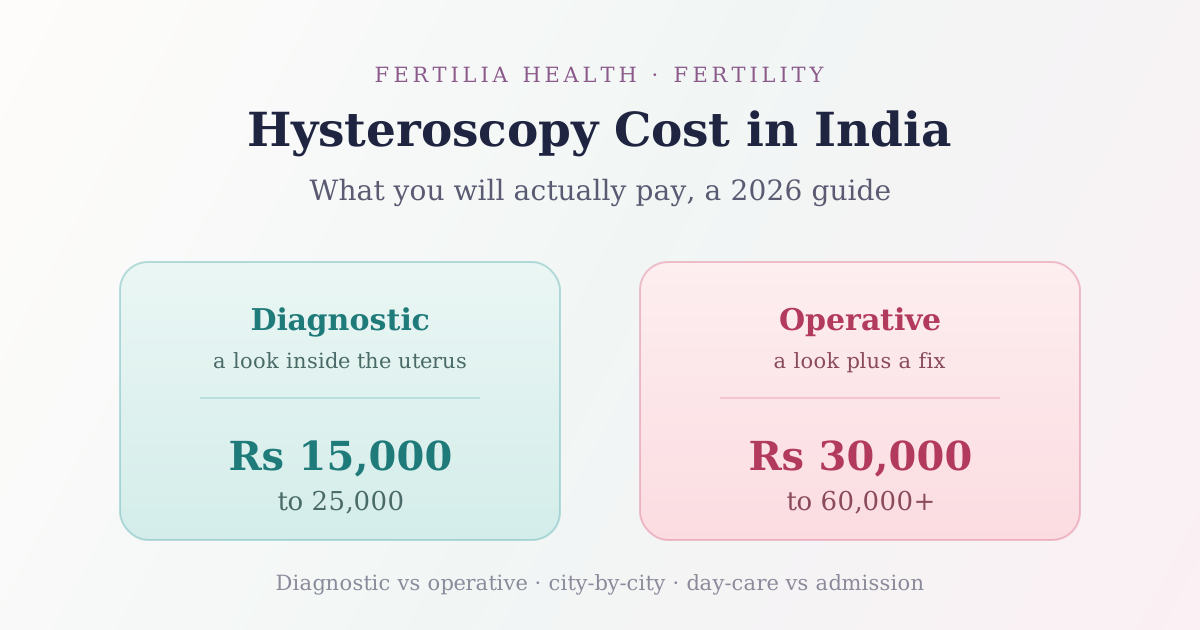
- Diagnostic hysteroscopy (the camera looks inside the uterus, nothing is removed): usually Rs 15,000 to 25,000 at many private day-care centres. Metro tertiary hospitals often quote Rs 29,000 to 41,000 as a package because they bundle in anaesthesia, pre-op tests and facility charges.
- Operative hysteroscopy (a polyp, fibroid, uterine septum or adhesion is also removed): usually Rs 30,000 to 60,000, and sometimes more at premium metro private hospitals or for complex surgery.
- Government and CGHS rates are much lower: the CGHS metro rate for a diagnostic hysteroscopy, with or without biopsy, is around Rs 20,000, and government hospitals are typically nominal for eligible patients.
The one number that matters most is whether your procedure is diagnostic or operative, because that decides which band you fall into.
Diagnostic vs operative: the split that sets the price
This is the most important thing to understand before you compare quotes.
A diagnostic hysteroscopy is a look. A thin telescope (the hysteroscope) is passed through the cervix so your doctor can see the inside of the uterus directly on a screen. Nothing is removed. It is often done as a quick day-care or office procedure, sometimes without general anaesthesia, which is why it sits at the lower end of the price range.
An operative hysteroscopy is a look plus a fix. In the same sitting, your doctor uses fine instruments passed through the scope to treat what they find: removing a polyp (polypectomy), a submucosal fibroid, a uterine septum (a wall of tissue some women are born with), or scar tissue from a previous procedure (adhesiolysis, the treatment for Asherman’s syndrome). Because it involves surgery, anaesthesia and more time, it costs more.
Often you will not know for certain which one you will need until the camera is inside. Many hospitals plan for a diagnostic hysteroscopy and quote an operative price as a contingency, so the estimate you are given may cover both possibilities.
City-by-city cost (2026)
These are typical private hospital ranges for a hysteroscopy in the major cities. The higher figures usually reflect operative procedures or package pricing that includes anaesthesia and pre-op tests; budget day-care centres can be lower.
| City | Typical private range (2026) |
|---|---|
| Delhi | Rs 15,000 to 41,000 |
| Mumbai | Rs 15,000 to 41,000 |
| Bangalore | Rs 25,000 to 60,000 |
| Chennai | Rs 15,000 to 40,000 |
| Hyderabad | Rs 22,000 to 50,000 |
| Coimbatore & smaller cities | Often below metro rates, roughly Rs 15,000 to 30,000 |
Sources for these ranges include MediFee, myUpchar, Medicover and the CGHS published rate list. The India-wide private range across all hospital tiers works out to roughly Rs 17,850 to 53,550. As always, a written quote from your chosen hospital is the only number you can fully rely on.
💜 Got a hysteroscopy quote and not sure if it is reasonable, or even needed yet? Message Dr. Suganya’s team on WhatsApp and we will help you understand your report and your options before you commit to anything.
What is included, and what adds to the bill
When you compare two quotes, they may look different simply because one includes more. A hysteroscopy bill can be built from:
- Surgeon or gynaecologist’s fee
- Anaesthesia, if general or spinal anaesthesia is used (a diagnostic scope may need none)
- Operation theatre or day-care facility charge
- The procedure itself, priced higher if it becomes operative
- Biopsy and histopathology, if a tissue sample is taken and sent to the lab, usually an extra Rs 1,000 to 2,000
- Pre-operative tests (blood tests, sometimes an ECG), often Rs 3,000 to 5,000
- Room charges, only if you are admitted rather than treated as day-care
- Medicines and follow-up visit
When you ask for an estimate, it helps to ask specifically whether anaesthesia, pre-op tests and biopsy are included, because these are the items that most often turn a low quote into a higher final bill.
Government, private and insurance
Government hospitals offer hysteroscopy at nominal or heavily subsidised rates for eligible patients, though waiting times can be longer. CGHS publishes a diagnostic hysteroscopy rate of around Rs 20,000 for its beneficiaries in metro cities.
Private hospitals quote the wider ranges above because the final bill depends on the surgeon, the city, the hospital tier and what is actually done during the procedure.
Insurance may cover a hysteroscopy when it is medically necessary, for example to investigate abnormal bleeding or remove a fibroid, but coverage depends on your policy and the reason for the procedure. Many purely fertility-related investigations are not covered, so check with your insurer in advance and ask whether it needs to be an in-patient admission to qualify.
What a hysteroscopy is for
It helps to remember why this is being suggested, because that often explains the cost and whether it is the right step. A hysteroscopy is used to look at and treat problems inside the uterine cavity, including:
- Abnormal or heavy uterine bleeding that needs a direct look
- Polyps or submucosal fibroids seen on a scan
- A uterine septum, a congenital wall of tissue linked to recurrent miscarriage
- Scar tissue (adhesions), the cause of Asherman’s syndrome, often after a previous D&C
- Repeated pregnancy loss, where the cavity is checked as part of the workup (see recurrent miscarriage tests)
- A fertility workup, when the uterine cavity needs assessing before IVF or after a suggestive scan
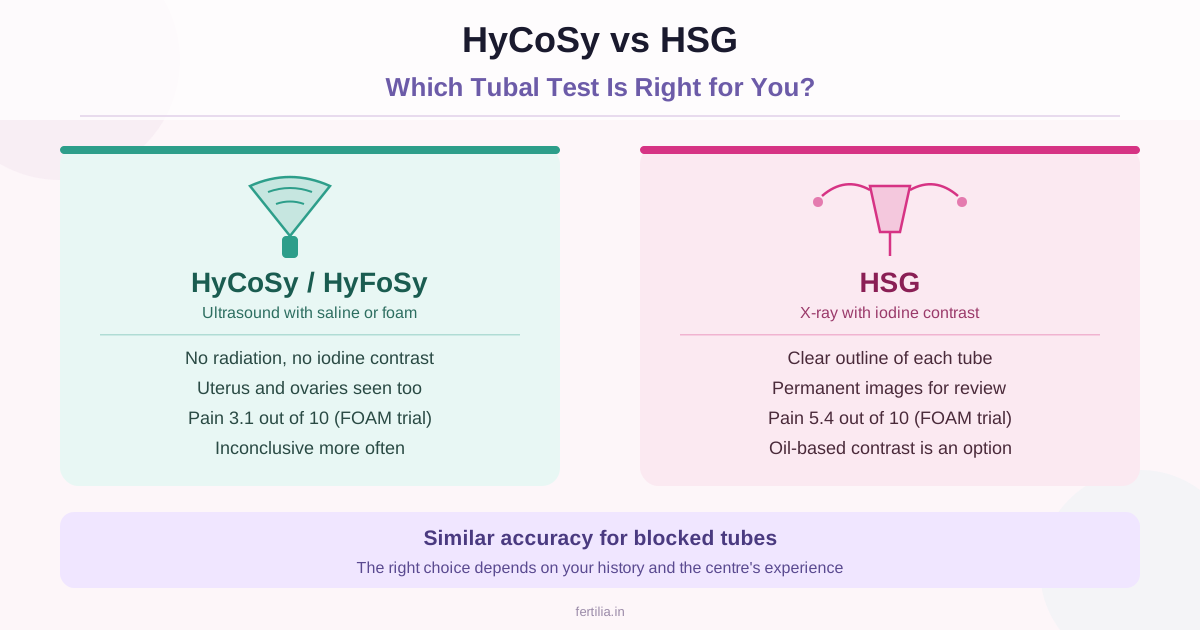
It is different from an HSG test, which checks whether your fallopian tubes are open and costs far less. HSG looks mainly at the tubes; hysteroscopy looks directly inside the uterus and can treat what it finds. The two answer different questions, and your doctor chooses based on what needs checking. For where each sits in the sequence, our honest fertility workup guide lays out the order tests are usually done in.
Day-care vs admission, and recovery
Most diagnostic hysteroscopies, and many straightforward operative ones, are done as day-care: you come in, have the procedure, and go home the same day. This keeps the cost lower because there are no room charges. Admission is reserved for more complex surgery or when closer monitoring is needed, and it adds room, nursing and longer anaesthesia costs.
Recovery is usually quick. Mild cramping and light spotting for a day or two is normal, and most women return to routine activities within a day or so after a diagnostic procedure, a little longer after an operative one. Your doctor will give you specific guidance based on what was done.
How to think about the cost
It is natural to weigh a procedure like this against its price, especially when you are already spending on tests. The useful way to look at it: a hysteroscopy is often the step that gives a clear answer after scans have only hinted at something, or the step that actually fixes a problem such as a polyp or a septum that has been affecting your cycles or your chances of carrying a pregnancy. Spending on the right investigation at the right time usually saves money, and heartache, later.
If you are not sure whether you need it yet, or you want to understand a quote before you agree to it, that is a very reasonable thing to talk through first.
💜 Want to understand your report and your next step before you spend? Message Dr. Suganya’s team on WhatsApp for a calm, unhurried conversation. Consultations are online, across India and for Indian women abroad. Our fertility program can also help you plan the workup in the right order.
Frequently Asked Questions
How much does a hysteroscopy cost in India in 2026?
A diagnostic hysteroscopy usually costs Rs 15,000 to 25,000 at private day-care centres, with metro tertiary hospitals often quoting Rs 29,000 to 41,000 as a package. An operative hysteroscopy, where a polyp, fibroid, septum or adhesion is removed, usually costs Rs 30,000 to 60,000 or more. Government and CGHS rates are lower (around Rs 20,000 for diagnostic under CGHS). Prices vary by hospital and city, so confirm a written estimate.
Why is operative hysteroscopy more expensive than diagnostic?
A diagnostic hysteroscopy is only a look inside the uterus, often done quickly as day-care and sometimes without general anaesthesia, so it costs less. An operative hysteroscopy also treats what is found, using surgical instruments, anaesthesia and more theatre time, which raises the cost. You will sometimes only know which you need once the camera is inside, so hospitals may quote for both.
Is hysteroscopy covered by insurance in India?
It can be, when it is medically necessary, for example to investigate abnormal bleeding or remove a fibroid. Coverage depends on your policy and the reason for the procedure, and some fertility-related investigations are not covered. Check with your insurer in advance, and ask whether it needs to be an in-patient admission to qualify.
What is the difference between an HSG and a hysteroscopy?
An HSG (hysterosalpingogram) is an X-ray dye test that mainly checks whether your fallopian tubes are open, and it costs far less. A hysteroscopy uses a camera to look directly inside the uterus and can treat problems such as polyps, a septum or adhesions in the same sitting. They answer different questions, and your doctor chooses based on what needs checking.
Is a hysteroscopy painful?
A diagnostic hysteroscopy is usually well tolerated, with some cramping similar to period pain, and it is often done with light or no anaesthesia. An operative hysteroscopy is done under anaesthesia, so you feel nothing during it. Mild cramping and light spotting for a day or two afterwards is normal.
Do I need to be admitted for a hysteroscopy?
Usually not. Most diagnostic and many straightforward operative hysteroscopies are done as day-care, so you go home the same day. Admission is reserved for more complex surgery or when closer monitoring is needed, and it adds to the cost.
How soon can I go back to normal activities?
Recovery is usually quick. After a diagnostic hysteroscopy most women return to routine activities within a day. After an operative procedure it may take a little longer. Your doctor will give you specific advice based on what was done and whether you had anaesthesia.