A scan report comes back. The endometrium is 5.8mm. A fertility consultation follows, and the word “IVF” is mentioned. Before taking that step, the woman asks one question: “Can I still try naturally?”
For more on this, read our guide on PCOS After 35. I hear this often, and yes: many women do conceive naturally with a thin endometrium, particularly when the cause is treatable and the lining responds to appropriate support. It does not apply to everyone, though, and whether it applies to you comes down to a few specific clinical factors.
For more on this, read our guide on Can I Conceive with Adenomyosis Naturally?.
For more on this, read our guide on Can I Conceive Naturally with Fibroids?. This post does not repeat the detailed guide on what thin endometrium is, what causes it, and how to treat it. That is already covered in the thin endometrium guide. What this post answers is the decision question: is natural conception a realistic goal for your situation, and how do you know when it is time to escalate?
What the Research Shows
Most of the published data on endometrial thickness and pregnancy comes from IVF and IUI cycles. In these cycles, the lining is measured on a specific day relative to the planned transfer, and if it does not meet the working threshold (typically 7 to 8mm at most fertility centres), the transfer is cancelled or the protocol is modified.
For more on this, read our guide on Endometrial Thickness. Levi et al. (2000, Fertility and Sterility) established that endometria below 7mm in IVF cycles are associated with significantly lower implantation rates. Subsequent systematic reviews have confirmed this pattern across large datasets.
Here is something important that does not get explained clearly in a clinic setting: this evidence applies specifically to IVF transfer cycles, where the lining is assessed at a fixed priming endpoint. In a natural cycle, the endometrium develops over the entire follicular phase under the body’s own estrogen. The lining is not assessed on a predetermined day but tracked as the follicle grows. This is a more dynamic process, and the same woman who measures 6.8mm on day 12 in a natural monitored cycle may have a lining that is functionally different from a woman who measures 6.8mm at the scheduled transfer point in a stimulated IVF cycle.
This does not mean that thin endometrium in a natural cycle is not a real concern. It is. But the 7 to 8mm threshold from IVF literature should not be read as an absolute ceiling below which natural conception is impossible.
The Four Factors That Determine Your Answer
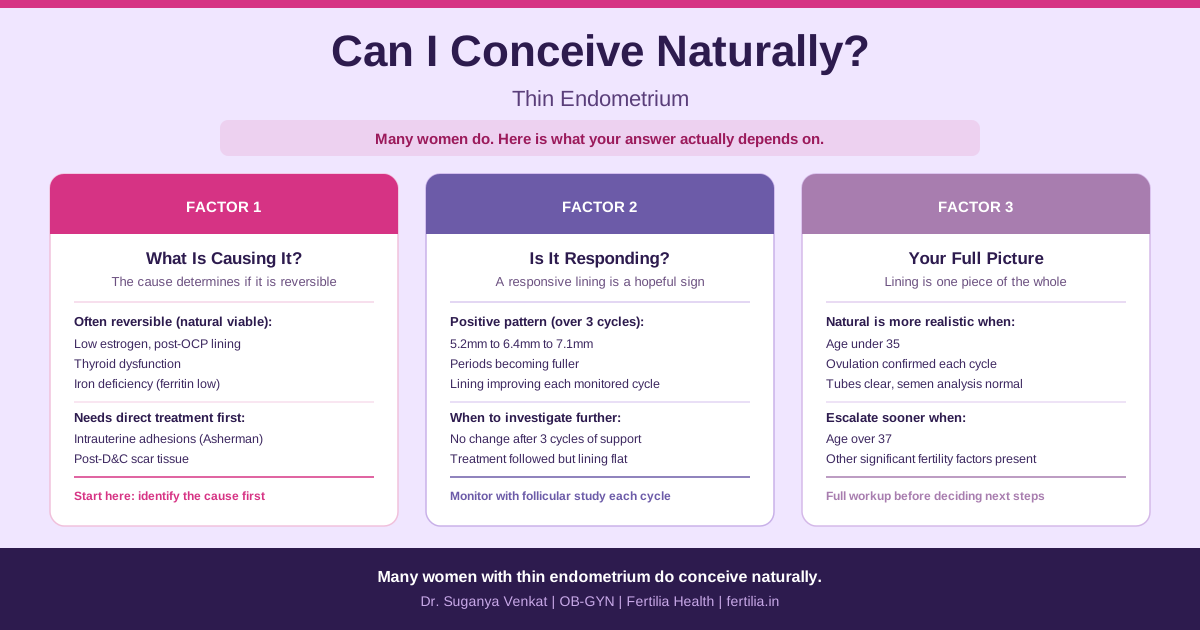
Whether natural conception is realistic with a thin endometrium depends on these four things.
1. What Is Causing the Thin Endometrium?
The cause is the most important determinant, because the cause tells you whether the problem is reversible.
Causes that often respond to treatment and support natural conception:
Low estrogen from any cause, including the post-oral-contraceptive lining that has not yet recovered to its pre-pill state. Thyroid dysfunction, particularly subclinical hypothyroidism, can suppress estrogen activity and result in a lining that does not grow normally. Iron deficiency anaemia impairs oxygen delivery to uterine tissue and affects lining development. NFHS-5 data shows that 57% of Indian women between 15 and 49 are anaemic, and many have not had a ferritin level checked. These causes do not damage the endometrium structurally. The lining cells are intact. They are simply not being adequately stimulated. When the driver is corrected, most women see their lining grow normally within 2 to 3 cycles.
Causes that are more complex and may require direct intervention before natural conception is realistic:
Intrauterine adhesions from a prior D&C, hysteroscopy, or uterine surgical procedure. In Asherman’s syndrome, scar tissue replaces responsive endometrial cells with fibrous tissue that does not respond to estrogen, regardless of how much support you give the lining. These women need hysteroscopic evaluation and, if adhesions are present, surgical removal. After successful adhesion removal, natural conception is often possible. But waiting without investigating the cavity does not help and costs time. A sonohysterogram (saline infusion ultrasound) is the most practical first-line test to assess whether the uterine cavity is structurally normal.
For more on this, read our guide on Asherman’s Syndrome. If you have had any prior uterine procedure and your lining has been consistently thin since, this investigation is not optional. It is the starting point.
2. Is the Endometrium Responding?
An endometrium that has never received targeted treatment cannot be called resistant. The meaningful data point is whether the lining improves when the right support is given.
Three monitored cycles on a structured protocol, addressing the underlying cause and supporting uterine blood flow, should show some response. If the lining moves from 5.2mm to 6.4mm to 7.1mm across three cycles, that is a responsive endometrium, and natural conception once the lining reaches an adequate threshold is a realistic goal for many women in this pattern.
If the endometrium shows no measurable change across three full cycles of appropriate treatment, that is a different situation. It requires a more detailed workup: checking for adhesions that may not have been visible on standard ultrasound, reassessing the hormonal picture, or considering whether the lining tissue itself has been compromised in a way that does not show on imaging.
The key practical point: you cannot know whether your lining is responsive until it has been given a proper attempt. Many women who hear “IVF” after a first thin endometrium finding have not yet had a structured 2 to 3-month protocol to see whether the lining can improve. A finding on a scan is a starting point for investigation, not an automatic treatment plan.
3. Your Age and How Much Time You Have
Age is a practical part of this decision, and there is no judgement in raising it. A 25-year-old woman with a thin lining related to post-OCP recovery has a different fertility window than a 39-year-old with the same finding. The younger woman can spend 3 to 4 months working on the lining before a natural conception attempt without meaningfully changing her fertility picture. The 39-year-old cannot afford the same timeline without some parallel medical support.
For women under 35 with a reversible cause, a 3-month structured attempt is reasonable. For women over 37, I would not recommend waiting more than 2 cycles before involving a fertility specialist, not because natural conception is impossible, but because time is the one variable in fertility that cannot be recovered.
4. What Else Is in the Fertility Picture?
A thin endometrium in an otherwise straightforward fertility picture, meaning normal ovulation, normal fallopian tubes, and a normal semen analysis, is one variable to address. The same thin endometrium alongside bilateral tubal blockage, absent ovulation that does not respond to lifestyle management, or very low sperm count is a different situation where the endometrium may not be the first or most limiting problem.
If you have not had a complete fertility workup, that is the starting point before any decision about natural versus assisted conception. The honest fertility workup guide explains what the relevant tests are, what order to do them in, and how to read the results.
If you would like Dr. Suganya Venkat to review your scan reports, hormone results, and full fertility picture to help you understand whether natural conception is realistic for your situation, she offers video consultations across India. Message us on WhatsApp to book a consultation for Rs 399.
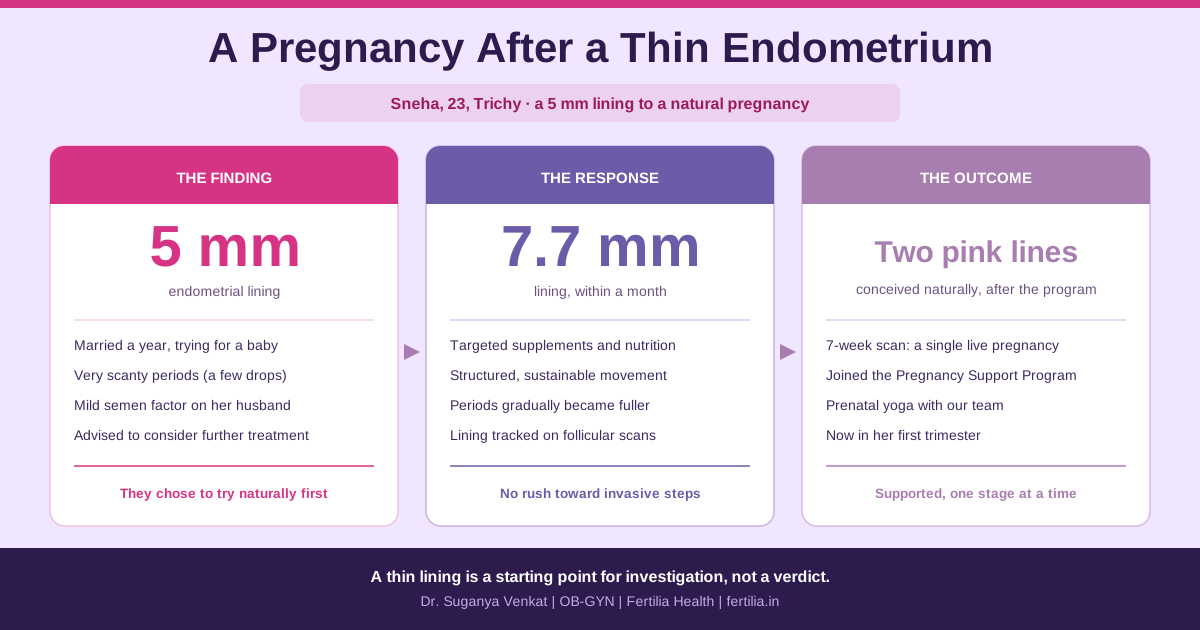
Sneha: A 5mm Lining and a Natural Pregnancy
Sneha was 23 and had been married a little over a year when she and her husband started trying for a baby. Her fertility workup showed an endometrial thickness of around 5mm and very scanty periods. Her husband had mild semen abnormalities. She was advised to consider further treatment.
Before committing to that step, she and her husband wanted to understand what was happening and whether they could support things naturally first.
Her plan focused on improving endometrial health: targeted supplements, dietary changes to support hormonal balance and uterine circulation, and a consistent movement routine. Sneha was remarkably consistent, and the response showed it. Cycle by cycle, her lining improved on follicular monitoring. Her previously scanty periods became fuller, a reassuring sign that her body was responding. There was no rush to invasive steps.
In May, a positive pregnancy test. Her 7-week scan confirmed a single intrauterine pregnancy.
Sneha’s story does not guarantee the same outcome for everyone with a 5mm lining. What it illustrates is what is possible when the endometrium is not structurally damaged, the cause is reversible, the approach is consistent, and the woman is given the time and support to see whether her body can respond. Her full journey, including the follicular scan where her lining reached 7.7mm and the pregnancy that followed, is told in Sneha’s Story: Pregnant After a Thin Endometrium.
What “Natural First” Looks Like in Practice
If the factors above suggest that natural conception is a reasonable starting point for you, here is what a structured 3-month approach typically involves.
Investigating and addressing the underlying cause. Estradiol levels to check whether the problem is driven by low estrogen. A full thyroid panel (TSH, free T3, free T4) because subclinical hypothyroidism is one of the most commonly missed causes of persistently thin endometria in young Indian women. Serum ferritin to check for iron deficiency. And, if you have had any prior uterine procedure, a sonohysterogram to check the uterine cavity.
Supporting uterine blood flow. Low-dose aspirin (75mg daily, started from cycle day 1, after discussion with your doctor), Vitamin E, and regular moderate movement. These are commonly used alongside other interventions and work by improving microcirculation to the uterine lining.
Dietary support. Til (sesame seeds), alsi (flaxseeds), anaar (pomegranate juice), methi, palak, and aakhrot are the most relevant foods for uterine lining support. The rationale for each and how much to include is in the thin endometrium guide. The short version: til and alsi provide lignans that support estrogen metabolism, anaar supports uterine blood flow, and palak addresses iron deficiency which is an under-recognised contributor.
Follicular monitoring each cycle. This is essential and non-negotiable if you are working on a thin lining. A follicular study (3 to 4 ultrasound scans across the cycle) tells you whether the lining is growing, when ovulation occurs, and gives you a chance to time conception accurately. Without monitoring, you are working without feedback.
Targeted supplementation. Vitamin E, L-arginine, and inositol are among the supplements that have been studied in women with thin endometria. Dosing should be discussed with a gynaecologist based on your full picture, not taken from general internet lists.
When to Move Faster
Natural first is not the right path for every woman with a thin endometrium. Here is when I would advise moving more quickly to medical or assisted treatment.
The lining is not responding after 2 to 3 cycles of proper support. If the thickness shows no improvement across three monitored cycles despite addressing the identified cause and providing appropriate support, further investigation is needed. This is not a failure. It is new information.
The cause is structural. Asherman’s syndrome and intrauterine adhesions do not respond to nutrition, supplements, or lifestyle changes. Hysteroscopic evaluation and, if adhesions are confirmed, surgical treatment is the starting point. After successful cavity restoration, natural conception often becomes possible.
You are over 37. Time is the one fertility variable that cannot be recovered. A parallel approach, working on the lining while beginning a medically supported cycle, is worth discussing. This is not abandoning the goal of natural conception. It is being practical about the window.
There are significant concurrent fertility factors. Blocked fallopian tubes, anovulation not responding to management, or severe male factor need to be addressed directly. In these cases, the thin endometrium may resolve with targeted support but the other factors would still limit natural conception. The IVF decision guide goes through this framework in more detail.
What the Next 90 Days Can Look Like
If you have just received a thin endometrium finding for the first time and none of the “escalate quickly” flags above apply, here is a practical 90-day frame.
Month 1. Full workup: estradiol, FSH, LH, TSH, serum ferritin, and a sonohysterogram if you have had any uterine procedure. Begin dietary support. Discuss low-dose aspirin and Vitamin E with your doctor. Follicular monitoring this cycle to get a baseline on how the lining develops naturally.
Month 2. Targeted supplementation in place. Follicular monitoring showing whether the lining is improving relative to Month 1. If ovulation is confirmed and the lining is above 7mm, this is a cycle to attempt conception. If the lining is still below 7mm, continue the protocol and review.
Month 3. Clinical review of the response. If the lining is moving in the right direction and you have not yet conceived, continue and reassess. If there is no response to report, the next step is to review the workup for any causes that were missed and to discuss whether assisted reproduction is now appropriate.
The programme page at Fertilia’s endometrium health resource gives more detail on what a personalised support plan looks like.
Dr. Suganya Venkat consults online across India. No travel is required beyond a 30-minute video call, and your reports, scans, and bloodwork can all be reviewed digitally. Message us on WhatsApp to book a Rs 399 consultation. If building the lining and the wider conception picture is the goal, the 90-day Fertility program brings the medical, nutritional, and lifestyle pieces into one plan.
Frequently Asked Questions
What endometrium thickness is needed for natural conception?
The 7 to 8mm threshold is most clearly established for IVF transfer cycles, where the lining is assessed at a fixed point before a scheduled embryo transfer. For natural conception, the endometrium develops across the entire follicular phase and is tracked relative to follicle growth rather than a calendar date. Most gynaecologists prefer to see the lining above 7mm at the time of confirmed ovulation in a natural monitored cycle. Pregnancies do occur below this threshold, particularly when the cause of thinness has been addressed and the endometrium is responding, but the probability falls with each millimetre below 7mm.
Can I get pregnant with a 5mm or 6mm lining?
It is possible. Sneha’s story, with a starting endometrium of around 5mm that improved with targeted support and resulted in a natural pregnancy, is one documented example. Whether it is likely in your case depends on the cause, whether the lining responds to treatment, your age, and the rest of your fertility picture. A lining that has improved from 5mm to 6.5mm across two cycles of treatment is a very different situation from a lining that has stayed at 5mm despite appropriate management over the same period.
How long does it take for a thin endometrium to improve?
When the cause is low estrogen from OCP use or nutritional deficiency, measurable response typically appears within 2 to 3 months of targeted support. Iron deficiency anaemia, one of the most common and under-addressed contributors to poor endometrial development in Indian women, can take a similar window to correct once iron supplementation begins. Structural causes such as adhesions require surgical treatment and do not respond to supplements or lifestyle changes. Recovery after successful adhesion removal varies depending on the extent of the adhesions.
Does thin endometrium always mean I need IVF?
No. Thin endometrium is one finding, and IVF is indicated when the cause is structural and cannot be adequately corrected, when the lining is not responding after an appropriate trial of treatment, when age or other fertility factors make a long natural trial impractical, or when there are other significant infertility issues in the same picture. Many women with thin endometrium conceive naturally once the cause is identified and the lining is given appropriate support. The decision between natural first and IVF should be based on your specific clinical picture, not on the finding alone.
For more on this, read our guide on Can I Conceive with Endometriosis Without IVF?.
For more on this, read our guide on Can I Conceive After 35 Without IVF?.
For more on this, read our guide on Can I Conceive Naturally with One Blocked Tube?. My IUI was cancelled because of thin endometrium. What do I do next?
An IUI cancelled for thin endometrium usually means either the protocol needs adjusting before the next attempt, or a more detailed workup is needed to understand why the lining is not responding. Before repeating an IUI cycle with the same protocol, it is worth reviewing what support was given in the cancelled cycle and whether anything was missed, particularly thyroid function, ferritin levels, and the uterine cavity. If you would like a review of your specific situation, reach out via WhatsApp and we can go through the picture in a consultation.
What foods specifically help build the uterine lining?
Til (sesame seeds), alsi (flaxseeds), anaar (pomegranate), methi (fenugreek), palak (spinach), and aakhrot (walnuts) are the most relevant Indian foods for uterine lining support. Til and alsi provide dietary lignans that support estrogen metabolism. Anaar supports uterine blood flow through its effect on vascular endothelial growth factor. Palak and rajma address iron deficiency, which impairs oxygen delivery to uterine tissue and is a frequently missed contributor to poor endometrial development. The amounts, preparation methods, and evidence behind each are in the thin endometrium guide.
Can stress cause a thin endometrium?
Not directly. Stress does not thin the endometrium through a direct pathway. However, chronic cortisol elevation suppresses the hypothalamic-pituitary-ovarian axis, which can reduce endogenous estrogen production. Lower estrogen means a lining that does not grow as thickly. This is one reason why some women notice that their lining improves meaningfully once sleep, physical load, and emotional demand are better managed, even before any other intervention. Addressing these factors alongside the medical and nutritional protocol is not separate from treating the endometrium. It is part of the same picture.