A woman in her late twenties sits across from me. She has just been told she has endometriosis, stage II. Her doctor has referred her to a fertility specialist. The specialist’s first sentence was: “With this, you should probably think about IVF sooner rather than later.”
She has one question: “Do I really need IVF? Can I not try naturally first?”
It is a reasonable question, and the answer is not a blanket yes or no. It depends on what stage of endometriosis she has, whether her tubes are open, how long she has been trying, and a few other clinical factors. For many women with Stage I and Stage II endometriosis, natural conception is genuinely realistic. For women with advanced disease, the picture is more complicated and sometimes IVF is the right path.
This post does not repeat the background on what endometriosis is, how it is diagnosed, or how it generally affects fertility. That is covered in the existing endometriosis and fertility guide. What this post answers is the decision question: given your specific clinical picture, is natural conception still a reasonable first path?
The Single Variable That Changes Everything: ASRM Stage
The most important piece of information in your endometriosis workup, for the purpose of answering this question, is the ASRM (American Society for Reproductive Medicine) staging.
Endometriosis is staged from I to IV based on the location, depth, and spread of the lesions, whether adhesions are present, and whether ovarian cysts (endometriomas) exist.
- Stage I (Minimal): A few small implants, no significant adhesions, no endometriomas
- Stage II (Mild): More implants, still mostly superficial, mild adhesions, no large cysts
- Stage III (Moderate): Multiple deep implants, one or both ovaries involved with endometriomas, some adhesions affecting pelvic structures
- Stage IV (Severe): Extensive deep implants, large endometriomas, dense adhesions, possibly involving the bowel or bladder
The staging does not perfectly predict fertility outcomes. A woman with Stage IV can sometimes conceive naturally, and a woman with Stage I may still have unexplained difficulty. But staging does shift the probability considerably.
What the Research Shows, Stage by Stage
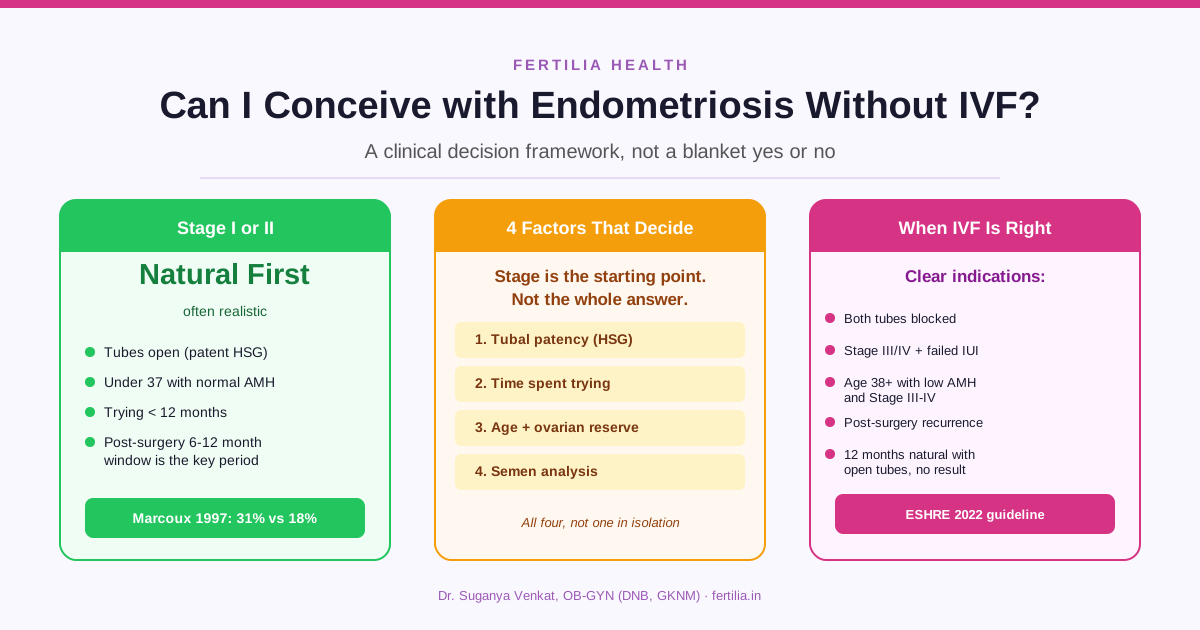
For Stage I and Stage II endometriosis, the data on natural conception after laparoscopic treatment is genuinely encouraging. The Canadian Collaborative Group on Endometriosis (Marcoux et al., 1997, NEJM, PMID 9227926) conducted a randomised controlled trial comparing laparoscopic surgery versus diagnostic laparoscopy alone in women with minimal or mild endometriosis, and found pregnancy rates of 31% in the treated group versus 18% in the untreated group over 36 weeks. These are natural conception rates. The surgical group’s improvement was meaningful and statistically significant.
For Stage III and Stage IV, the picture changes. Natural conception still happens, but the per-cycle probability drops considerably due to the mechanical and inflammatory changes that come with more extensive disease. The ESHRE 2022 Endometriosis Guideline acknowledges this, recommending that clinicians discuss both the expected natural conception rates by stage and the realistic timeline before advising a specific path. What the guideline also notes is that for Stage I and II with a good prognosis, a period of natural trying is appropriate before escalating to IVF.
The endometrioma question is worth addressing directly. If you have an endometrioma (a cyst filled with old blood on the ovary), it affects your ovarian reserve. Raffi et al. (2012, Journal of Clinical Endocrinology and Metabolism, PMID 22723324) showed in a systematic review and meta-analysis that surgery to remove an endometrioma causes a significant reduction in AMH because removing cyst wall tissue also removes surrounding ovarian cortex. This means operating on an endometrioma specifically to “improve fertility” comes at a cost to your reserve. The ESHRE 2022 Endometriosis Guideline cautions against routine surgical removal of endometriomas before IVF for this reason. If the cyst is causing pain or is very large (above 4 to 5 cm), surgery may still be indicated, but the decision needs to weigh the reserve cost against the benefit.
The Other Factors That Complete the Picture
Stage is the starting point, not the whole answer. Four other clinical variables shape the decision.
Tubal Patency
If endometriosis has affected the fallopian tubes, causing blockage or significant adhesions around them, the egg and sperm cannot meet naturally. An HSG (hysterosalpingography) or laparoscopy with dye tells you whether your tubes are open.
If both tubes are blocked by adhesion or disease, natural conception is not a biological possibility. IVF is not a preference in that case; it is the only path.
If one tube is open, natural conception remains possible. If both tubes are structurally normal, tubal factor is not limiting your options. Many women with Stage I and II endometriosis have patent tubes, and the disease has not reached the tubes at all.
This is why an HSG matters early in the workup. A fertility recommendation based on endometriosis staging alone, without knowing tubal status, is missing a key piece of information.
How Long You Have Been Trying
The definition of infertility is 12 months of regular unprotected intercourse without conception, reduced to 6 months for women over 35.
If you have just been diagnosed with endometriosis and have not yet tried to conceive, or have only been trying for 2 to 3 months, the clinical picture is different from a woman who has been trying for 2 years with no result. An early diagnosis, treated conservatively, followed by a structured natural conception attempt, is a reasonable sequence for many women with Stage I or II disease.
Your Age and Ovarian Reserve
Age combines with endometriosis to create a more urgent situation in some cases. A woman of 28 with Stage II endometriosis and normal ovarian reserve has time to try naturally after surgery. A woman of 38 with Stage III endometriosis and a low AMH is in a different position, and the time available for natural attempts is genuinely constrained.
AMH matters here because endometriomas, and surgery to remove them, can reduce reserve. If AMH is already low before any intervention, knowing this changes the calculation.
Male Factor
Endometriosis is only one part of the fertility picture. If the semen analysis shows severely reduced parameters, the natural conception probability drops regardless of the endometriosis stage. Male factor workup should be part of the initial assessment before deciding on natural versus IVF.
When Natural Conception Is a Reasonable First Step
Natural conception, with the right clinical support, is a reasonable first step if:
- Your endometriosis is Stage I or Stage II, confirmed on laparoscopy
- Conservative laparoscopy has already been performed and the disease was removed or treated
- Both fallopian tubes are open on HSG
- You are under 35, or between 35 and 38 with a reasonable AMH
- You have not been trying for more than 6 to 12 months
- The semen analysis is in the normal range
In this scenario, the post-surgical window of 6 to 12 months is the optimal period to attempt natural conception. This is when the inflammatory environment is reduced, the pelvic anatomy is clearer, and the probability of natural conception is at its highest before the disease can re-establish.
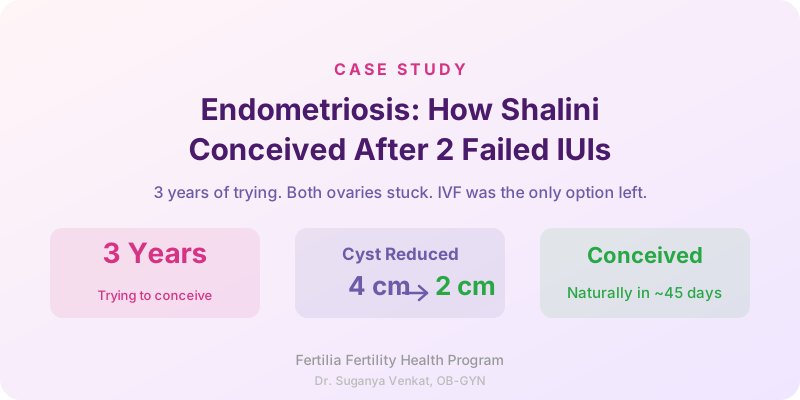
One of my patients, Shalini, had a 4cm endometriotic cyst and both ovaries adhered to the back of the uterus. Two IUI cycles had already failed. IVF had been recommended as the next step. She joined the program for anti-inflammatory nutritional support, structured ovulation tracking, and movement work. Within approximately 45 days, she conceived naturally, and her cyst reduced from 4 cm to around 2 cm on follow-up scan. Her full story is in the Shalini case study. She is not a typical case for her stage, and I do not present her story as the expected outcome for Stage III disease. But she shows that the ceiling for natural conception in endometriosis is not as fixed as some women are told.
Book a video consultation with Dr. Suganya to review your specific stage, tubal status, and workup before deciding on IVF. Online consult, pan-India, Rs 399.
When IVF Is the Right Path for Endometriosis
There are specific situations where IVF is not just an option but the appropriate clinical decision, and being clear about them matters.
Both tubes are blocked. If adhesions from endometriosis have blocked both fallopian tubes, natural conception cannot happen. IVF is the biologically necessary path.
Stage III or IV with failed IUI. The ESHRE 2022 guideline supports IUI with ovarian stimulation as a reasonable step for Stage I and II but does not recommend it as a standard approach for Stage III or IV, where the mechanical barriers are more significant. For women with moderate to severe disease, IVF is often a more appropriate first-line fertility treatment.
Age 38 or above with Stage III-IV and low ovarian reserve. When the timeline is compressed by age and the disease has reduced reserve through ovarian involvement, the argument for natural trying gets weaker quickly. The risk is not just the individual cycle probability but missing the window.
Post-surgical endometriosis recurrence. If endometriosis has come back after a previous surgery and natural conception has not occurred, a second surgery to the same ovarian tissue carries a significant risk of further reserve reduction. In this setting, IVF is often preferable to repeat surgery.
Failed natural attempts after a post-surgery window. If you have tried naturally for 6 to 12 months after surgery for Stage I or II and conception has not occurred, IVF becomes a reasonable next step. At that point, the surgical window has been used and further natural attempts yield diminishing returns.
The Lifestyle Layer: What Running Alongside All of This
Regardless of whether natural conception or IVF is the path, the same anti-inflammatory approach applies, and the evidence supports it.
Missmer et al. (2010, Human Reproduction, PMID 20332166) found in a large prospective cohort that higher long-chain omega-3 fatty acid intake was associated with a lower risk of endometriosis, while a higher trans-fat intake was associated with a higher risk. Mier-Cabrera et al. (2009, Reproductive Biology and Endocrinology, PMID 19476631) showed that antioxidant supplementation reduced oxidative stress markers in women with endometriosis, suggesting the inflammatory environment in the pelvis is modifiable through dietary means.
An anti-inflammatory plate for women with endometriosis, in a practical Indian context, looks like: rajma, chana dal, and moong for plant protein; palak, methi, and drumstick leaves for folate and iron; haldi in cooking consistently (the curcumin content carries anti-inflammatory properties studied in endometriosis tissue, though large clinical trial evidence in humans is still limited); til, alsi (flaxseed ground), and walnuts for omega-3 fatty acids; and reducing processed oil use and refined grains where possible.
This is not a guarantee of conception. It is a meaningful way to reduce the inflammatory load in the pelvic environment, support egg quality, and improve the conditions in which conception, natural or assisted, happens.
Talking to Your Doctor
The goal of this conversation with your gynaecologist or fertility specialist is not to push back against medical advice. It is to understand what specific finding is driving the recommendation.
Questions that help clarify the picture:
- What stage of endometriosis was confirmed, and how?
- Has an HSG been done to confirm tubal status?
- What is the current AMH and antral follicle count?
- Has a semen analysis been done for my partner?
- Is the recommendation based on stage alone, or on stage plus tubal involvement plus time already spent trying?
- If I have Stage I or II with open tubes and we haven’t been trying long, is there a post-surgical natural window that is reasonable to attempt first?
A reproductive medicine specialist who is familiar with endometriosis and fertility will be able to answer these specifically. If the IVF recommendation comes without a clear answer to these questions, a second opinion is worth considering.
Talk to Dr. Suganya online to go through your workup and understand what the right next step is for your specific situation. Rs 399 video consultation, available across India. For women with endometriosis where a natural window is reasonable, the 90-day Fertility program adds structured preparation alongside your specialist’s care.
FAQ
I have Stage II endometriosis. Can I still try naturally?
Yes, for many women with Stage II endometriosis, natural conception after conservative laparoscopy is a realistic goal. Marcoux et al. (1997, NEJM) showed 31% cumulative pregnancy rates in the treated Stage I/II group vs 18% in the untreated group over 36 weeks of natural trying. The key factors are whether your tubes are open, how long you have been trying, your age, and your ovarian reserve. An HSG and a full fertility workup before deciding on IVF is a reasonable first step.
Does having an endometrioma mean I need IVF?
Not automatically. An endometrioma affects your ovarian reserve, and surgery to remove it causes a significant reduction in AMH (Raffi et al. 2012, JCEM, PMID 22723324). The ESHRE 2022 guideline cautions against removing endometriomas purely to improve fertility, especially before IVF. If the cyst is causing pain, is very large, or is affecting follicle access during stimulation, surgery may be warranted. Otherwise, IVF can often be done with an endometrioma present, managed by the treating clinic during stimulation.
My doctor told me IVF is the only option with endometriosis. Is that true?
For Stage III and Stage IV with blocked tubes, IVF is often the appropriate clinical path. For Stage I and Stage II, this is not automatically true. The ESHRE 2022 guideline supports a trial of natural conception after conservative surgery for mild disease. Whether IVF is truly the only option depends on your stage, your tubal status, how long you have been trying, your age, and your ovarian reserve. If you have not had a clear answer to all of those, a second opinion is worth pursuing.
Will surgery for endometriosis help me conceive naturally?
For Stage I and Stage II, the evidence supports conservative laparoscopy followed by a 6 to 12 month window of natural trying. The Marcoux et al. 1997 NEJM study showed a meaningful improvement in conception rates with treated vs untreated mild disease. For Stage III and IV, the benefit is less straightforward and depends on the specific anatomy involved. Surgery to remove an endometrioma on the ovary comes with a cost to ovarian reserve that must be factored in.
Do diet and lifestyle changes make a difference in endometriosis and fertility?
The evidence base here is growing but not yet definitive for conception rates specifically. What is supported is that an anti-inflammatory dietary approach reduces oxidative stress markers in women with endometriosis (Mier-Cabrera et al. 2009), and that dietary patterns high in omega-3 fatty acids and antioxidants are associated with lower endometriosis risk and symptom severity (Rogers et al. 2017). In clinical practice, the women I work with who follow a consistent anti-inflammatory plan alongside appropriate medical management generally report reduced pain and improved cycle regularity. Whether this directly translates to a higher conception rate per cycle has not been established in large trials.
I conceived on the first IVF after being told IVF was my only option. Was the IVF recommendation correct?
It may have been appropriate for your specific clinical picture at the time. A successful IVF outcome does not necessarily mean IVF was the only possible path; it means IVF worked. Whether natural conception might have worked is a counterfactual that cannot be answered after the fact. What matters is reviewing the workup to understand what finding drove the recommendation and whether those factors are still present if you consider a second pregnancy.
How do I know if my endometriosis is affecting my tubes?
An HSG (hysterosalpingography) is the standard first-line test for tubal patency. It involves a dye being passed through the uterus and tubes under fluoroscopy. If both tubes are open, the dye spills into the pelvis and is visible on the scan. A laparoscopy with chromopertubation (a dye test done during the laparoscopy) is more definitive and is also done during any surgical treatment of endometriosis. If you have had a laparoscopy for endometriosis and tubal status was not assessed during that procedure, it is worth asking whether it was checked. See the full HSG report guide for what the test involves.
The decision about natural conception versus IVF with endometriosis is not made by the diagnosis alone. Stage I and Stage II endometriosis with open tubes, a reasonable reserve, and a short period of trying is a different clinical picture from Stage IV with tubal involvement, a reduced AMH, and two years of failed attempts. Both are endometriosis. The answers are not the same.
What you need is clarity on where your specific situation falls in that range, based on your staging, your tubal status, your reserve, and your timeline. That is what the workup is for, and that is what an honest conversation with your treating doctor or a second opinion should give you.